Key Takeaways
- Meta is investing $900 million in CRED, with Kunal Shah appointed WhatsApp global CEO
- The deal values CRED at $4.5 billion, a recovery from its 2022 valuation cut
- Shah retains his CRED shareholding while Miten Sampat steps in as interim CEO
Kunal Shah, the founder of Indian fintech startup CRED, is stepping away from his creation to become WhatsApp's global head. The move follows Meta's announcement of a Rs 8,550 crore (roughly $900 million) investment in CRED, one of the largest financing deals for an Indian fintech company to date.
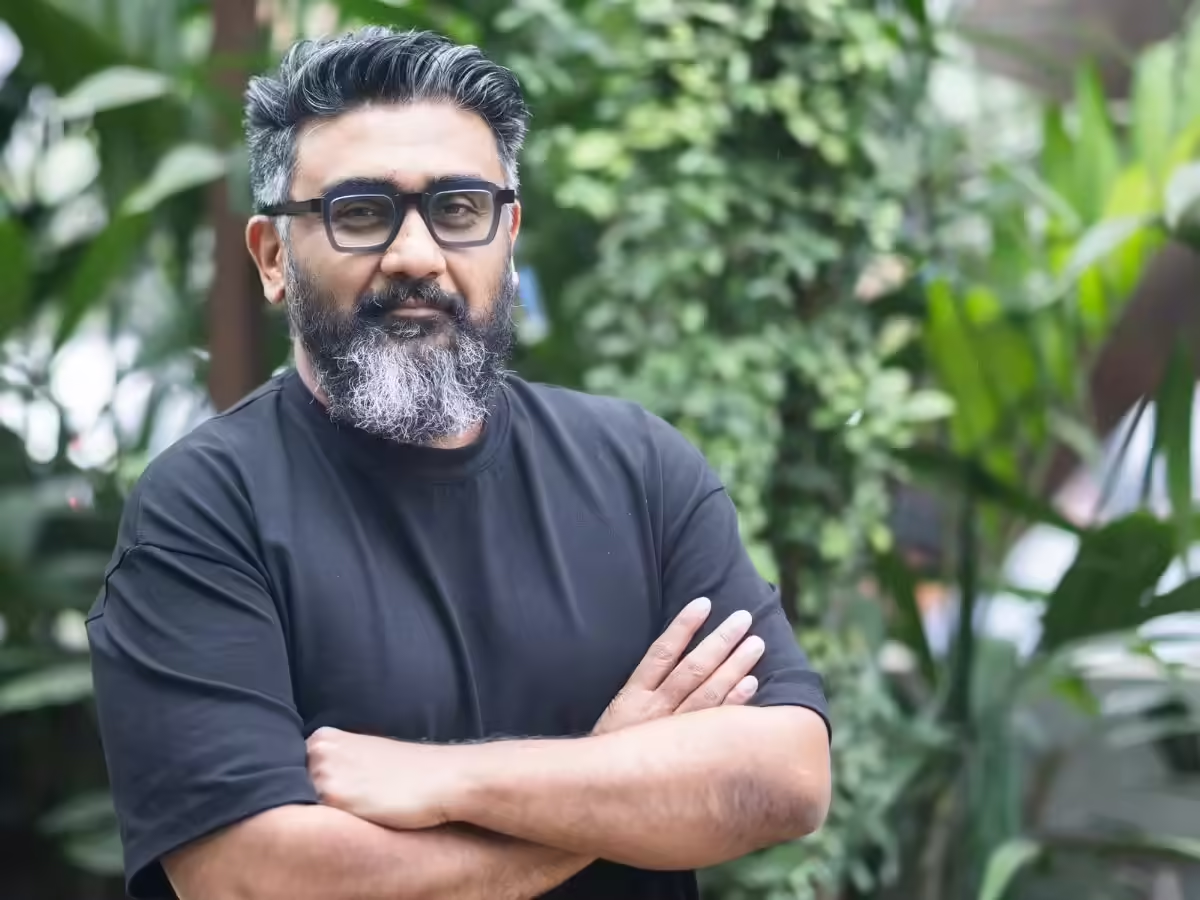
The transaction splits into two parts: $400 million in secondary stake purchases and $500 million in fresh primary capital. Post-money, CRED is now valued at Rs 43,239 crore, or approximately $4.5 billion. That marks a significant recovery from the company's last fundraise, which came at $3.5 billion, a 45% haircut from its 2022 peak of $6.4 billion.
What happens to CRED now?
Shah will retain his personal shareholding in CRED, remaining the single largest individual shareholder with a stake now below 20%. Miten Sampat, who has led strategy and finance at the company since 2020, has been appointed interim CEO.
Meta joins CRED's cap table as a minority investor with less than 20% ownership. Notably, Meta will not have access to CRED's customer information, a detail the company emphasized in its announcement.
“I am stepping back and @miten steps in as interim CEO, partnered with an incredibly talented team. He has been heading strategy and finance and suffering me since 2020. I'm stepping away from the operating role and will continue as a shareholder. My commitment doesn't change. Just the role.”
— Kunal Shah, on X
Why is Meta betting on an Indian fintech founder?
Will Cathcart, who led WhatsApp for seven years, has stepped down from the role. In announcing his departure, Cathcart wrote that "WhatsApp is in the strongest position it's ever been" and that this felt like the right moment to transition. Meta CEO Mark Zuckerberg confirmed Cathcart will move to a new role within the company.
The timing makes strategic sense for Meta. India is WhatsApp's largest market globally, with over 500 million users. Shah's deep understanding of Indian consumer behavior, payments infrastructure, and high-value user segments could prove critical as Meta pushes WhatsApp Pay and commerce features in the region.
Shah's track record extends beyond CRED. He previously founded FreeCharge, the mobile recharge platform he sold to Snapdeal for $400 million in 2015. He has become one of the most visible voices in Indian startup circles, known for his threads on consumer psychology and business fundamentals.
Coursera's AI challenge: convincing people learning still matters
In a separate interview, Coursera CTO Mustafa Furniturewala addressed the existential question facing edtech in the AI era. The core challenge, he argued, is not content creation but convincing people that structured learning still has value when AI makes information instantly accessible.
“It's not possible to put the people who require learning in front of a chatbot and expect them to learn. The grounding from the expert content, as well as the pedagogy that's behind learning, is still important.”
— Mustafa Furniturewala, Coursera CTO
Furniturewala criticized much of edtech's AI focus as misplaced. The industry obsesses over model benchmarks, he said, while the real opportunity sits in the application layer. The bottleneck is not access to AI models but whether organizations have the skills to use them effectively.
India remains Coursera's second-largest market globally, with over 35 million learners. The country now leads the world in generative AI learning on the platform, with more than four million GenAI enrollments.
AI startups drive 21% hiring surge in India

India's AI startups are hiring aggressively. As of May, they posted a 21% year-on-year jump in hiring, nearly double the broader startup ecosystem's 12% growth rate.
The surge spans engineering, product, research, and customer-facing roles. Recruitment firms report that mandates have increased sharply over the past year, driven by fresh funding rounds, new product launches, and rising enterprise demand for generative AI, agentic AI, and automation solutions.
Info Edge doubles down on AI and deeptech
Info Edge, the company behind Naukri.com and an early backer of Zomato, is increasing its bets on AI and deeptech startups. The pivot reflects a broader pattern among established Indian tech investors seeking exposure to the next generation of high-growth opportunities.
Logicity's Take
This deal signals Meta's realization that WhatsApp's future lies in commerce and payments, not just messaging. Shah built CRED by understanding exactly what makes Indian high-income users engage with financial products. That playbook translates directly to WhatsApp Pay's ambitions. But the real test is whether Shah, who thrived as a founder with full control, can operate within Meta's corporate structure. The $900 million price tag suggests Zuckerberg is willing to pay a premium for that answer.
Frequently Asked Questions
Who is replacing Kunal Shah as CRED CEO?
Miten Sampat has been appointed interim CEO. He has led strategy and finance at CRED since 2020.
What is CRED's new valuation after Meta's investment?
The deal values CRED at approximately $4.5 billion post-money, up from its last round at $3.5 billion.
Will Meta have access to CRED customer data?
No. Meta will hold less than 20% of CRED and will not have access to the company's customer information.
Who did Kunal Shah replace at WhatsApp?
Will Cathcart, who led WhatsApp for seven years, stepped down. He is transitioning to a new role within Meta.
Does Kunal Shah still own shares in CRED?
Yes. Shah retains his personal shareholding and remains the single largest individual shareholder, though his stake is now below 20%.
Another major platform leadership perspective on creator and user relationships
Need Help Implementing This?
Logicity provides enterprise intelligence on tech industry movements, leadership transitions, and market strategy. Subscribe to our newsletter for daily analysis delivered to your inbox.
Source: Tech-Economic Times
Huma Shazia
Senior AI & Tech Writer
Produced with AI assistance and reviewed by the Logicity editorial team. Learn more in our Editorial Policy.