Key Takeaways
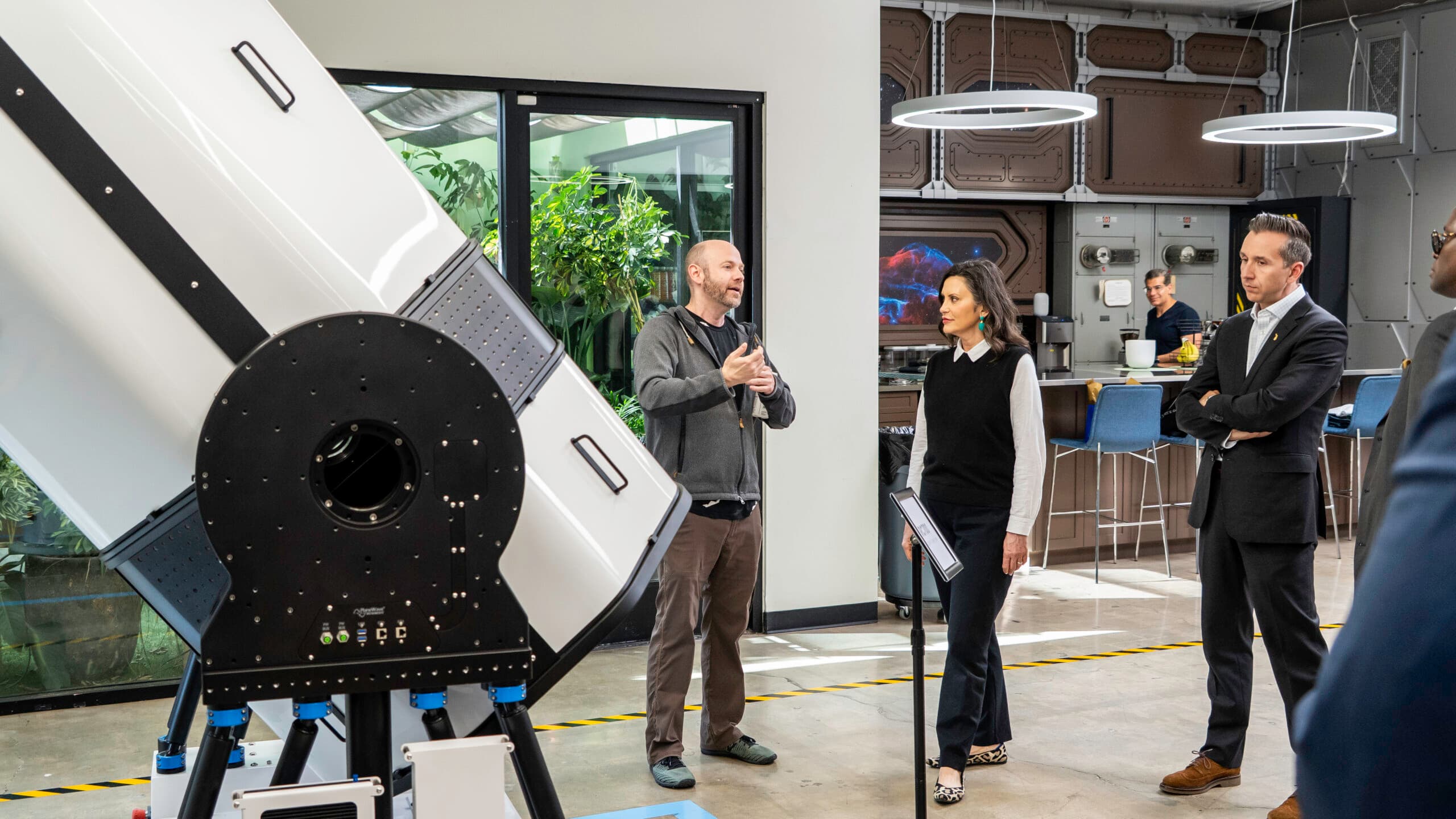
- Dan Roelker, who helped develop US offensive cyberwarfare tools at DARPA, now runs Observable Space, a telescope and optics company founded in 2025
- The company builds ground-based systems to receive laser communications from satellites and orbital data centers
- Roelker's career spans Sourcefire (acquired by Cisco for $2.7 billion), SpaceX software development, and crypto/NFTs
Dan Roelker spent a decade breaking into computer systems. He built cyberweapons for DARPA. He wrote code for SpaceX. He dabbled in crypto and NFTs. Now, at 48, he's building telescopes in rural Virginia.
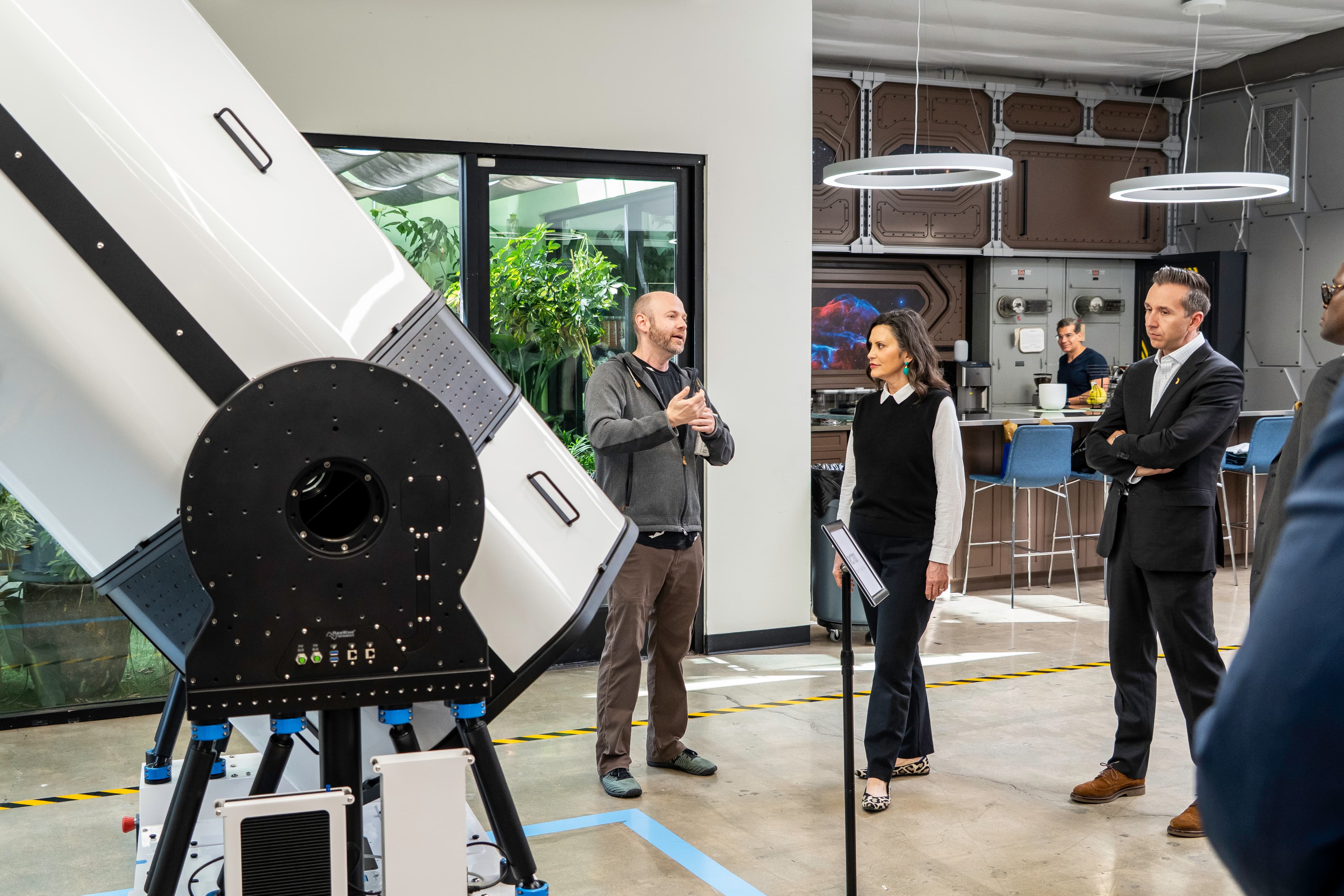
His new company, Observable Space, wants to win what Roelker calls the ground-based space race. The company builds advanced optics and software to capture laser light beamed down from satellites and, increasingly, orbital data centers. "If you can control light, you can control space," Roelker told Ars Technica from an overlook in Virginia's Blue Ridge foothills. "So it's basically a race for who is collecting the most light."
Why ground stations matter for space data
The logic is straightforward. Satellites generate enormous amounts of data. Traditional radio links can't keep up. Laser communications, or lasercom, can transmit data at dramatically higher rates, but the light needs somewhere to land. That's where ground stations come in.
The problem gets bigger with orbital data centers. Companies are planning to put computing infrastructure in space, partly for latency advantages, partly because cooling is free in the vacuum. All that processed data needs a fast path back to Earth. Roelker sees Observable Space filling that gap with precision telescopes and the software to make them work.

"The new space race is going to be on the ground," he said. The winners, in his view, will be whoever can capture the most photons from orbit.
From hacking to DARPA's cyberwarfare program
Roelker's path to telescopes started in late-1990s hacking culture. Growing up working-class in small-town Pennsylvania, he discovered computers and The Anarchist Cookbook. He studied math and philosophy at a private university in Maryland, which baffled his family. "What are you going to do with that? How are you going to be able to build a house with that?" they asked.
He took a research job at Johns Hopkins Applied Physics Laboratory before graduating. A stable 40-year career stretched ahead. He walked away from it.
In May 2002, Roelker became a founding developer at Sourcefire, a network security startup. Cisco acquired the company in 2013 for $2.7 billion. But by then, Roelker had already moved on to offense.
He took cyberwarfare jobs at companies later acquired by BAE Systems and Raytheon. In early 2011, DARPA recruited him to manage its offensive cyber programs. He was in his early 30s, one of the youngest program managers in the agency's history.
His biggest project was called Plan X, military jargon for dominating the cyber battlespace. The Department of Defense had talked about cyber defense for years. Plan X was about attack. Roelker helped build tools to automate the execution of cyberattacks.
“It was a pretty big deal because it was one of the first public acknowledgements that the military was engaging in offensive cyberwarfare.”
— Dan Roelker on DARPA's Plan X program
The detour through gaming, SpaceX, and crypto
After four years at DARPA, Roelker wanted something different. He moved to Los Angeles in early 2014 to work on League of Legends, then the world's most popular PC game. The game's client software needed fixing, and Riot Games hired him.
He played mid lane, maining Diana. But the workplace didn't suit him. Riot Games, swimming in League's success, lacked the urgency Roelker craved. He left for SpaceX, where he eventually led software development.
SpaceX was a different animal. The pace matched his appetite. But Roelker kept moving. He spent time in crypto and NFTs during the boom years, though the Ars Technica profile doesn't detail what projects consumed him there.
What Observable Space actually builds
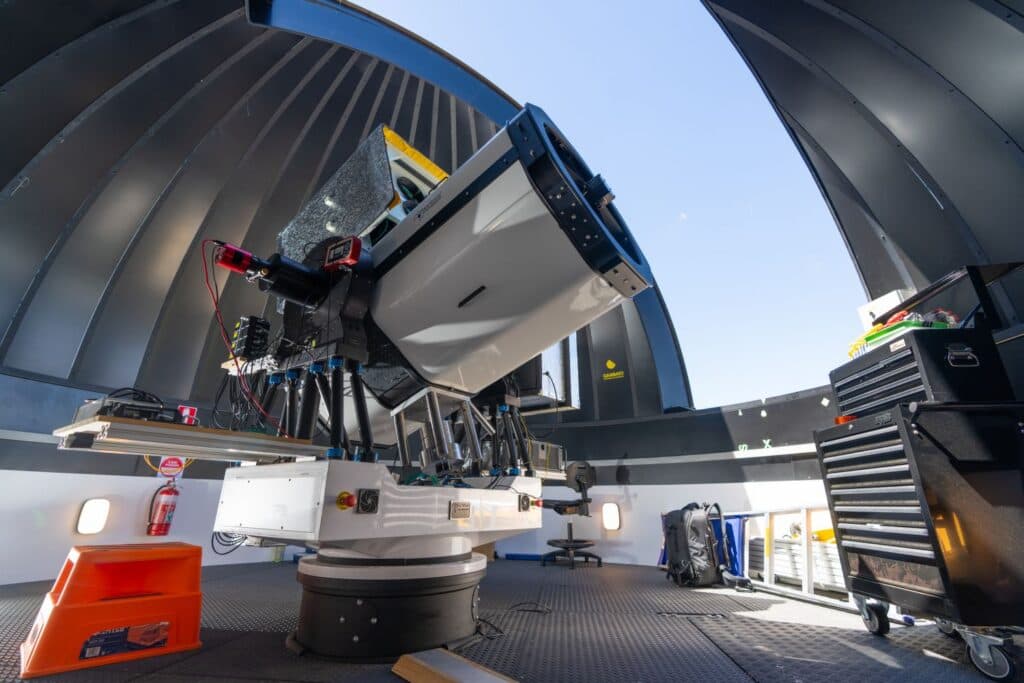
Roelker cofounded Observable Space in 2025. The company makes ground-based optical systems, essentially telescopes designed to receive laser communications from spacecraft. But the hardware is only half the product. Roelker's background is software, and Observable Space writes the code that makes precision optics work in real-world conditions.
The applications range from downloading high-resolution Earth observation data to tracking the growing swarm of satellites in low orbit. Collision avoidance requires knowing exactly where thousands of objects are at any moment. Light, properly captured, tells you.
The market is real. Companies like SpaceX, Amazon's Project Kuiper, and dozens of smaller operators are launching constellations that need ground infrastructure. Orbital data centers, still nascent, could multiply demand.
The bet on photons
Roelker frames his career as a series of obsessions with control. Controlling networks through hacking. Controlling battlespace through cyber offense. Now, controlling space through light. Each pivot seems abrupt until you see the thread: finding leverage points where small advantages compound.
Whether Observable Space becomes the Sourcefire of space infrastructure remains to be seen. The company is young, the market is crowded, and Roelker has bounced between industries before. But he's betting that whoever collects the most photons will own the next era of space communications.
Frequently Asked Questions
What is Observable Space?
Observable Space is a company founded in 2025 by Dan Roelker that builds ground-based telescopes and optical systems for receiving laser communications from satellites and orbital data centers.
What is laser communication (lasercom) for satellites?
Lasercom uses laser light instead of radio waves to transmit data between spacecraft and ground stations. It enables much higher data rates than traditional radio links, making it essential for data-intensive applications like Earth observation and orbital computing.
What was DARPA's Plan X program?
Plan X was a DARPA initiative focused on offensive cyberwarfare capabilities. Dan Roelker managed the program, which developed tools to automate cyberattacks. It was one of the first public acknowledgements that the US military engaged in offensive cyber operations.
What is Sourcefire and why does it matter?
Sourcefire was a network security company that Dan Roelker helped found in 2002. It developed widely deployed intrusion detection systems. Cisco acquired Sourcefire for $2.7 billion in 2013.
Why are ground stations important for space data?
Satellites and orbital data centers generate massive amounts of data that must be transmitted to Earth. Ground stations equipped with optical systems capture laser transmissions, enabling high-bandwidth data transfer from orbit.
Logicity's Take
Roelker's bet on optical ground infrastructure is well-timed. The satellite industry's shift from radio to laser communications is accelerating, and the bottleneck is increasingly on Earth, not in orbit. SpaceX already uses laser links between Starlink satellites. Amazon's Kuiper plans the same. But all that data needs ground receivers, and there aren't enough. Observable Space is positioning itself at that chokepoint. The question is whether a 2025 startup can compete with established players like ATLAS Space Operations and Amazon's own ground station network. Roelker's edge, if he has one, is software. Making precision optics work reliably in variable atmospheric conditions is as much a software problem as a hardware one.
Another founder making an unexpected career pivot at the top of their field
Need Help Implementing This?
If you're building space infrastructure or evaluating optical communication systems for your satellite operations, our team can connect you with the right technical partners. Contact Logicity's advisory desk for introductions to ground station providers and space communications experts.
Source: Ars Technica
Manaal Khan
Tech & Innovation Writer
Produced with AI assistance and reviewed by the Logicity editorial team. Learn more in our Editorial Policy.