Four astronauts splashed down in the Pacific Ocean on April 10, 2026, after traveling farther from Earth than any human beings in history. The Artemis II crew shattered a 56-year-old distance record set by Apollo 13, journeying nearly 253,000 miles from our planet during their 10-day lunar flyby mission. This marks the first time humans have ventured beyond low Earth orbit since 1972.
Key Takeaways
- The Artemis II crew traveled 252,756 miles from Earth, breaking the distance record set by Apollo 13 astronauts in 1970
- This was the first crewed mission to venture beyond low Earth orbit in more than half a century
- Christina Koch became the first woman to travel to the Moon, while Jeremy Hansen became the first non-American on a lunar mission
- The successful test flight clears the path for Artemis III, which will land astronauts on the lunar surface
In This Article
- A Historic Splashdown Caps Off a Record-Breaking Journey
- How Four Astronauts Shattered a 56-Year-Old Space Record
- A Crew of Firsts: Women, International Partners, and New Frontiers
- Ten Days That Changed Space Exploration: The Mission Timeline
- Eyes on Artemis III: The Next Giant Leap
- The Engineering Marvel That Brought Them Home
A Historic Splashdown Caps Off a Record-Breaking Journey
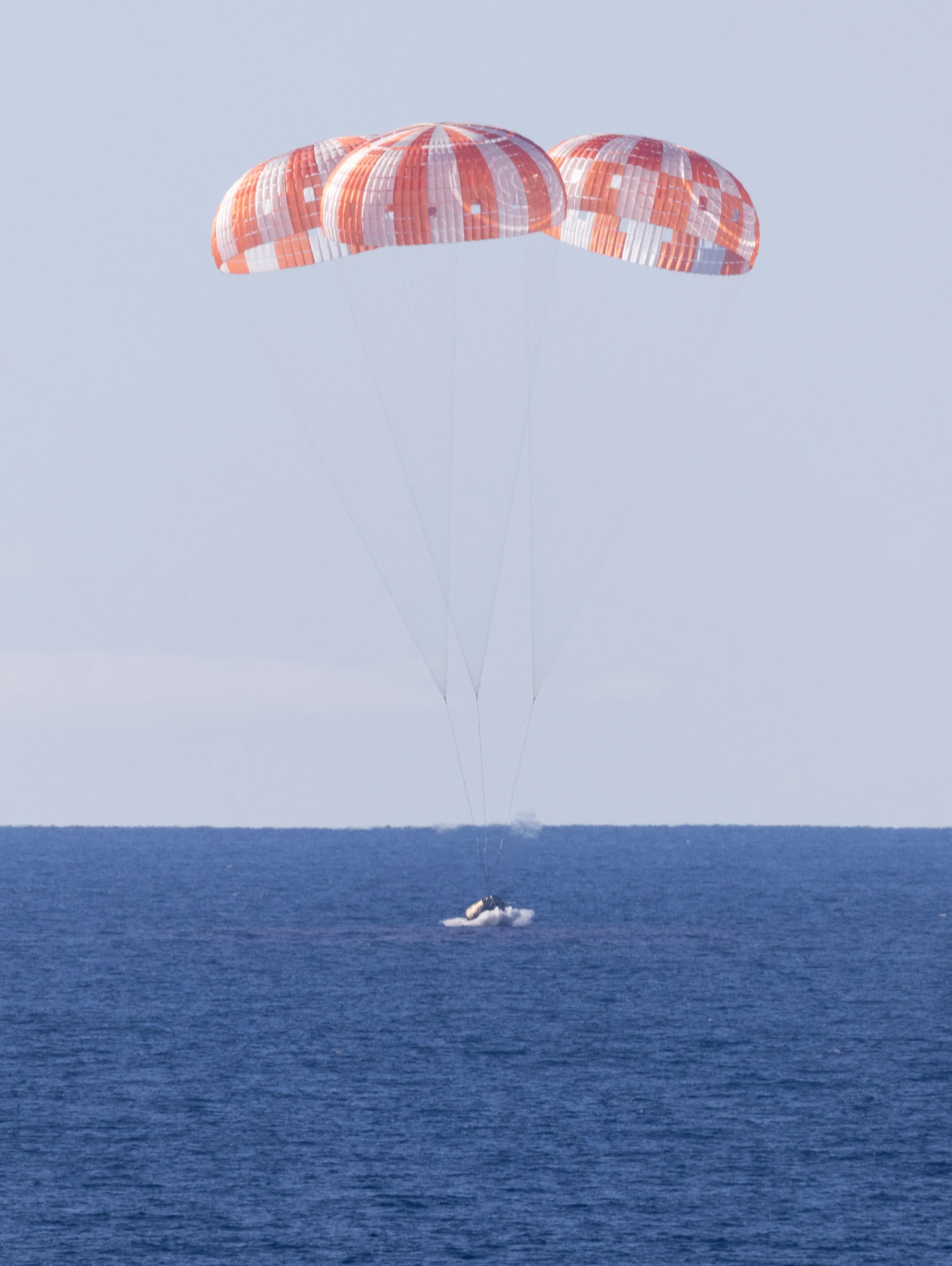
At 5:07 p.m. Pacific Time on Friday, the Orion spacecraft — nicknamed 'Integrity' by its crew — hit the waters of the Pacific Ocean just off the San Diego coast. Inside were four astronauts who had just accomplished something no human beings had done in over five decades: they went to the Moon and came back.
- The crew traveled a total of 694,481 miles during their nearly 10-day mission, reaching speeds of approximately 25,000 miles per hour during reentry
- Recovery teams from NASA and the U.S. military extracted the astronauts in open water and transported them via helicopter to the USS John P. Murtha for medical evaluations
- All four crew members were reported in good health and scheduled to return to Johnson Space Center in Houston on April 11
How Four Astronauts Shattered a 56-Year-Old Space Record
On April 6, six days into their mission, the Artemis II crew passed a milestone that had stood since the troubled days of Apollo 13. They ventured 248,655 miles from Earth — and kept going. By the time they reached their farthest point, they had traveled nearly 253,000 miles from home, surpassing the previous record by more than 4,000 miles.
- Apollo 13's distance record of roughly 248,655 miles had stood unchallenged since April 1970, when that crew famously used a lunar gravity assist to return home after an onboard explosion
- The Artemis II spacecraft came within 4,067 miles of the lunar surface at its closest approach — close enough to see craters in stunning detail through the capsule windows
- Unlike Apollo 13's emergency flyby, this was a planned trajectory designed to test every system aboard Orion before future landing missions
A Crew of Firsts: Women, International Partners, and New Frontiers
The Artemis II crew wasn't just breaking distance records — they were breaking barriers. Commander Reid Wiseman led a team that included several historic 'firsts' in human spaceflight, signaling a new era of diversity in lunar exploration.
- Christina Koch became the first woman to travel to the vicinity of the Moon, adding to her already impressive résumé that includes the longest single spaceflight by a woman
- Jeremy Hansen of the Canadian Space Agency became the first non-NASA astronaut to participate in a lunar mission, marking a milestone for international space cooperation
- Victor Glover, who previously served as pilot on SpaceX's Crew-1 mission to the ISS, became only the second Black astronaut to fly beyond low Earth orbit
Ten Days That Changed Space Exploration: The Mission Timeline
The journey began on April 1, 2026, when NASA's massive Space Launch System rocket ignited with 8.8 million pounds of thrust at Kennedy Space Center. What followed was a carefully choreographed dance between human ingenuity and cosmic mechanics.
- Launch occurred at 6:35 p.m. from the historic Launch Pad 39B — the same complex that sent Apollo missions to the Moon decades ago
- On day two, after confirming all spacecraft systems were healthy, the crew fired Orion's main engine to set course for their lunar flyby trajectory
- The mission included deploying four CubeSats from international partners into Earth orbit, demonstrating Artemis's role in broader scientific collaboration
- Throughout the flight, astronauts manually tested spacecraft controls and evaluated life support, navigation, propulsion, and habitability systems
Eyes on Artemis III: The Next Giant Leap
With Artemis II successfully completed, NASA isn't wasting any time looking ahead. The agency has already begun assembling hardware for Artemis III, which will attempt something that hasn't happened since December 1972 — landing humans on the lunar surface.
- Artemis III will utilize SpaceX's Starship as a lunar lander, requiring additional test flights and development before the crewed mission can proceed
- NASA's long-term vision includes establishing a permanent lunar base, with Administrator Jared Isaacman declaring the agency's intent to 'never give up the Moon again'
- The successful performance of Orion's heat shield, life support, and reentry systems during Artemis II provides critical validation for future landing missions
- International partners including the European Space Agency and Canadian Space Agency will continue playing key roles in upcoming Artemis missions
The Engineering Marvel That Brought Them Home
Returning from the Moon isn't as simple as pointing your spacecraft at Earth and hoping for the best. The Artemis II reentry pushed Orion to its limits, with the capsule screaming through the atmosphere at speeds that would vaporize most objects.
- Entry flight director Rick Henfling confirmed the spacecraft reached peak velocities of 24,664 miles per hour — roughly 32 times the speed of sound
- Orion's heat shield, the largest ever built for a spacecraft designed to carry humans, protected the crew from temperatures exceeding 5,000 degrees Fahrenheit
- The entry, descent, and landing systems all performed exactly as designed, validating years of engineering work by teams across fourteen countries
- This successful test flight marks the first time a crew has flown aboard both the Space Launch System rocket and the Orion spacecraft
“Reid, Victor, Christina, and Jeremy, welcome home, and congratulations on a truly historic achievement.”
— Jared Isaacman, NASA Administrator
“As the first astronauts to fly this rocket and spacecraft, the crew accepted significant risk in service of the knowledge gained and the future we are determined to build.”
— Jared Isaacman, NASA Administrator
“The entry, descent, and landing systems performed as designed and the final test was completed as intended. This moment belongs to the thousands of people across fourteen countries who built, tested, and trusted this vehicle.”
— NASA Associate Administrator
“With Artemis II complete, focus now turns confidently toward assembling Artemis III and preparing to return to the lunar surface, build the base, and never give up the Moon again.”
— Jared Isaacman, NASA Administrator
Final Thoughts
The safe return of the Artemis II crew marks more than just the end of a successful test flight — it represents humanity's renewed commitment to becoming a multi-world species. For the first time in over half a century, we've proven that we can still reach the Moon and come back safely. The technology works. The international partnerships are solid. And most importantly, we have astronauts willing to take the risks necessary to push our boundaries outward. As the Artemis III hardware comes together and plans for a permanent lunar presence take shape, one thing is clear: the Moon is no longer just a destination for flags and footprints. It's becoming a stepping stone to something much bigger.
Sources & Credits
Originally reported by NASA
Huma Shazia
Senior AI & Tech Writer
Produced with AI assistance and reviewed by the Logicity editorial team. Learn more in our Editorial Policy.