The NASA Artemis II mission has successfully completed its 10-day journey to the Moon and back, marking a major milestone in space exploration. The crew of four astronauts splashed down in the Pacific Ocean, bringing back valuable insights and paving the way for future lunar missions. With this achievement, NASA is one step closer to returning humans to the Moon and establishing a sustainable presence in space.
Key Takeaways
- NASA's Artemis II mission successfully completed its 10-day journey to the Moon and back
- The crew of four astronauts splashed down in the Pacific Ocean, bringing back valuable insights
- The mission paves the way for future lunar missions and establishes a sustainable presence in space
In This Article
- Mission Overview
- Spacecraft and Crew
- Mission Objectives
- Splashdown and Recovery
- Reaction and Impact
- Future Plans
Mission Overview
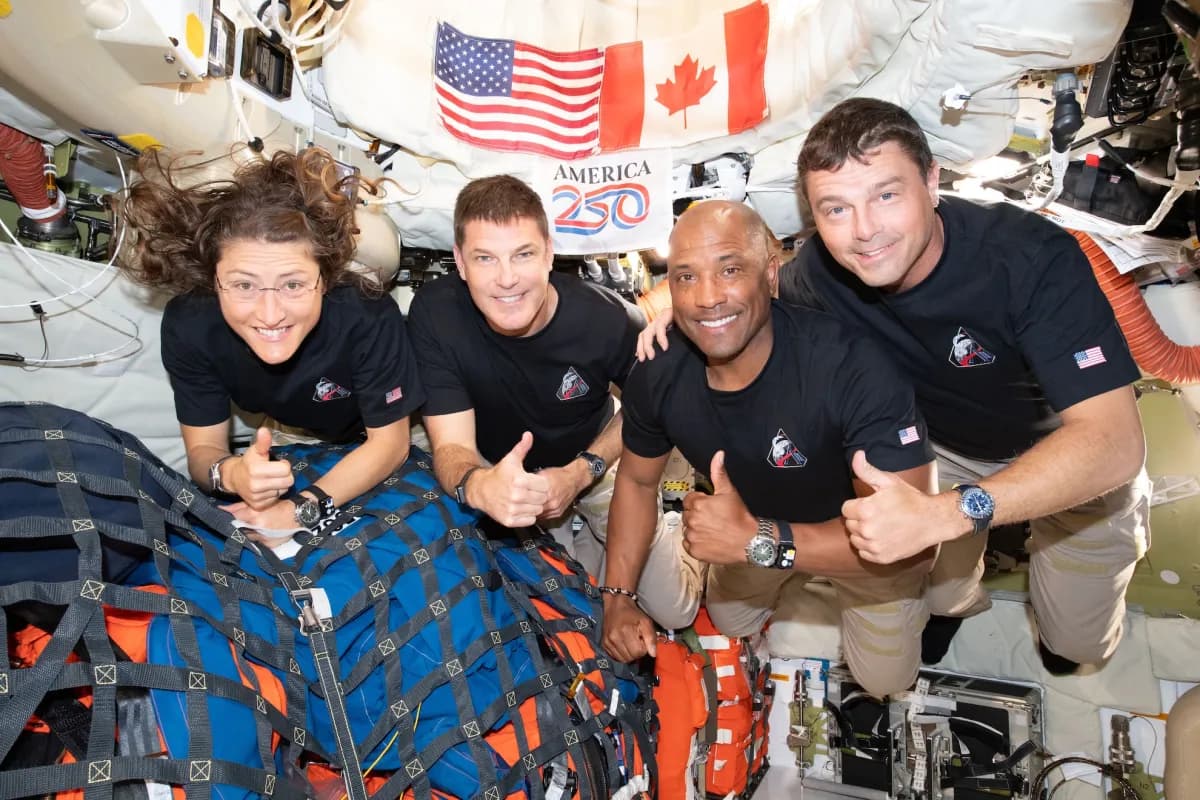
The NASA Artemis II mission was a groundbreaking journey that took four astronauts on a 10-day trip to the Moon and back. The crew, consisting of Commander Reid Wiseman, pilot Victor Glover, and mission specialists Christina Koch and Jeremy Hansen, traveled farther from Earth than humans ever have before, reaching an estimated 252,760 miles from our planet.
- The mission was the first to send humans to the Moon's orbit in over 50 years
- The crew orbited the Moon, taking photos and identifying new craters
And splashdown!
— NASA Administrator Jared Isaacman (@NASAAdmin) April 11, 2026
America is back in the business of sending astronauts to the Moon and bringing them home safely.
Reid, Victor, Christina, and Jeremy did an outstanding job. These talented astronauts inspired the world and represented their space agencies and nations as… pic.twitter.com/wOioBBvGhX
Spacecraft and Crew
The Artemis II mission was crewed by four experienced astronauts who played a crucial role in the success of the mission. The spacecraft, named Integrity, was designed to withstand the harsh conditions of space and provide a safe and healthy environment for the crew.
- The crew was composed of three Americans and one Canadian
- The spacecraft was equipped with state-of-the-art technology to support the crew's needs
Mission Objectives
The Artemis II mission had several key objectives, including testing the capabilities of the spacecraft and crew, gathering data on the Moon's surface, and paving the way for future lunar missions. The crew successfully completed all their objectives, bringing back valuable insights and data that will inform future missions.
- The crew took photos of never-before-seen parts of the Moon's surface
- They witnessed a total solar eclipse, a rare and spectacular event
Splashdown and Recovery
After completing their mission, the crew splashed down in the Pacific Ocean, marking the end of their 10-day journey. The recovery process was successful, with the crew emerging from the spacecraft in good health and spirits.
- The spacecraft splashed down in the Pacific Ocean off the coast of San Diego, California
- The crew was recovered by a team of NASA personnel and support staff
Reaction and Impact
The success of the Artemis II mission has been widely praised, with NASA Administrator Jared Isaacman describing it as a 'perfect mission'. The mission marks a major milestone in space exploration and paves the way for future lunar missions.
- The mission demonstrates America's commitment to space exploration and its ability to send astronauts to the Moon and bring them back safely
- The success of the mission has significant implications for the future of space travel and exploration
Future Plans
With the success of the Artemis II mission, NASA is now looking to the future and planning its next steps. The agency is committed to returning humans to the Moon and establishing a sustainable presence in space.
- NASA plans to build a Moon base and prepare for future missions to Mars and beyond
- The agency is working to develop new technologies and capabilities to support its future plans
“America is back in the business of sending astronauts to the Moon and bringing them home safely”
— Jared Isaacman, NASA Administrator
“These were the ambassadors to the stars that we sent out there”
— Jared Isaacman, NASA Administrator
Final Thoughts
The success of the Artemis II mission marks a major milestone in space exploration and paves the way for future lunar missions. With this achievement, NASA is one step closer to returning humans to the Moon and establishing a sustainable presence in space. As the agency looks to the future, it is clear that the possibilities are endless, and the next great chapter in space exploration is just beginning.
Sources & Credits
Originally reported by TechCrunch — Graham Starr
Manaal Khan
Tech & Innovation Writer
Produced with AI assistance and reviewed by the Logicity editorial team. Learn more in our Editorial Policy.