Key Takeaways
- The Boring Company is reportedly raising $4 billion at a $20 billion valuation, up from $5.7 billion in 2022
- The startup has faced nearly 800 environmental violations in Nevada and serious worker injuries
- Expansion plans include tunnel networks under Nashville, Dubai, Baltimore, Chicago, and Los Angeles
Elon Musk's tunneling venture The Boring Company is in talks to raise $4 billion at a $20 billion valuation, according to The Wall Street Journal. If the deal closes at these terms, it would mark a 3.5x jump from the company's $5.7 billion valuation in 2022. The round hasn't closed and terms could still change.
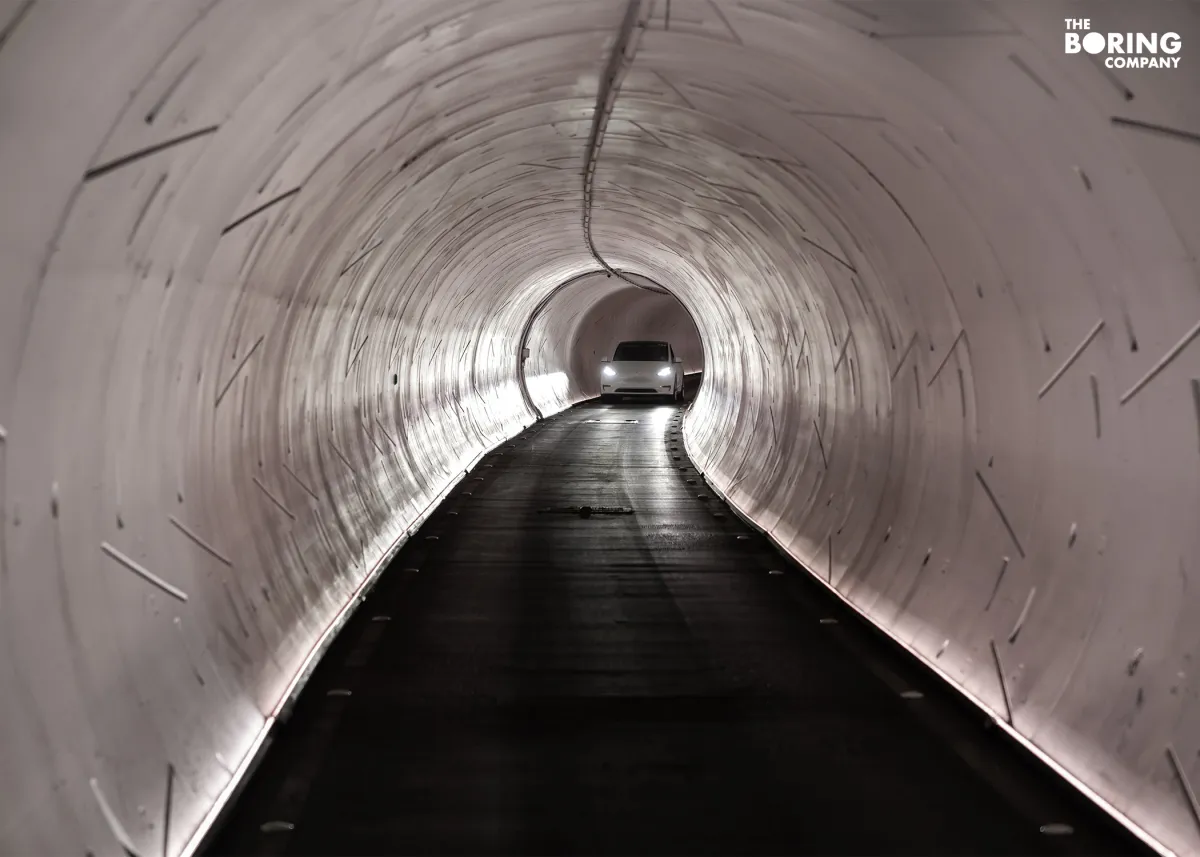
The valuation surge comes despite a mixed operational record. The Boring Company's Las Vegas loop, which shuttles passengers in Teslas through tunnels beneath the convention center, represents its only functioning system. Meanwhile, the startup has racked up nearly 800 environmental violations in Nevada and faced scrutiny over serious worker injuries.
Why investors are still bullish on tunnels
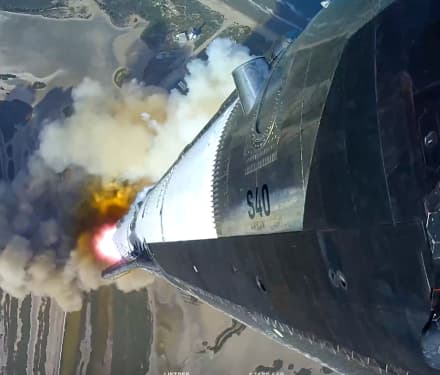
The jump from $5.7 billion to $20 billion in four years raises an obvious question: what changed? The answer lies partly in Musk's broader orbit. SpaceX recently completed what the WSJ describes as the largest IPO ever, though shares have since dipped. The Boring Company spun out of SpaceX in 2018, and the rocket company's success creates a halo effect for Musk's other ventures.
There's also the expansion pipeline. The Boring Company has announced plans to build tunnel networks beneath Nashville and Dubai. The WSJ reports the startup has pitched projects in Baltimore, Chicago, and Los Angeles as well. For investors, that pipeline represents optionality. A single successful municipal contract could generate billions in revenue over decades.
Infrastructure spending remains politically popular across both parties in the U.S., and cities facing chronic traffic congestion are hunting for solutions. Traditional tunneling costs run between $100 million and $1 billion per mile. The Boring Company claims it can cut that substantially, though independent verification of those claims remains thin.
Another high-profile startup navigating complex funding dynamics
The operational baggage Boring Company carries
A $20 billion valuation demands scrutiny of what the company has actually delivered. The Las Vegas Convention Center loop opened in 2021, combining tunnels and surface routes to move attendees between venues. It works, but capacity has been modest compared to traditional mass transit.
More concerning: Nevada regulators reported in 2025 that The Boring Company violated environmental regulations nearly 800 times. The violations ranged from dust control failures to improper waste disposal. For a company promising to revolutionize urban infrastructure, that regulatory track record matters. Cities evaluating Boring Company bids will factor in compliance risk.
Worker safety is another issue. Tunnel workers have suffered serious injuries on Boring Company projects, though specific incident details remain limited in public reporting. Construction work is inherently dangerous, but injuries invite regulatory attention and can slow project timelines. Both problems compound in municipal contracting, where political blowback from workplace accidents can derail entire projects.
How the $20B stacks up against comparable infrastructure plays
The Boring Company's proposed valuation puts it in rare company among private infrastructure startups. For context, most venture-backed construction tech companies operate at valuations between $500 million and $3 billion. The Boring Company's $20 billion figure implies either exceptional growth expectations or a significant Musk premium.
| Company | Sector | Last Known Valuation | Status |
|---|---|---|---|
| The Boring Company | Tunneling/Transit | $20B (proposed) | Private, fundraising |
| SpaceX | Aerospace | $350B+ (post-IPO) | Public |
| Katerra (defunct) | Modular Construction | $4B (peak) | Bankrupt 2021 |
| Veev | Modular Construction | $1.2B | Private |
Katerra's collapse looms as a cautionary tale. The modular construction startup hit a $4 billion valuation before filing for bankruptcy in 2021. Physical infrastructure companies face different scaling dynamics than software. You can't copy-paste a tunnel. Each project requires local permitting, new equipment deployment, and site-specific engineering.
What this signals for infrastructure startups
The Boring Company's fundraise, if it closes, suggests venture capital appetite for infrastructure hasn't dried up. But the capital is concentrating in founder-led companies with existing operational proof points, however limited. For infrastructure founders seeking Series B or beyond, the lesson is straightforward: show a working system, even a small one.
The Las Vegas loop may be modest, but it exists. Passengers have ridden it. That tangible proof point matters more than pitch decks full of renders. First-time infrastructure founders often underestimate how much physical evidence moves capital allocation decisions.
Municipal sales cycles also demand patience. The Boring Company announced its Nashville project years ago, and construction hasn't started. Baltimore, Chicago, and Los Angeles remain at the pitch stage. Founders building B2G (business-to-government) companies should plan for sales cycles measured in years, not quarters.
Markets are adjusting to capture high-value tech companies like those in Musk's portfolio
The Musk factor in startup valuations
Strip away the tunnels and you're left with a founder premium question. Would The Boring Company command $20 billion under different leadership? Probably not. Musk's track record with Tesla and SpaceX gives investors confidence that execution problems are solvable, even when current operations show cracks.
That confidence has limits. SpaceX's stock dipped significantly after its IPO, suggesting public markets apply more skepticism than private investors. If The Boring Company eventually seeks public listing, it may face a similar repricing.
For now, the company operates in private market conditions where narrative can outrun numbers. The $4 billion raise would give it substantial runway to pursue multiple city contracts simultaneously, potentially breaking the chicken-and-egg problem where cities want proven technology but proof requires city contracts.
Logicity's Take
The $20 billion valuation is a bet on Musk's execution ability, not current operations. The Las Vegas loop works but hasn't scaled. Nearly 800 environmental violations suggest process gaps that will need fixing before major cities sign contracts. For infrastructure founders, the real signal is that venture capital will pay up for physical proof points, even flawed ones. If you're building hardware or real-world systems, get something running before your Series A closes. The Boring Company's entire valuation thesis rests on one convention center tunnel.
What happens if the deal doesn't close
The WSJ explicitly notes the deal hasn't closed and terms could change. Fundraising announcements that don't materialize happen regularly, especially at this valuation scale. If the round falls through or closes at a lower price, it would raise questions about private market appetite for infrastructure bets.
A down round would also complicate employee retention. Tunnel engineering talent is scarce, and equity compensation loses its shine when valuations drop. The Boring Company competes with traditional construction firms that can offer stable cash compensation without startup risk.
Frequently Asked Questions
What is The Boring Company's current valuation?
The Boring Company was last valued at $5.7 billion in 2022. The company is reportedly in talks to raise funding at a $20 billion valuation, though the deal hasn't closed.
How much money is The Boring Company trying to raise?
According to The Wall Street Journal, The Boring Company is seeking to raise $4 billion in its current funding round.
Where does The Boring Company operate?
The Boring Company currently operates a tunnel loop system in Las Vegas. It has announced expansion plans for Nashville and Dubai, and has pitched projects in Baltimore, Chicago, and Los Angeles.
What problems has The Boring Company faced?
Nevada regulators reported that The Boring Company committed nearly 800 environmental violations. The company has also faced scrutiny over serious worker injuries on its projects.
When did The Boring Company spin out of SpaceX?
The Boring Company spun out of SpaceX in 2018 and has operated as a separate entity since then.
Need Help Implementing This?
If you're building an infrastructure startup and need guidance on fundraising strategy, B2G sales, or scaling physical operations, reach out to Logicity's founder network. We connect early-stage founders with operators who've navigated municipal contracting and hardware scaling challenges.
Source: Venture Capital News | TechCrunch / Anthony Ha
Manaal Khan
Tech & Innovation Writer
Produced with AI assistance and reviewed by the Logicity editorial team. Learn more in our Editorial Policy.