Key Takeaways
- ASML shares have risen over 40% year-to-date on AI chip demand
- The company is the only maker of EUV lithography systems needed for advanced AI chips
- SK Hynix ordered $8 billion in ASML tools, Samsung placed $4-5 billion in orders
- Analysts expect Q1 revenue near the top of the 8.2-8.9 billion euro guidance range
- China export restrictions remain a key risk factor for future growth
Read in Short
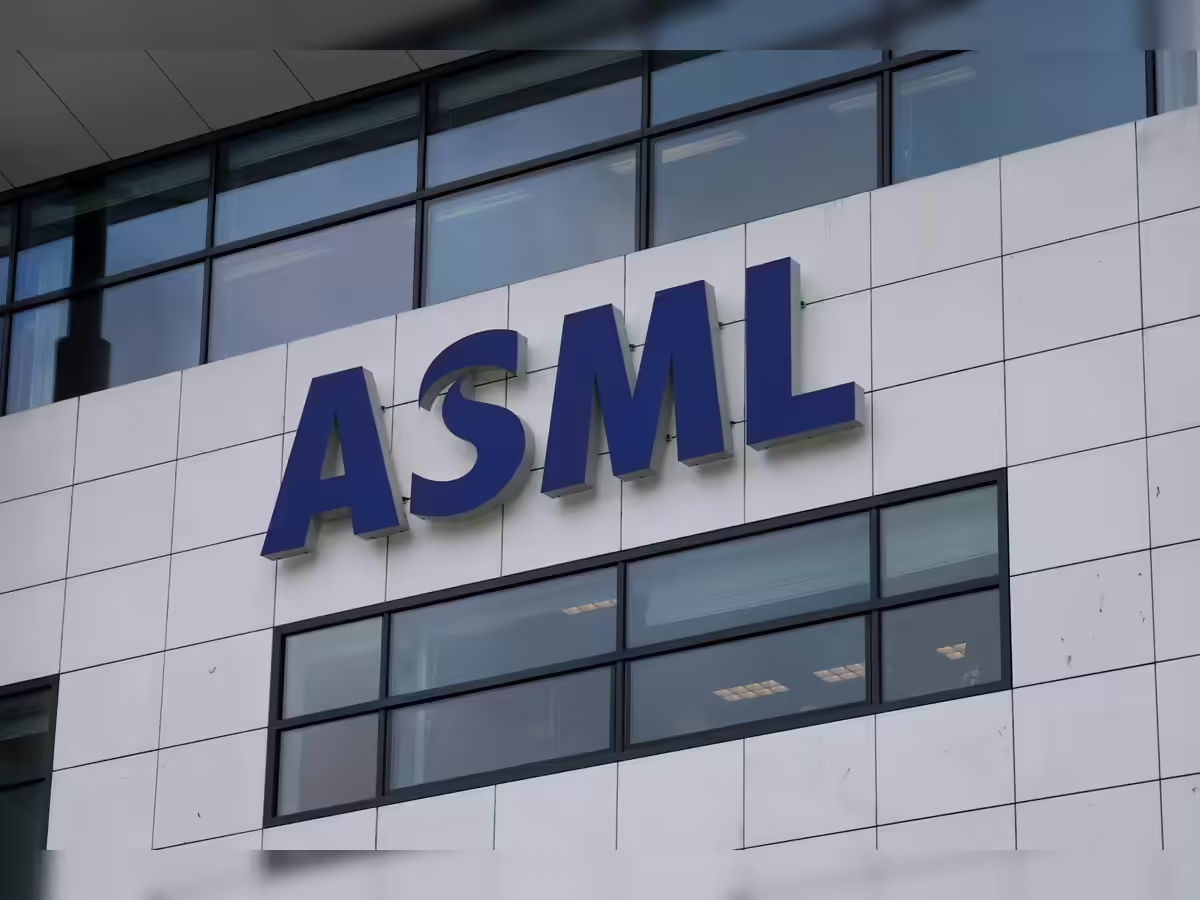
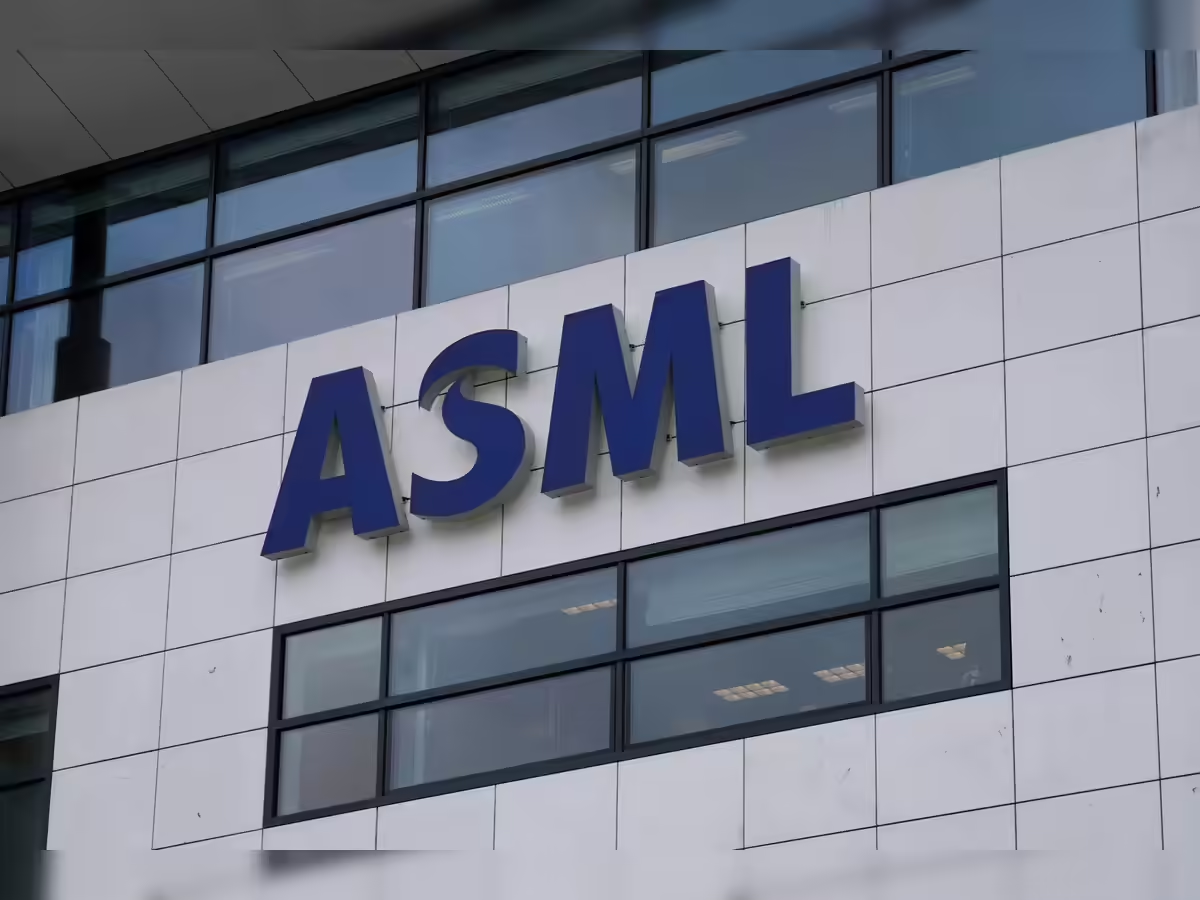
ASML, the Dutch company that makes the machines used to manufacture AI chips, has seen its stock jump 40% this year. With Wednesday's Q1 earnings report approaching, investors expect strong results and potentially raised 2026 forecasts as memory chip makers rush to meet AI demand.
Here's a question that keeps popping up in investment circles: if you want to profit from the AI gold rush, should you buy the gold or the shovels? ASML investors have clearly made their choice. And so far, it's paying off big time.
The Netherlands-based company isn't a household name like Nvidia or Apple. Most people have never heard of it. But here's the thing: every single advanced AI chip in the world passes through ASML's machines at some point during manufacturing. Every. Single. One.
What Does ASML Actually Do?
ASML makes lithography machines. Think of them as incredibly precise printers that etch microscopic patterns onto silicon wafers. These patterns become the transistors that power your chips. The company's extreme ultraviolet (EUV) lithography systems are the most advanced on the planet, and ASML is the only company that makes them.
That's not a typo. The sole maker. No competition. Zero.
When TSMC manufactures processors for Nvidia's AI GPUs or Apple's iPhone chips, they're using ASML equipment. Samsung and Intel? Same deal. If you want to make a chip smaller than 7 nanometers, you need EUV technology. And if you need EUV technology, you're calling ASML.
“We're investing in the picks and shovels of the AI revolution.”
— Richard Carlyle, Equity Investment Director at Capital Group
Capital Group holds just over 3% of ASML's shares, so they've got skin in the game. Carlyle mentioned his firm is closely watching EUV shipment volumes as a key indicator of where things are headed.
The Numbers Behind the Hype
Let's talk actual figures, because the recent order book is genuinely impressive.
- SK Hynix placed an $8 billion order for ASML tools
- Samsung followed with roughly $4-5 billion in orders
- Q1 2025 revenue guidance sits at 8.2 to 8.9 billion euros
- Full-year 2025 forecast ranges from 34 to 39 billion euros ($40-46 billion)
- 2024 revenue hit 32.7 billion euros for comparison
Analysts polled by LSEG expect about 8.5 billion euros in Q1 revenue and 37.6 billion euros for the full year. But several analysts told Reuters they think ASML will land near the top end of those ranges. Why? Because customers are rushing to install machines they ordered months ago and upgrade existing ones.
“It's no secret that the quarter will be strong. We've had a lot of incremental positive news in the last month, like SK Hynix buying $8 billion in tools, or Samsung placing around $4-5 billion in orders.”
— Javier Correonero, Morningstar Analyst
The 'Picks and Shovels' Investment Strategy
You've probably heard the old story about the California Gold Rush. The people who got reliably rich weren't the miners panning for gold. They were the folks selling pickaxes, shovels, and jeans to the miners. Levi Strauss made his fortune that way.
ASML occupies a similar position in the AI boom. Nvidia gets all the headlines for its GPUs. OpenAI and Anthropic grab attention for their models. But ASML quietly profits from all of them, because none of those chips exist without its machines.
Why ASML's Monopoly Matters
EUV lithography systems cost upwards of $150 million each and can take more than a year to build. The technology is so complex that no other company has managed to develop a competing product. This gives ASML extraordinary pricing power and predictable long-term demand.
The downside? Those 12+ month build times mean ASML can't just ramp up production overnight when demand spikes. There's always a question of whether they can keep up with orders as data centers multiply and AI chip demand keeps climbing.
Another look at how AI is reshaping industries and driving major executive moves
The China Problem
Not everything is rosy for ASML investors. There's a geopolitical elephant in the room that nobody can ignore.
The US has been tightening restrictions on semiconductor technology exports to China, and ASML has been caught in the crossfire. The company has already stopped shipping its most advanced EUV machines to Chinese customers. But there's always the risk of further restrictions that could cut off more revenue.
ASML actually stopped reporting new bookings after last quarter. They said the numbers caused unnecessary volatility in their share price on earnings days. Analysts now say that'll put more focus on ASML's own sales forecasts, which could get lifted to the top half of their 2026 range.
✅ Pros
- • Absolute monopoly on EUV lithography technology
- • Locked-in customer base including TSMC, Samsung, Intel
- • AI boom driving sustained demand for advanced chips
- • Strong balance sheet and pricing power
- • Long-term contracts provide revenue visibility
❌ Cons
- • Machines take 12+ months to build, limiting growth speed
- • China export restrictions could reduce addressable market
- • Single-source supplier risk if any production issues arise
- • High stock valuation prices in a lot of future growth
- • Dependent on continued AI infrastructure spending
What to Watch Wednesday
When ASML reports Q1 earnings this week, a few things will matter more than the headline numbers.
- Revenue guidance: Will they raise the top end of 2026 forecasts?
- EUV shipment volumes: How many advanced machines went out the door?
- China commentary: Any hints about future export restriction impacts?
- Capacity expansion: Can they speed up production to meet demand?
- Memory chip demand: Are SK Hynix and Samsung orders translating to installs?
The company's long-term growth assumptions call for 6% to 13% annual sales growth through 2030. That might sound modest for a company riding the AI wave. But remember, ASML already dominates its market. Growth at this scale compounds into something massive.
Should You Care About ASML?
Look, I'm not your financial advisor. But ASML represents an interesting case study in how to think about technology investments. The companies grabbing headlines aren't always the best bets. Sometimes the boring infrastructure players, the ones making the tools that everyone else depends on, offer better risk-adjusted returns.
ASML isn't cheap by any traditional metric. A 40% run-up this year means a lot of good news is already baked into the price. But the company's position as the sole supplier of critical technology gives it a moat that most tech companies would kill for.
The AI revolution needs chips. Chips need lithography. And lithography, at the cutting edge, means ASML. That simple chain of logic is why investors keep betting on this Dutch company that most people have never heard of.
Wednesday's earnings call should give us a better picture of where things stand. If ASML raises guidance, expect the stock to react. If they signal any trouble keeping up with demand or new China restrictions, that's worth watching too.
Either way, this is a company that'll keep mattering as long as the world keeps wanting more AI. And based on current trends, that's not changing anytime soon.
Source: Tech-Economic Times / ET
Manaal Khan
Tech & Innovation Writer
Produced with AI assistance and reviewed by the Logicity editorial team. Learn more in our Editorial Policy.