Key Takeaways
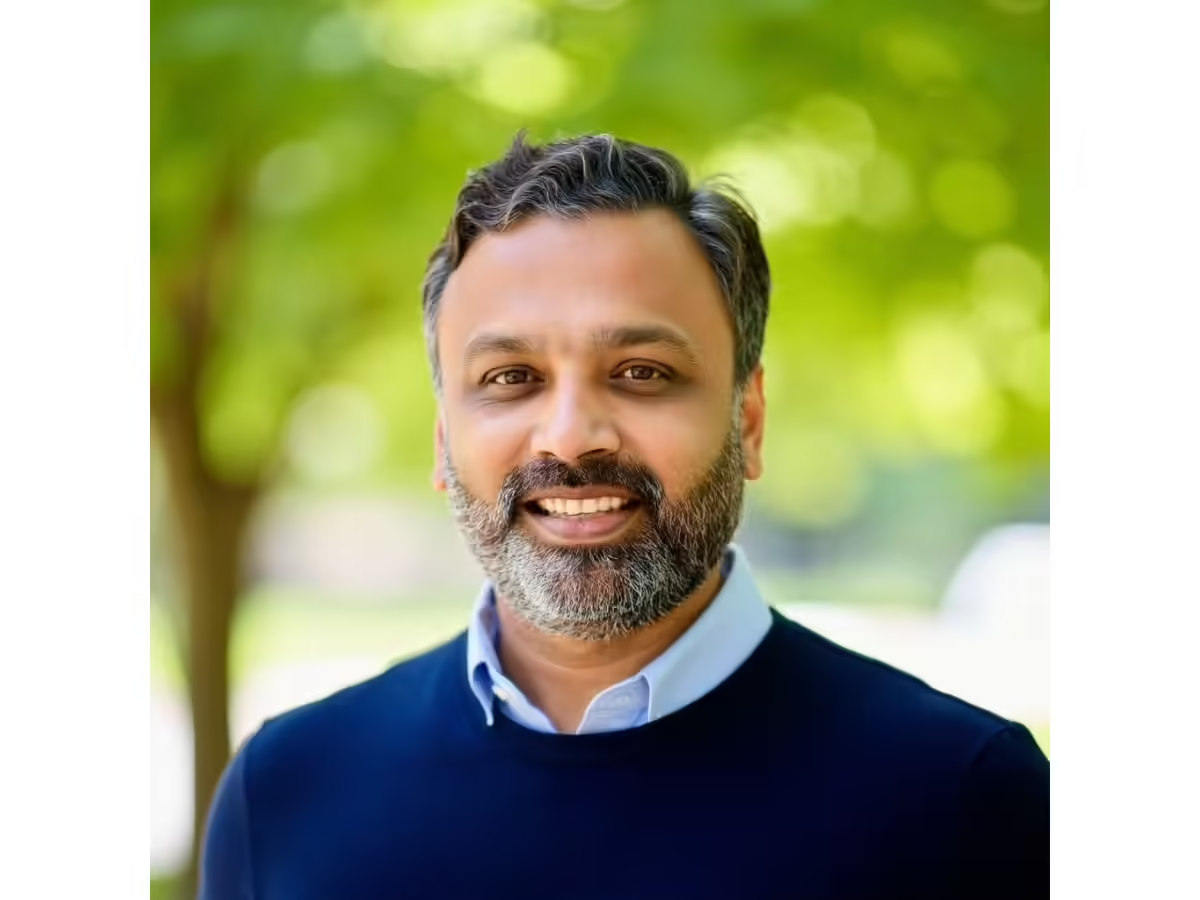
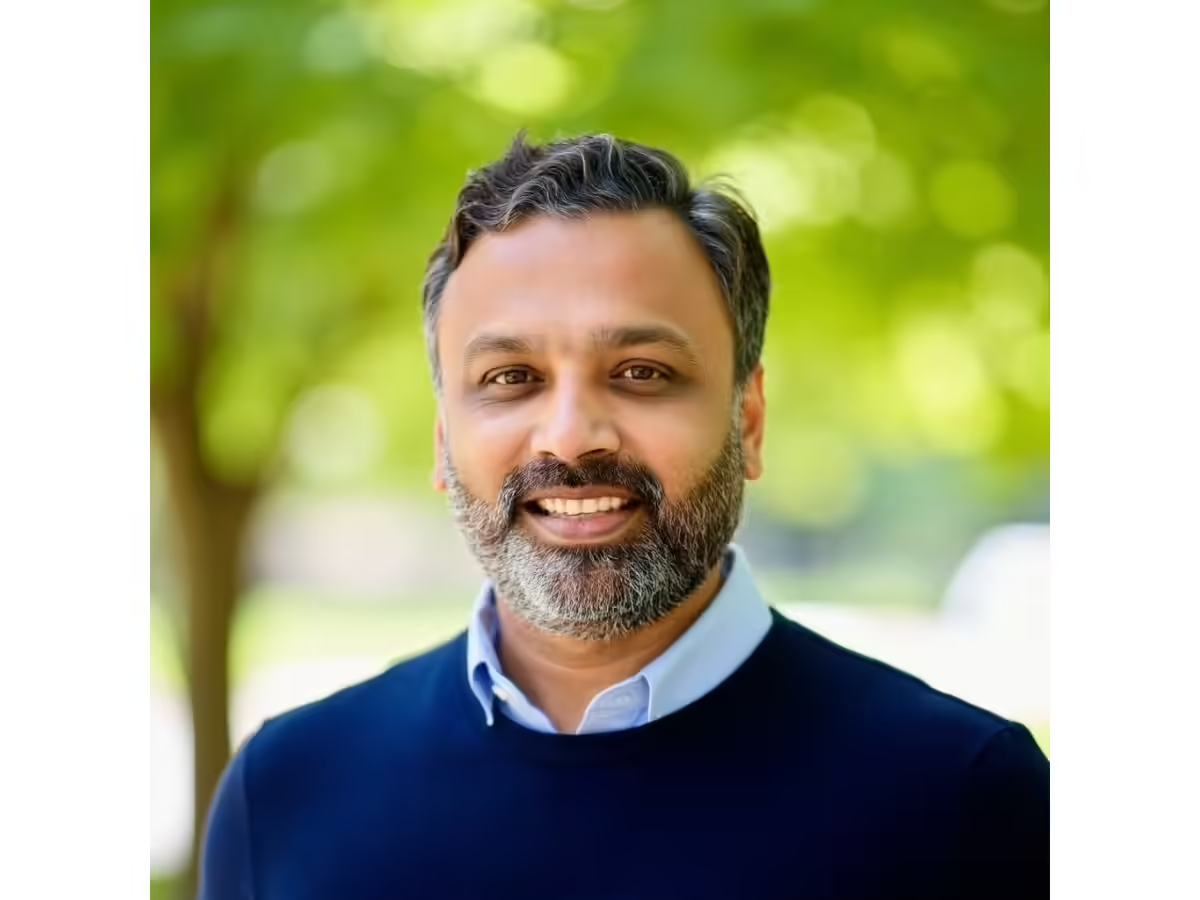
- Srijesh Kumar joins Practo from Salesforce where he led product engineering for industry cloud offerings
- Kumar will consolidate engineering, data, and product teams under one unified structure
- The appointment follows Practo's recent hire of Cijo George as VP of AI strategy
- Practo currently connects patients with over 700,000 doctors across 2,400+ cities globally
- The company is focusing on AI integration across patient discovery, care delivery, and follow-ups
Read in Short
Practo just poached a heavy hitter from Salesforce. Srijesh Kumar, who ran product engineering for Salesforce's industry cloud, is now Practo's global CPTO. His job? Unify all the tech teams and supercharge their AI capabilities as the company eyes bigger international markets.
So here's the thing about healthcare tech in 2026: everyone's racing to be the platform that actually makes AI useful for patients and doctors. Not just chatbots that spit out generic advice, but systems that genuinely change how healthcare works from booking to follow-up. Practo just made a pretty bold statement about where they're headed by bringing in someone with serious enterprise tech credentials.
Who is Srijesh Kumar?
If you've been following enterprise software at all, you know Salesforce doesn't exactly hand out VP titles like candy. Kumar led product engineering for their industry cloud offerings and managed their loyalty and promotions management products. That's the kind of experience that involves building systems that handle millions of transactions without breaking a sweat.
But his resume goes deeper than just Salesforce. We're talking leadership stints at Expedia Group, Punchh, Adobe, and Microsoft. The guy has basically done a tour of duty at every major tech company that deals with massive scale platforms. That's not an accident, and it's clearly what caught Practo's attention.
What's the Actual Plan Here?
The big structural change is consolidating engineering, data, and product teams under one roof. If that sounds like corporate reshuffling to you, it's actually more significant than it appears. When these teams operate in silos, you get products that don't quite work together and data that never gets properly used. Kumar's job is to fix that.
“We're at an inflection point in how technology is shaping healthcare globally, with AI redefining how systems are built, scaled, and experienced.”
— Shashank ND, Founder and CEO of Practo
The AI integration isn't just about adding some machine learning sprinkles on top of their existing app. Practo wants artificial intelligence baked into every step: patient discovery, decision-making support, care delivery, and post-treatment follow-ups. That's ambitious. Like, really ambitious.
What is a CPTO?
A Chief Product and Technology Officer combines two traditionally separate C-suite roles. Instead of having a CTO focused on technical infrastructure and a CPO focused on product strategy, a CPTO oversees both. This structure is increasingly popular at tech companies because it eliminates the friction between 'what we want to build' and 'how we build it.'
The Timing Isn't Random
This hire comes right after Practo brought in Cijo George as VP to lead their AI strategy. George came from Observe.AI, a company that specializes in conversation intelligence. So within a short span, Practo has added two executives whose entire focus is making their platform smarter.
And they're not the only healthtech company thinking this way. The whole sector is moving toward integrated, full-stack platforms. The days of standalone appointment booking apps are basically over. Patients want, and honestly deserve, something that handles their entire healthcare journey in one place.
Another Indian startup disrupting healthcare costs through innovative technology
Why Kumar Took the Job
“What drew me to Practo is the opportunity to work on problems that have a real, human impact at scale. Healthcare is one of the areas where technology can make a life-changing difference, not just in improving access but in reducing suffering and enabling better health outcomes.”
— Srijesh Kumar, Global CPTO at Practo
Look, executives say stuff like this all the time when they join new companies. But there's something to it here. Building loyalty programs at Salesforce is technically challenging, sure. But it's not exactly saving lives. Healthcare tech, when done right, actually matters in a way that most enterprise software doesn't.
The scale is what makes it interesting from a tech perspective too. Practo operates across India, the Middle East, and the US. Different healthcare systems, different regulations, different patient expectations. Building a platform that works across all of those is the kind of puzzle that gets engineers excited.
The Bigger Picture for Indian Healthtech
Practo was founded back in 2008, which makes it ancient by startup standards. They've survived multiple funding cycles, pivoted when needed, and built out infrastructure that includes hospital management software through their Insta platform. This isn't a company that's just figuring things out.
- Founded in 2008, one of India's oldest healthtech startups
- Operations span India, Middle East, and United States
- Offers both patient-facing services and B2B hospital management software
- Over 2,400 cities covered globally
The CPTO hire signals that Practo is entering its next phase. They've got the scale. They've got the market presence. Now they need the technical leadership to turn all that into something that actually pushes healthcare forward instead of just digitizing existing processes.
How major tech players are investing in AI across different industries
What This Means for Users
If you're a Practo user, you probably won't notice changes immediately. Platform architecture improvements and data infrastructure upgrades don't make for flashy app updates. But over time, expect the recommendations to get smarter, the matching between patients and doctors to improve, and follow-up care to become more proactive.
The real test will be whether Practo can use AI to solve problems that actually frustrate patients. Can they reduce the back-and-forth of finding the right specialist? Can they make post-treatment check-ins less annoying? Can they help doctors spend less time on paperwork and more time with patients? That's where the rubber meets the road.
The Competitive Angle
Healthtech is getting crowded. Every big tech company has some healthcare initiative, and startups are popping up constantly with AI-powered this or that. Practo's advantage is that they already have the network effects: the doctors, the patients, the hospitals using their software. Kumar's job is to make sure they don't lose that lead.
Bringing in someone from Salesforce is interesting because Salesforce basically wrote the playbook on platform businesses. They know how to build ecosystems that lock in users while still delivering genuine value. That's exactly what Practo needs as competition heats up.
Key Takeaway
This appointment is less about one person and more about where Practo is headed. They're betting that unified tech leadership and aggressive AI integration will be what separates winners from losers in healthtech over the next few years. Kumar is the person they've chosen to execute that bet.
The kicker? Healthcare is one of those industries where getting it right actually matters. If Practo pulls this off, it's not just good for their business. It's potentially good for millions of patients who need better access to care. That's worth paying attention to, regardless of whether you use their platform or not.
Source: Tech-Economic Times / ET
Manaal Khan
Tech & Innovation Writer
Produced with AI assistance and reviewed by the Logicity editorial team. Learn more in our Editorial Policy.