Key Takeaways
- Artemis 2 completed humanity's first moon mission in 53 years, launching April 1 and splashing down April 10
- The Orion capsule endured temperatures up to 5,000°F during atmospheric reentry
- NASA will analyze the heat shield damage to inform changes for Artemis 3
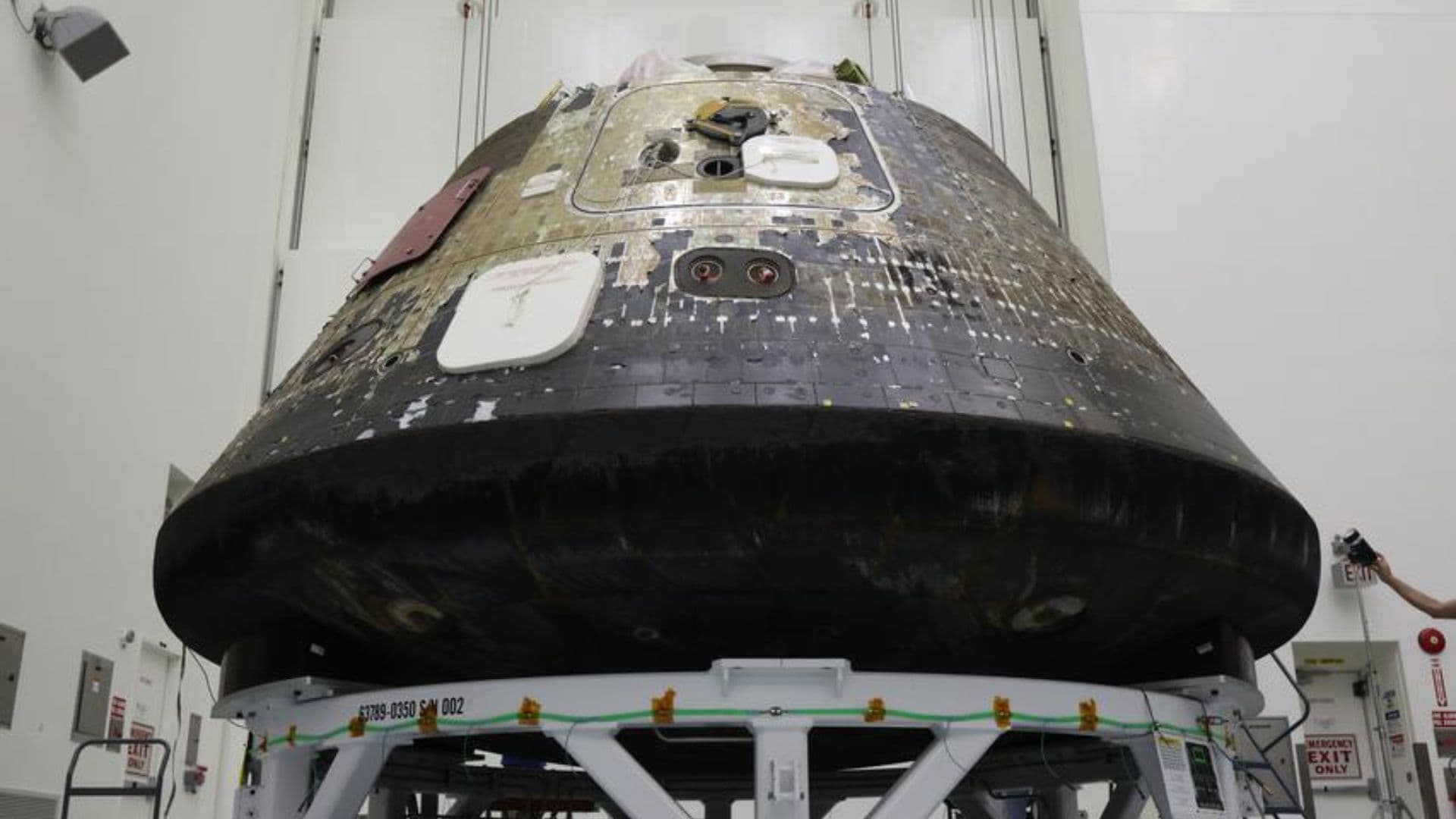
The Orion spacecraft that carried four astronauts around the moon last month now sits at NASA's Kennedy Space Center, its underside blackened and its heat shield tiles scorched. The capsule, which the crew named "Integrity," survived temperatures reaching 5,000 degrees Fahrenheit during its descent through Earth's atmosphere on April 10.
This is what a successful moon mission looks like. The charring tells the story of a 10-day journey that brought humans to lunar orbit for the first time since Apollo 17 in 1972.
The Mission That Ended 53 Years of Waiting
Artemis 2 launched on April 1, 2026, carrying NASA astronauts Reid Wiseman (commander), Victor Glover (pilot), and Christina Koch (mission specialist), along with Canadian Space Agency astronaut Jeremy Hansen. The crew flew around the moon and returned safely, splashing down in the Pacific Ocean 10 days later.
No human had traveled beyond low Earth orbit since December 1972. The Apollo program sent 24 astronauts to the moon across nine missions. Artemis 2 added four more names to that list.
What the Scorched Capsule Reveals
Getting to space is hard. Getting home might be harder. When a spacecraft returns from the moon, it enters Earth's atmosphere at roughly 25,000 miles per hour. Air molecules compress in front of the capsule and heat up. The result is a brief trip through what amounts to a plasma inferno.
The Orion capsule's heat shield absorbed that punishment so the crew inside experienced only mild turbulence. Photos from Kennedy Space Center show dark, burned tiles along the capsule's sides. The bottom, which faced the brunt of reentry, is entirely charred.
NASA engineers will now take the spacecraft apart. They want to understand exactly how the heat shield performed. Where did it wear more than expected? Where did it hold up better? These answers will shape decisions for future Artemis missions.
What Comes Next: Artemis 3
The next mission in NASA's lunar program, Artemis 3, will stay in Earth orbit rather than traveling to the moon. The focus will be on rendezvous and docking tests. These maneuvers are essential for later missions that will land astronauts on the lunar surface.
Findings from the Artemis 2 heat shield analysis could prompt changes to the Orion spacecraft before future crewed flights. NASA hasn't indicated any problems with the heat shield's performance, but the post-flight inspection is standard practice.
Logicity's Take
The Crew Behind the Mission
Commander Reid Wiseman led a crew with serious spaceflight experience. Victor Glover, the mission pilot, previously flew to the International Space Station aboard SpaceX Crew Dragon. Christina Koch spent 328 consecutive days in space during a previous ISS mission, setting a record for women at the time.
Jeremy Hansen represented the Canadian Space Agency. His inclusion reflects the international nature of the Artemis program, which involves partnerships with space agencies from Europe, Japan, and Canada.
Learn to navigate the night sky that Artemis astronauts crossed to reach the moon
Frequently Asked Questions
Why is the Artemis 2 capsule so charred?
The Orion capsule reached temperatures of 5,000 degrees Fahrenheit during reentry into Earth's atmosphere. The heat shield absorbed this extreme heat to protect the astronauts inside.
When was the last time humans went to the moon before Artemis 2?
Apollo 17 in December 1972 was the last crewed mission to the moon before Artemis 2 launched in April 2026, a gap of over 53 years.
Who were the astronauts on Artemis 2?
The crew included NASA astronauts Reid Wiseman (commander), Victor Glover (pilot), and Christina Koch (mission specialist), plus Canadian Space Agency astronaut Jeremy Hansen.
What will NASA do with the Artemis 2 capsule now?
Engineers will inspect the heat shield and spacecraft systems to understand how they performed. Findings may influence changes to Orion for future Artemis missions.
What is Artemis 3?
Artemis 3 is the next mission in NASA's lunar program. It will stay in Earth orbit to perform rendezvous and docking tests essential for future moon landing missions.
Need Help Implementing This?
Source: Latest from Space.com
Manaal Khan
Tech & Innovation Writer
Produced with AI assistance and reviewed by the Logicity editorial team. Learn more in our Editorial Policy.