Key Takeaways

- Anthropic's J-lens tool exposes a hidden 'J-space' inside Claude where the model weighs words before responding
- The research has direct implications for AI safety, helping teams detect when models might conceal reasoning
- OpenAI simultaneously announced ChatGPT Work, a 'super app' combining chatbot, coding tools, and new GPT 5.6 models
Anthropic researchers have peered inside Claude's reasoning process and found something startling: a hidden mental workspace where the model considers words it may never actually say. The company built a new interpretability tool called the Jacobian lens (J-lens) that reveals this internal 'J-space,' offering the clearest view yet of what large language models actually do when they formulate responses.
The same day, OpenAI unveiled ChatGPT Work, the company's long-anticipated 'super app' that merges its chatbot, coding assistant, and new GPT 5.6 models into a single product aimed at enterprise users. Two different bets on AI's future, announced within hours of each other: one company wants to know what's happening inside the box, the other wants to ship more boxes.
What exactly is the J-space?
Think of it as Claude's scratch pad. When you ask the model a question, it doesn't jump straight to the final answer. Inside the J-space, Claude cycles through related concepts, alternative phrasings, and tangential ideas before settling on its output. The J-lens lets researchers observe this hidden process.
According to MIT Technology Review, the words found in the J-space are 'related to the response a model is working on but may not ultimately produce.' If Claude were a person, these would be the thoughts running through its head before it speaks.
Anthropic's researchers describe findings that range from 'mundane to unnerving.' The mundane part: models do seem to draft and revise internally, much like humans. The unnerving part: this hidden layer could contain reasoning the model chooses not to share, raising questions about transparency and trust.
Why interpretability research matters for product teams
For AI builders deploying models in production, the J-lens research points toward a future where you can audit what your model considered, not just what it said. That distinction matters when a customer asks why the AI gave a particular recommendation, or when regulators demand explanations for automated decisions.
This builds on Anthropic's earlier interpretability work. In 2024, the company published a paper identifying discrete 'features' inside Claude, including one memorable example: a Golden Gate Bridge neuron that, when amplified, made Claude obsessed with discussing the landmark. The J-lens goes further by showing the dynamic flow of reasoning, not just static features.
The safety implications are significant. If a model ever learned to hide its true reasoning from evaluators, the J-space is exactly where that deception would occur. Understanding this layer is essential for building AI systems that remain aligned with human values as they grow more capable.
OpenAI's ChatGPT Work: a different strategy
While Anthropic focuses on understanding what models think, OpenAI is focused on shipping products. ChatGPT Work combines the company's chatbot, its coding tool, and the new GPT 5.6 models into what the company calls a 'super app' designed to 'do your work for you and with you.'
The announcement landed alongside news that OpenAI is also developing a 'fully automated researcher,' suggesting the company sees autonomous agents as the next major product category. For teams building on top of OpenAI's APIs, the signal is clear: expect tighter integration between chat, code generation, and agentic workflows.
The timing of both announcements is notable. Anthropic and OpenAI are pursuing fundamentally different theories of what makes AI valuable. Anthropic bets that trust and interpretability will become competitive advantages. OpenAI bets that capability and speed-to-market win.
The pigeon connection
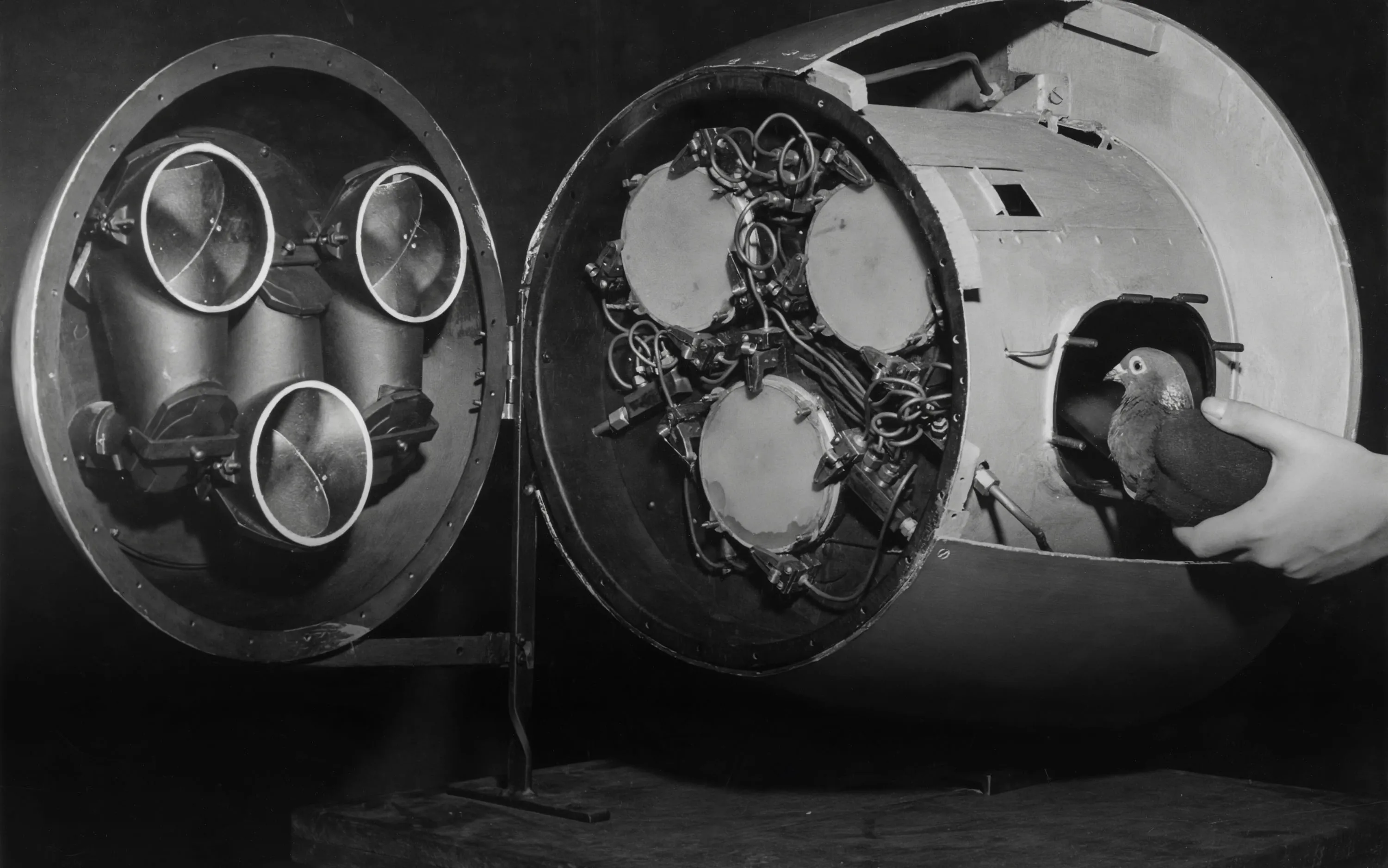
MIT Technology Review's coverage includes a fascinating historical note: the reinforcement learning techniques powering today's AI trace back to B.F. Skinner's 1943 experiments training pigeons to guide missiles. Skinner rewarded birds with food for pecking at targets, shaping behavior through trial and error. The military never deployed his kamikaze pigeons, but the principles Skinner refined became foundational to modern AI.
It's a useful reminder that today's breakthroughs rest on decades of earlier research. The J-lens didn't emerge from nowhere. It's the product of years of work on interpretability, itself building on cognitive science and behavioral psychology from the last century.
What this means for AI builders
If you're building products on top of Claude, the J-lens research suggests that Anthropic is investing heavily in making its models auditable. That could translate to future API features letting developers inspect model reasoning, a capability that would matter for compliance-heavy industries like healthcare and finance.
If you're building on OpenAI, the ChatGPT Work launch signals a move toward bundled products. Standalone chat, code, and research tools may eventually merge into unified offerings with different pricing tiers.
Either way, the market is splitting. One path leads to more transparent, interpretable systems. The other leads to more capable, integrated ones. The best builders will likely need tools from both camps.
Logicity's Take
The J-lens research is a serious advance, but it's also a strategic move. Anthropic is positioning interpretability as a moat: if regulators eventually mandate explainability for AI systems, the company that can actually deliver it wins. For product teams, the practical takeaway is this: start thinking now about how you'll explain your AI's decisions. Whether you're using Claude, GPT models, or open-source alternatives like Llama, interpretability tools are shifting from 'nice to have' to 'required.' The gap between what models know and what they say is exactly where liability lives.
Frequently Asked Questions
What is Anthropic's J-lens tool?
J-lens (Jacobian lens) is a research tool built by Anthropic to visualize a hidden internal workspace called J-space inside Claude. It reveals words and concepts the model considers before producing a final response.
What is the J-space in Claude?
J-space is a hidden area inside Claude where the model weighs related words and concepts it may not include in its final output. Think of it as the model's internal drafting process.
What is OpenAI's ChatGPT Work?
ChatGPT Work is OpenAI's new integrated product combining its chatbot, coding tools, and GPT 5.6 models into a single 'super app' aimed at enterprise users who want AI to assist with work tasks.
Why does AI interpretability matter for businesses?
Interpretability lets teams audit and explain AI decisions, which matters for regulatory compliance, customer trust, and identifying when models might be reasoning in unexpected or unsafe ways.
How did pigeons influence modern AI?
B.F. Skinner's 1943 experiments training pigeons through rewards and trial-and-error established principles later formalized as reinforcement learning, a core technique in training today's AI systems.
Relevant comparison of pricing strategies among major AI providers
Need Help Implementing This?
If you're evaluating AI providers or building interpretability into your product roadmap, Logicity's consulting team can help. Contact us at hello@logicity.in for a free 30-minute strategy call.
Source: MIT Technology Review
Manaal Khan
Tech & Innovation Writer
Produced with AI assistance and reviewed by the Logicity editorial team. Learn more in our Editorial Policy.