Key Takeaways
Why I Replaced My iPhone with a Flip Phone
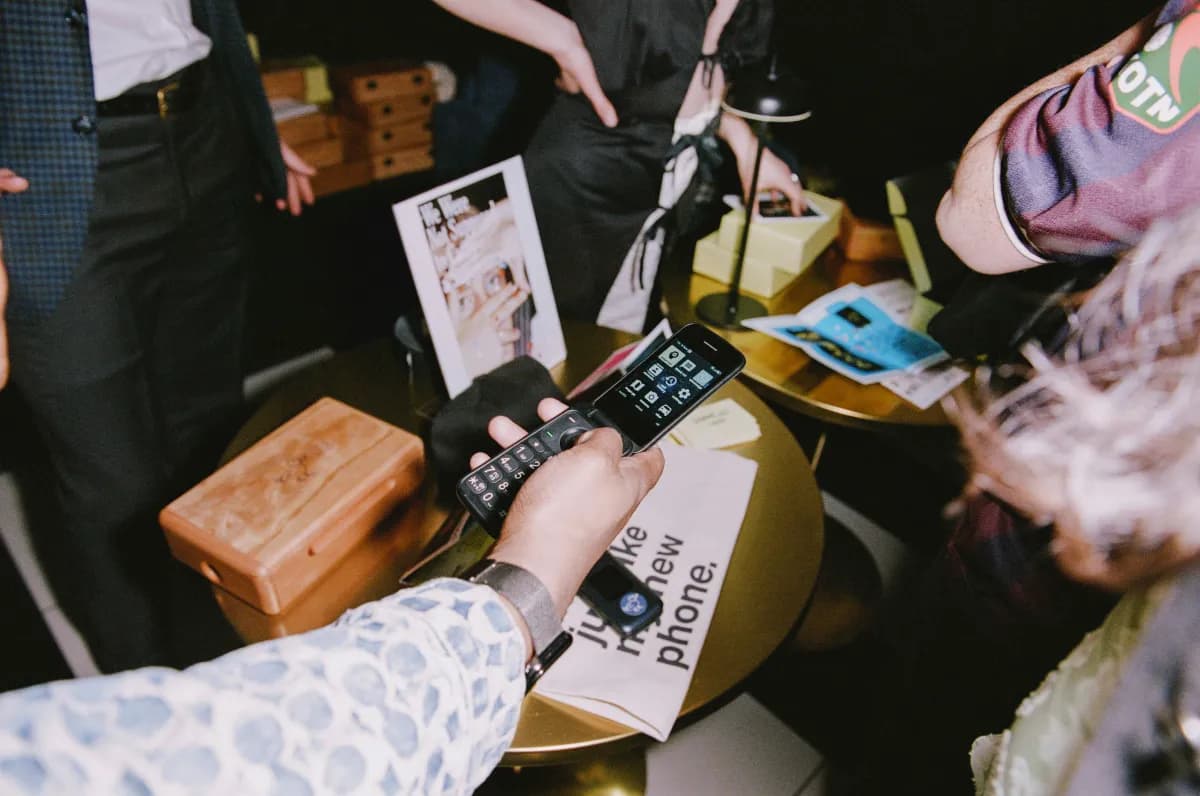
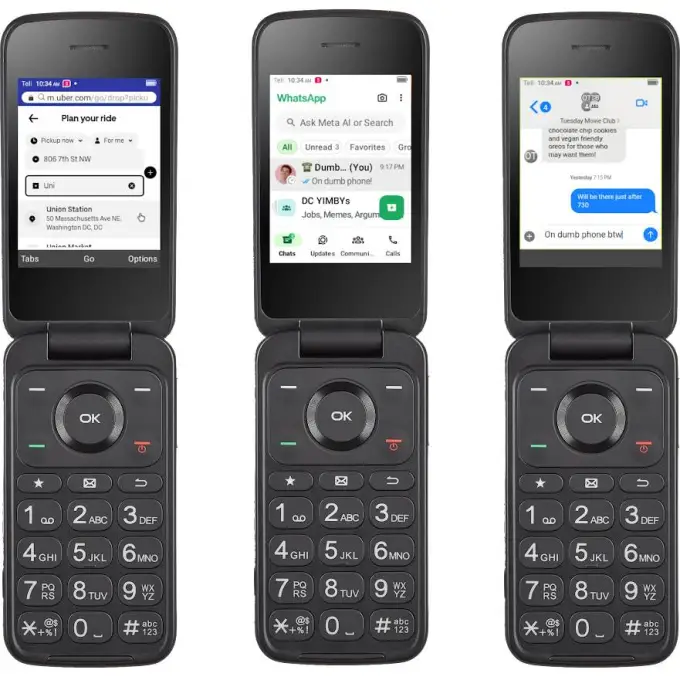
- Dumb Co loads custom software onto $20 TCL flip phones, enabling WhatsApp, Spotify, Uber, and even iMessage access
- The startup grew from Month Offline, a community challenge where people swap smartphones for flip phones
- The device syncs with your iPhone rather than replacing it, letting users forward calls and texts when they want to disconnect
Dumb Co, a startup that emerged from a viral digital detox challenge, is selling hacked flip phones loaded with custom software that lets users access WhatsApp, Spotify, Apple Music, Uber, and even iMessage. The pitch: leave your iPhone at home and actually talk to people.
The company grew out of Month Offline, a community challenge where participants swap their smartphones for flip phones. Lydia Peabody, now Dumb Co's founding CMO, first encountered the concept when she saw a friend pull out a flip phone at a party. She laughed. A year later, she quit her job as a licensed therapist to join the company.
“I did Month Offline, and I was like, 'Whoa, why am I suddenly not anxious? Am I feeling good?' I didn't even know that this is what I needed, and that spending this much time on my screen after work was causing me to feel so yucky.”
— Lydia Peabody, Founding CMO of Dumb Co
How does the Dumb Phone actually work?
Dumb Co takes a $20 TCL flip phone and loads its own software onto it. The result is a device that looks like something from 2005 but runs essential modern apps. Users get access to messaging through WhatsApp, music streaming via Spotify and Apple Music, ride-hailing through Uber, and, notably, iMessage through a third-party workaround. The company didn't elaborate on the technical details of the iMessage integration, though it likely runs through a service that bridges Apple's protocol.
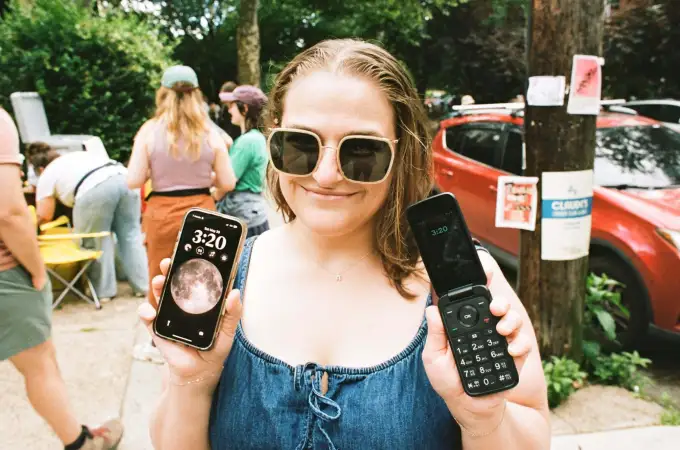
The phone syncs with your smartphone rather than replacing it entirely. Call forwarding and text forwarding can be toggled on and off, so you can redirect everything to the flip phone when you leave the house, then switch back when you return. It's a halfway measure for people who want to reduce screen time but can't fully disconnect in a world designed around smartphones.
"We are trying to make something where you can leave your smartphone at home and literally just live your life and engage with other people," Afreka Ebanks, Dumb Co's communications director, told TechCrunch.
What's it like to use for a month?
TechCrunch's reporter tested the device for over a month, keeping an iPhone nearby as a safety net. The verdict: clunky, slow, and oddly refreshing. T9 texting takes longer than a touchscreen keyboard. The experience is deliberately friction-filled.
But the friction is the point. When you physically can't open social media, take a throwaway photo, or check your email, the compulsion fades. The reporter noted that friends weren't confused by the flip phone. They were envious.
Ebanks, who bedazzled her Dumb Phone, described it as a conversation starter. "I've been getting into a lot of interesting conversations with people as I'm walking and someone sees me at the stoplight," she said. "I think it's incredible watching people, myself included, work through the awkwardness of socializing with others, because I'm no longer distracted because I'm looking down at my phone."
Who's building Dumb Co?
The company is run by a small team in their 20s and early 30s, funded by friends and family. No venture capital, no institutional backing. They're part of a generation that grew up with iPads and Instagram but now finds the always-on lifestyle exhausting.
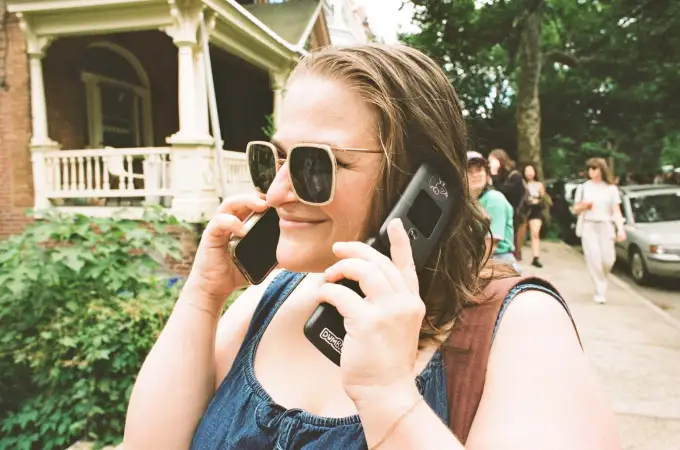
Peabody challenged the reporter to leave the iPhone at home entirely for a day. The reporter resisted, citing the need for transit schedules and Slack. Peabody's response: "The truth is, when you say the word need, it almost gives the same meaning as like, 'I need food or shelter.' Yeah, sure, it's actually helpful to know when the buses are coming, but if you don't have that information, you turn to your neighbor and say, 'Do you know when the next bus is coming?'"
Peabody herself went seven weeks without using her smartphone last summer, including a cross-country road trip to New Mexico. "I did not think I could do that, but I'm telling you that you can."
Does this fit into a larger trend?
Dumb Co joins a growing market of intentional disconnection products. Light Phone, a minimalist device with e-ink display, has been selling since 2019. Punkt offers a pared-down phone focused on calls and texts. The difference with Dumb Co is the hybrid approach: it doesn't ask you to abandon your smartphone entirely, just to leave it behind when you step outside.
Research consistently shows Americans feel their phone use is excessive. Pew Research found 58% of Americans say they spend too much time on their phones. Average daily screen time for US adults hovers around four hours. Whether hacked flip phones are a solution or a symptom is an open question, but Dumb Co is betting that enough people want the option.
Logicity's Take
Dumb Co's model is clever: rather than building expensive custom hardware like Light Phone (which retails around $300), they're hacking $20 commodity devices. The margins could be healthy if they scale. The bigger question is whether the target market, digitally exhausted millennials and Gen Z, will pay for a product that requires behavior change. Light Phone has survived but hasn't exploded. Punkt remains niche. Dumb Co's advantage might be price and approachability. The friends-and-family funding suggests they're not chasing hypergrowth, which could actually help them build a sustainable small business rather than a VC-funded flame-out.
Frequently Asked Questions
What apps work on the Dumb Co flip phone?
The device runs custom software that supports WhatsApp, Spotify, Apple Music, Uber, and iMessage through a third-party workaround. It does not support social media apps or email.
How much does the Dumb Phone cost?
Dumb Co uses $20 TCL flip phones as the hardware base. The company loads its own software onto the devices. Pricing for the finished product was not specified in the report.
Can you still receive calls on your iPhone while using the Dumb Phone?
Yes. The device syncs with your smartphone, and call and text forwarding can be toggled on or off depending on whether you want to redirect communications to the flip phone.
Who is behind Dumb Co?
The company is run by a small team in their 20s and early 30s, including founding CMO Lydia Peabody, a former licensed therapist. It's funded by friends and family, not institutional investors.
Need Help Implementing This?
Interested in digital wellness strategies for your team or exploring productivity tools that reduce notification overload? Reach out to Logicity's editorial team for curated recommendations.
Source: TechCrunch / Amanda Silberling
Huma Shazia
Senior AI & Tech Writer
Produced with AI assistance and reviewed by the Logicity editorial team. Learn more in our Editorial Policy.