Key Takeaways
Zetwerk files confidential papers for IPO, aims to raise over Rs 4,200 crore: Report
- Zetwerk received SEBI approval for an IPO expected to raise around ₹5,000 crore, making it one of the largest new-age manufacturing listings in India
- The company's operating income grew to an estimated ₹15,900 crore in FY26, up from ₹12,800 crore the previous year
- Founders recently injected ₹600 crore of personal debt to increase their stake ahead of the public offering
Contract manufacturing startup Zetwerk received SEBI approval on Friday for its initial public offering, clearing the path for what could be one of India's largest new-age manufacturing listings. The IPO is expected to raise approximately ₹5,000 crore, with ₹2,700-2,800 crore coming from fresh capital and the rest from existing shareholders selling their stakes.
The Bengaluru-based company filed its draft red herring prospectus through SEBI's confidential filing route in late March. Kotak Mahindra Capital, Goldman Sachs, Pantomath Investment Banking, Morgan Stanley, HSBC, and JM Financial are handling the issue as merchant bankers. The final valuation will be set through book-building closer to launch.
What is Zetwerk's current valuation?
Zetwerk has been in discussions to raise about ₹500 crore from Bharat Value Fund and high-net-worth individuals at a valuation of ₹25,000-26,000 crore, roughly $3 billion. This figure is broadly in line with its previous private-market valuation, a sign of the cautious pricing environment for new-age IPOs right now.
The company has raised about $912 million to date. Its investor roster includes Khosla Ventures, IndiGo co-founder Rakesh Gangwal, Baillie Gifford, Accel, Peak XV Partners, Lightspeed Venture Partners, Greenoaks, Avenir Growth Capital, D1 Capital, and Kae Capital.
How have the founders prepared for the listing?
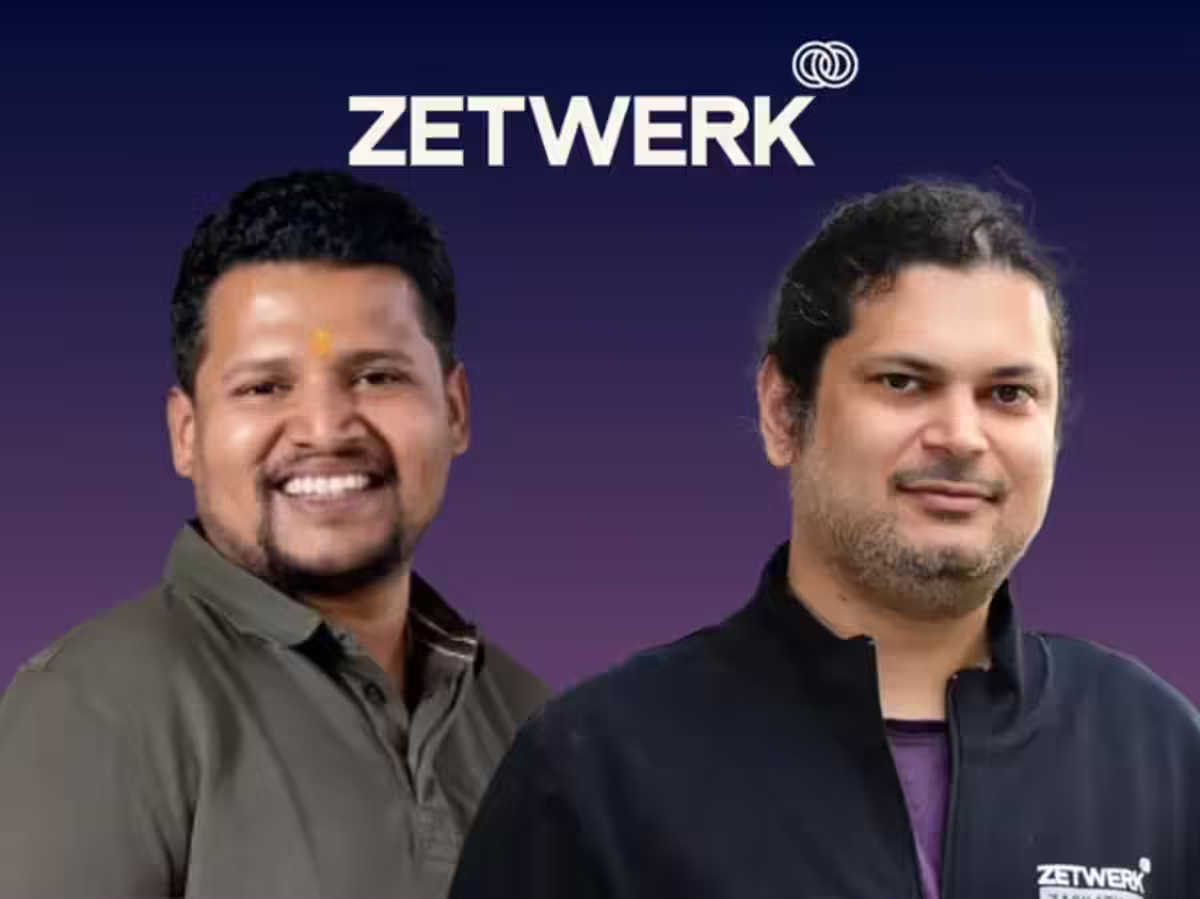
In July 2025, co-founders Amrit Acharya and Srinath Ramakkrushnan put ₹600 crore of their own money into the company by raising personal debt. This move increased their combined stake by roughly two percentage points. Founders betting their own capital ahead of a public offering sends a clear signal to potential investors about their confidence in the company's trajectory.
Before that, Zetwerk raised close to $90 million in late 2024 from Khosla Ventures, Gangwal, and Baillie Gifford at a valuation of about $3.1 billion.
What do the financials look like?
Zetwerk's operating income is estimated to have grown to ₹15,900 crore in FY26 from ₹12,800 crore the year before, according to Crisil Ratings. That's a 24% year-on-year jump. The company also narrowed its net loss significantly, from ₹918 crore in FY24 to ₹371 crore in FY25.
The loss reduction came even as revenue declined after Zetwerk exited lower-margin businesses like civil engineering, procurement, and construction projects. The company's order book stood at more than ₹12,000 crore as of March. Exiting unprofitable lines to focus on higher-margin work is a classic pre-IPO move that improves unit economics.
Who does Zetwerk serve?
Founded in 2018 by IIT alumni Amrit Acharya, Srinath Ramakkrushnan, Rahul Sharma, and Vishal Chaudhary, with Ankit Fatehpuria later elevated as the fifth co-founder, Zetwerk operates a technology-enabled manufacturing platform. The company connects enterprise customers with manufacturing suppliers across energy, electronics, defence, aerospace, and capital goods sectors.
Its customer list includes Acer, Noise, CG Power Solutions, Schneider Electric, and Siemens. Zetwerk operates over 20 facilities across India, the US, Mexico, and Europe, serving about 19 countries.
Where does this fit in India's IPO market?
SEBI's approval arrives as India's IPO market starts to recover after a slow first half of 2026. Geopolitical uncertainty, weak foreign flows, and valuation concerns had dampened activity. Major players like PhonePe, Flipkart, and Curefoods have paused their IPO plans. But startups like Zepto and Oyo's parent PRISM are gearing up for potential listings in the coming months.
Zetwerk's listing will test investor appetite for manufacturing-focused tech companies. Unlike pure-play software startups, Zetwerk sits at the intersection of technology and physical manufacturing, a capital-intensive model that carries different risk profiles.
Logicity's Take
Zetwerk's IPO timing is shrewd. India's push for manufacturing self-reliance under 'Make in India' creates favorable policy tailwinds, while the company's pivot away from low-margin construction work shows discipline. The real question is whether public market investors will value a manufacturing marketplace the same way private investors did. At $3 billion, Zetwerk is priced at roughly 1.9x its FY26 operating income. Compare that to traditional engineering companies like L&T, which trade at lower revenue multiples but with decades of track record. Zetwerk will need to prove its tech layer genuinely creates margin advantages that justify the premium.
Frequently Asked Questions
When will Zetwerk's IPO launch?
The exact date has not been announced. SEBI approval is the first step; the company will determine final pricing and timing through the book-building process in the coming months.
How much has Zetwerk raised before the IPO?
Zetwerk has raised approximately $912 million in total funding from investors including Khosla Ventures, Lightspeed, Peak XV Partners, and IndiGo co-founder Rakesh Gangwal.
Is Zetwerk profitable?
No. The company reported a net loss of ₹371 crore in FY25, though this was a significant improvement from ₹918 crore the previous year.
What sectors does Zetwerk operate in?
Zetwerk serves energy, electronics, defence, aerospace, and capital goods sectors. Its clients include Acer, Noise, Schneider Electric, and Siemens.
Who are Zetwerk's competitors?
Zetwerk competes with traditional contract manufacturers and emerging B2B manufacturing platforms. The company differentiates through its technology layer that connects enterprises with a network of manufacturing suppliers.
Another startup founder story with IPO-track potential in India's manufacturing-adjacent space
Need Help Implementing This?
Planning to invest in IPOs or track manufacturing tech startups? Logicity covers the Indian startup ecosystem daily. Subscribe to our newsletter for analysis on upcoming listings and funding rounds.
Source: Tech-Economic Times / ET
Huma Shazia
Senior AI & Tech Writer
Produced with AI assistance and reviewed by the Logicity editorial team. Learn more in our Editorial Policy.