Key Takeaways

- Former Livspace cofounder Saurabh Jain and CBO Lalit Mittal are raising $15M for a new home interior materials venture called Gravity
- The startup targets India's $20 billion home interior materials market, competing with PharmEasy founders' AllHome
- Gravity plans to operate as a full-stack platform with a house of brands, not a marketplace or supplier
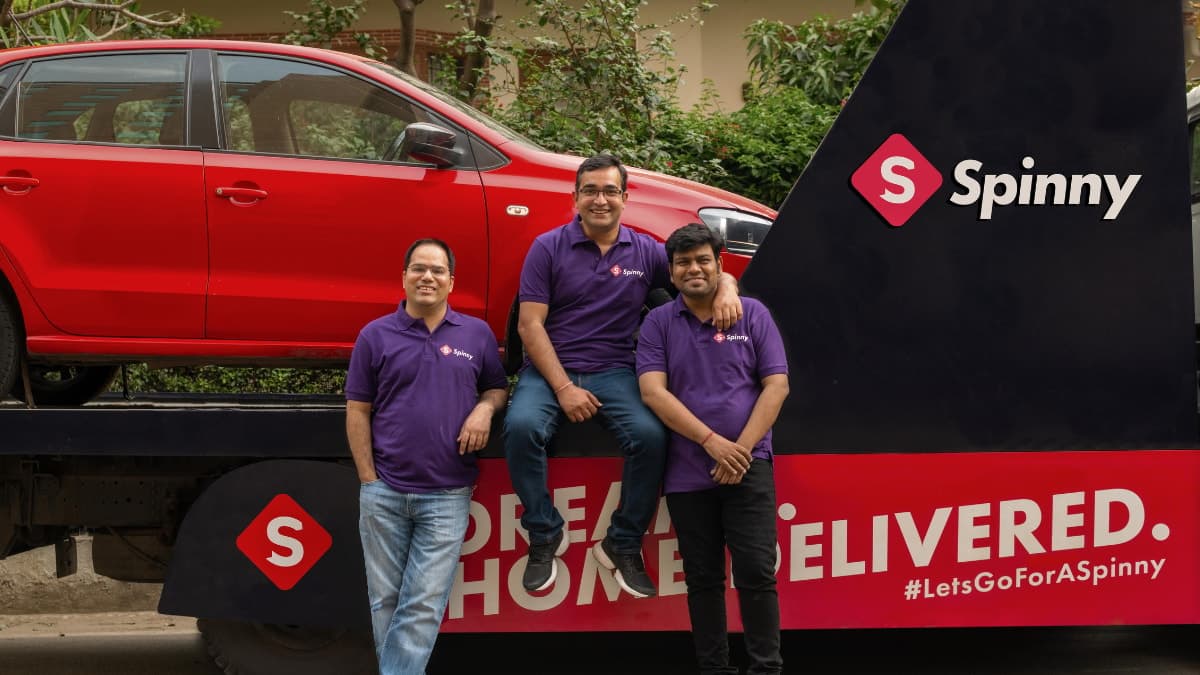
Saurabh Jain, who cofounded Livspace and served as its India CEO, has partnered with former Livspace Chief Business Officer Lalit Mittal to launch Gravity, a home interior materials startup currently in talks to raise $15 million. The funding round, which will combine equity and debt, signals another serial-entrepreneur bet on India's fragmented building materials supply chain.
Sources told Inc42 that Gravity has held preliminary discussions with 3one4 Capital and InfoEdge. The company has also secured angel investment, including a check from Ramakant Sharma, one of Jain's original Livspace cofounders. Neither Jain nor Mittal responded to requests for comment.
What will Gravity actually do?
The startup plans to build a house of brands for premium homes. Unlike marketplace models that connect buyers with suppliers, Gravity intends to position itself as a full-stack platform for home interior materials. Independent designers, design studios, and interior platforms are the primary customers. The focus is solving procurement and supply chain pain points that exist across the broader interior design industry.
Gravity expects to emerge from stealth in four to five months. The timing matters. India's home interior materials market is valued at roughly $20 billion, according to industry estimates, with projected growth of 8 to 10 percent annually through 2027.
The competitive picture
Jain and Mittal are not the only experienced founders eyeing this sector. PharmEasy cofounders Dharmil Sheth and Dhaval Shah recently launched AllHome, which raised ₹200 crore (about $24 million) from Bessemer Venture Partners. AllHome operates in a similar space, suggesting that multiple investor groups see the fragmented supply chain as a solvable, scalable problem.
Gravity's differentiation will likely rest on its founders' operational experience. Livspace scaled across India, Singapore, Malaysia, and Saudi Arabia. It raised over $450 million from investors including KKR and Ingka Group (IKEA's parent company). Jain saw firsthand how procurement inefficiencies hindered design execution. That context shapes the new venture's thesis.
Why the founders left Livspace
Both Jain and Mittal departed Livspace in February 2025. Their exits came days after the unicorn laid off 1,000 employees, roughly 12 percent of its workforce, as part of an AI-focused restructuring. Jain cofounded Livspace in 2015 after selling his previous startup DezignUp in 2014. He studied at IIT Delhi and started his career in management consulting.
Mittal, also an IIT Delhi alumnus, joined Livspace in 2019 after serving as AVP at Meesho. At Livspace, he oversaw key business operations as CBO. The pair's combined tenure gives them deep knowledge of the market's structural challenges.
A wave of serial founders
Gravity joins a broader trend of experienced operators launching second or third ventures. BharatPe cofounder Shashvat Nakrani recently joined Dubai-based luxury ecommerce platform Luxury For You as cofounder and CEO. Former Dream11 CTO Amit Sharma announced a new AI startup this week. Dunzo cofounder Mukund Jha launched vibe coding startup Emergent last year and is reportedly in talks to reach unicorn status.
For investors, repeat founders often carry lower perceived risk. They have built companies before. They know how funding rounds, hiring, and scaling work. The tradeoff is higher valuation expectations.
Logicity's Take
Gravity's bet makes sense for fintech and supply chain finance players. India's interior materials industry remains deeply informal. Most transactions happen offline. Payment terms are inconsistent. Inventory financing is scarce. A full-stack platform that aggregates demand could create opportunities for embedded lending, invoice discounting, or working capital products. If Gravity builds scale, expect financial services partnerships or even acquisitions by players like Razorpay, Cashfree, or traditional NBFCs looking for industry-specific deal flow.
Key questions ahead
Whether Gravity can differentiate from AllHome and existing building material distributors will depend on execution. Premium homes represent a narrower market than mass-market interiors. That focus sharpens the target customer but limits scale. How Gravity structures its brand relationships, whether exclusive or shared, will shape its margin profile.
The $15 million raise, if closed, gives runway to build the platform and onboard initial customers before the stealth period ends. But the company will likely need additional capital to compete against AllHome's $24 million war chest.
Frequently Asked Questions
Who founded Gravity?
Gravity was founded by Saurabh Jain, former Livspace cofounder and India CEO, along with Lalit Mittal, former Livspace Chief Business Officer.
How much funding is Gravity raising?
Gravity is currently in talks to raise $15 million in a mix of equity and debt from investors including 3one4 Capital and InfoEdge.
What market is Gravity targeting?
Gravity targets India's home interior materials market, estimated at $20 billion, serving independent designers, design studios, and interior platforms.
Who is Gravity competing with?
Gravity competes with AllHome, founded by PharmEasy cofounders Dharmil Sheth and Dhaval Shah, which recently raised ₹200 crore from Bessemer Venture Partners.
When will Gravity launch publicly?
Gravity expects to exit stealth mode in four to five months from the time of reporting.
Need Help Implementing This?
Following India's startup fundraising landscape? Subscribe to the Logicity newsletter for weekly coverage of funding rounds, founder moves, and market analysis that matters for fintech and finance teams.
Source: Inc42 Media / Debarghya Sil
Huma Shazia
Senior AI & Tech Writer
Produced with AI assistance and reviewed by the Logicity editorial team. Learn more in our Editorial Policy.