Key Takeaways
- AI audiobook production costs 90% less than human narration, driving rapid adoption
- Libby labels AI narrators as 'synthesized voice' or 'digital voice' for easy identification
- The audiobook market hit $7.8B in 2024, with AI threatening to reshape profit margins
Read in Short
AI-narrated audiobooks are quietly appearing on library platforms like Libby. Publishers save 90% on production costs, but quality varies wildly. You can spot them by checking for 'synthesized voice' or 'digital voice' labels. For media companies, this signals a broader shift in content production economics that every content strategist should understand.
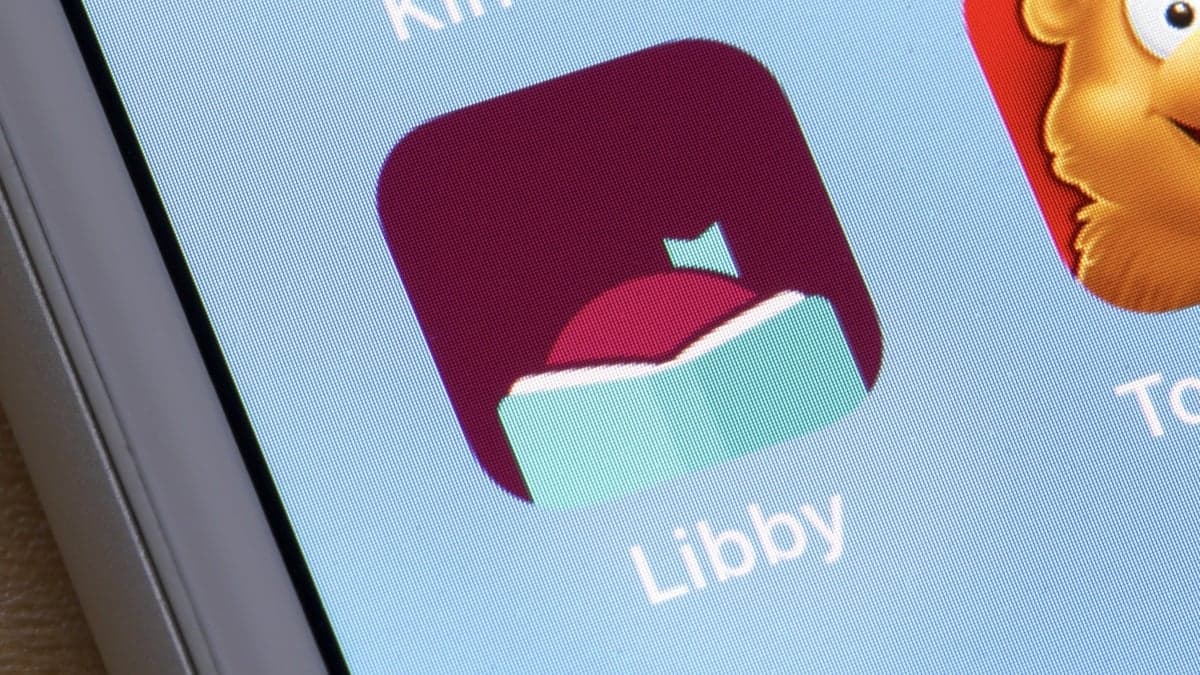
According to [Lifehacker](https://lifehacker.com/tech/how-to-spot-ai-audiobooks-on-libby?utm_medium=RSS), AI-generated audiobooks are now common on Libby, the popular library lending app, and users can identify them by looking for 'synthesized voice' or 'digital voice' tags in the narrator information section.
This isn't just a consumer convenience tip. It's a signal flare for anyone running a content business, media company, or publishing operation. The economics of audio content production are fundamentally shifting, and the companies that understand this shift will have a significant competitive advantage.
What Does AI Audiobook Production Cost?
Traditional audiobook production runs between $2,000 and $5,000 per finished hour. A typical 10-hour audiobook costs publishers $20,000-$50,000 just for narration. That doesn't include studio time, editing, or mastering.
For publishers with extensive backlists, the math is compelling. A mid-size publisher sitting on 500 out-of-print titles that never made economic sense as audiobooks can now produce the entire catalog for what three premium audiobooks would have cost.
| Production Method | Cost Per Hour | Time to Market | Quality Level |
|---|---|---|---|
| Premium Human Narrator | $3,000-5,000 | 4-8 weeks | Highest |
| Mid-tier Human Narrator | $1,500-2,500 | 2-4 weeks | High |
| AI Narration (Premium) | $300-500 | 1-3 days | Medium-High |
| AI Narration (Basic) | $50-150 | Hours | Variable |
How to Identify AI Narration on Libby
Libby's approach is notably hands-off. The platform doesn't curate or filter AI content. It simply serves whatever libraries purchase. This puts the identification burden on users and purchasing librarians.
- Select any audiobook in Libby
- Scroll to the information section below the cover
- Look for 'NARRATOR' field
- Check for 'synthesized voice' or 'digital voice' labels
- The AI will have a fictional narrator name next to these tags
You can also search Libby for 'synthesized voice' or 'digital voice' to see the full scope of AI audiobooks available through your library. The results might surprise you. Some libraries have hundreds of AI-narrated titles already in circulation.
Why Should Business Leaders Care About AI Audio?
The audiobook market isn't a niche anymore. It hit $7.8 billion globally in 2024 and is projected to reach $35 billion by 2030. But the real story is what AI does to the competitive landscape.
Consider the strategic implications. If you're running a content company, training platform, or any business with written content assets, AI narration makes audio versions economically viable for the first time. That technical documentation sitting on your intranet? It could be an audio training library by next month.
- Corporate training materials can become podcast-style content for commuting employees
- Backlist content that never justified audio production is now viable
- Accessibility compliance becomes dramatically cheaper to achieve
- International markets open up with AI translation plus narration
The quality question remains real. Premium AI voices are good enough for instructional content, technical documentation, and straightforward nonfiction. They're not ready for literary fiction where character voice acting matters. But that gap is closing faster than most executives realize.
Another automation technology reshaping how teams handle previously manual work
Is AI Audiobook Quality Good Enough for Business Use?
This depends entirely on your use case. The technology has hit an inflection point where certain applications are clearly viable while others still need human talent.
✅ Pros
- • 90% cost reduction enables previously impossible projects
- • 48-hour turnaround vs. 4-8 week production cycles
- • Easy updates when source content changes
- • Consistent quality across large content libraries
- • Multilingual production from single source text
❌ Cons
- • Character voice acting remains weak
- • Emotional nuance in dramatic content falls flat
- • Some listeners actively avoid AI narration
- • Ethical concerns about voice actor displacement
- • Quality varies significantly between platforms
For B2B applications like training content, product documentation, or internal communications, AI narration is already good enough. For consumer-facing content where experience matters, the calculus is more complex.
What's the Voice Actor Industry Response?
Voice actors and their unions are pushing back hard. SAG-AFTRA has made AI voice protections a central bargaining issue. But the economic pressure is immense. Publishers can produce 10 AI audiobooks for what one human-narrated title costs.
Some narrators are adapting by licensing their voices for AI cloning. This creates a hybrid model where a human voice trains the AI, and the narrator receives ongoing royalties. It's not a solution that satisfies everyone, but it points toward how the industry might evolve.
“If I choose to listen to an audiobook, I am almost assuredly looking for an experience, rather than a simple means to get the text into my ears.”
— Lifehacker
This sentiment captures the consumer perspective that premium content will still demand human narration. The market is likely bifurcating: AI for functional content, humans for experiential content.
Another industry grappling with automation economics and workforce transitions
Strategic Questions for Content Leaders
If you're sitting on content assets that have never been converted to audio, now is the time to reassess. The economics have fundamentally changed. Here's what your team should be evaluating.
Executive Checklist: AI Audio Strategy
1. Audit existing written content for audio conversion potential. 2. Identify which content types are AI-appropriate vs. human-required. 3. Calculate ROI on converting backlist content to audio. 4. Assess accessibility compliance requirements that audio could address. 5. Evaluate platforms like ElevenLabs, Play.ht, and Amazon Polly for enterprise needs.
The companies moving fastest are using AI audio for internal content first. Training materials, onboarding documentation, and policy updates are low-risk pilot projects that build organizational capability before tackling customer-facing content.
AI Audiobooks FAQ: What Business Leaders Ask
Frequently Asked Questions
How much does AI audiobook production actually cost?
Premium AI narration runs $300-500 per finished hour compared to $2,000-5,000 for human narrators. Basic AI tools can produce passable audio for under $100 per hour, though quality varies significantly. For a typical 10-hour book, you're looking at $1,000-5,000 for AI vs. $20,000-50,000 for traditional production.
Is AI narration legal for commercial audiobooks?
Yes, if you own the text rights. The legal landscape is still evolving around AI voices trained on human narrators without consent, but using licensed AI voice platforms for your own content is straightforward. Check platform terms for commercial use rights.
How long does AI audiobook production take?
A 10-hour audiobook can be generated in hours rather than weeks. The bottleneck shifts from recording to quality review. Most publishers spend 1-3 days on review and editing for AI-produced content vs. 4-8 weeks for traditional production cycles.
Will listeners reject AI-narrated content?
Data is mixed. For fiction and literary content, many listeners actively seek human narration. For instructional, technical, and functional content, acceptance is much higher. The key is matching production method to content type and being transparent about AI use.
What AI voice platforms do publishers actually use?
ElevenLabs and Play.ht dominate the premium market with most realistic voices. Amazon Polly and Google Cloud Text-to-Speech are popular for scale. Apple's newer voice cloning capabilities are gaining traction for publishers in the Apple ecosystem.
The Bottom Line for Decision-Makers
AI audiobook production isn't a future consideration. It's a present reality reshaping content economics. Libraries are already stocking AI-narrated titles. Publishers are already slashing production costs. The question for your organization isn't whether AI audio makes sense. It's which content to convert first.
Start with low-stakes internal content. Build capability and quality assessment processes. Then expand to customer-facing applications where the economics and quality thresholds align. The companies that figure this out fastest will have a significant content advantage over the next three years.
Another technology risk that requires executive attention and quick decision-making
Logicity's Take
At Logicity, we've been watching AI voice technology closely because it intersects with the AI agent work we do for clients. The audiobook use case is fascinating, but the broader pattern matters more for Indian tech businesses. Voice AI is becoming infrastructure, not innovation. That means the competitive advantage isn't in having AI voices. It's in knowing when to use them and when human touch still matters. For startups building content platforms or training products, AI narration removes a major cost barrier. We've seen clients convert documentation libraries to audio in days rather than months. But here's the honest caveat: quality control becomes the new bottleneck. AI can produce audio fast. Producing good audio still requires human judgment. Our recommendation for Indian companies looking at this space: start with internal content where quality tolerance is higher, build review processes, then scale to customer-facing applications. The technology is ready. The question is whether your quality standards and workflows are.
Need Help Implementing This?
Logicity helps companies integrate AI into their content and automation workflows. Whether you're exploring AI voice generation, building content pipelines, or automating production processes, our team can help you evaluate options and implement solutions that make business sense. Reach out for a conversation about your content strategy.
Source: Lifehacker
Manaal Khan
Tech & Innovation Writer
Produced with AI assistance and reviewed by the Logicity editorial team. Learn more in our Editorial Policy.