Key Takeaways
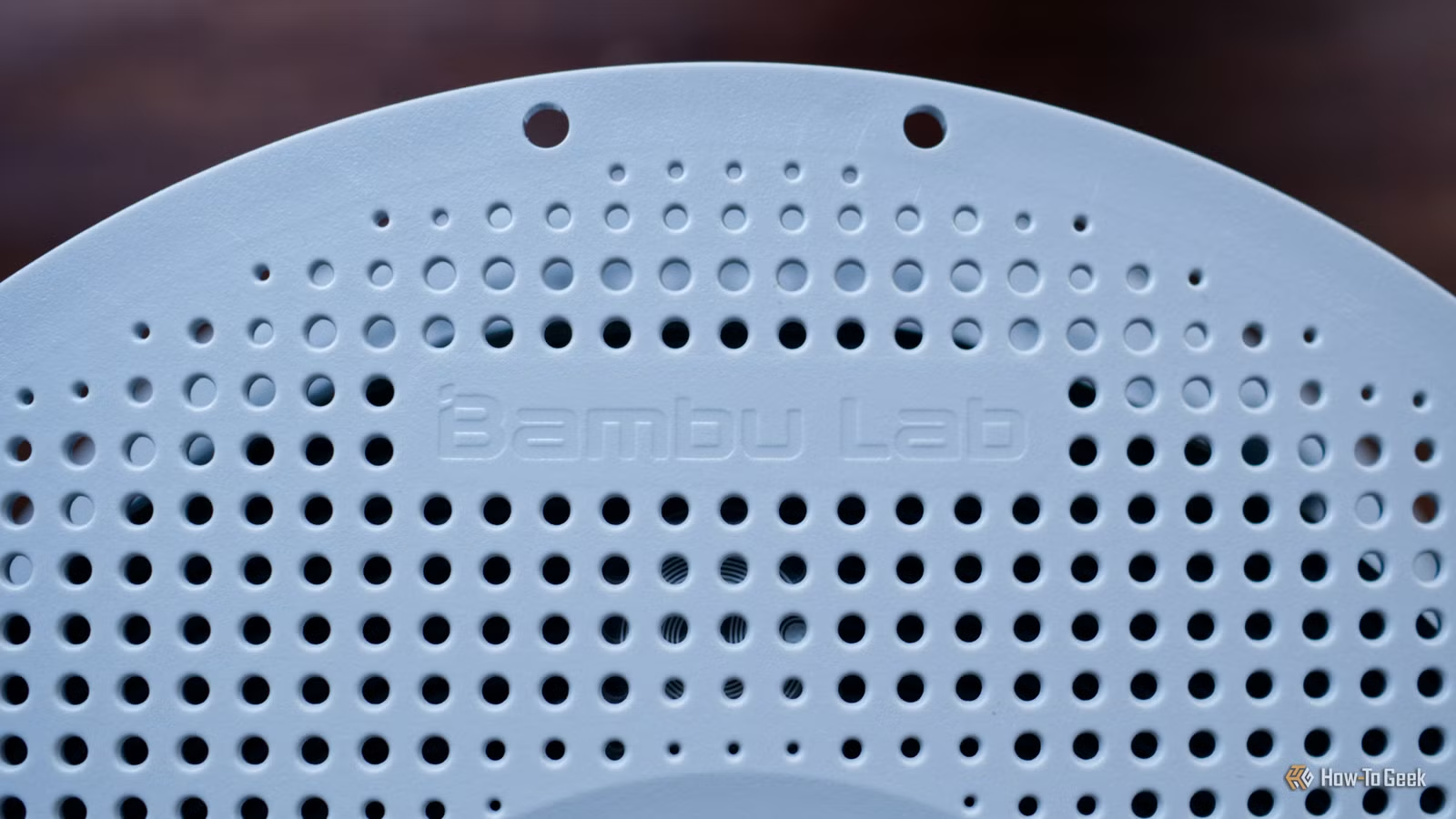
- Custom battery holders for odd sizes like 18650 or CR2032 are nearly impossible to buy but easy to print
- 3D printed appliance parts can save weeks of shipping time and 60-80% of OEM replacement costs
- Workshop organizers and board game inserts represent practical 3D printing at its most useful
Most 3D printing conversations circle back to the same projects: Gridfinity systems, articulated dragons, or desktop toys. But the real value of a 3D printer shows up when you need something specific that nobody manufactures. Patrick Campanale at How-To Geek highlights five practical 3D printing projects that solve actual problems rather than just demonstrating what the machine can do.
The shift matters. Entry-level FDM printers now cost $200-300, down from $2,000 a decade ago. With over 15 million free models available across Thingiverse, Printables, and MakerWorld, the barrier to solving household problems with printed plastic has never been lower.
Battery holders for sizes stores don't stock
Finding a holder for AA or AAA batteries takes thirty seconds at any hardware store. Finding one for an 18650, CR2032, or AAAA? Nearly impossible. These batteries power flashlights, watch fobs, styluses, and dozens of other devices, but retailers don't stock organizers for them.
3D printing solves this in two ways. Sites like MakerWorld and Printables already host models for most uncommon battery sizes. If your specific combination doesn't exist, drawing circles in CAD software and extruding them into a holder takes maybe fifteen minutes. The result: a custom organizer that fits your exact battery collection, costs pennies in filament, and prints in under an hour.
Workshop organizers that actually fit your stuff
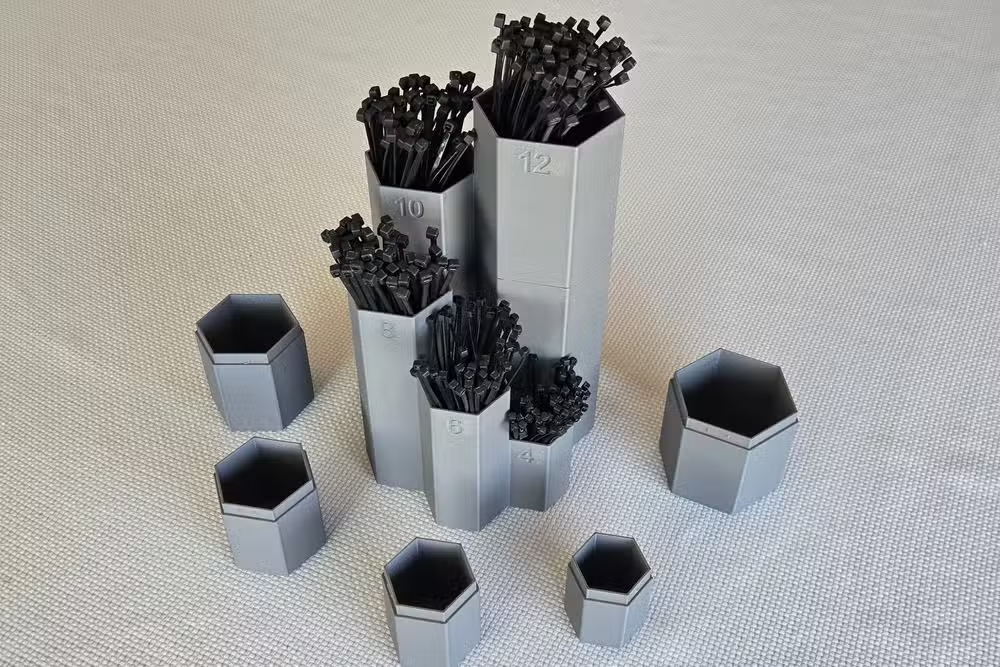
Generic bins work. Purpose-built organizers work better. Campanale describes his father's approach to zip tie storage: a tall container with each size rubber-banded together. It functioned, but grabbing the right size meant untangling bundles and re-banding what you didn't use.
A 3D printed organizer separates each zip tie size into its own slot. Pull what you need, drop it back if you grabbed wrong. The same logic applies to sanding discs, painter's tape rolls, gloves, and any other consumable that comes in multiple sizes. Someone has probably already designed what you need. If not, the model is usually simple geometry.
Appliance repair parts in hours, not weeks
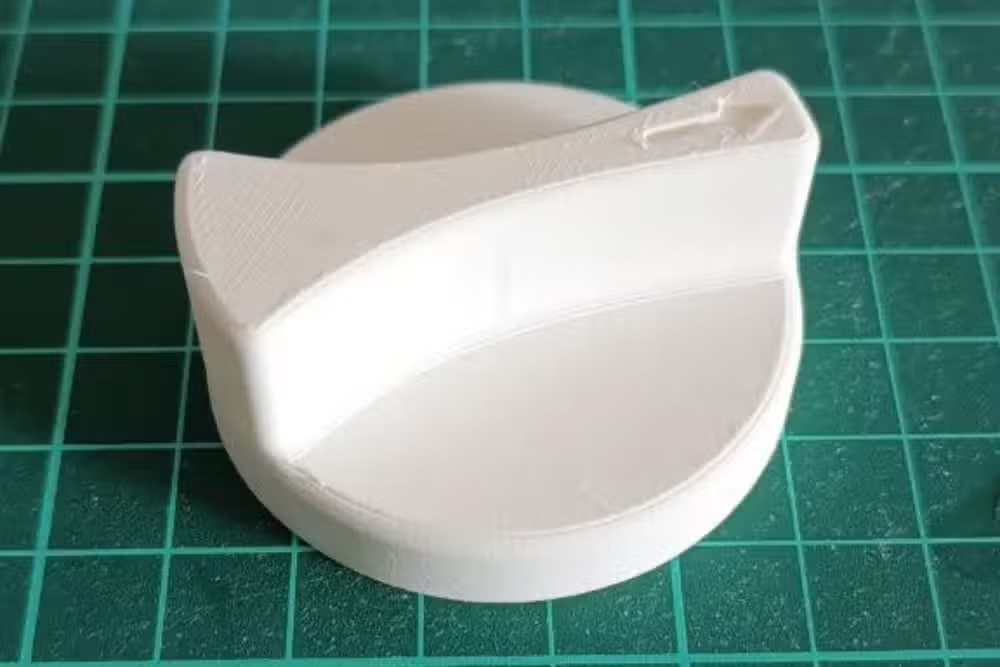
OEM replacement parts carry absurd markups. A small plastic knob, bracket, or clip can cost $30-100 when ordered through official channels. Beyond the price, shipping times for obscure parts often stretch past a week because only one distributor stocks them.
3D printing cuts both problems. For popular appliances, someone has likely already reverse-engineered the part and uploaded the file. Even if you need to design it yourself, measuring with calipers and modeling a simple bracket takes a few hours. Print time adds another hour or two. By dinner, the dishwasher works again.
The economics tilt further in your favor when you consider that most broken appliance parts are simple plastic pieces. They don't need to withstand extreme temperatures or heavy loads. Standard PLA or PETG filament handles the job fine.
Board game inserts that replace plastic bags
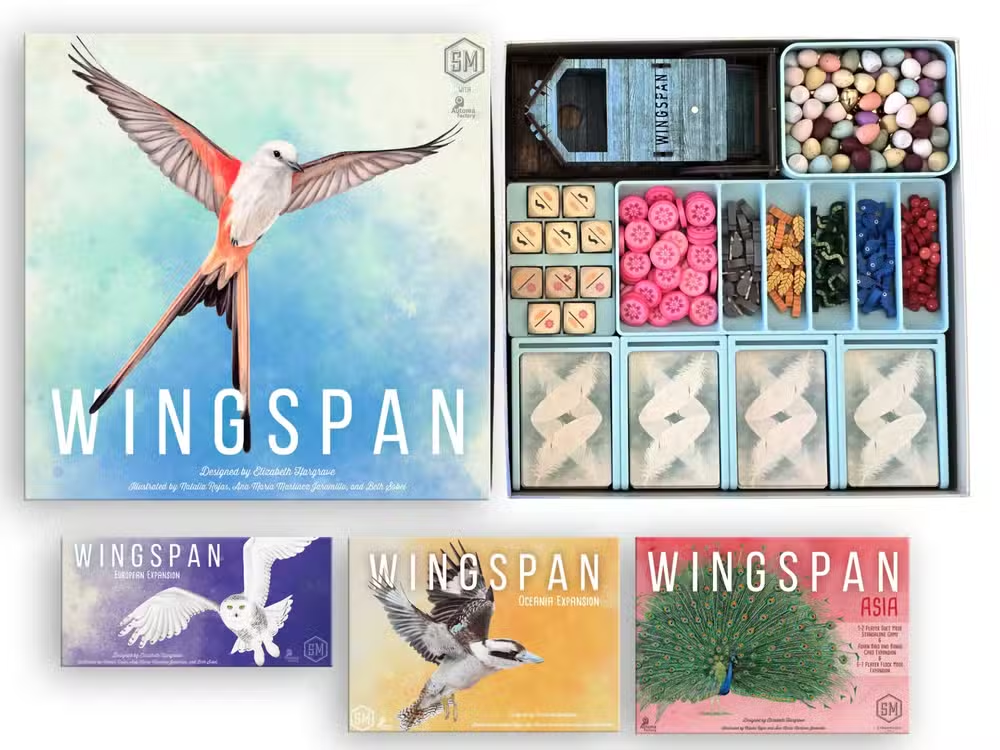
Modern board games aren't Monopoly. Titles like Wingspan, Gloomhaven, or Terraforming Mars ship with hundreds of pieces, multiple player stashes, and expansion content that doesn't fit in the original box. The default storage solution: plastic baggies.
3D printed inserts replace those bags with molded trays that hold each component type in its own compartment. Setup time drops because you're not emptying eight baggies. Teardown speeds up because everything has a designated spot. Sites like BoardGameMeta on MakerWorld specialize in these inserts, with designs for most popular titles already available.
The investment pays off if you play the same game regularly. Printing an insert for a game you play twice a year wastes filament. Printing one for your weekly group's favorite? Worth every gram.
Custom mounts for electronics and gear
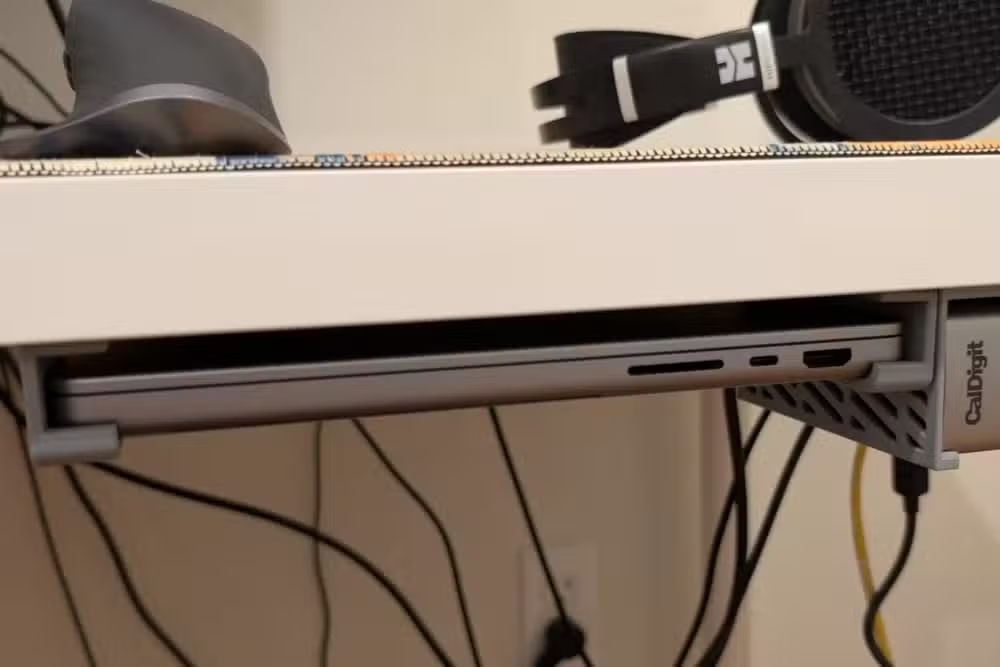
Laptops, tablets, cameras, and controllers rarely ship with mounting options. Third-party mounts exist but rarely fit your exact setup. 3D printing lets you create brackets that match your specific device dimensions and mounting location.
Under-desk laptop mounts clear surface space while keeping the machine accessible. Wall-mounted tablet holders turn old iPads into smart home controllers. Controller stands keep gaming gear organized and charged. Each mount takes a few hours to print and costs a dollar or two in filament.
Why these projects matter more than toys
Surveys suggest around 71% of 3D printer owners primarily use their machines for functional prints rather than artistic ones. That tracks with how the technology has matured. Early adopters printed calibration cubes and low-poly Pokemon to prove the machine worked. Current owners print the bracket that keeps their dishwasher door from sagging.
The shift represents 3D printing evolving from hobby to household tool. Nobody brags about their screwdriver, but everyone uses one. 3D printers are heading the same direction: less novelty, more utility.
Logicity's Take
The best argument for owning a 3D printer isn't the projects you plan to make. It's the projects you can't anticipate. When a plastic clip breaks on a Sunday afternoon and the replacement costs $40 plus a week of shipping, the printer pays for itself. Consumer 3D printing's real killer app was never toys. It was always repair and customization.
Frequently Asked Questions
What filament should I use for functional prints?
PLA works for most low-stress parts. PETG handles higher temperatures and offers better durability. ABS suits automotive or outdoor applications but requires ventilation during printing.
How much does a practical 3D printer cost in 2026?
Capable entry-level FDM printers like the Ender 3 series or Bambu Lab A1 Mini start around $200-300. These handle all the projects described here without requiring upgrades.
Where can I find 3D models for appliance parts?
Printables, Thingiverse, and MakerWorld host millions of free models. Search your appliance brand and model number. For obscure parts, r/functionalprint on Reddit often helps with custom designs.
Do I need CAD skills to 3D print useful things?
Not for most projects. Existing models cover common use cases. If you do need to design something, tools like Tinkercad offer free browser-based modeling with minimal learning curve.
How strong are 3D printed replacement parts?
Strong enough for most household applications. Wall thickness and infill percentage affect durability more than the printing technology. Parts that need to bear heavy loads may require redesign with reinforcement.
Another practical tech upgrade that solves real household problems
Need Help Implementing This?
Considering a 3D printer for practical home use? Our team can help you evaluate options based on your specific needs. Contact Logicity for personalized recommendations on hardware, materials, and project workflows.
Source: How-To Geek
Huma Shazia
Senior AI & Tech Writer
Produced with AI assistance and reviewed by the Logicity editorial team. Learn more in our Editorial Policy.