Key Takeaways
- Saltwater pools push pH up constantly, requiring weekly acid adjustments to prevent scale buildup
- A climbing filter pressure gauge signals when to backwash, not your water chemistry test kit
- Ignoring your pool cover through winter creates a spring swamp that costs weeks and chemicals to fix
The first season maintaining a pool teaches lessons you pay for twice: once in time, once in money. Jonathon Jachura, a mechanical engineer with 12 years of HVAC experience, recently shared the five pool maintenance mistakes that cost him real money during his first year helping maintain his in-laws' saltwater pool. The kicker? Every fix turned out to be free. The damage came from not knowing to do them.
Jachura had swallowed the idea that saltwater pools are close to maintenance-free. They aren't. The mistakes that cost real money were slow and invisible, and the most expensive was a winter close he was certain he'd handled correctly.
Why balanced water doesn't stay balanced
A salt generator makes chlorine by splitting salt in the water. One byproduct of that process is rising pH. Jachura got everything dialed in at startup and walked away satisfied. That was the mistake.
His pH climbed on its own while he wasn't looking. The waterline tile started wearing a chalky scale ring, the water got cloudy, and the chlorine the cell produced couldn't keep up, even with the unit running plenty. The ideal pH range for pool water sits between 7.2 and 7.6. Outside that range, equipment suffers and swimmers notice.
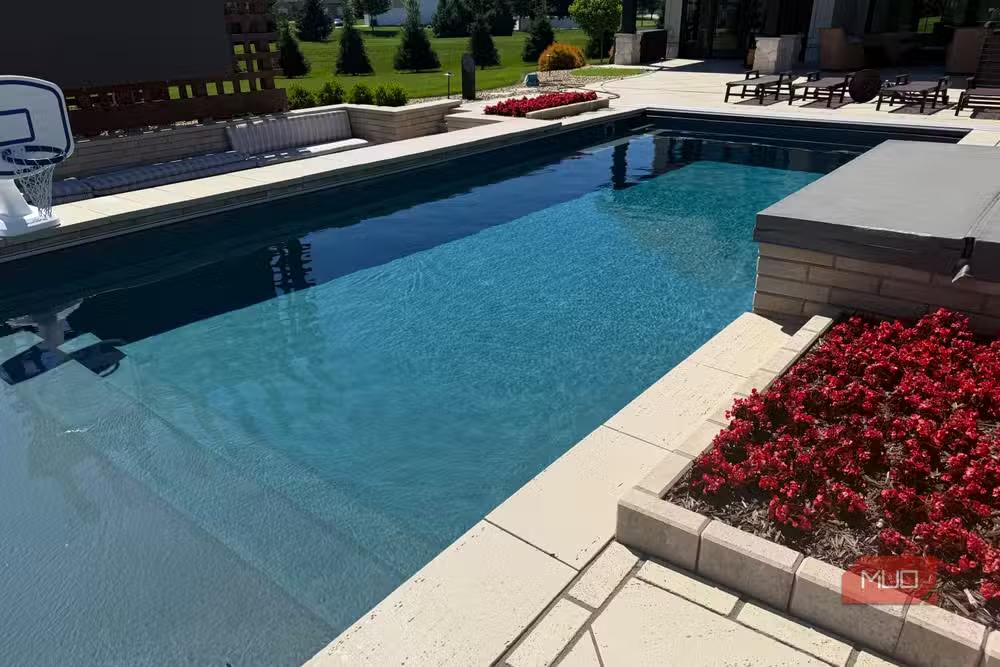
The cost of learning this slowly: a bottle's worth of muriatic acid, an afternoon scrubbing scale off tile, and a couple swim weeks lost. The fix is simple. Test weekly and add acid in small doses before pH drifts.
The salt cell is not permanent equipment
A salt cell has no moving parts and nothing obvious to wear out, so Jachura assumed it was the one piece of equipment he'd never have to touch. Wrong. It scales up the same way tile does.
Calcium builds on the metal plates inside, and as that coating thickens, the cell makes less chlorine for the same run time. By midsummer, the pool was losing the chlorine fight during the hottest stretch of July. The numbers kept sliding and Jachura couldn't figure out why.
The answer sat inside the housing the whole time, crusted in white. Salt cells are consumable parts, not permanent fixtures. Replacements run a few hundred dollars. Jachura shortened his cell's life by ignoring it. A quick inspection every few months, plus a soak in mild acid when scale shows up, is all it asks for.
What the filter pressure gauge actually tells you
There's a pressure gauge on the filter. For most of the first season, Jachura rarely looked at it. Pressure had been creeping upward the whole time.
As a filter loads with debris, resistance builds, flow drops, and the water stops getting cleaned. This happens even when chemistry reads fine. That's what confused Jachura. His test kit said the water was balanced, yet it had haze for weeks.
The filter simply wasn't moving enough water to clear it. A rise of about 8 to 10 psi over the clean baseline means it's time to backwash. Once someone pointed at the gauge and explained this, the haze solved itself. He'd been chasing a clarity problem with chemicals when the fix was a two-minute backwash and the habit of glancing at a dial.
The winter cover trap nobody warns you about
The cover went on in October, and Jachura considered the job done. Through winter, rain and snowmelt pooled on top. Leaves piled into that water. The whole thing turned into a stagnant tray sitting over the pool. He never pumped it off.
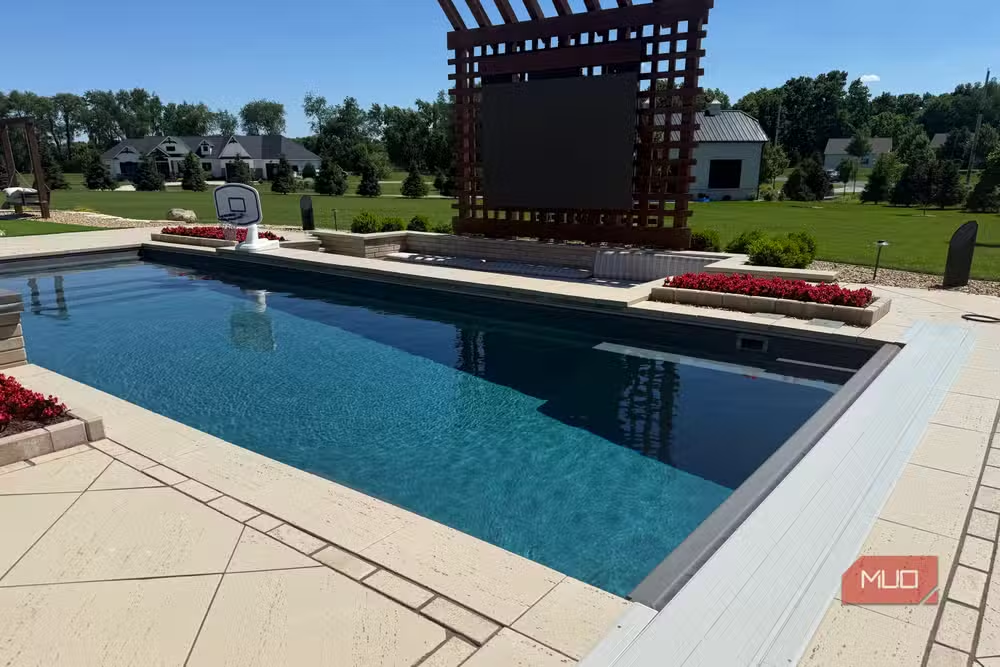
Then he opened late the next spring, well after the water underneath had warmed. What he pulled back was a swamp. That first year cost weeks of recovery, heavy cell run time, and a chunk of water lost vacuuming the gunk out to waste.
His solution now: a Ring floodlight camera that overlooks the pool. From his place next door, he pulls up the feed, catches water and debris collecting on the cover, and clears them before they build up.
The closing mistake you can't see until spring
Jachura thought he'd closed the pool correctly. A cracked line in spring proved otherwise. This is the mistake you don't discover for six months. By then, you're dealing with repairs rather than prevention.
Proper winterization means blowing out lines completely and plugging them, not just draining the pump. Water left in pipes freezes, expands, and cracks PVC. The repair bill arrives in April.
The real cost of DIY pool maintenance
Professional pool service runs $3,000 to $5,000 per year. DIY chemical maintenance for an average residential pool costs $500 to $1,200 annually. That gap makes DIY appealing, but only if you actually know what you're doing.
The United States has over 10.7 million residential inground pools. Most owners, like Jachura, assume the pool will tell them when something's wrong. It won't. The problems that cost real money are invisible until they aren't.
Recommended free chlorine levels sit between 1 and 3 ppm. But chlorine alone doesn't solve problems caused by clogged filters, scaled cells, or drifting pH. Pool chemistry is interconnected. Fix one thing without understanding the relationships and you throw off another.
Another guide to avoiding expensive mistakes in home equipment maintenance
Logicity's Take
Pool maintenance is a perfect example of how consumer-grade automation creates false confidence. Saltwater systems market themselves as low-maintenance, which leads owners to ignore the exact checks that would prevent expensive problems. The pattern repeats across smart home tech: the promise of automation paired with the reality that equipment still needs human attention at specific intervals. The owners who save money are the ones who build simple weekly habits, not the ones who trust the system to handle itself.
Frequently Asked Questions
How often should you test saltwater pool water?
Test weekly at minimum. Saltwater generators push pH up continuously, so waiting until water looks cloudy means you're already behind on corrections.
What PSI increase means the pool filter needs cleaning?
An increase of 8 to 10 psi over your filter's clean baseline pressure indicates it's time to backwash. Note the clean baseline number when you first start the season.
How do you prevent scale buildup on salt cell plates?
Inspect the cell every few months. When scale appears, soak it in a mild acid solution. Regular pH management also slows scale formation.
Why does pool water stay cloudy even with good chemistry?
Cloudy water with balanced chemistry usually means a flow problem. Check your filter pressure gauge. A clogged filter can't clear particulates regardless of chlorine levels.
What's the most expensive pool maintenance mistake for first-time owners?
Improper winterization. A cracked line from frozen water left in pipes creates repair bills in the hundreds of dollars and isn't discovered until spring.
Need Help Implementing This?
Building consistent maintenance habits matters more than expensive equipment. Set a weekly phone reminder for water testing, note your filter's clean baseline pressure on tape near the gauge, and schedule a fall reminder to properly blow out lines before closing. These small systems prevent the costly mistakes.
Source: MakeUseOf
Manaal Khan
Tech & Innovation Writer
Produced with AI assistance and reviewed by the Logicity editorial team. Learn more in our Editorial Policy.