Key Takeaways
- A Lexus GX 550 costs $8,212 to maintain over 10 years, compared to over $19,000 for a BMW X5
- Lexus shares 50-70% of parts with Toyota models, dramatically lowering replacement costs
- Lexus scores 151 problems per 100 vehicles in J.D. Power studies, versus 235 for Mercedes-Benz
Luxury SUVs carry a reputation for expensive repairs and complicated technology. Once the warranty expires, many owners face repair bills that rival a used car payment. But not all premium brands follow this pattern.
Data from CarEdge shows that five Lexus SUVs cost roughly half as much to maintain over 10 years compared to their German competitors. The gap isn't small. A Lexus GX 550 runs about $8,212 in maintenance costs during its first decade. A BMW X5 exceeds $19,000 for the same period.
Why the Cost Gap Exists
The explanation comes down to engineering philosophy. German manufacturers push performance boundaries with complex, proprietary components. Lexus takes the opposite approach: proven technology, shared platforms, and parts bins that overlap heavily with Toyota.
That parts-sharing strategy matters more than most buyers realize. Between 50% and 70% of components in many Lexus models come directly from Toyota counterparts. When your Lexus needs a new alternator or water pump, you're often paying Toyota prices, not luxury-brand premiums.
“The reality is that German luxury brands prioritize cutting-edge innovation that creates complex engineering hurdles, whereas Lexus optimizes for long-term component durability and shared platform reliability.”
— Industry Analyst, Automotive Research Firm
J.D. Power's dependability studies quantify this difference. Lexus scores 151 problems per 100 vehicles. Mercedes-Benz hits 235 problems per 100 vehicles. Fewer problems mean fewer trips to the shop and lower bills when you do go.
The Five Models and Their Costs
CarEdge ranked Lexus SUVs by their 10-year maintenance costs, from highest to lowest within the lineup. Even the most expensive Lexus to maintain still undercuts German rivals by a wide margin.
2026 Lexus TX: $8,028
The TX is new to the Lexus lineup but built on familiar bones. It's essentially a refined version of the Toyota Grand Highlander. The powertrain won't excite performance enthusiasts, but that's partly the point. Proven engines and transmissions break less often than experimental ones.
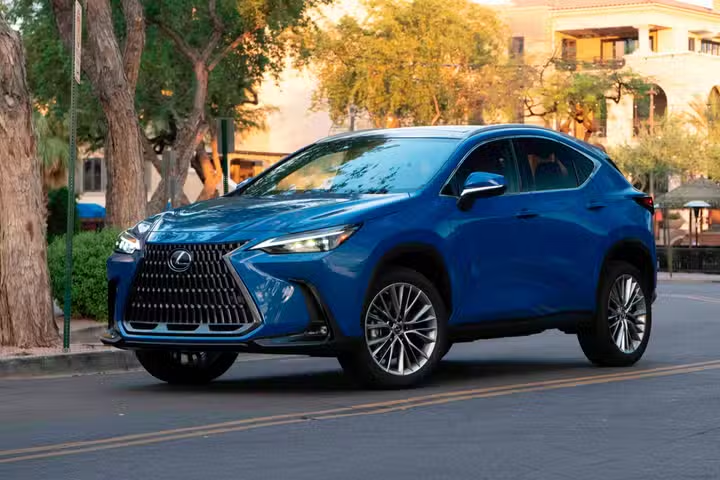
For families needing three-row seating with a plush cabin, the TX delivers luxury without the ownership anxiety that comes with German alternatives.
2026 Lexus RX 350h
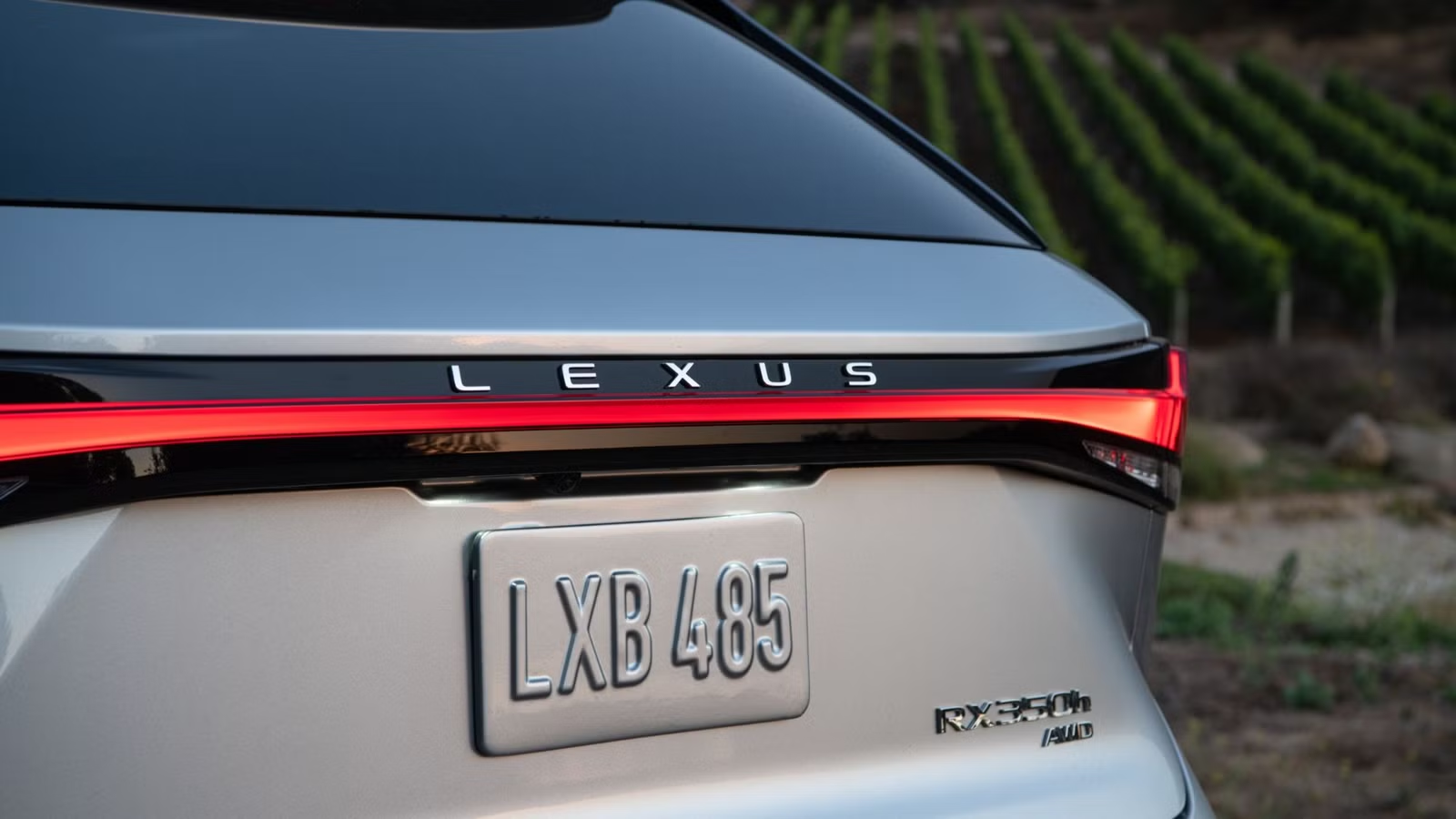
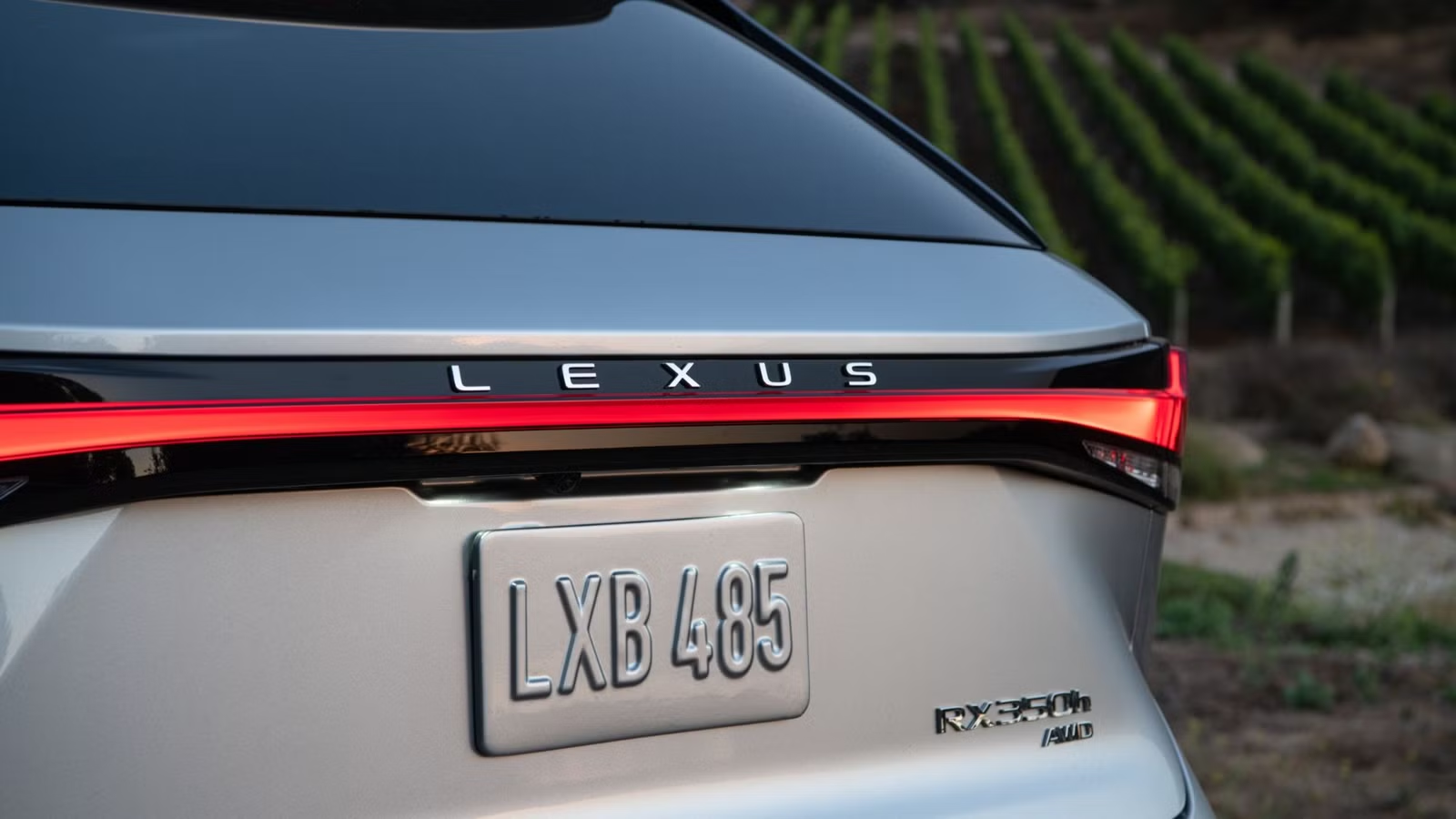
The RX has been Lexus's bestseller for years, and the hybrid variant adds fuel savings to the maintenance advantage. Lexus hybrid systems have a track record spanning two decades now. Early concerns about battery replacement costs have largely proven unfounded as real-world longevity data accumulated.
Lexus GX 550
At $8,212 for 10 years, the GX 550 offers body-on-frame capability with maintenance costs that embarrass softer crossovers from European brands. The GX shares its platform with the Toyota Land Cruiser, a vehicle with a global reputation for going anywhere and lasting decades.
What Owners and Experts Say
The maintenance cost data aligns with sentiment across automotive communities. On Reddit's r/Lexus and r/Cars forums, a common refrain emerges: "Lease a German car, buy a Lexus." The thinking is straightforward. German vehicles offer superior driving dynamics and often more exciting designs. But those advantages erode quickly when you're writing five-figure checks to keep them running.
“If you want to drive a car for a decade without worrying about a catastrophic repair bill, the engineering philosophy of Lexus is objectively superior.”
— Independent Master Mechanic, Automotive Content Creator
On HackerNews, discussions frame the issue as "engineering debt." German luxury vehicles front-load their appeal with technology and performance that push boundaries. The cost of that ambition comes due later, when proprietary parts fail and specialized labor is required to fix them.
The Trade-Offs Are Real
This isn't a one-sided story. Lexus SUVs typically don't match the driving engagement of a BMW X5 or the interior innovation of a Mercedes GLE. The TX's powertrain, as noted, prioritizes reliability over excitement. Lexus designs tend toward conservative styling that some buyers find bland.
✅ Pros
- • 10-year maintenance costs roughly 50% lower than German rivals
- • 50-70% parts sharing with Toyota reduces replacement costs
- • J.D. Power dependability scores significantly better than Mercedes-Benz
- • Proven hybrid technology with two decades of real-world data
❌ Cons
- • Less engaging driving dynamics than BMW equivalents
- • Conservative styling that may lack visual excitement
- • Interior technology often trails German innovation
- • Powertrains prioritize reliability over performance
For buyers who prioritize the driving experience or want to be on the bleeding edge of cabin technology, German brands still make sense. The question is whether you want to pay for that experience twice: once at purchase, and again throughout ownership.
The Business Case for Fleet Buyers
Companies running executive vehicle programs face this calculation at scale. A 50-vehicle fleet choosing Lexus over BMW saves roughly $500,000 in maintenance costs over a decade, based on the GX versus X5 comparison. That's before accounting for reduced downtime and the administrative burden of managing more frequent repairs.
Residual values compound the advantage. Lexus SUVs historically depreciate less steeply than German competitors, partly because used-car buyers factor in those same maintenance concerns. A lower total cost of ownership makes the business case straightforward for organizations that hold vehicles past warranty.
Logicity's Take
Another example of how brand philosophy shapes buyer decisions in luxury automotive
Analysis of how brand expectations affect luxury vehicle reception
Frequently Asked Questions
How much does a Lexus SUV cost to maintain over 10 years?
According to CarEdge data, Lexus SUVs range from about $8,028 (TX) to $8,212 (GX 550) in 10-year maintenance costs. This is roughly half what comparable German luxury SUVs cost to maintain.
Why are Lexus vehicles cheaper to maintain than BMW or Mercedes?
Lexus shares 50-70% of parts with Toyota models, reducing component costs. The brand also prioritizes proven technology over cutting-edge innovation, resulting in fewer complex repairs and lower labor requirements.
Are Lexus SUVs as reliable as the maintenance costs suggest?
J.D. Power data supports the reliability claims. Lexus scores 151 problems per 100 vehicles in dependability studies, compared to 235 for Mercedes-Benz.
What are the downsides of choosing Lexus over German luxury SUVs?
Lexus SUVs typically offer less engaging driving dynamics, more conservative styling, and interior technology that may trail German competitors. The trade-off is lower ownership costs and better long-term reliability.
Which Lexus SUV is cheapest to maintain?
The 2026 Lexus TX has the lowest 10-year maintenance cost in the CarEdge study at $8,028, benefiting from its shared platform with the Toyota Grand Highlander.
Need Help Implementing This?
Source: How-To Geek
Huma Shazia
Senior AI & Tech Writer
Produced with AI assistance and reviewed by the Logicity editorial team. Learn more in our Editorial Policy.