Key Takeaways
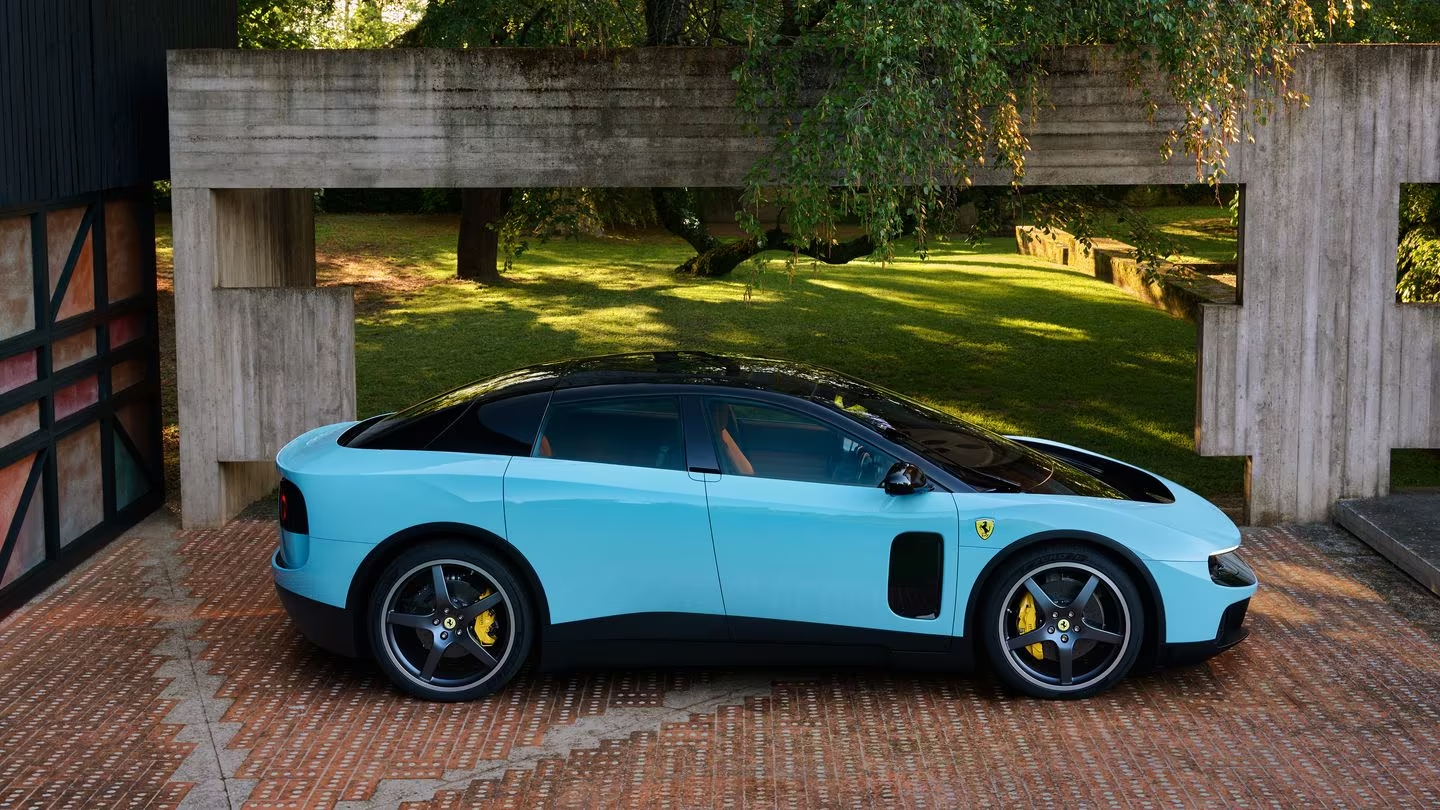
- The Luce's design isn't the issue. The tension between electric efficiency and Ferrari's performance heritage is the real source of controversy.
- Ben Thompson argues EVs prioritize efficiency over visceral experience, which conflicts with what Ferrari has always sold.
- The backlash may reflect broader alienation from tech-driven efficiency culture, not just automotive taste.
Ferrari unveiled its first electric vehicle in May 2026. The Luce, designed by Jony Ive's LoveFrom studio, starts at €550,000 and promises 2.5-second 0-62 mph acceleration with 330 miles of range. On paper, it's an impressive machine. In practice, it's become one of the most polarizing cars in decades.
The criticism hasn't been polite. Fans have flooded Reddit with photoshopped "fixes" trying to make the car look more like a traditional Ferrari. Hacker News users debate whether the lack of screens is visionary or unusable. Former Ferrari chairman Luca di Montezemolo went on record saying the company is "risking the destruction of a myth."
“We're risking the destruction of a myth.”
— Luca di Montezemolo, Former Ferrari Chairman
But according to Ben Thompson's analysis on Stratechery and his podcasts Dithering and Sharp Tech, the design itself isn't the core problem. The Luce's minimalist aesthetic is good, he argues. The real issue is simpler: it's a Ferrari.
Efficiency vs. Performance: A Philosophical Clash
Thompson's central argument is that electric vehicles are built around efficiency as a first principle. Every design choice, from aerodynamics to battery management, optimizes for getting the most miles from the least energy. This is fundamentally different from what Ferrari has sold for 80 years.
Ferrari's brand is built on performance as theater. The sound of the engine. The mechanical connection between driver and machine. The deliberate excess of power beyond what any road could legally use. These are features, not bugs. They're the entire point.
An electric Ferrari can be fast. The Luce is extremely fast. But speed achieved through silent efficiency feels different from speed achieved through controlled mechanical fury. Thompson suggests this difference isn't just aesthetic preference. It's a philosophical incompatibility.
The Apple-ification Problem
Jony Ive's involvement has inevitably drawn comparisons to Apple. The Luce's minimalist interior, which Marc Newson described as "an attempt to redefine what a luxury vehicle feels like without screens," could have come from the same playbook as removing headphone jacks or reducing MacBook ports.
“It's not just a car; it's an attempt to redefine what a luxury vehicle feels like without screens.”
— Marc Newson, Creative Partner at LoveFrom
This works when Apple does it because Apple's brand promise is elegant simplicity. Fewer things, better integrated. But Ferrari's brand promise is the opposite: more power, more drama, more everything that makes driving feel like an event rather than transportation.
Online discussions have centered on this tension. Critics argue Ive designed a beautiful object that happens to have wheels, not a Ferrari. Supporters counter that every brand must evolve. Both sides are talking past each other because they're measuring success against different standards.
Why This Matters Beyond Cars
Thompson takes the analysis further on Sharp Tech, arguing the Luce controversy reflects a broader cultural moment. Modern technology, including cars, increasingly prioritizes optimization metrics over human experience. Software measures engagement, not satisfaction. EVs measure efficiency, not thrill.
This creates what Thompson calls alienation. People feel served by systems designed for aggregate efficiency rather than individual experience. A Ferrari was always inefficient by design. That inefficiency was the luxury.
Interestingly, Thompson suggests AI might help reverse this trend. If AI handles the optimization layer, humans might be freed to focus on experiences that are deliberately inefficient. Whether that applies to cars remains to be seen.
The Business Reality
Despite the backlash, Ferrari isn't panicking. The company announced the Luce is sold out through 2027. At €550,000 per unit, that represents significant revenue regardless of what enthusiasts think on forums.
This points to a gap between online discourse and market reality. The people buying the Luce may not care whether it "feels like a Ferrari" in the traditional sense. They may be buying the Jony Ive collaboration, the status of owning Ferrari's first EV, or simply the next collectible from a brand they've always collected.
The question Thompson raises isn't whether Ferrari made a business mistake. It's whether Ferrari, by succeeding with the Luce, stops being Ferrari in any meaningful sense.
Logicity's Take
Frequently Asked Questions
How much does the Ferrari Luce cost?
The Ferrari Luce starts at €550,000, making it one of the most expensive production EVs available.
Who designed the Ferrari Luce?
Jony Ive and his design firm LoveFrom led the design, with Marc Newson as creative partner.
What is the Ferrari Luce's range?
The Luce delivers 330 miles of WLTP range from its 122 kWh battery pack.
Why are people criticizing the Ferrari Luce?
Critics argue its efficiency-focused, minimalist design conflicts with Ferrari's traditional emphasis on performance theater and mechanical drama.
Is the Ferrari Luce sold out?
Yes. Despite the design backlash, Ferrari has announced the Luce is sold out through 2027.
Thompson's analysis also covers how AI is changing digital advertising economics
Need Help Implementing This?
Source: Stratechery by Ben Thompson
Manaal Khan
Tech & Innovation Writer
Produced with AI assistance and reviewed by the Logicity editorial team. Learn more in our Editorial Policy.