Key Takeaways
- Google Search revenue grew 19% in Q1 despite AI competition, showing AI hasn't hurt its core business
- New ad formats insert sponsored content directly into AI-generated answers, not alongside links
- Publishers provide content that powers AI answers, but users no longer need to click through to their sites
Google spent the early generative AI era as a punchline. Bard stumbled. ChatGPT and Perplexity grabbed headlines. Antitrust regulators circled. But the I/O developer conference told a different story. Google is not scrambling to catch up. It is building ads into the new AI search experience.
The announcement matters because it signals a fundamental change in how Google makes money from search. For two decades, Google sold proximity to information. Ads appeared near links to trusted sources. Now Google is selling the information directly, with AI answers replacing the need to click anywhere.
The Business Held Up
Before talking about the future, look at the present. Alphabet's Q1 earnings showed Google Services revenue up 16% to $89.6 billion. Google Search and "Other" revenue climbed 19%. The surge in AI-powered search competitors did not dent the numbers. It may have helped them.
That financial confidence appears to have unlocked experimentation. Google is testing multiple AI ad formats that would have seemed risky a year ago. The company previously said it had no plans to sell ads in Gemini. That promise looks narrower now.
Three New Ad Formats
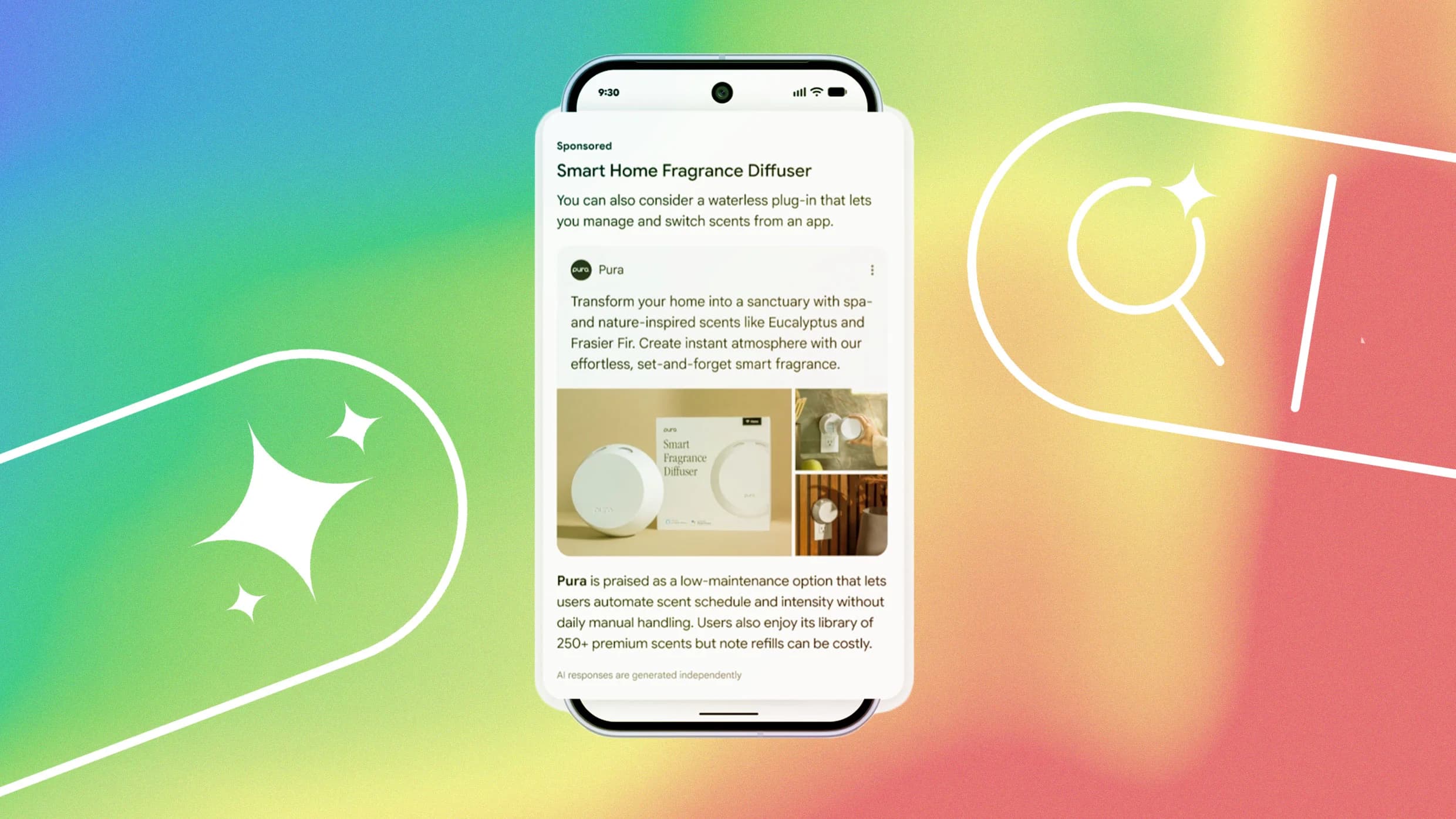
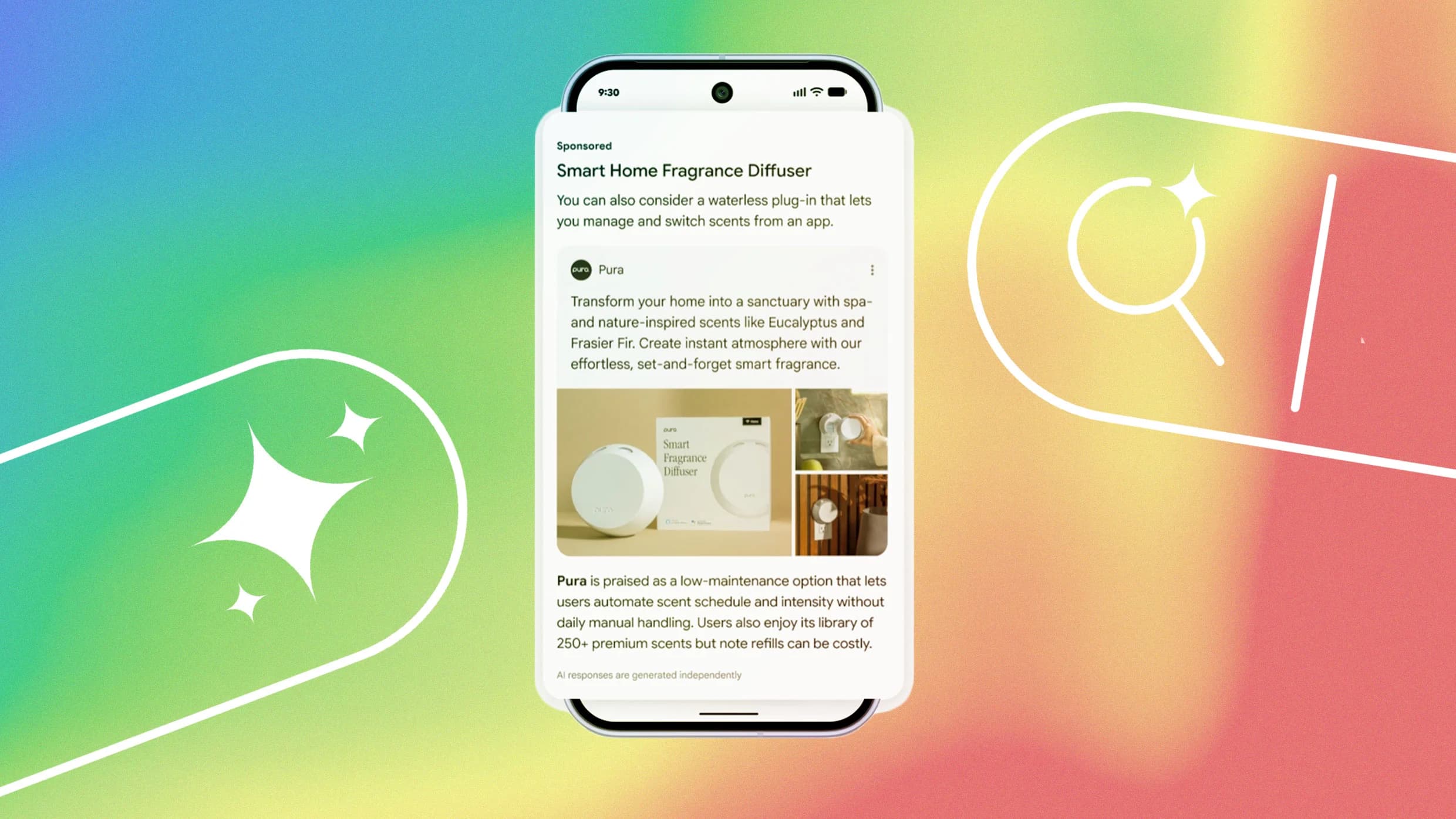
Google announced several AI-powered ad products at I/O. Each one embeds commercial content into the answer itself, not alongside it.
- Conversational Discovery ads: Built dynamically to fit the user's query. They appear as a "sponsored" section within the AI answer.
- Highlighted Ads and AI-powered Shopping Ads: Inserted into product category queries. Ask about running shoes and the ad becomes part of the response.
- Business Agents for Leads: Custom versions of Gemini that appear inside ads. Users can interact with a branded AI agent without leaving the search page.
These formats are still in testing. But the pattern is clear. Google is commercializing the AI experience across Search, even while maintaining that the Gemini chatbot itself is not an ad product. That distinction feels thinner by the month.
The Publisher Problem
Google's AI answers draw from publisher content. The old system worked like this: You searched for "best SUVs." You saw ads for Toyota or Hyundai. Below them, you saw links to Car and Driver. You clicked through. The publisher got traffic.
The new system cuts out the click. The AI reads Car and Driver's review, synthesizes the key points, and delivers them in the answer. The user gets the information. The AI-powered ad offers a path to buy. Everything happens without leaving Google.
Logicity's Take
Trust Becomes the Question
The click served a purpose beyond traffic. It let users verify. You could see where the information came from. You could check the source's credibility. You could compare multiple takes.
AI answers collapse that process. Users get a single synthesized response. They may see attribution links, but research suggests few people click them. The answer is the answer.
This creates a trust dependency. Users must believe that Google's AI assembled the best available information and presented it accurately. They must trust that sponsored content is clearly marked and does not bias the answer. They must accept that they are getting the full picture without seeing the underlying sources.
How AI companies are approaching transparency and third-party verification
What This Means in Practice
For advertisers, the new formats offer tighter integration with user intent. An ad inside an answer is harder to ignore than an ad beside a link. Engagement rates will likely climb.
For publishers, the economics get worse. They provide the training data and the source material. They receive less traffic in return. Some may pursue licensing deals with Google. Others may find themselves squeezed out of the value chain entirely.
For users, convenience increases and friction decreases. But the trade-off is opacity. You get faster answers. You lose the ability to easily interrogate where those answers came from.
Google's Stronger Position
The real story from I/O is not any single product announcement. It is Google's posture. The company was defensive a year ago. Now it is confident enough to experiment with formats that could reshape its core business.
That confidence comes from the earnings. AI disruption was supposed to threaten Google's search monopoly. Instead, search revenue is up 19%. Users are not abandoning Google for ChatGPT. They are using both, and Google is still getting the commercial queries.
The question now is whether users will accept ads embedded in AI answers as readily as they accepted ads beside links. Google is betting yes. The test results will determine how aggressively these formats roll out.
Frequently Asked Questions
Is Google putting ads in AI Overviews?
Yes. Google is testing multiple ad formats that appear within AI-generated search answers, including Conversational Discovery ads and AI-powered Shopping Ads.
Did AI search hurt Google's revenue?
No. Google Search revenue grew 19% in Q1 2025. The rise of AI search competitors like ChatGPT and Perplexity has not dented Google's core business.
Will publishers still get traffic from Google AI search?
Less of it. AI answers synthesize publisher content directly, reducing the need for users to click through to source articles.
What are Business Agents for Leads?
Custom Gemini chatbots that appear within Google ads. Users can interact with a branded AI agent to get product information without leaving the search results page.
Need Help Implementing This?
Source: Fast Company / Pete Pachal
Huma Shazia
Senior AI & Tech Writer
Produced with AI assistance and reviewed by the Logicity editorial team. Learn more in our Editorial Policy.