Key Takeaways
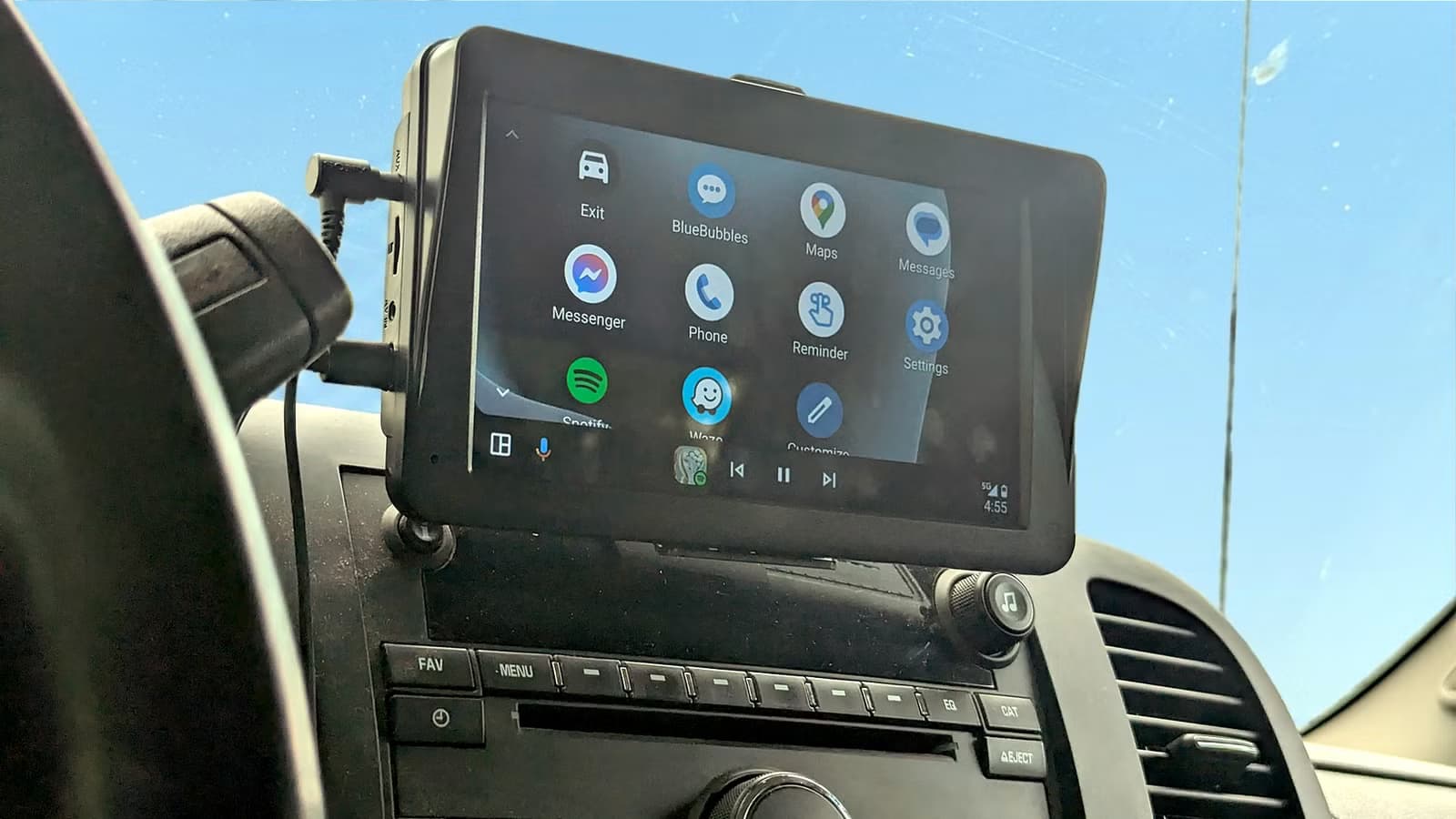
- Portable Android Auto screens cost $45-$85 and require zero wiring modifications or dashboard disassembly
- These devices work with both Android Auto and Apple CarPlay, connecting via USB power and aux cable or Bluetooth
- The interface mirrors what you'd find in factory-installed systems since Android Auto projects directly from your phone
Portable Android Auto screens sell for around $45 on Amazon and plug directly into your car's power outlet. No wiring, no dashboard surgery, no trips to an installer. For owners of older vehicles, this solves a problem that previously required either a full head unit replacement or acceptance that your 2009 truck would forever feel like 2009.
Tech journalist Joe Fedewa at How-To Geek recently documented his experience adding one of these screens to his 15-year-old truck. His initial research into aftermarket head units hit a wall fast. Compatibility was uncertain, wiring diagrams looked intimidating, and the cost kept climbing. Then he found the portable alternative.
How do portable Android Auto screens work?
These devices function as projection displays. Android Auto runs on your phone. The screen just mirrors that interface. This means the onboard computing power of the screen itself barely matters. Your phone handles navigation, music, calls, and everything else.
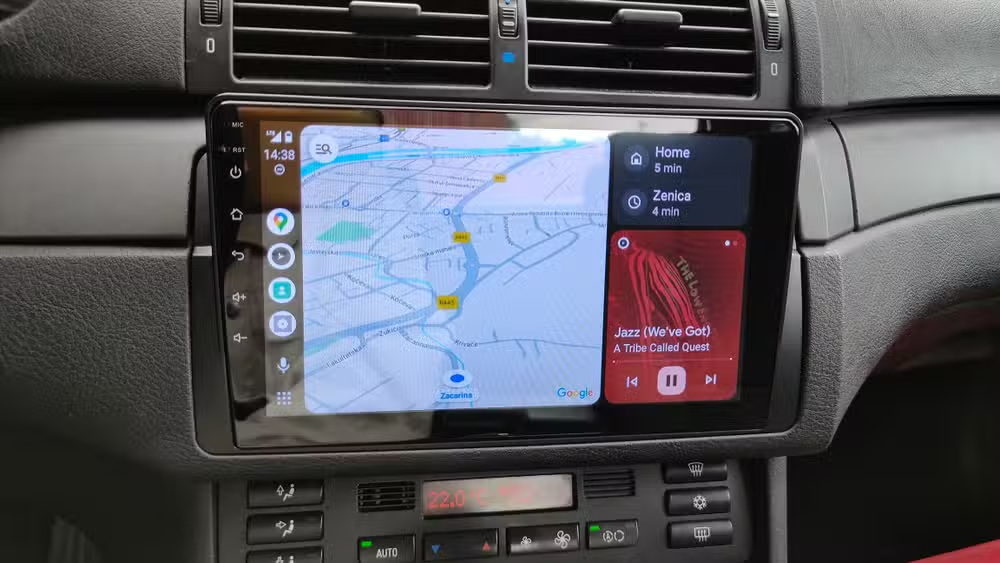
Setup requires two connections: power and audio. A USB car charger handles power. For audio, you can run a 3.5mm aux cable to your existing stereo's aux input. If your vehicle has Bluetooth built in, skip the cable entirely and pair wirelessly. The first Android Auto pairing process takes a minute or two. After that, power on the screen and the interface launches automatically.
Most vehicles cut accessory power when the engine shuts off, so you can leave the screen plugged in permanently. It powers down with the car and wakes up when you start driving.
What do these screens cost?
Fedewa paid $45 for his unit. Higher-end models with larger screens, wireless connectivity, or better build quality run up to $85. Compare that to aftermarket head units from Sony, Pioneer, or Kenwood, which start around $200 and often require professional installation at another $100 or more.
The model Fedewa bought came from a brand called Podofo. The product photos looked questionable. The brand name inspired zero confidence. Yet he reports it's worked reliably for nearly two years. Almost all of these devices support both Android Auto and Apple CarPlay, so iPhone users aren't excluded.
Why not just replace the factory head unit?
Head unit replacement remains the cleaner solution aesthetically. Everything sits flush, cables hide behind panels, and power draws directly from the vehicle's electrical system. But that cleanliness comes with complications.
Compatibility is the first hurdle. Older vehicles often have non-standard dash openings. Some require expensive adapter kits. Even units listed as "compatible" sometimes require modifications that forums don't mention until you're already frustrated. Then there's wiring. Connecting power, speakers, and sometimes steering wheel controls involves matching harness connectors or, worse, splicing wires.
For someone comfortable with car electronics, this is a weekend project. For someone who describes themselves as "not a car guy," it's a recipe for unfinished projects and trips to an installer. The portable option bypasses all of it.
What are the tradeoffs?
Aesthetics suffer. You're sticking a screen to your dashboard or windshield mount. It looks exactly like what it is: an aftermarket add-on. Cables will be visible unless you're willing to route them behind panels yourself.
Audio quality depends on your connection method. Aux cables deliver cleaner sound than Bluetooth in most setups. If your old car lacks both aux and Bluetooth, you'll need an FM transmitter, which adds another layer of compromise.
Reddit communities in r/AndroidAuto and r/CarPlay report generally positive experiences but flag wireless connection stability as hit-or-miss depending on the model. Wired connections via USB are more reliable but less convenient.
Who should consider this solution?
Anyone driving a vehicle old enough to lack Android Auto but not old enough to justify selling. If your car runs fine mechanically and you'll keep driving it for years, $45 to modernize the dashboard makes financial sense. The alternative is either living without navigation and hands-free calling or spending 5x more on a proper head unit swap.
This also works for people who want Android Auto in a secondary vehicle. A work truck, a weekend car, or a vehicle you might sell in a year. The portable screen unplugs and moves to your next vehicle in seconds.
Frequently Asked Questions
Do portable Android Auto screens work without a phone?
No. Android Auto runs on your phone and projects to the screen. The screen is just a display and touch input device. Your phone must be connected via USB or wirelessly.
Can I use Apple CarPlay on the same device?
Most portable screens support both Android Auto and Apple CarPlay. Check the product listing to confirm dual compatibility before purchasing.
Do I need to modify my car's wiring?
No wiring modification is required. The screen runs on USB power from a car charger. Audio connects via aux cable or Bluetooth to your existing stereo.
How is audio quality compared to a built-in head unit?
Audio quality depends on your connection method. Aux cables typically provide better quality than Bluetooth. FM transmitters are the worst option but work when nothing else is available.
Will the screen drain my car battery?
Most vehicles cut accessory power when the engine is off, so the screen shuts down automatically. If your cigarette lighter stays powered with the engine off, unplug the screen when parked for extended periods.
Logicity's Take
The real story here isn't the product. It's the gap in the market that created it. Automakers gatekeep Android Auto and CarPlay to sell new cars or expensive factory upgrades. Aftermarket head unit makers target enthusiasts willing to tear apart dashboards. These cheap portable screens exist because millions of people drive perfectly functional older vehicles and just want navigation without the hassle. That's a market neither group was serving well.
Another practical guide to identifying and managing connected devices in your ecosystem
Need Help Implementing This?
Looking for guidance on car tech upgrades or other DIY projects? Reach out to our team at Logicity.in for recommendations tailored to your setup.
Source: How-To Geek
Manaal Khan
Tech & Innovation Writer
Produced with AI assistance and reviewed by the Logicity editorial team. Learn more in our Editorial Policy.