Key Takeaways
- Use the Big Dipper's handle to 'arc to Arcturus', the fourth brightest star in the night sky
- Bootes represents a herdsman in Greek mythology and the tip of an azure dragon in Chinese astronomy
- Corona Borealis depicts the crown of Ariadne from Greek mythology
Spring delivers a fresh lineup of constellations to the night sky. May is the prime month to spot stellar patterns that have captured human imagination for thousands of years. Four constellations in particular stand out this month, each carrying myths from ancient Greek and Chinese cultures.
Before telescopes revealed stars as nuclear fusion reactors burning across vast cosmic distances, ancient civilizations saw them as something more personal. They connected the dots into heroes, beasts, and sacred objects. Those stories still hang above us every clear night.
Bootes: The Herdsman and the Dragon's Horn
Bootes has collected myths like a magnet. Greek astronomers saw a herdsman driving a great plow, represented by the nearby Big Dipper asterism. The constellation also goes by Arcturus, the name of its brightest star, which translates roughly to 'guardian of the bears'. This refers to Ursa Major and Ursa Minor, the bear constellations that Bootes appears to watch over, according to NASA's Chandra Space Telescope website.
Chinese astronomers saw something different. They combined Bootes and Virgo into a larger pattern representing the horn of an azure dragon. Arcturus served as the glowing tip of that celestial beast.
How to Find Bootes
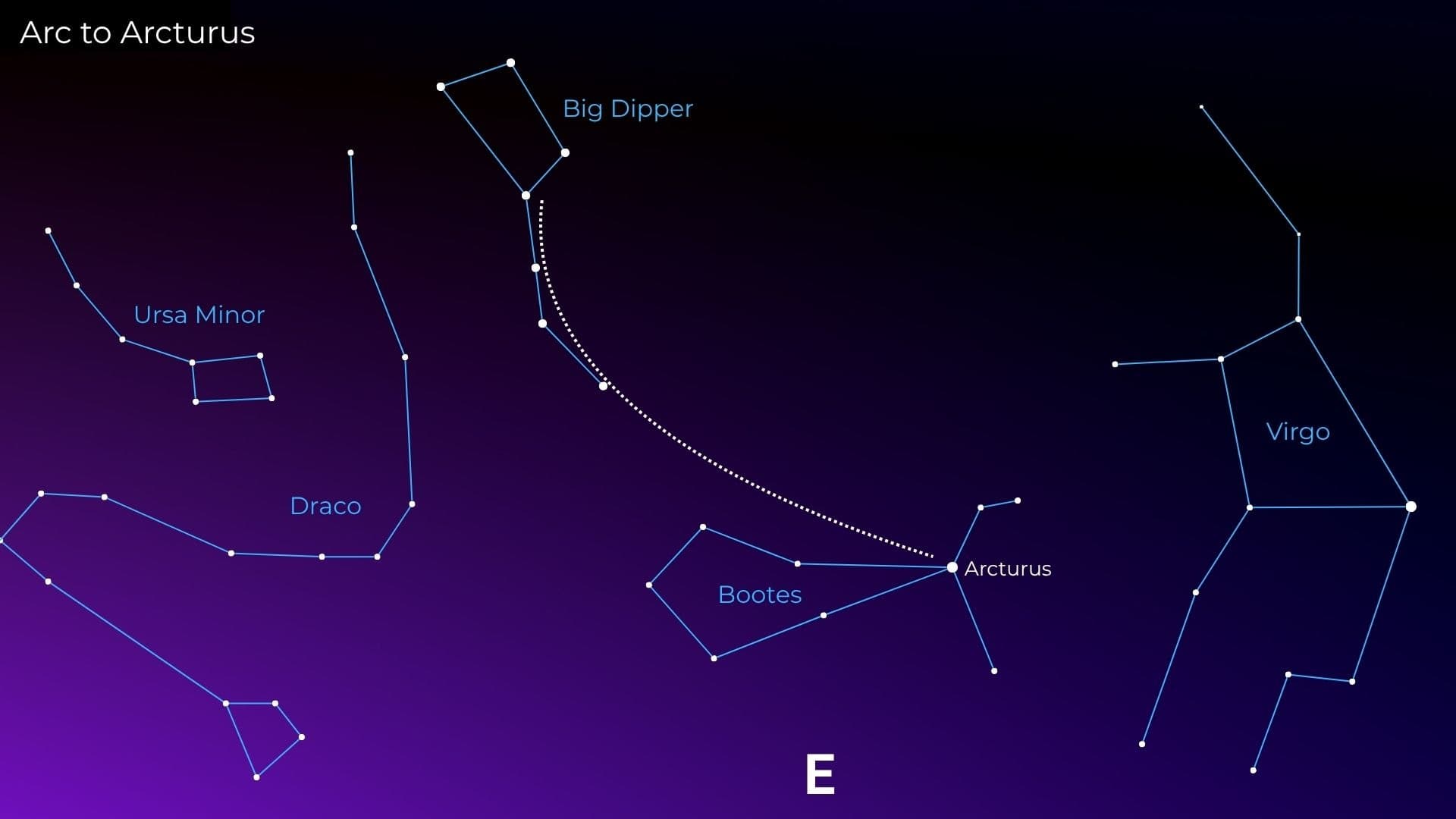
Finding Bootes requires knowing one trick that stargazers call 'arc to Arcturus'. Start with the Big Dipper, which hovers above the northern horizon year-round. Locate the three stars that form the handle. Follow their curve outward into space, continuing for roughly the length of the entire Big Dipper. You'll land on Arcturus, the fourth brightest star visible from Earth.
Arcturus shines with an orange hue, making it easier to distinguish from surrounding stars. Once you've found it, the rest of Bootes takes shape around it.
Corona Borealis: The Crown of Ariadne
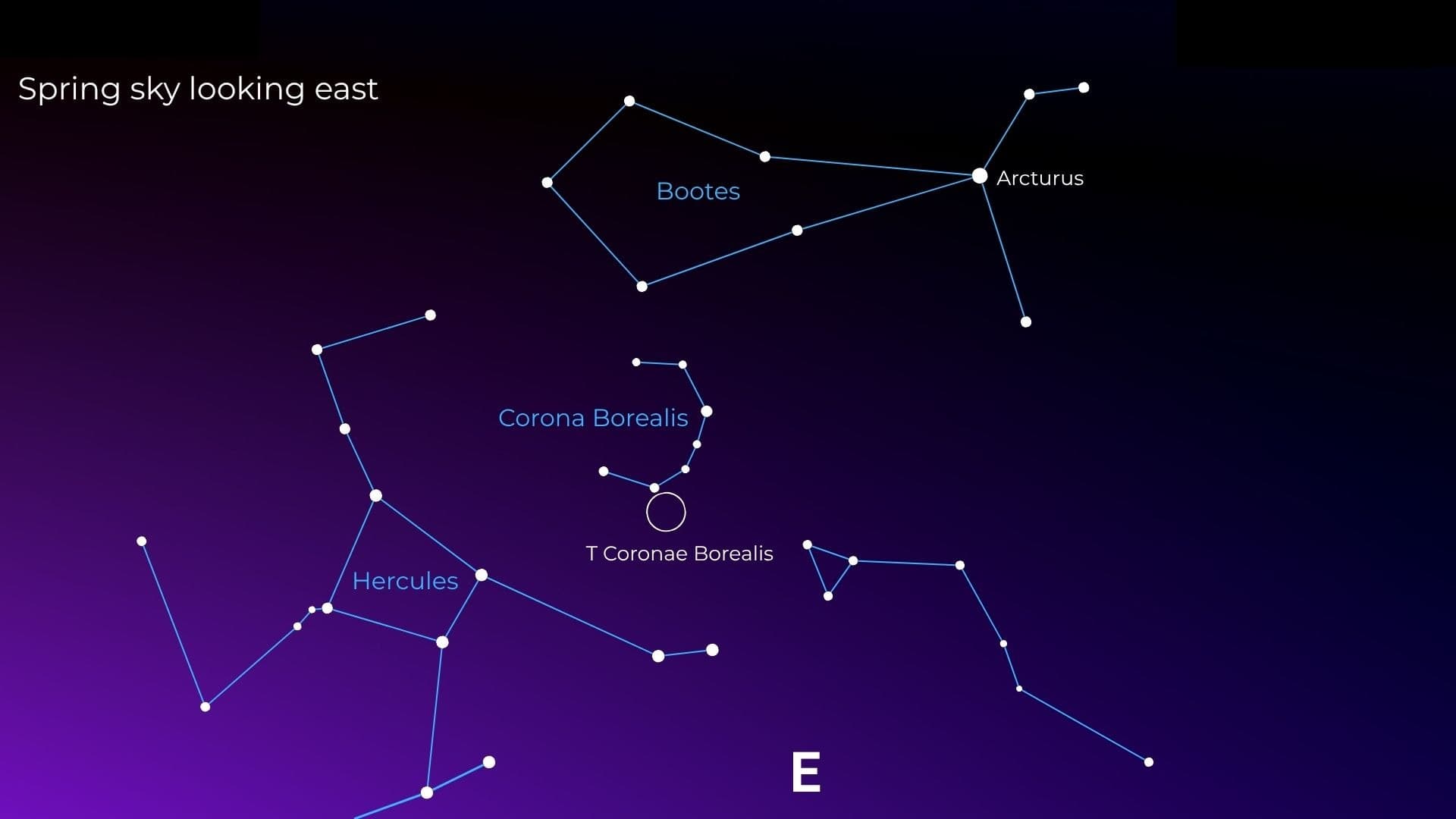
The constellation Corona Borealis forms a distinctive arc of stars. In Greek mythology, this arc represents the crown of Ariadne. Her story connects to one of the most famous Greek myths.
Ariadne helped the hero Theseus defeat the Minotaur in the labyrinth beneath the island of Crete. In some versions of the myth, she later married Dionysus, the god of wine. Her crown was placed among the stars to honor her.
Tools for Finding Constellations
If you're new to stargazing, smartphone astronomy apps can accelerate your learning. These apps use your phone's GPS and compass to identify stars, planets, and constellations in real time. Point your phone at the sky and the app overlays constellation outlines on your camera view.
Most apps also track galaxies and nebulas for those who graduate beyond naked-eye stargazing. Free versions work well enough for constellation hunting.
Why These Stories Persist
Humanity's relationship with the stars stretches back several millennia. Every culture that looked up found meaning in the patterns. Greek shepherds saw bears and heroes. Chinese astronomers saw dragons and celestial bureaucracies. Australian Aboriginal peoples mapped songlines across the sky.
We now understand stars as incandescent orbs powered by nuclear fusion. But the myths haven't lost their pull. They connect us to ancestors who stood under the same stars, asking the same questions about what it all means.





Logicity's Take
Frequently Asked Questions
What is the best time to see spring constellations?
Late evening in May offers optimal viewing. Wait until at least an hour after sunset for the sky to fully darken. Spring constellations rise highest around 10 PM local time.
How do I find Arcturus without an app?
Use the 'arc to Arcturus' technique. Find the Big Dipper's handle, follow its curve outward for roughly the Big Dipper's length, and you'll land on Arcturus, an orange-tinted star.
Why is Arcturus called the guardian of the bears?
The name comes from Greek, meaning 'bear guard'. Arcturus appears to watch over Ursa Major and Ursa Minor, the Great Bear and Little Bear constellations.
What makes Corona Borealis easy to identify?
Corona Borealis forms a distinctive semicircular arc of stars. Unlike most constellations that require imagination to see their shapes, the crown pattern is immediately recognizable.
Need Help Implementing This?
Source: Latest from Space.com
Huma Shazia
Senior AI & Tech Writer
Produced with AI assistance and reviewed by the Logicity editorial team. Learn more in our Editorial Policy.