Key Takeaways
- Old phones mounted near windshields can overheat and cause battery swelling, creating a fire risk in hot conditions
- Using a basic 5W charger instead of fast charging reduces heat buildup during continuous recording
- Lithium-ion batteries operate safely up to 45°C (113°F) but dashboard conditions often exceed this
Why Your Drawer Phone Makes a Decent Dashcam
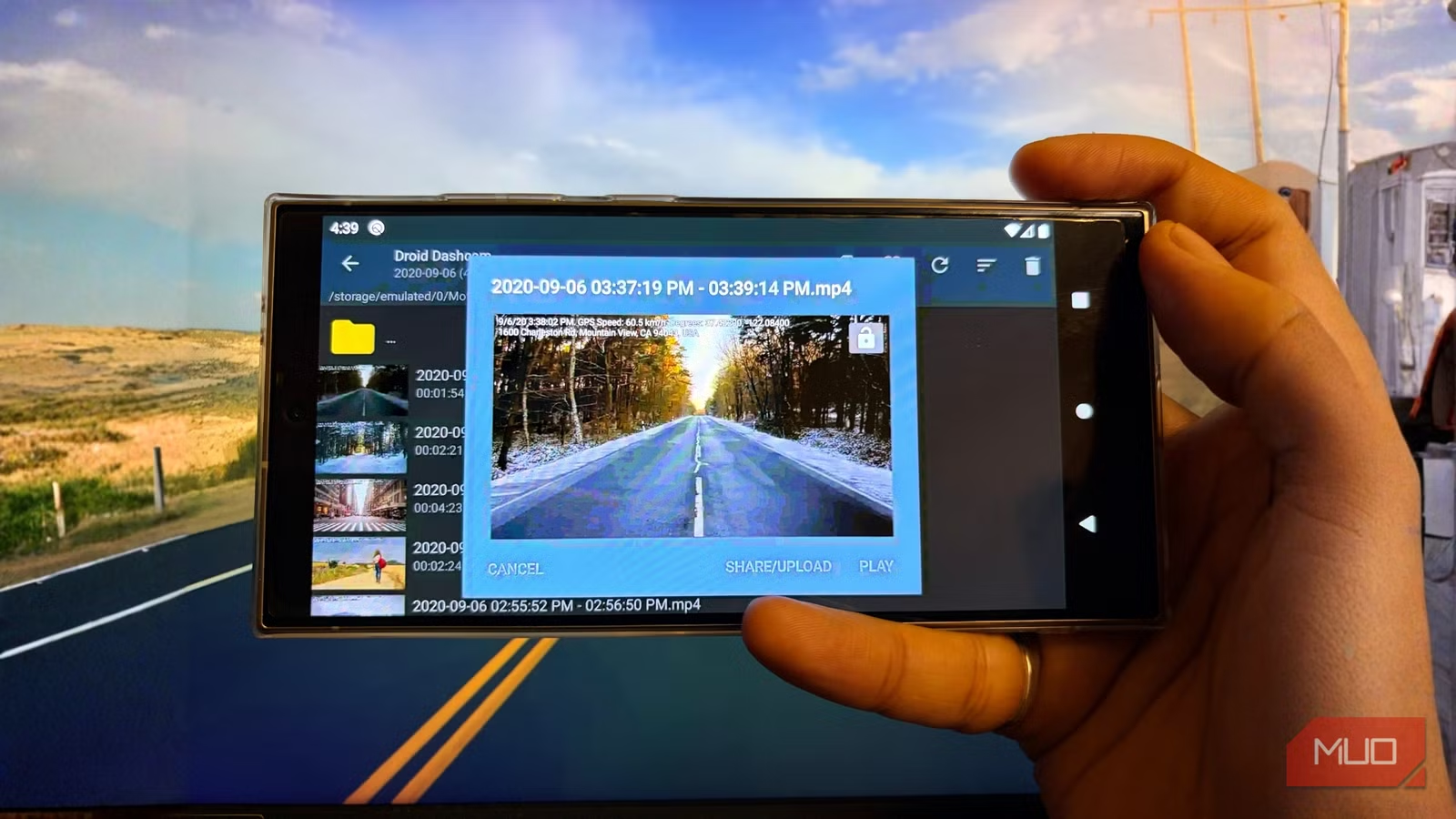
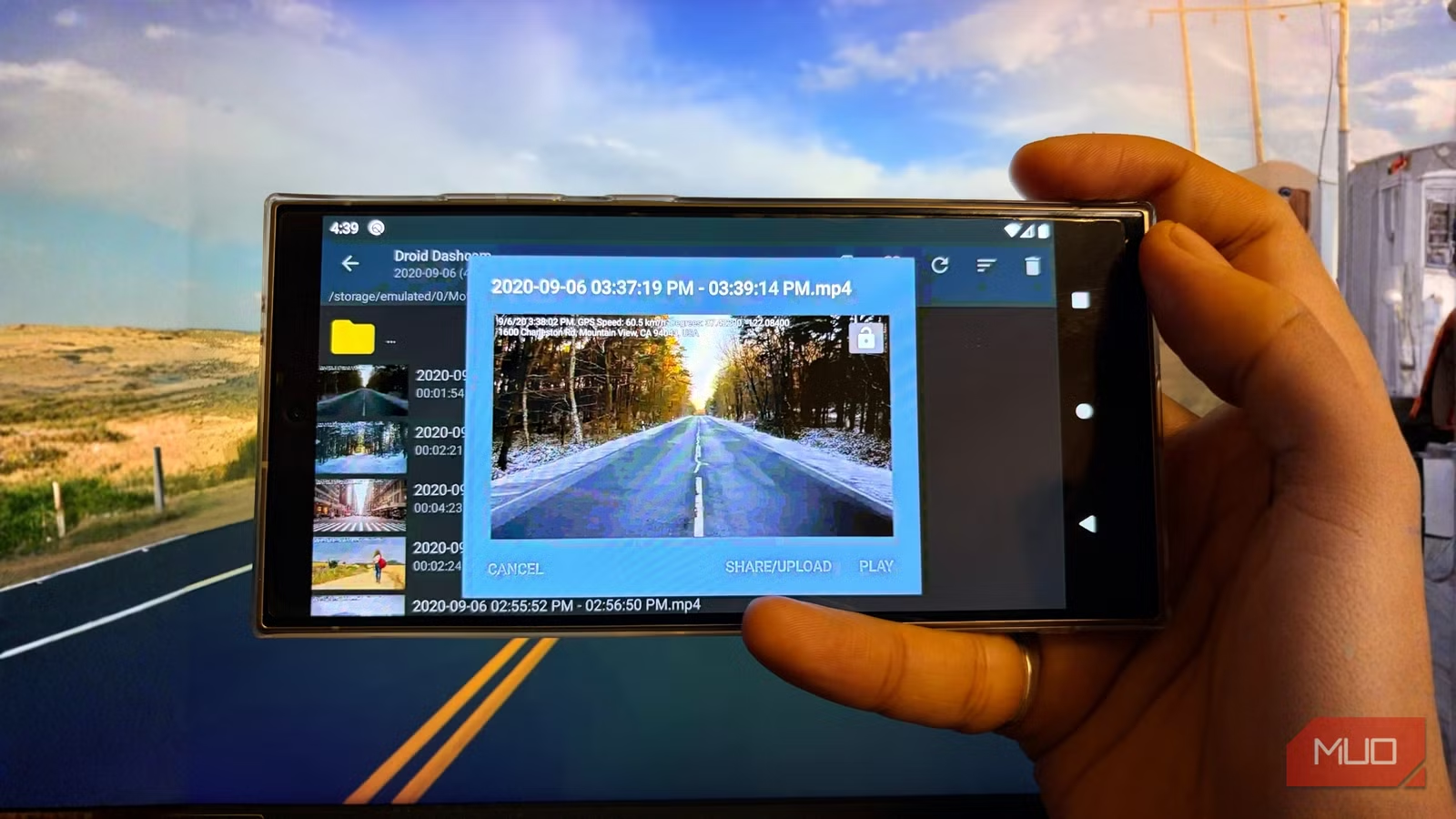
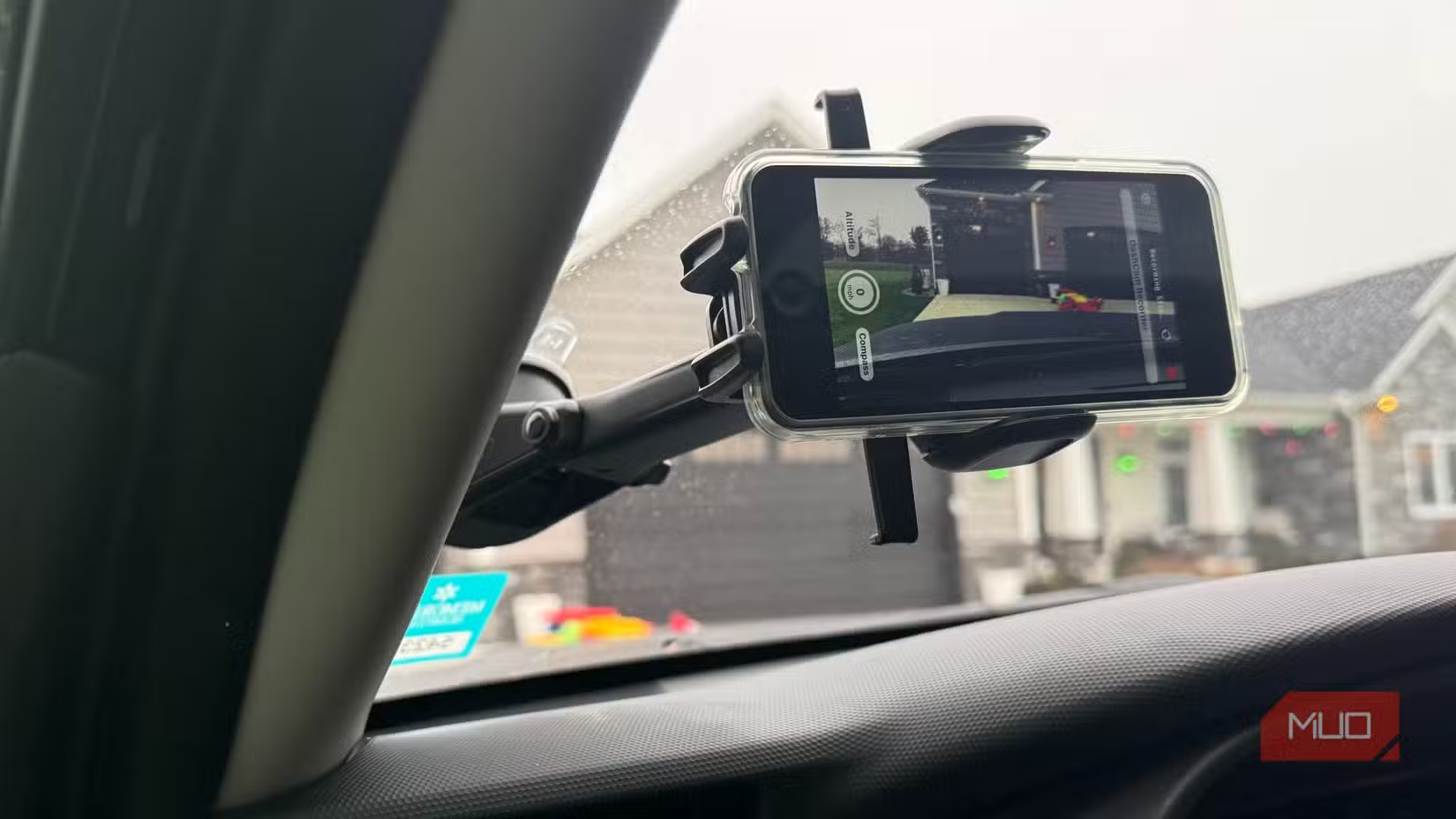
A dashcam feels unnecessary until you need one. A fender bender with no witnesses, an insurance claim that turns into a dispute. Having actual footage can be the difference between a smooth claim and a messy fight. Most standalone dashcams cost $30 to $100, but that old phone in your drawer already has everything: a camera, storage, and processing power to record road footage.
Free apps like Droid Dashcam for Android and Dashcam Recorder for iOS make the software side simple. Getting it to work reliably, though, takes more thought than most tutorials mention. Three problems catch people off guard.
Problem 1: Summer Heat Can Swell Your Battery
Using an old phone as a dashcam sounds like smart recycling. But once the phone is mounted and recording for hours, heat becomes the first real problem. A phone acting as a dashcam does three things at once: running a camera app continuously, processing and writing video to storage, and charging through a cable the whole time. All three generate heat, and together they can push the phone well beyond its safe operating range.
The phone sits near the windshield, where glass traps and intensifies surrounding heat. Air conditioning cools cabin air, not the phone's surface baking in direct sunlight. Older phones make this worse because their processors and batteries are no longer as efficient, especially under sustained workloads like continuous video recording.
Lithium-ion batteries are rated to operate safely up to around 45°C (113°F). When a phone crosses that threshold repeatedly, the electrolyte inside the battery begins to break down and produce gas. This is what causes battery swelling. In an enclosed phone sitting in a hot car, a swollen lithium-ion battery is a fire hazard. The risk is higher in older devices where the battery has already lost some of its original capacity through years of charge cycles.
The Fix: Slower Charging, Less Heat
Start with the charger. Switching from a fast charger to a basic 5W charger cuts down on charging heat. Fast charging adds warmth on top of heat from recording and sunlight. A slower charger keeps the phone topped up without contributing as much to the thermal load.
- Use a basic 5W charger instead of fast charging
- Remove the phone case to improve heat dissipation
- Mount the phone on the dashboard edge rather than directly on the windshield
- Consider a vent-mounted phone holder to catch AC airflow
- Check the phone periodically for warmth during long drives
Removing the phone case also helps. Cases trap heat that would otherwise dissipate into the air. A naked phone runs cooler than one wrapped in silicone or plastic, even if it looks less protected.
Problem 2: Storage Fills Up Fast
Continuous video recording eats storage quickly. At 1080p, a dashcam app can use 200-400MB per hour depending on compression. An old phone with 16GB or 32GB of storage might have only 8-15GB free after the operating system and residual apps take their share.
That means 20-75 hours of footage before the phone runs out of space. Most dashcam apps handle this with loop recording, automatically deleting the oldest clips when storage fills up. But you need to configure this correctly. Without loop recording enabled, the app simply stops recording when storage is full, defeating the purpose.
Problem 3: Older Processors Struggle with Video
Recording and encoding video continuously is processor-intensive work. A phone from 2018 or 2019 may handle it, but with more strain than a newer device. This shows up as dropped frames, app crashes, or the phone becoming sluggish and unresponsive.
Before committing to this setup, test the phone at home. Record video for 30-60 minutes while charging and see how the phone handles it. Check for overheating warnings, app stability, and video quality. If the test goes poorly, the phone may be too old for reliable dashcam duty.
When a Dedicated Dashcam Makes More Sense
A repurposed phone works, but it has limits. Dedicated dashcams are built to handle extreme temperatures. They use capacitors instead of lithium-ion batteries, avoiding the swelling risk entirely. They also start recording automatically when the car turns on and handle storage loops without configuration.
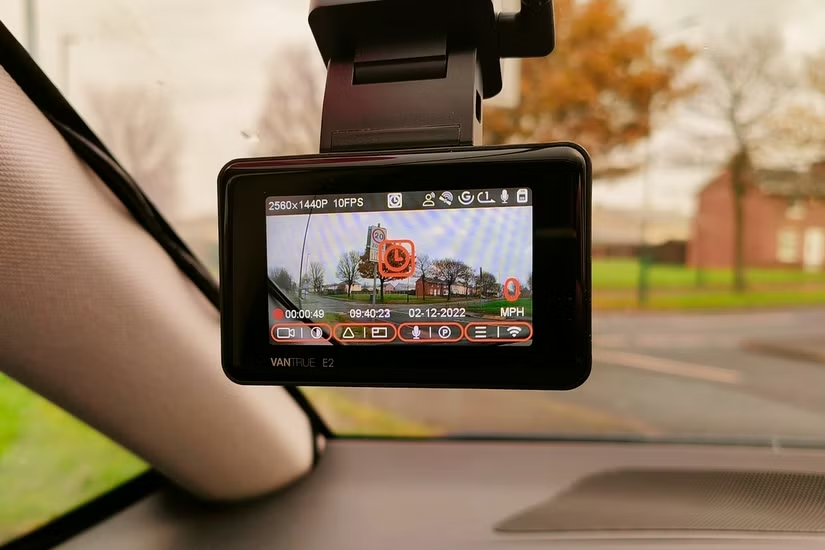
If you drive daily in hot climates, or need footage you can rely on for insurance purposes, a $50-100 dedicated dashcam may be worth the cost. The old phone approach works best for occasional use, cooler climates, or as a stopgap while you decide whether dashcam footage matters enough to invest in proper hardware.
✅ Pros
- • Free if you already have an old phone
- • Higher video quality than budget dashcams
- • Easy to view and share footage
- • Can be upgraded with better dashcam apps over time
❌ Cons
- • Battery swelling risk in hot conditions
- • Requires manual setup and testing
- • May not survive extreme dashboard temperatures
- • No automatic recording on car startup
Logicity's Take
Frequently Asked Questions
Can I use my old phone as a dashcam without data?
Yes. Dashcam apps record locally to the phone's storage. You don't need cellular data or Wi-Fi for basic recording, though some apps offer cloud backup features that require connectivity.
What temperature is too hot for a phone dashcam?
Lithium-ion batteries are rated to operate safely up to 45°C (113°F). Dashboard surfaces in summer can exceed this easily. If the phone shows overheating warnings or feels too hot to hold, it's time to stop recording.
How long can an old phone record as a dashcam?
With loop recording enabled, indefinitely. The app deletes old footage as storage fills up. Without loop recording, a phone with 10GB free might record 25-50 hours before stopping.
Is phone dashcam footage good enough for insurance claims?
Usually yes. Most phones record at 1080p, which is sufficient for license plates and accident details. The bigger question is whether your phone will reliably record when you need it to.
Should I use fast charging with a phone dashcam?
No. Fast charging generates significant heat. Use a basic 5W charger to reduce thermal load while the phone is already dealing with recording heat and sunlight.
More practical tech repurposing ideas
Need Help Implementing This?
Source: MakeUseOf
Manaal Khan
Tech & Innovation Writer
Produced with AI assistance and reviewed by the Logicity editorial team. Learn more in our Editorial Policy.