Key Takeaways
- Game server backups prevent data loss from bad mods or configuration errors
- Local GitHub mirrors protect your code if the service goes down
- LanCache can cut household bandwidth usage by 40% for game updates
The homelab community has shifted. It's no longer about collecting hardware. It's about collecting data autonomy. This weekend's projects focus on two things every serious homelab operator needs: reliable backups and smarter bandwidth management.
Patrick Campanale at How-To Geek outlined three projects worth tackling between May 29 and 31. Each one addresses a real pain point. Each one can be completed in a few hours.
Project 1: Game Server Backup Snapshots
If you host game servers for friends or family, you've probably experienced the sinking feeling of a corrupted save or a bad mod upload. Campanale describes exactly this scenario. A friend's server stopped working due to a configuration error. Progress was lost. The server had to be restarted from scratch.
The fix is straightforward: set up automated backup snapshots. You have two main options.
- Use the game server software's built-in backup features. This lets you restore a single server without touching the entire VM.
- Back up the entire virtual machine in Proxmox. This acts as a secondary protection layer if the game server software itself corrupts.
For multiple servers, the first method is usually better. You can roll back one server while the others keep running. The VM-level backup becomes your insurance policy.
This project takes an hour or two to set up properly. The payoff comes the first time someone uploads a broken mod and you can roll back in minutes instead of starting over.
Project 2: Mirror Your GitHub Repositories Locally
GitHub is reliable. But it's not your server. If the service goes down, or your account gets flagged, or GitHub changes its policies, your code could become inaccessible. A local mirror solves this.
The homelab community has embraced GitOps principles. According to industry tracking, 65% of enterprise-grade homelabbers now use some form of automated infrastructure-as-code to manage their services. Your code repositories deserve the same level of protection as your game saves.
“We've moved past the era of 'will it run?' and into the era of 'is it reproducible?' Using GitOps isn't just for the pros anymore—it's the only way to sleep soundly knowing your lab can be rebuilt from scratch in minutes.”
— David Chen, Founder of SelfHost Weekly
For self-hosted Git mirrors, the Reddit homelab community recommends Forgejo or Gitea as lightweight alternatives. Both run well on modest hardware and can sync with your GitHub repos on a schedule.
Project 3: Set Up Local Update Caching with LanCache
Modern games ship 100GB+ updates. Operating systems push gigabytes of patches monthly. If you have multiple devices in your household, that bandwidth adds up fast.
LanCache acts as a local proxy for game and software downloads. The first device downloads the update from the internet. Every device after that pulls from your local cache at LAN speeds.
This matters more in 2026 than ever. Local, self-hosted LLM inference traffic on home networks has increased 1200% since early 2025. Between AI workloads, game updates, and OS patches, home networks are under more pressure than ever.
Some Hacker News users argue that modern game launchers have peer-to-peer delivery features that make caching less necessary. But if you're running a household with multiple PCs or a small office, the bandwidth savings are still substantial.
Why These Projects Matter Now
Cloud service fatigue is real. Every subscription, every service that holds your data hostage, every outage that takes your tools offline. The homelab community's response has been to prioritize data sovereignty.
These three projects share a common thread: they give you control. Control over your game data. Control over your code. Control over your bandwidth.
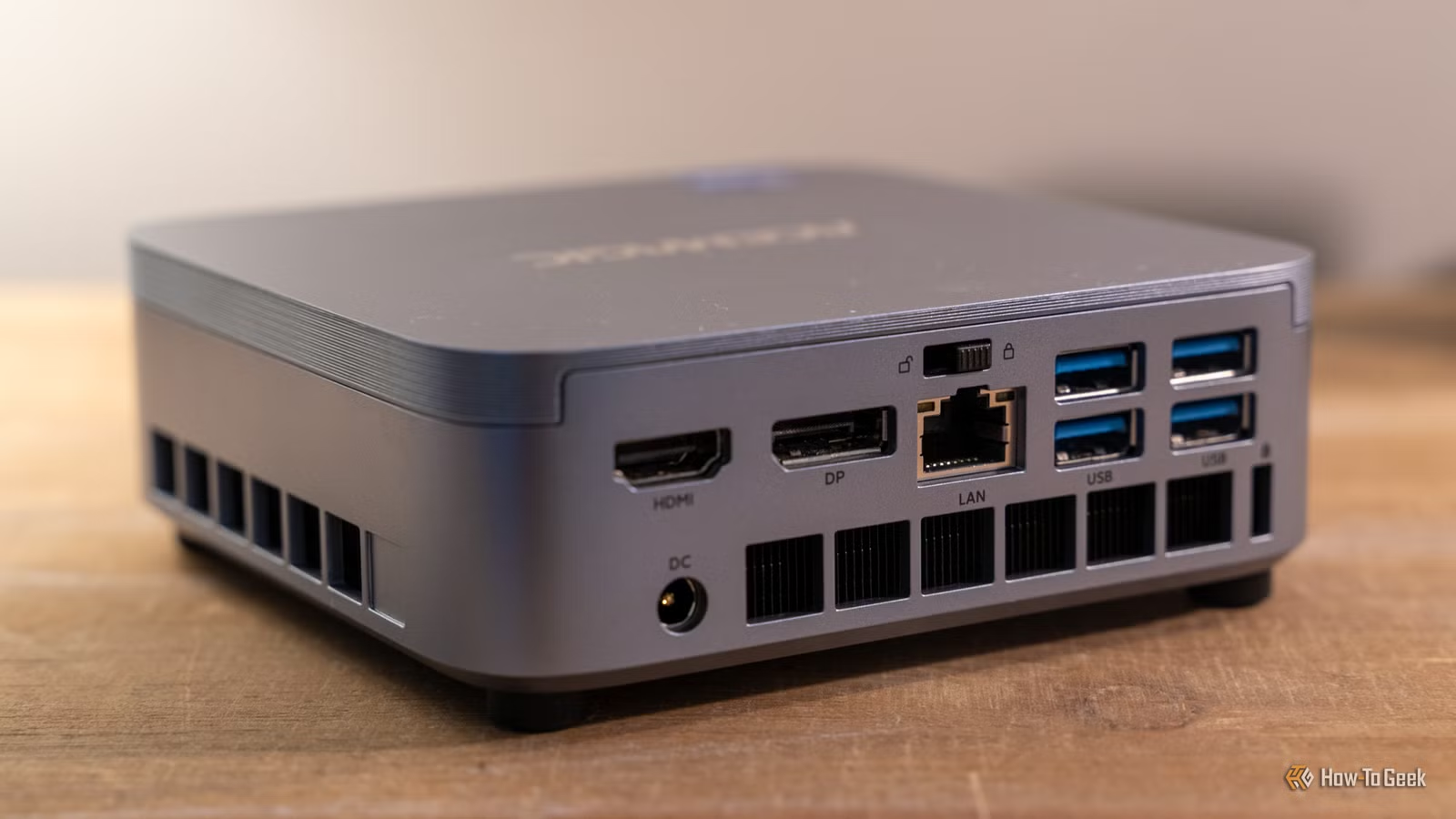
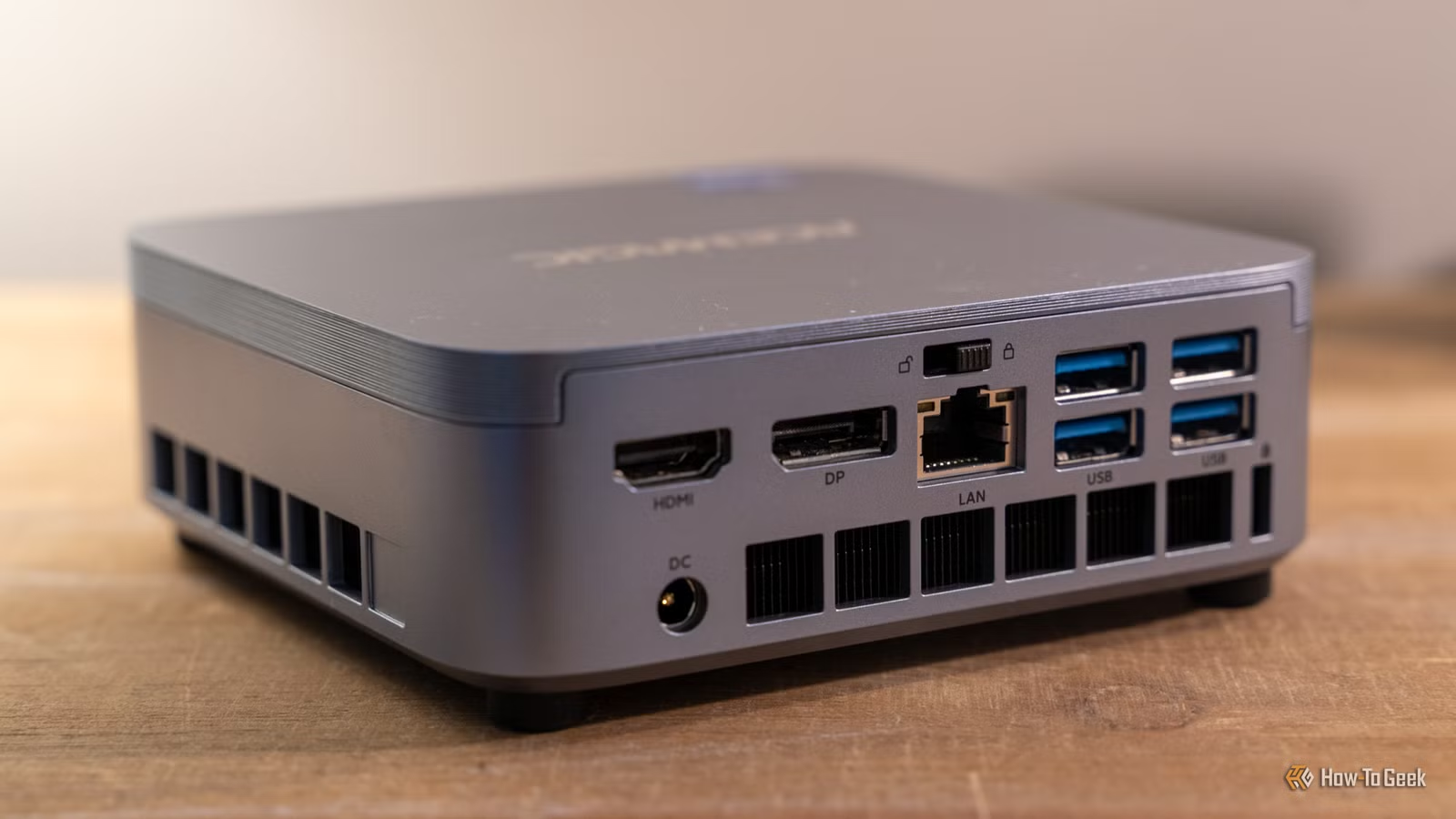
None of them require expensive hardware. A mini PC, some storage, and a weekend afternoon. That's all it takes to build infrastructure that's yours.


Logicity's Take
Another practical homelab automation project
Frequently Asked Questions
How much storage do I need for game server backups?
It depends on the game, but most server saves are small. Allocate 10-50GB for backup retention across multiple snapshots. Proxmox makes it easy to set retention policies that automatically delete old backups.
Can I run LanCache on a Raspberry Pi?
Technically yes, but performance will be limited. A mini PC with an SSD and gigabit ethernet is a better choice. The cache benefits from fast storage and network speeds.
Is Forgejo better than Gitea for self-hosted Git?
Forgejo is a community fork of Gitea with a focus on open governance. Functionally they're similar. Pick whichever has the community and update cadence you prefer.
How often should I back up game servers?
Daily is a good baseline. For active multiplayer servers with frequent changes, consider hourly snapshots with a shorter retention window.
Does LanCache work with all game platforms?
LanCache supports Steam, Epic Games, Origin, Battle.net, and most major platforms. Check the LanCache documentation for the current list of supported services.
Need Help Implementing This?
Source: How-To Geek
Huma Shazia
Senior AI & Tech Writer
Produced with AI assistance and reviewed by the Logicity editorial team. Learn more in our Editorial Policy.