Key Takeaways
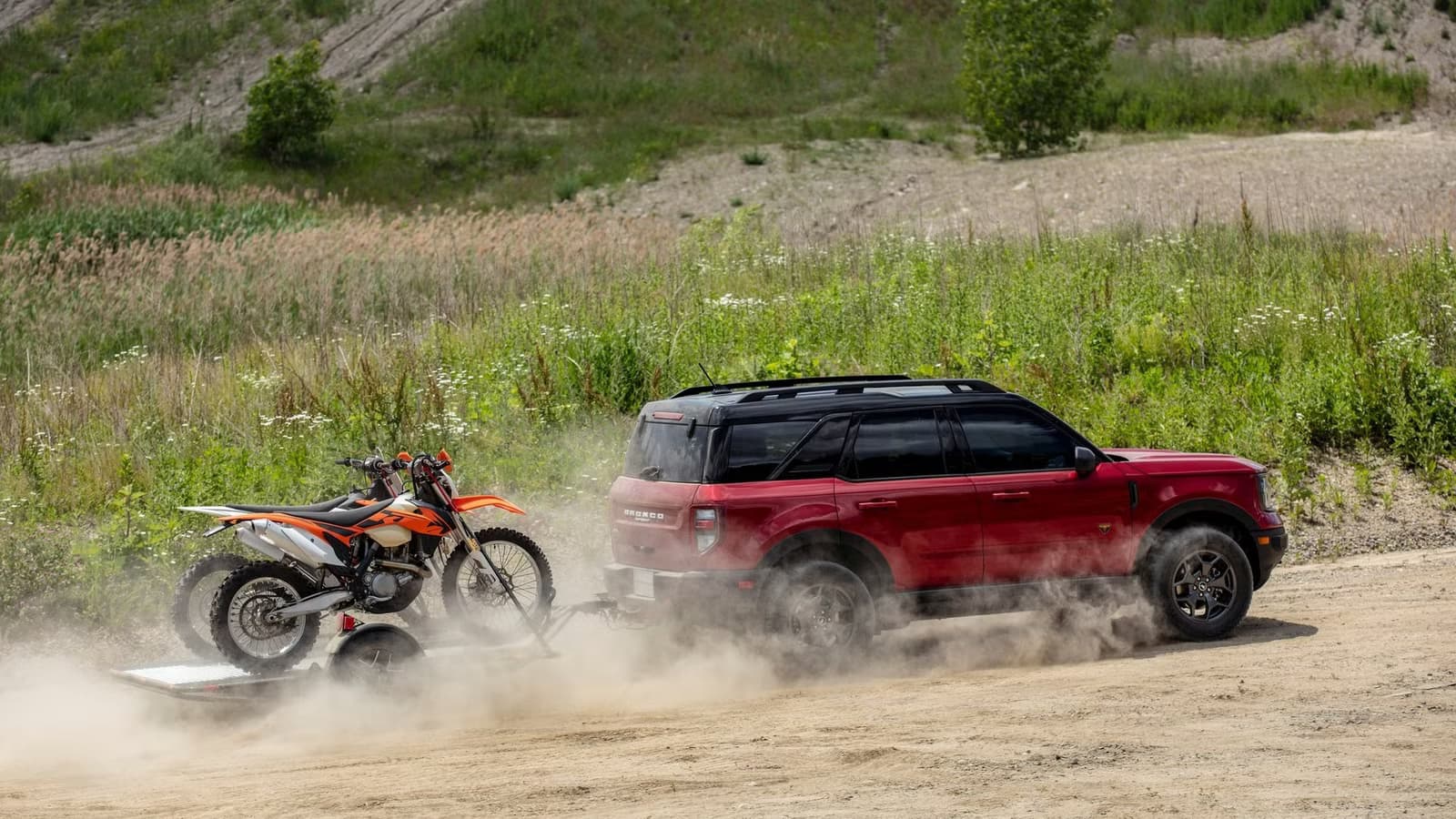
- The 2026 Ford Bronco Sport starts at $31,845, just $55 less than the base RAV4, but includes standard four-wheel drive
- The Badlands trim ($37,265) adds a 250-hp turbo engine that hits 0-60 in 5.9 seconds plus lifted suspension
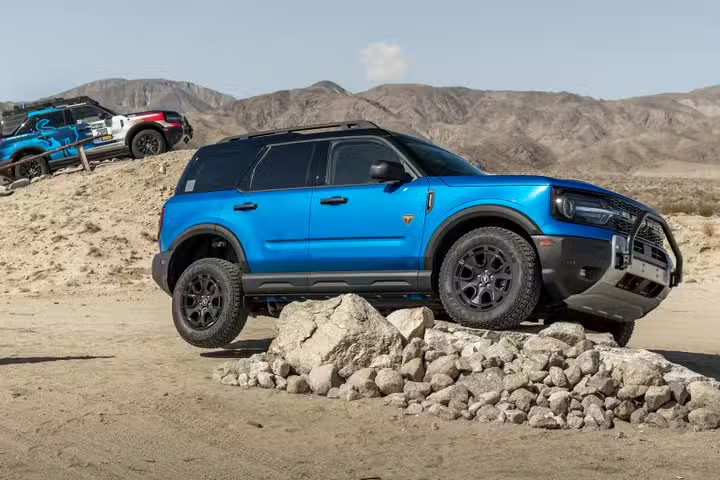
- The optional Sasquatch package delivers 8.7 inches of ground clearance with bash plates and upgraded tires
Ford's 2026 Bronco Sport starts at $31,845, making it $55 cheaper than the base Toyota RAV4. The difference: standard four-wheel drive and hardware designed to actually leave pavement. For buyers who want weekend trail access without paying Wrangler money, this compact SUV fills a gap most crossovers ignore.
The RAV4 dominates its segment through fuel efficiency and daily practicality. Toyota made the hybrid powertrain standard, prioritizing MPG above almost everything else. That formula works for commuters. It does not work for anyone who actually wants to use dirt roads.
Ford took the opposite approach. Every Bronco Sport comes with 4WD and G.O.A.T. (Goes Over Any Type of Terrain) driving modes. These are not marketing gimmicks on a pavement-only crossover. The system adjusts throttle response, traction control, and stability settings for mud, sand, rock crawl, and several other surfaces.
What does each Bronco Sport trim cost?
Ford offers four trims for 2026, all with standard 4WD. The price spread is about $5,400 from base to top.
| Trim | Starting MSRP |
|---|---|
| Big Bend | $31,845 |
| Heritage | $33,395 |
| Outer Banks | $35,145 |
| Badlands | $37,265 |
The Badlands is the only trim that gets Ford's 250-horsepower 2.0-liter turbo-four. That engine pushes the Bronco Sport to 60 mph in 5.9 seconds, quick for this class. The lower trims use a 181-hp 1.5-liter turbo-three, adequate but not exciting.
How does the Sasquatch package change things?
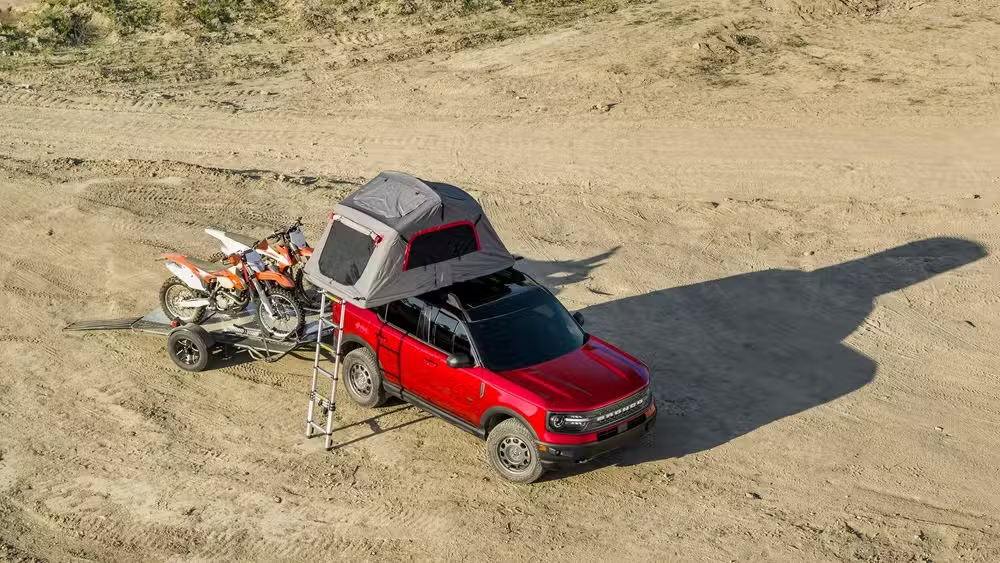
The Sasquatch package, available on Badlands, adds genuine trail components. Ground clearance jumps to 8.7 inches. Ford includes bash plates to protect the underbody, plus upgraded all-terrain tires. The suspension gets retuned for rougher surfaces.
Community reaction on r/FordBronco has centered on whether the Sasquatch price premium makes sense for a unibody vehicle. The debate is legitimate. A fully loaded Badlands Sasquatch approaches the price of used full-size Broncos or 4Runners, which are body-on-frame trucks with significantly more off-road ceiling.
What can't the Bronco Sport do?
This is not a Jeep Wrangler. It will not follow body-on-frame trucks through the most demanding trails. The unibody construction limits maximum articulation, and approach angles cannot match dedicated off-roaders.
It also cannot match the RAV4's fuel economy. Toyota's hybrid tech delivers better MPG, period. If your commute is long and your trails are nonexistent, the RAV4 remains the rational choice.
But rationality is not the only buying criterion. The Bronco Sport has actual personality, something missing from most compact crossovers. The squared-off styling references the full-size Bronco. The interior has a rubberized floor option for muddy boots. These details signal that Ford expects owners to use the capability, not just admire it in the brochure.
Who should actually buy this?
The Bronco Sport targets what Ford calls "weekend warriors," people who commute during the week but want to reach trailheads, campsites, or ski resorts on weekends. Standard 4WD means no weather surprises on mountain roads. The cargo area is sized for bikes, gear, and dogs.
For CTOs or founders who live in cities but escape to mountains or beaches regularly, this math checks out. You get real capability without the parking nightmares of a full-size truck.
Is the Badlands worth $5,400 over base?
If you actually plan to use the off-road hardware, yes. The turbo-four engine alone justifies part of the premium. The upgraded dampers and lifted suspension make a tangible difference on trails. The base Big Bend is capable, but the Badlands is where Ford's engineers stopped holding back.
For buyers who will never leave pavement, the Big Bend at $31,845 offers excellent value. Standard 4WD, G.O.A.T. modes, and the Bronco's distinctive styling come without the trail-specific hardware you would not use anyway.
Logicity's Take
Ford has carved out a genuine niche between soft-roader crossovers and expensive body-on-frame trucks. The Bronco Sport is not trying to be everything. It accepts fuel economy trade-offs to deliver capability most competitors fake. For the growing segment of buyers who treat their SUV as weekend recreation equipment, this focus makes it a smarter buy than another interchangeable crossover.
Upgrading your vehicle's tech without buying new
Frequently Asked Questions
Is the 2026 Ford Bronco Sport a real off-road vehicle?
It's more capable than most compact crossovers, with standard 4WD and G.O.A.T. terrain modes. The Badlands trim with Sasquatch package adds 8.7 inches of ground clearance and bash plates. However, its unibody construction means it cannot match body-on-frame trucks like the Jeep Wrangler on the most technical trails.
How does the Bronco Sport compare to the RAV4 on price?
The base Bronco Sport Big Bend starts at $31,845, which is $55 less than the base RAV4 at $31,900. However, the RAV4 includes a hybrid powertrain for better fuel economy, while the Bronco Sport includes standard 4WD for better off-road capability.
What engine does the 2026 Bronco Sport Badlands have?
The Badlands is the only trim with Ford's 250-horsepower 2.0-liter turbocharged four-cylinder engine, which achieves 0-60 mph in 5.9 seconds. Other trims use a 181-hp 1.5-liter turbo-three.
What is the Bronco Sport Sasquatch package?
The Sasquatch package, available on Badlands, adds serious off-road hardware: 8.7 inches of ground clearance, bash plates for underbody protection, all-terrain tires, and retuned suspension for rough terrain.
Should I buy the Bronco Sport or wait for a used full-size Bronco?
A fully loaded Badlands Sasquatch approaches used full-size Bronco pricing. If maximum off-road capability is your priority and parking size is not an issue, the larger truck offers more ceiling. If you need city practicality with weekend trail access, the Bronco Sport's compact size is the advantage.
Need Help Implementing This?
Looking to optimize your fleet purchasing decisions or analyze vehicle total cost of ownership? Logicity covers the intersection of technology, business, and practical decision-making. Subscribe for weekly insights on the tools and machines that power modern work.
Source: How-To Geek
Huma Shazia
Senior AI & Tech Writer
Produced with AI assistance and reviewed by the Logicity editorial team. Learn more in our Editorial Policy.