
Key Takeaways

- Stolen credentials remain the #1 way attackers breach networks in 2025
- Zero Trust only works when identity governance is the foundation, not an afterthought
- Least privilege access and continuous authentication are critical components
- Session hijacking and token theft can bypass traditional login security
- Device trust binding helps prevent attackers from using stolen credentials
Read in Short
Credential theft is still the most common way hackers get into networks. Zero Trust can actually solve this problem, but only if you implement it with identity at the center. Slapping on some access controls and calling it a day won't cut it.
So here's something that should make every IT admin lose sleep: stolen credentials accounted for 22% of all known initial access vectors last year. That's not some obscure attack method. That's hackers literally walking through the front door with someone else's keys.
And the problem doesn't stop at the login screen. Once attackers get inside, they typically find a goldmine of excessive permissions and practically zero visibility into what they're doing. They escalate privileges, move laterally, and by the time anyone notices, the damage is done.
This is where Zero Trust enters the conversation. You've probably heard the term thrown around in every security pitch for the past five years. The concept sounds great on paper: trust nothing, verify everything. But here's the thing that vendors don't always mention. Implementing Zero Trust as a checklist of isolated security controls is basically useless. If there are gaps between those controls, attackers will find them. They always do.
What Zero Trust Gets Wrong (And How to Fix It)
The organizations that actually benefit from Zero Trust are the ones treating identity as the foundation, not an afterthought. We're talking about tight governance, continuous validation, and full visibility across every corner of the environment. Let's break down five approaches that make this work in the real world.
1. Enforcing Least Privilege Access
Here's a pattern you've probably seen: someone joins a team, gets access to a bunch of systems, then moves to another role, gets more access, works on a special project, gets even more access. Fast forward two years and they've got permissions to stuff they haven't touched in eighteen months.
This is called permission creep, and it's a massive security liability. If an attacker compromises that account, they inherit every single one of those accumulated privileges. Suddenly they've got a much bigger footprint than they should.
What Least Privilege Actually Means
Access should be granted based on specific requirements, not job titles or seniority. This includes just-in-time access (given when needed, revoked immediately after), time-bound privileges, and strict segmentation between systems and data.
When you implement this properly, stolen credentials become way less dangerous. The attacker can't escalate privileges easily because there's nothing extra to inherit. They can't pivot to sensitive systems because that account was never supposed to access them anyway. The blast radius shrinks dramatically.
2. Continuous, Context-Aware Authentication
Remember when logging in once was enough? Those days are over. Treating authentication as a one-time event at login is basically leaving the door wide open for session hijacking and token theft. Attackers have gotten really good at bypassing that initial check entirely.
The scary part? These attackers don't trigger traditional security alerts. They're using legitimate user sessions, often from compromised devices that blend in perfectly with normal activity. Your security tools see what looks like a regular employee going about their day.
Building secure systems requires catching vulnerabilities early, which is exactly what this AI-powered development workflow addresses.
The fix is continuous, context-aware authentication. This means looking beyond just the username and password. Device health matters. Location matters. Behavior patterns matter. If something seems off, the system should require re-verification or block access entirely.
3. Binding Identity to Trusted Devices
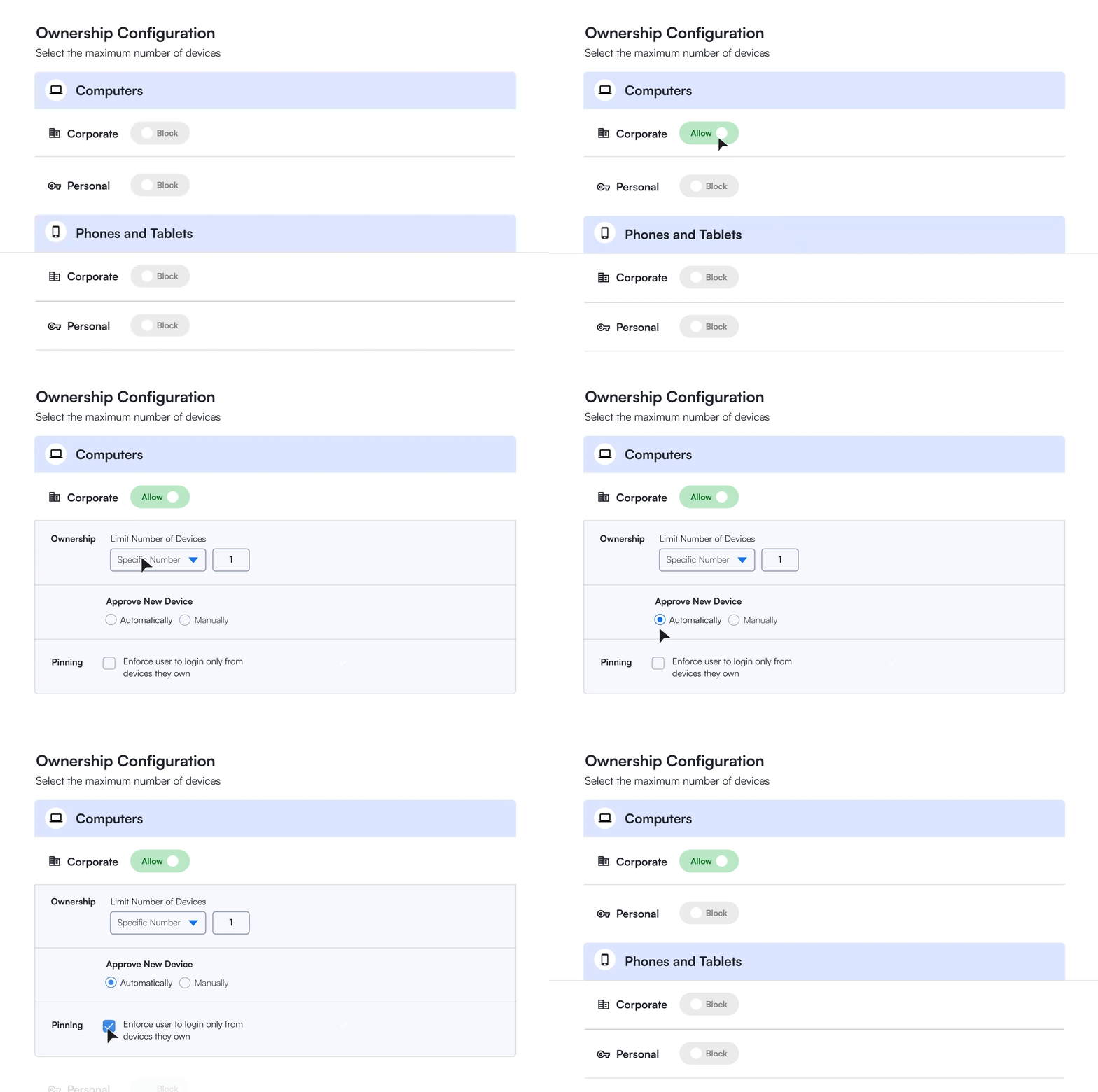
This is where things get interesting. One of the most effective ways to stop credential theft is making those credentials worthless without the right device. You can steal my password all day long, but if you can't also steal my laptop, you're not getting in.
- Device trust verification before granting any access
- Binding user identities to specific, managed devices
- Blocking access attempts from unknown or unmanaged hardware
- Continuous device health monitoring throughout the session
This approach essentially adds a physical layer to your digital security. An attacker in another country with stolen credentials can't just log in because they're not on a trusted device. Their attack surface shrinks to scenarios where they'd need physical access or sophisticated device spoofing.
4. Strict Segmentation Between Systems
Even if an attacker gets past your authentication layers, segmentation limits how far they can go. Think of it like compartments on a ship. A breach in one area doesn't sink the whole vessel.
In practical terms, this means your marketing database shouldn't be accessible from the same credentials that access your financial systems. Development environments stay separate from production. Customer data lives behind additional verification layers.
Why Segmentation Matters for Identity
Without proper segmentation, a single compromised identity can access everything that identity ever had permission to touch. With segmentation, attackers hit walls. They need to compromise additional credentials for each new system they want to access.
The key is making these boundaries identity-aware. It's not just about network segments anymore. Every access request gets evaluated based on who's asking, what they're asking for, and whether that combination makes sense.
5. Full Visibility Across the Environment
You can't protect what you can't see. And the dirty secret of most enterprise environments is that nobody has a complete picture of who has access to what. Shadow IT, forgotten service accounts, inherited permissions from legacy systems. It's a mess.
A proper Zero Trust implementation requires mapping every identity, every permission, and every access pattern across your entire environment. This visibility isn't just nice to have. It's the foundation everything else builds on.
- Complete inventory of all user accounts and their permissions
- Real-time monitoring of access patterns and anomalies
- Automated detection of permission creep over time
- Clear audit trails for compliance and incident response
When you can actually see what's happening, you can spot the attacker using stolen credentials at 3 AM from an unusual location. You can identify the service account that suddenly starts accessing databases it never touched before. You catch problems before they become breaches.
The Bottom Line on Zero Trust Identity Security
Look, Zero Trust isn't magic. It's not a product you buy and deploy on a Tuesday afternoon. It's a fundamental shift in how you think about access and identity across your organization.
The organizations getting real value from Zero Trust are the ones that started with identity as their foundation. They built governance around who can access what. They implemented continuous verification instead of one-time logins. They bound identities to trusted devices and segmented their environments so a single breach couldn't cascade.
With stolen credentials still topping the charts as the most common breach vector, this stuff isn't optional anymore. The question isn't whether you need better identity security. It's whether you're going to implement it properly or just check some boxes and hope for the best.
Frequently Asked Questions
What's the difference between Zero Trust and traditional security?
Traditional security trusts users once they're inside the network. Zero Trust verifies every access request regardless of where it originates, treating every user and device as potentially compromised.
How long does Zero Trust implementation take?
It varies wildly depending on your organization's size and complexity. Most enterprises take 1-3 years for full implementation, but you can start seeing benefits from early phases within months.
Does Zero Trust completely prevent credential theft?
No, but it dramatically reduces the impact. Stolen credentials become far less useful when they're tied to device trust, limited by least privilege, and monitored continuously.
Source: BleepingComputer
Huma Shazia
Senior AI & Tech Writer
Produced with AI assistance and reviewed by the Logicity editorial team. Learn more in our Editorial Policy.