Key Takeaways
Gumloop vs Zapier (2026) - Which One Is BETTER?
- Zapier connects to 9,000+ apps versus Gumloop's 130+, making it the safer bet for complex multi-tool environments
- Gumloop's agents self-improve by learning from corrections, a feature Zapier lacks in its current agentic workflows
- Zapier's task-based pricing is predictable; Gumloop's credit system varies based on workflow complexity
Operations teams now face a genuine fork in the road: adopt a specialized AI agent platform or expand the automation tool they already use. Zapier and Gumloop represent opposite ends of this choice. One has 15 years of integrations and 69% of the Fortune 1000 on its customer list. The other was founded in 2023 and rebuilt itself entirely around autonomous agents. The right pick depends on whether you need agents to do everything or need everything to work with agents.
Disclosure
Some links in this post are affiliate links — Logicity earns a commission if you sign up, at no extra cost to you. We only link products we have used or actively recommend.
What's the core difference between these platforms?
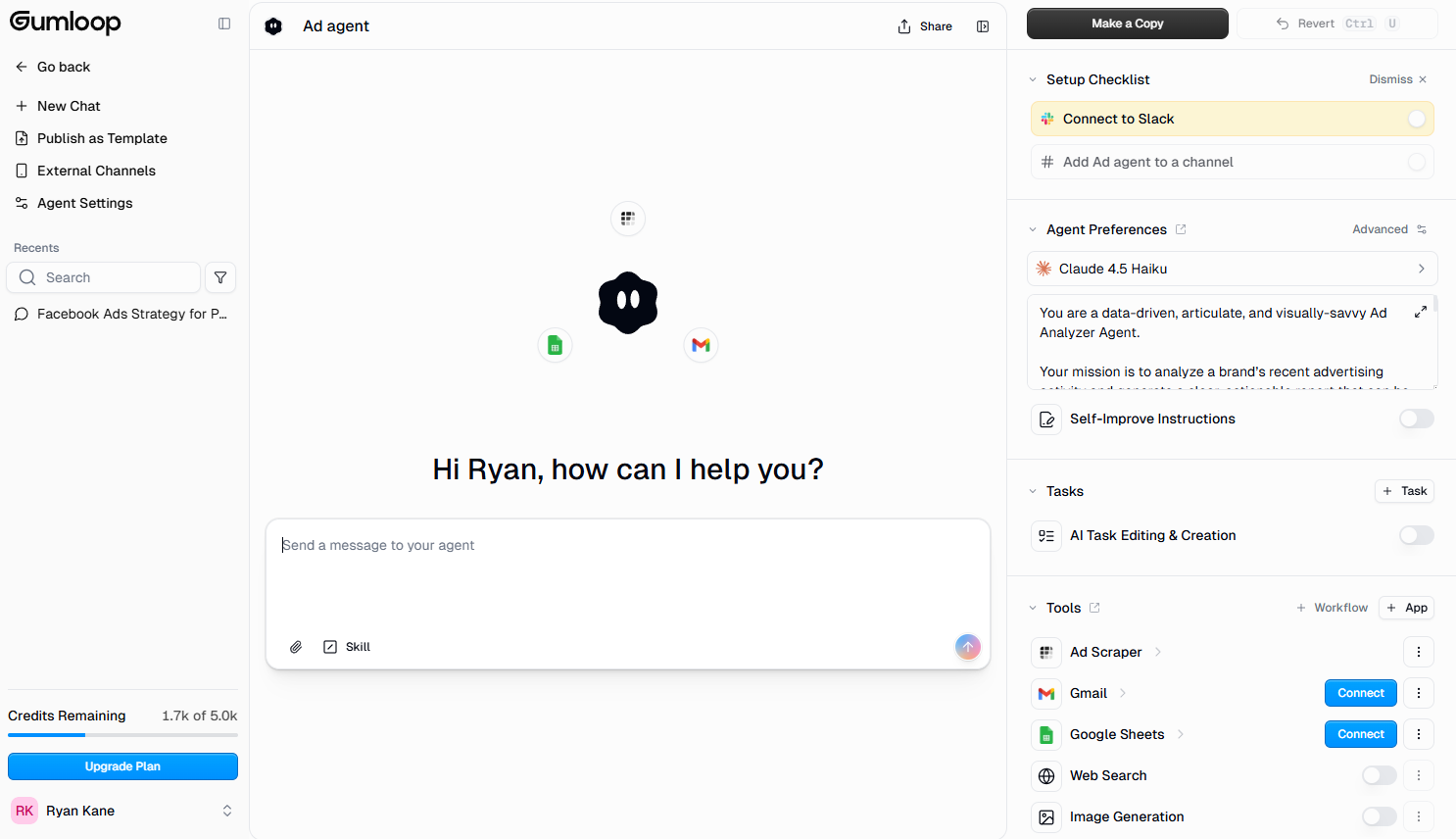
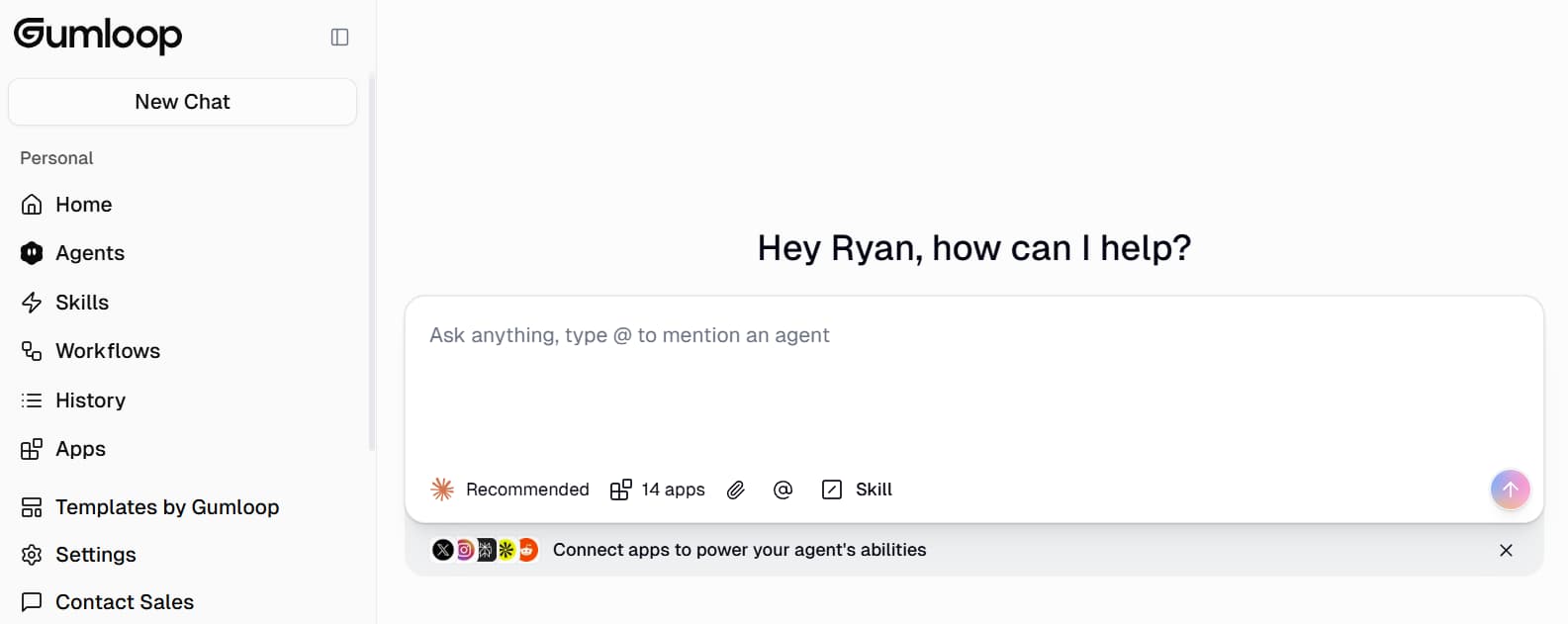
Gumloop treats AI agents as the primary interface. You describe what you need, and the agent figures out how to execute it, calling on workflows and skills as needed. The platform's workflow builder exists mainly to support agents, not to run independently. When you correct an agent's mistake, it updates the relevant skill so the same error doesn't repeat.
Zapier takes a different stance. Agentic workflows are one layer of a platform designed to make agents work within your existing stack. You can embed an agent in a deterministic Zap workflow, run it from Claude or ChatGPT through Zapier MCP, trigger it from the terminal with the CLI, or bake it into code projects via the SDK. The idea: your agents should work wherever you already work.
This isn't just philosophy. It has practical consequences for security. Zapier acts as a governed access layer with OAuth-managed connections. Credentials never get exposed to the AI model. One admin hub controls what agents can touch across every environment. Gumloop offers SOC 2, SSO, GDPR compliance, and audit logging, but its agent-first architecture means the agent is the interface, not an optional layer.
How do integrations compare?
Zapier connects to over 9,000 apps, including 500+ AI tools. Gumloop connects to 130+. That's a 70x difference. For RevOps teams running HubSpot, Salesforce, Slack, Notion, and a dozen other tools, Zapier's breadth matters. You won't hit a wall where the agent can't reach the app you need.

Gumloop's agents can monitor and react to events in any connected app, but 130 apps is a real constraint. If your stack includes niche vertical software or legacy tools, check Gumloop's integration list before committing.
Which is easier to use?
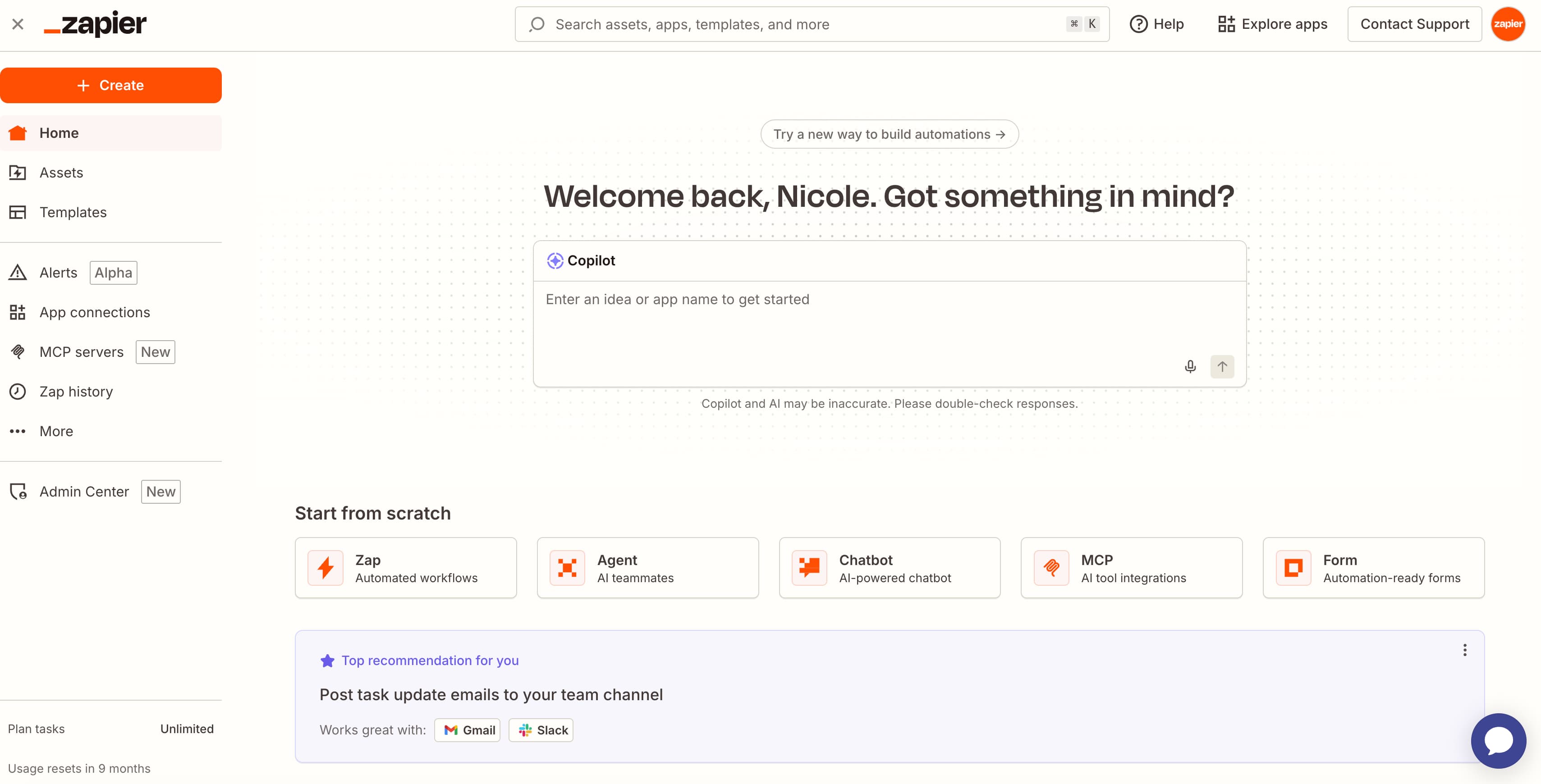
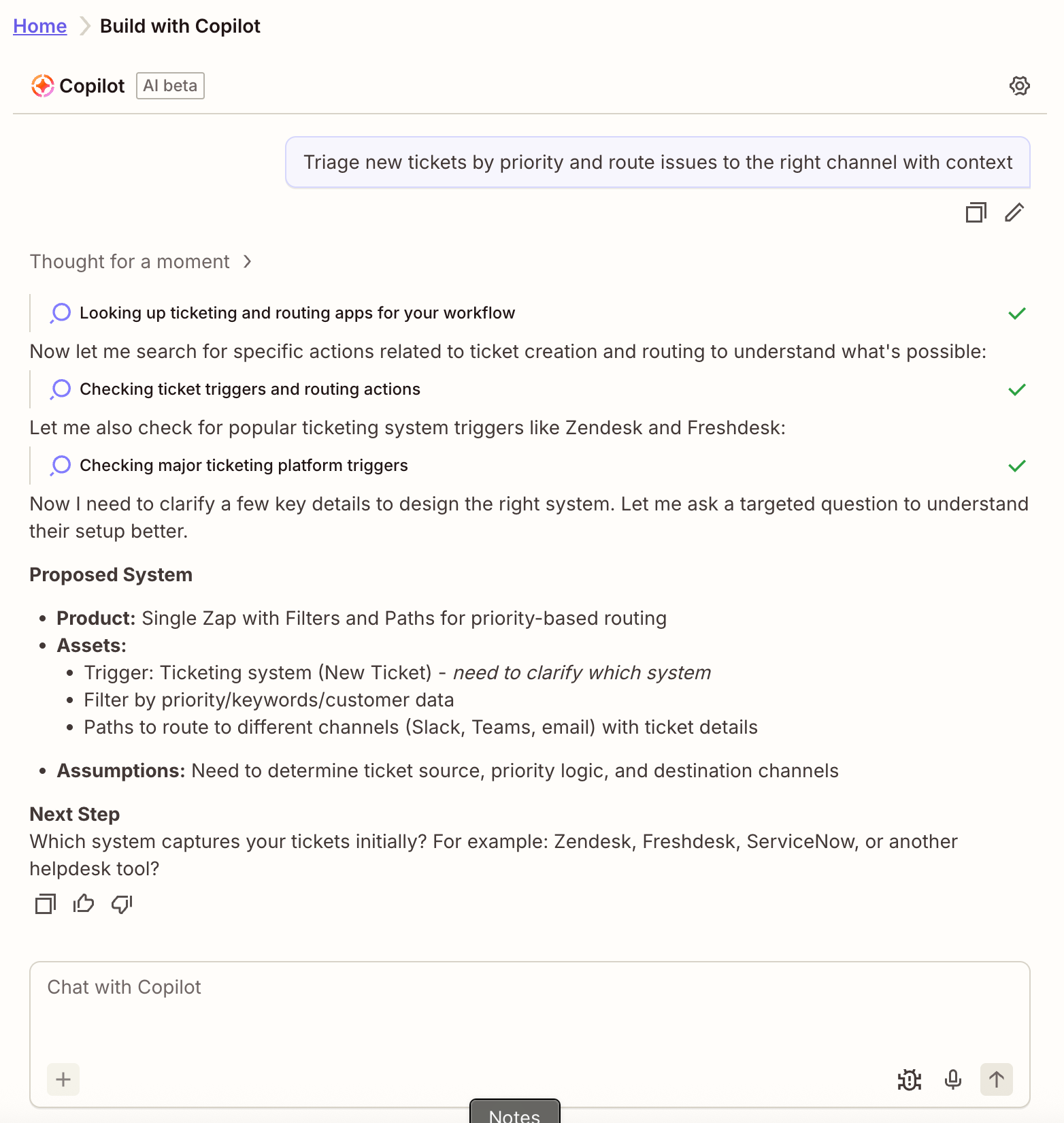
Both platforms claim ease of use, and both deliver on it. Zapier's Copilot feature lets anyone build in minutes. The company offers thousands of templates. Gumloop's agent-focused interface is intuitive, with 180+ templates and growing. Neither requires coding for basic workflows.
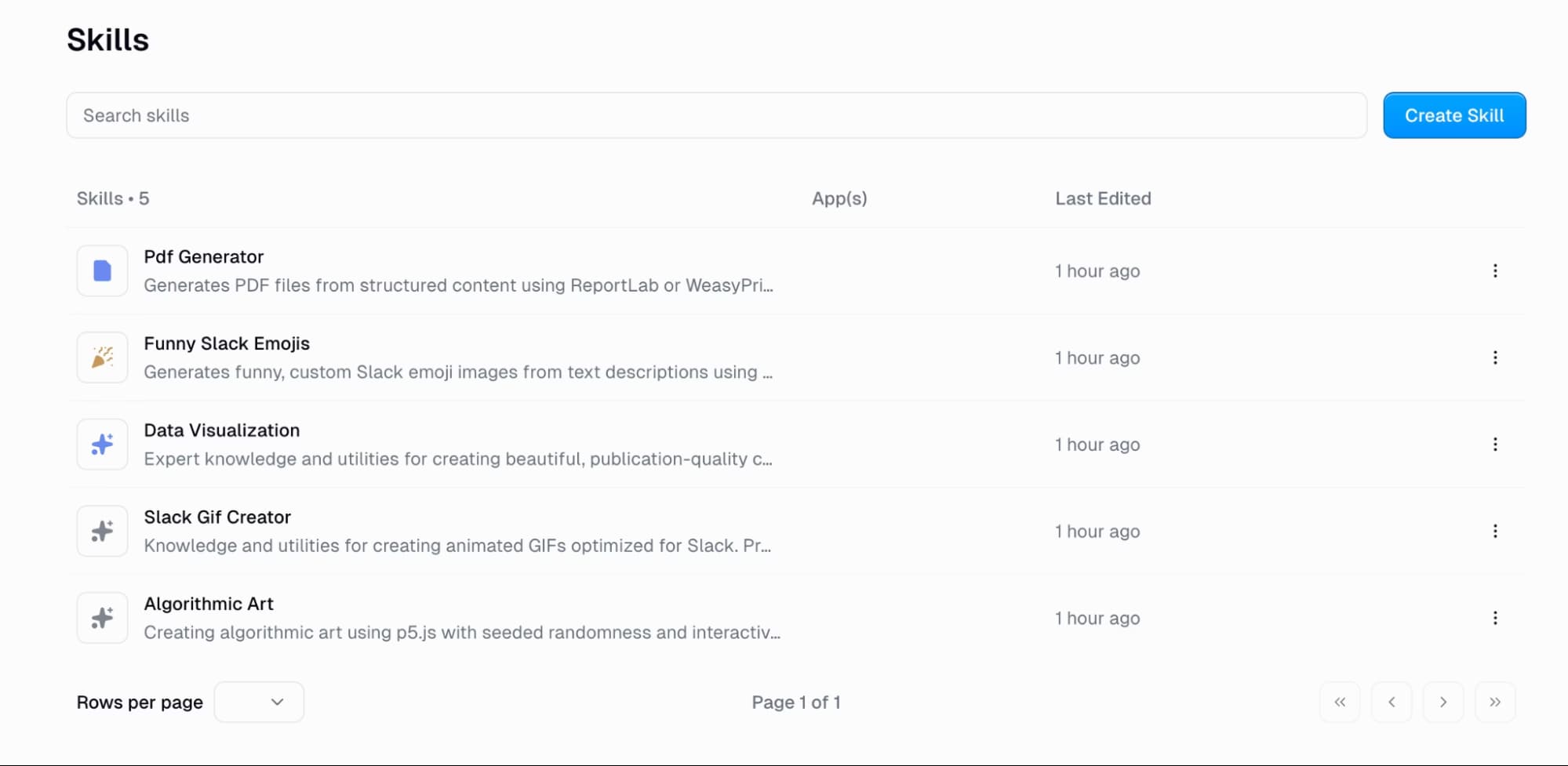
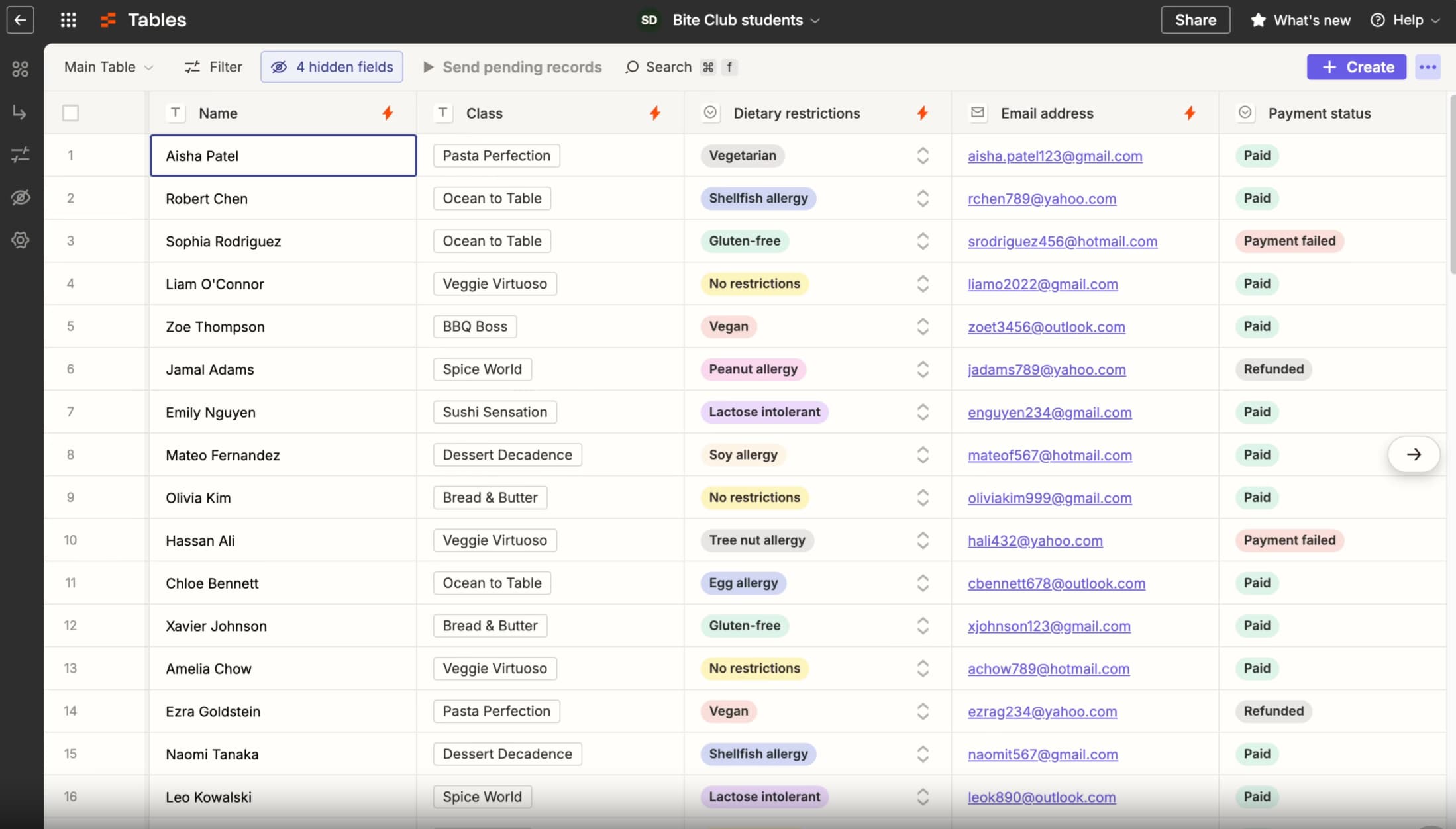
The learning curve difference shows up in advanced use. Zapier's platform scope extends beyond automations to Tables (structured data storage), Forms (custom inputs that trigger workflows), and Interfaces (basic app building). Gumloop focuses tightly on agents and automations, with basic forms included. If you need a low-code internal tool alongside your automations, Zapier covers more ground.
How does pricing work?
Zapier uses task-based pricing. You know what a task costs, and you can predict monthly bills. Gumloop uses a variable credit system where costs depend on workflow complexity. A simple agent might be cheap. A complex multi-step process with frequent API calls adds up faster.
For finance teams who need predictable software costs, Zapier's model is easier to budget. Gumloop's approach might be cheaper for specific use cases, but you'll need to monitor usage closely to avoid surprises.
What about enterprise governance?
Both platforms check the standard boxes: SOC 2 compliance, SSO, GDPR and CCPA adherence, audit logging. Zapier adds granular controls, real-time alerts, and a unified admin hub for managing permissions across the entire organization. Gumloop offers Gumstack for org-wide agent monitoring and granular permissions.
The difference is maturity. Zapier has 15+ years of development and claims 81+ billion tasks automated to date. Gumloop, founded in 2023, has automated 950+ million tasks. That's a significant gap in battle-tested reliability.
Gumloop's self-improving agents: a real advantage
One feature stands out in Gumloop's favor. When you correct an agent's mistake, the agent updates its relevant Skill so things go smoother next time. This self-improvement loop doesn't exist in Zapier's current agentic workflows. For teams running high-volume, repetitive processes like lead qualification or report generation, this could reduce the ongoing maintenance burden.
The trade-off: you're trusting the agent to update its own instructions correctly. For sensitive workflows, that autonomy might create more risk than it saves in manual tuning.
| Feature | Zapier | Gumloop |
|---|---|---|
| App integrations | 9,000+ | 130+ |
| Founded | 2012 | 2023 |
| Tasks automated | 81+ billion | 950+ million |
| Pricing model | Task-based (predictable) | Credit-based (variable) |
| Self-improving agents | No | Yes |
| MCP servers | Connects AI tools to 9,000+ apps | 50+ pre-built servers |
| Platform scope | Automations, Tables, Forms, Interfaces | Automations, agents, basic forms |
Logicity's Take
For most RevOps teams, Zapier remains the safer choice. The 9,000+ integration library means you won't hit walls as your stack evolves. Gumloop's self-improving agents are genuinely interesting for high-volume, narrowly scoped processes where the platform's 130 integrations cover your needs. If you're evaluating alternatives to both, [Make](https://logicity.in/r/make) (formerly Integromat) offers a visual builder with ~1,500 integrations at lower price points, while [n8n](https://logicity.in/r/n8n) provides a self-hosted option for teams with strict data residency requirements. Gumloop is a bet on agentic AI becoming the dominant paradigm fast. Zapier is a bet that agents need to work within existing infrastructure. The second bet feels more aligned with how enterprises actually operate today.
Frequently Asked Questions
Can Gumloop agents work with apps not in their integration list?
Gumloop agents can only interact with the 130+ apps in their official integration library. For apps outside this list, you'd need to use webhooks or API calls, which requires technical setup.
Does Zapier offer AI agents or just traditional automations?
Zapier offers both. Its agentic workflows allow you to describe what you need in natural language, and the agent executes multi-step processes. These work alongside traditional trigger-based Zaps.
Which platform is better for a startup with limited budget?
Zapier's free tier allows 100 tasks per month. Gumloop's credit-based pricing can be cheaper for specific use cases but harder to predict. Test both with your actual workflows before committing.
Can I migrate automations between Zapier and Gumloop?
No direct migration path exists. You'd need to rebuild workflows manually on the new platform, though both offer templates that can speed up recreation of common processes.
Which has better support for CRM integrations?
Zapier has deeper CRM integrations, including native connections to Salesforce, HubSpot, Pipedrive, and dozens of others. Gumloop supports major CRMs but with fewer action options per app.
Broader context on agent platforms beyond Zapier and Gumloop
Need Help Implementing This?
Logicity works with operations teams to evaluate and deploy automation platforms. If you're comparing Zapier, Gumloop, or alternatives for your RevOps stack, reach out at logicity.in/consulting.
Source: The Zapier Blog
Manaal Khan
Tech & Innovation Writer
Produced with AI assistance and reviewed by the Logicity editorial team. Learn more in our Editorial Policy.