Z Fold 8 Ultra vs Pixel 10 Pro Fold: why Google wins on value
Key Takeaways
Did Google Out-Fold Samsung? Pixel 10 Pro Fold vs. Galaxy Z Fold 7 Review
- Pixel 10 Pro Fold starts at $1,799, $300 less than the Z Fold 8 Ultra's $2,099
- Google's foldable supports Qi2 magnetic charging and MagSafe-compatible accessories
- Samsung offers a 200MP main camera vs Google's 48MP, but the Pixel brings 16GB RAM across all tiers
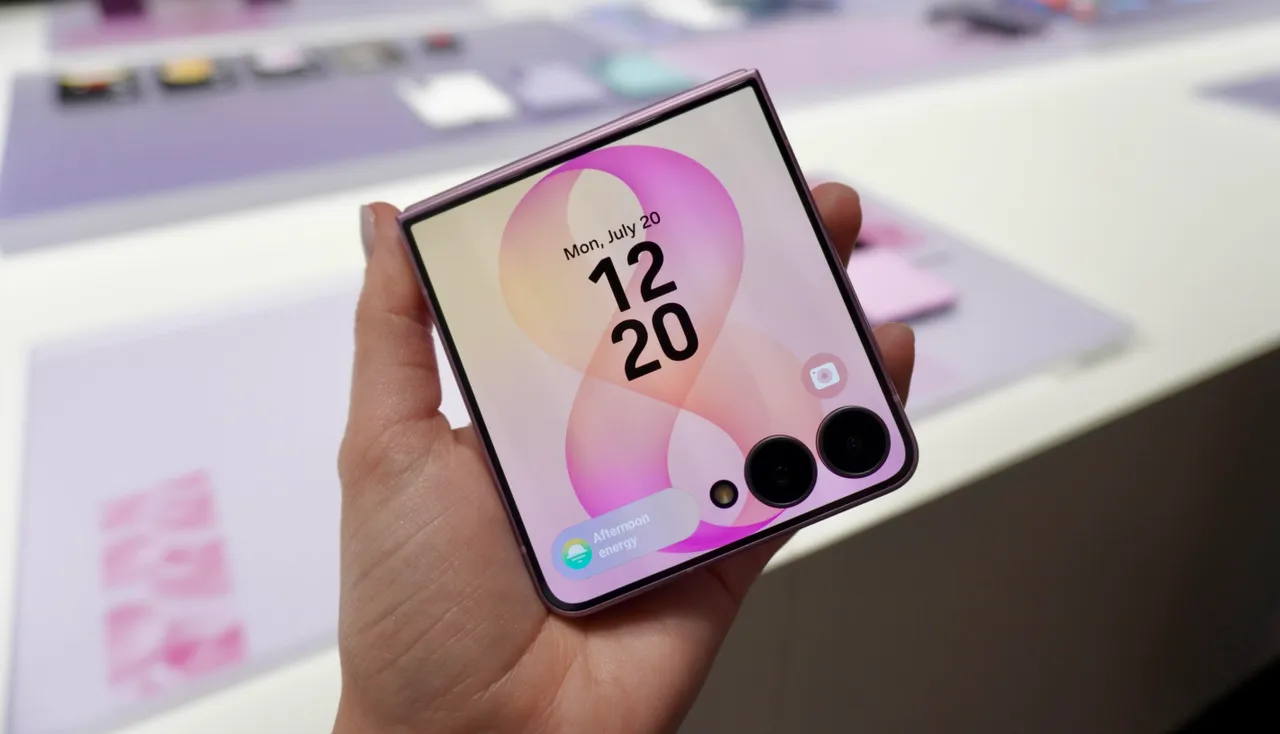
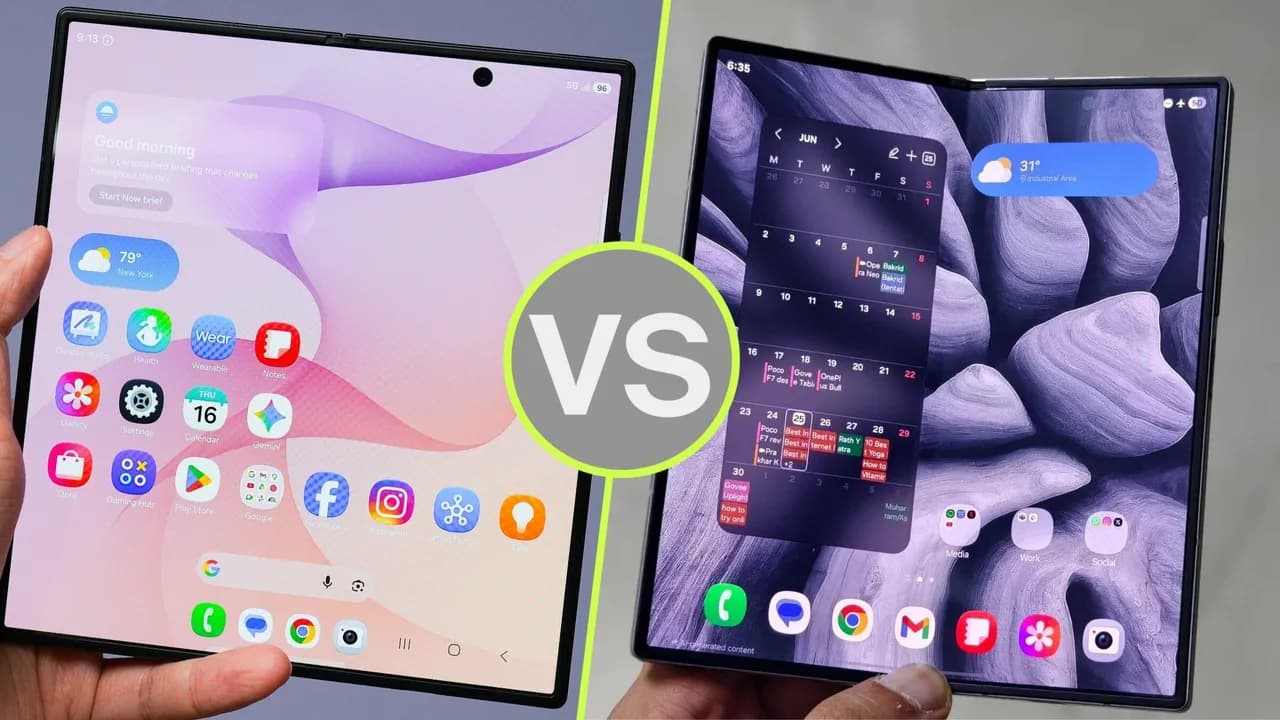
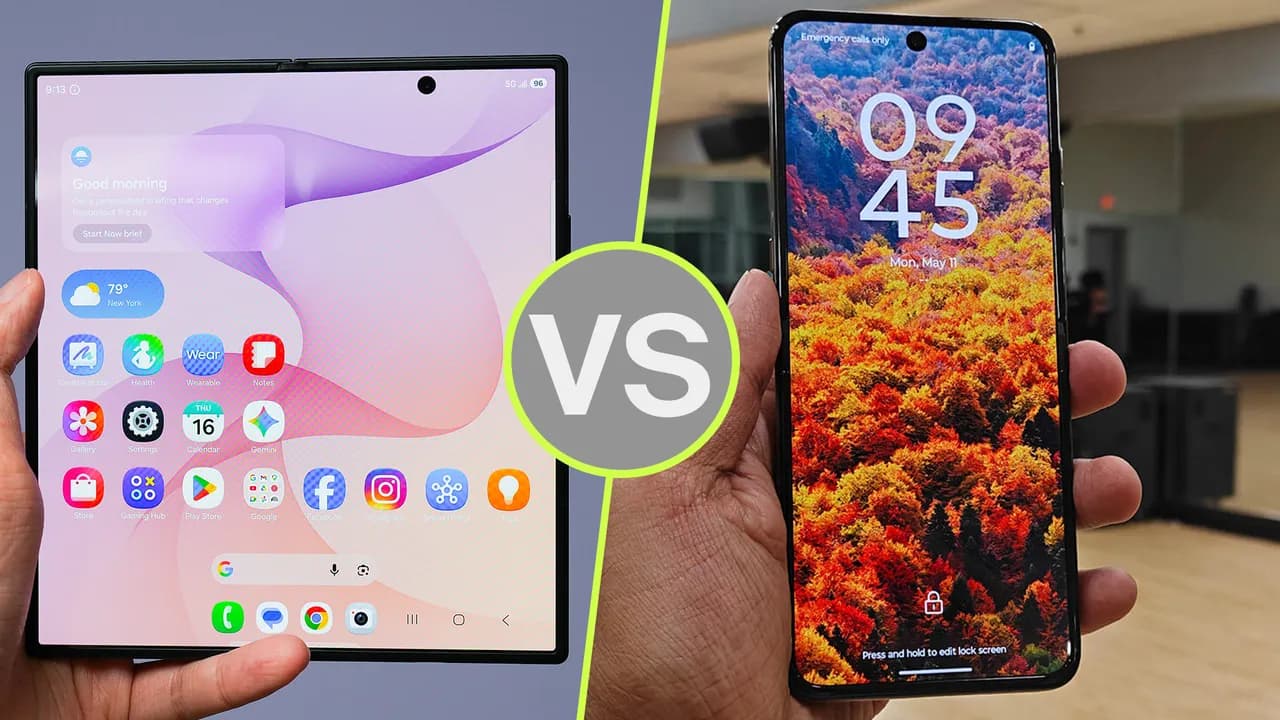
Samsung's Galaxy Z Fold 8 Ultra brings raw specs to the table: a 200MP main camera, Snapdragon 8 Elite Gen 5, and an 8-inch inner display hitting 3,000 nits. Google's Pixel 10 Pro Fold counters with a $300 lower price tag, Qi2 magnetic charging, and 16GB of RAM standard across every storage tier. Both are excellent foldables. But the Pixel offers more for less.
The US book-style foldable market now has three players: Samsung, Google, and Motorola. Motorola is the newcomer. Samsung has eight generations of Z Fold experience; Google is on its fourth Pixel Fold. Experience matters, but so does value. And on value, Google has Samsung beat.
How do the specs compare?
| Spec | Galaxy Z Fold 8 Ultra | Pixel 10 Pro Fold |
|---|---|---|
| Price | $2,099 | $1,799 |
| Cover display | 6.5-inch AMOLED 120Hz | 6.4-inch OLED 120Hz |
| Inner display | 8-inch AMOLED, 3,000 nits | 8-inch AMOLED, 3,000 nits |
| Weight | 215g | 258g |
| Processor | Snapdragon 8 Elite Gen 5 | Google Tensor G5 |
| RAM | 12GB / 16GB (1TB only) | 16GB (all tiers) |
| Battery | 5,000mAh, 45W charging | 5,015mAh, 30W charging |
| Main camera | 200MP | 48MP |
| Telephoto | 10MP 2x optical | 10.5MP 2x optical |
Samsung wins on camera resolution, weight, and charging speed. The Z Fold 8 Ultra is 43 grams lighter, charges 50% faster, and has a 200MP sensor that dwarfs Google's 48MP. For photographers and users who prioritize portability, Samsung's hardware is superior.
Google wins on RAM consistency and price. Every Pixel 10 Pro Fold configuration ships with 16GB of RAM. Samsung reserves 16GB for its 1TB model. For multitasking on a device designed for productivity, that RAM difference matters.
Why does the $300 price gap matter?
The Z Fold 8 Ultra is the most expensive foldable you can buy in the US. Its starting price crosses $2,000. The Pixel 10 Pro Fold starts at $1,799. That 15% savings buys accessories. Specifically, a quality set of earbuds and a charging stand.
Foldables are already a premium category. Buyers expect premium features. But when two phones deliver similar core experiences, the cheaper one carries less financial risk. And the Pixel 10 Pro Fold's accessory ecosystem offers something Samsung's foldable lacks.
What's Qi2 and why does it tilt the decision?
Apple introduced MagSafe years ago. Qi2 followed that pattern: a ring of magnets on the back of the phone that snaps accessories into place. The Pixel 10 Pro Fold supports Qi2. The Z Fold 8 Ultra does not.
Magnetic charging means wireless chargers align perfectly every time. Magnetic mounts in cars hold the phone securely. Magnetic wallets and battery packs attach without cases or adhesives. The accessory ecosystem for Qi2 devices is growing. Samsung users miss out.
This is not a minor feature gap. It's a convenience gap that compounds daily. Every time a Samsung user fumbles with wireless charging alignment, the Pixel user snaps their phone into place and moves on.
When should you pick the Z Fold 8 Ultra anyway?
Samsung's foldable makes sense in three scenarios. First, camera performance is paramount. A 200MP sensor captures detail that a 48MP sensor cannot. Second, weight is critical. At 215 grams, the Z Fold 8 Ultra is noticeably lighter in a pocket or bag. Third, you charge often and need speed. Samsung's 45W charging fills the battery faster than Google's 30W.
Samsung also offers the non-Ultra Z Fold 8, which slots below the Pixel on price while keeping most of the same hardware. Buyers willing to skip the Ultra branding get Samsung's foldable experience for less.
Logicity's Take
Samsung priced itself into a corner. The Z Fold 8 Ultra's $2,099 tag assumes buyers will pay a premium for the Samsung brand and a 200MP camera. But Google's Pixel 10 Pro Fold delivers the same inner display size, better RAM consistency, and Qi2 support for $300 less. For enterprise users who want foldables for multitasking and productivity, the Pixel's value proposition is stronger. Samsung's edge is narrow: photography enthusiasts and users who prioritize weight. Everyone else should seriously consider Google.
What about software and updates?
Google controls Android. Pixel devices receive OS updates and security patches first. Samsung matches Google's seven-year update commitment, but Pixel updates arrive months earlier. For security-conscious organizations, that lead time matters.
Samsung's One UI adds features Google's stock Android lacks. Split-screen multitasking, DeX desktop mode, and S Pen support (on some models) differentiate Samsung's software experience. But these features target power users. Mainstream buyers won't miss them.
Which foldable should you actually buy?
The Pixel 10 Pro Fold wins on value. Lower price, Qi2 support, consistent RAM, and faster updates. Samsung wins on camera resolution, lighter weight, and faster charging. Both are excellent phones. Neither is a bad choice.
For most buyers, the Pixel makes more sense. The $300 savings funds accessories. The Qi2 support adds daily convenience. The 16GB RAM handles demanding apps without compromise. Samsung's advantages are real but narrow.
Frequently Asked Questions
Is the Pixel 10 Pro Fold more durable than the Z Fold 8 Ultra?
Both use similar hinge technology and foldable display materials. Samsung has more generations of durability refinements, but Google's Pixel Fold line has proven reliable. Neither has a clear durability advantage.
Can I use MagSafe accessories with the Pixel 10 Pro Fold?
Yes. Qi2 uses the same magnetic alignment standard as MagSafe. Most MagSafe chargers, mounts, and wallets work with Qi2 devices.
Does the Z Fold 8 Ultra support the S Pen?
Samsung has offered S Pen support on previous Z Fold models. Check Samsung's official specs for Z Fold 8 Ultra compatibility.
Which foldable is better for business use?
The Pixel 10 Pro Fold offers 16GB RAM across all tiers and faster security updates, making it stronger for enterprise deployments. Samsung's DeX mode is useful for users who need desktop-like functionality.
How long will software updates last?
Both manufacturers commit to seven years of OS and security updates. Google delivers updates faster; Samsung takes longer to roll them out.
Full coverage of everything Samsung announced alongside the Z Fold 8 Ultra
See how Samsung's flagship stacks up against Motorola's book-style foldable
Need Help Implementing This?
Logicity helps tech teams evaluate enterprise hardware decisions. Contact us for vendor-neutral guidance on foldable deployment strategies.
Source: Latest news
Huma Shazia
Senior AI & Tech Writer
Produced with AI assistance and reviewed by the Logicity editorial team. Learn more in our Editorial Policy.