Key Takeaways
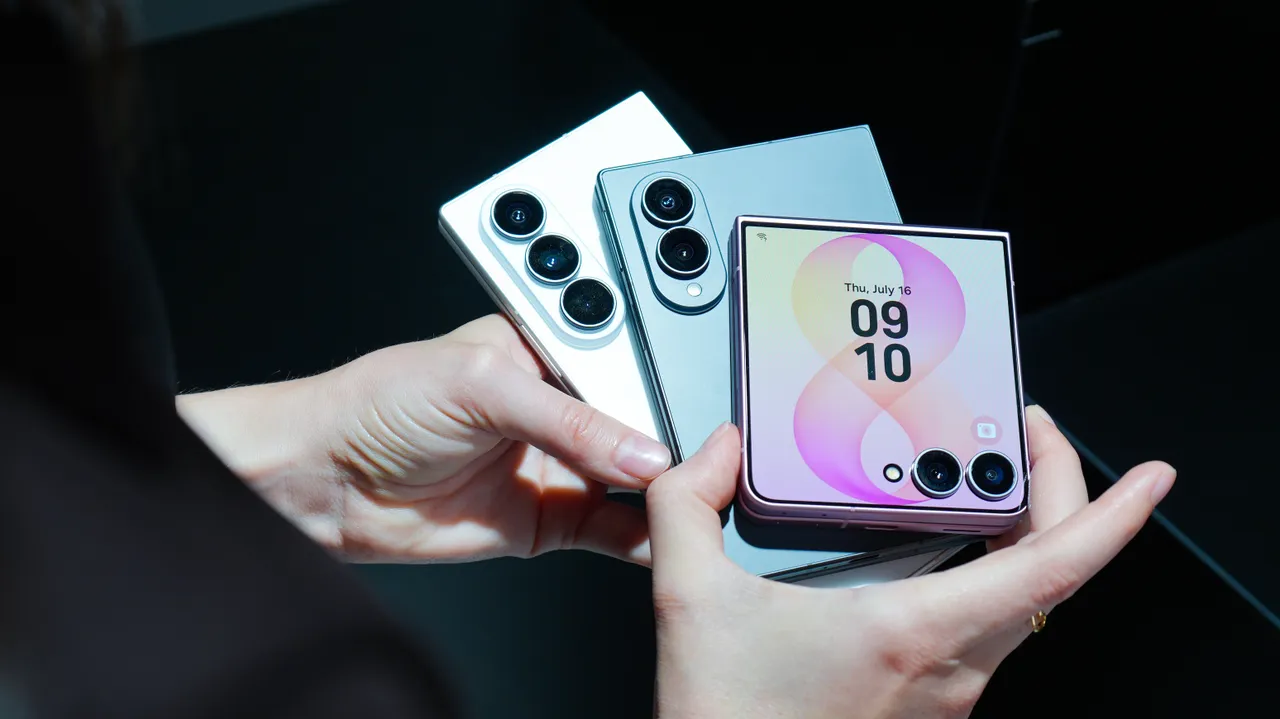
Samsung Galaxy Z Fold 8 vs Fold 8 Ultra - Which should you Buy?
- The Z Fold 8 Ultra is 28g lighter at 215g despite packing a 200MP main camera
- Motorola's Razr Fold offers a larger 6,000mAh battery and costs $199 less
- Samsung's Snapdragon 8 Elite Gen 5 delivers 20% faster CPU than the standard Gen 5 in the Razr Fold
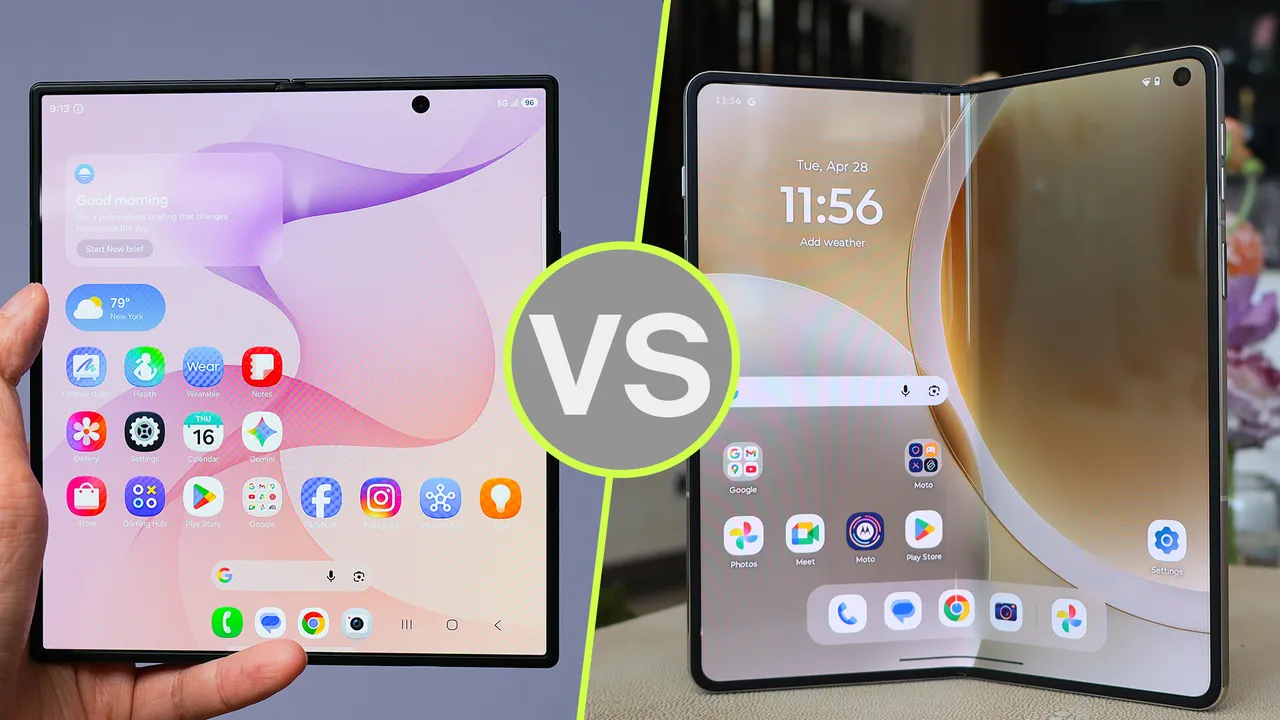
Samsung's Galaxy Z Fold 8 Ultra and Motorola's Razr Fold both chase the same buyer: someone willing to spend $1,900 or more on a book-style foldable. The Z Fold 8 Ultra starts at $2,099, while Motorola undercuts it by $199. Both run Snapdragon 8-series silicon, both fold out to roughly 8-inch inner displays, and both claim flagship camera systems. The differences sit in the details, and those details matter for anyone using a foldable as a daily work device.
How do the specs compare?
| Spec | Galaxy Z Fold 8 Ultra | Motorola Razr Fold |
|---|---|---|
| Cover display | 6.5" FHD+ AMOLED, 120Hz | 6.6" LTPO pOLED, 165Hz |
| Inner display | 8" QXGA+ AMOLED, 120Hz | 8.1" LTPO pOLED, 120Hz |
| Processor | Snapdragon 8 Elite Gen 5 for Galaxy | Snapdragon 8 Gen 5 |
| RAM / Storage | 12GB/256GB, 12GB/512GB, 16GB/1TB | 16GB/512GB only |
| Battery | 5,000mAh | 6,000mAh |
| Weight | 215g | 243g |
| Rear cameras | 200MP main, 50MP ultrawide, 10MP telephoto | 50MP wide, 50MP ultrawide/macro, 50MP telephoto |
| Price | $2,099+ | $1,900 |
Which has the faster processor?
Samsung gets the upgraded bin. The Z Fold 8 Ultra runs the Snapdragon 8 Elite Gen 5 "for Galaxy," a variant tuned specifically for Samsung devices. It features a third-generation Oryon CPU clocked at up to 4.74GHz, paired with an Adreno GPU and Qualcomm's Hexagon NPU for on-device AI tasks. Qualcomm claims 20% faster CPU throughput and 23% faster GPU performance compared to the standard Snapdragon 8 Elite.
Motorola ships the standard Snapdragon 8 Gen 5. It's still a flagship chip, but you're leaving performance headroom on the table. For light email and browsing, the gap won't register. For running split-screen productivity apps, editing video, or mobile gaming during downtime, the Samsung pulls ahead.
Why does weight matter on a foldable?
A foldable lives in your pocket and your hand far more than a slab phone. The Z Fold 8 Ultra weighs 215g; the Razr Fold hits 243g. That 28-gram delta sounds trivial on paper, but it compounds during extended one-handed use or video calls where you're holding the phone up. Samsung achieved the lighter weight partly through its titanium frame, which also adds drop resistance.
If you commute with a foldable tucked into a jacket pocket, the Samsung will feel noticeably less intrusive. Motorola's heavier build does house a larger battery, though, so the tradeoff is direct: portability versus uptime.
How much battery do you actually need?
Motorola packs a 6,000mAh cell, Samsung a 5,000mAh one. On paper, that's a 20% capacity advantage for the Razr Fold. Real-world impact depends on the efficiency of each chipset and display, but if your workday involves long flights or back-to-back meetings without access to a charger, the Motorola gives you more margin.
Samsung counters with more aggressive AI-driven power management in One UI and the higher-efficiency Snapdragon bin. Still, physics is physics: a bigger battery generally means longer uptime. Road warriors should weigh this heavily.
Camera systems: 200MP vs triple 50MP
Samsung's camera bump is the most obvious spec gap. The Z Fold 8 Ultra leads with a 200MP main sensor, the same resolution Samsung uses in the Galaxy S Ultra line. It pairs that with a 50MP ultrawide and a 10MP telephoto offering 3x optical zoom. Motorola fields a more uniform trio: 50MP wide, 50MP ultrawide with macro capability, and a 50MP telephoto.
For document scanning, whiteboard capture, or quick product shots, the Samsung's higher-resolution main sensor preserves more detail when you crop. The Motorola's macro mode is a niche advantage, useful for photographing small text or components. Neither will replace a dedicated camera, but the Samsung gets closer.
Storage options and flexibility
Motorola offers one configuration: 16GB of RAM and 512GB of storage. Samsung gives you three tiers. The entry model pairs 12GB RAM with 256GB storage. The mid-tier bumps storage to 512GB. The top-end variant jumps to 16GB RAM and a 1TB SSD. If you archive large files locally, store offline maps, or keep a library of reference PDFs, the Samsung's flexibility matters.
For most cloud-first workflows, 512GB is plenty. But power users who treat their foldable as a mini workstation will appreciate the 1TB option.
Which foldable should you buy?
Buy the Galaxy Z Fold 8 Ultra if you prioritize raw performance, camera quality, and a lighter chassis. The Snapdragon 8 Elite Gen 5 for Galaxy is the fastest mobile chip available, the 200MP camera outresolves the competition, and 215g is remarkably light for a book-style foldable with this feature set. You pay for it: $2,099 at minimum, climbing to roughly $2,400 for the 1TB model.
Buy the Motorola Razr Fold if battery life and value lead your decision. The 6,000mAh cell gives you breathing room on long days, the $1,900 price undercuts Samsung, and the 165Hz cover display is actually smoother than Samsung's 120Hz panel for quick interactions. You trade away the camera resolution, the lighter weight, and the chipset advantage.
Logicity's Take
Samsung's foldable premium now echoes the S Ultra pricing strategy: pay more, get the best silicon and camera. Motorola's counter is smart. Rather than chase specs, it competes on battery and price, which are the two pain points foldable skeptics cite most. For enterprise buyers equipping teams, the $199 per-device savings on the Razr Fold adds up fast. For executives or creatives who need the best mobile productivity tool, the Z Fold 8 Ultra justifies its price. Neither device is wrong; they serve different priorities.
Comparing Samsung's two flagship foldable form factors
Full breakdown of everything announced at the launch event
Frequently Asked Questions
Is the Galaxy Z Fold 8 Ultra waterproof?
Samsung typically rates its foldables at IPX8, allowing submersion in fresh water up to 1.5 meters for 30 minutes. Dust resistance is not certified due to the hinge mechanism.
Does the Motorola Razr Fold support wireless charging?
Yes, the Razr Fold supports Qi wireless charging. Exact wattage depends on the charger, but Motorola's own wireless pads typically deliver 15W.
Can I use the Z Fold 8 Ultra with Samsung DeX?
Yes. Samsung DeX allows you to connect the foldable to an external monitor for a desktop-like interface, useful for presentations or extended work sessions.
Which foldable has better software support?
Samsung commits to four years of OS upgrades and five years of security patches. Motorola has historically offered shorter support windows, though recent models have improved to three years of OS updates.
Need Help Implementing This?
If you're evaluating foldables for your organization or need guidance on mobile device management for mixed fleets, reach out to our team at Logicity.in for tailored recommendations.
Source: Latest news
Huma Shazia
Senior AI & Tech Writer
Produced with AI assistance and reviewed by the Logicity editorial team. Learn more in our Editorial Policy.