Key Takeaways
- Yahoo's Seller Agent compresses multi-week ad campaigns into seconds using a dual-graph architecture on Google Cloud
- The platform logs 100% of agent decisions in BigQuery for regulator-grade auditability
- A knowledge graph grounds agent actions in real business rules while a context graph handles memory and learning
Yahoo's new Seller Agent agentic AI platform can execute complex digital advertising campaigns in seconds, work that previously took human teams weeks. The company partnered with Google Cloud to build the system, which runs on a dual-graph architecture that grounds every autonomous decision in verifiable business rules.
The platform, announced at Google Cloud Next '26, represents a shift from AI as an analytical tool to AI as an operational actor. Where traditional AI systems analyze data and surface recommendations, Seller Agent actually negotiates and executes media buys. That distinction matters because an agent moving real advertising budgets cannot afford to hallucinate.
Why autonomous ad buying needs graph technology
Premium digital advertising campaigns have always involved weeks of human handoffs. Buyers submit requests. Sellers check inventory. Teams cross-reference pricing rules in spreadsheets. Contracts go through legal review. By the time a campaign launches, market conditions may have shifted.
Yahoo saw agentic AI as a way to collapse this timeline, but the company's engineers recognized a core problem: large language models do not inherently understand real-time inventory or contractual constraints. Drop an LLM into a high-stakes negotiation without deterministic guardrails, and it will generate plausible-sounding deals that violate business rules or promise inventory that does not exist.
“We are moving from reactive systems of intelligence to proactive systems of action. By embedding governance directly into the graph, we ensure every autonomous agent decision is explainable, auditable, and aligned with business goals.”
— Mikul Bhatt, Director of Engineering at Yahoo
The solution was to anchor every agent decision in a knowledge graph. Instead of relying on the LLM's statistical patterns, agents query a structured representation of Yahoo's actual business state: what inventory exists, which audience segments are available, what pricing rules apply, which governance controls are active.
How the dual-graph architecture works
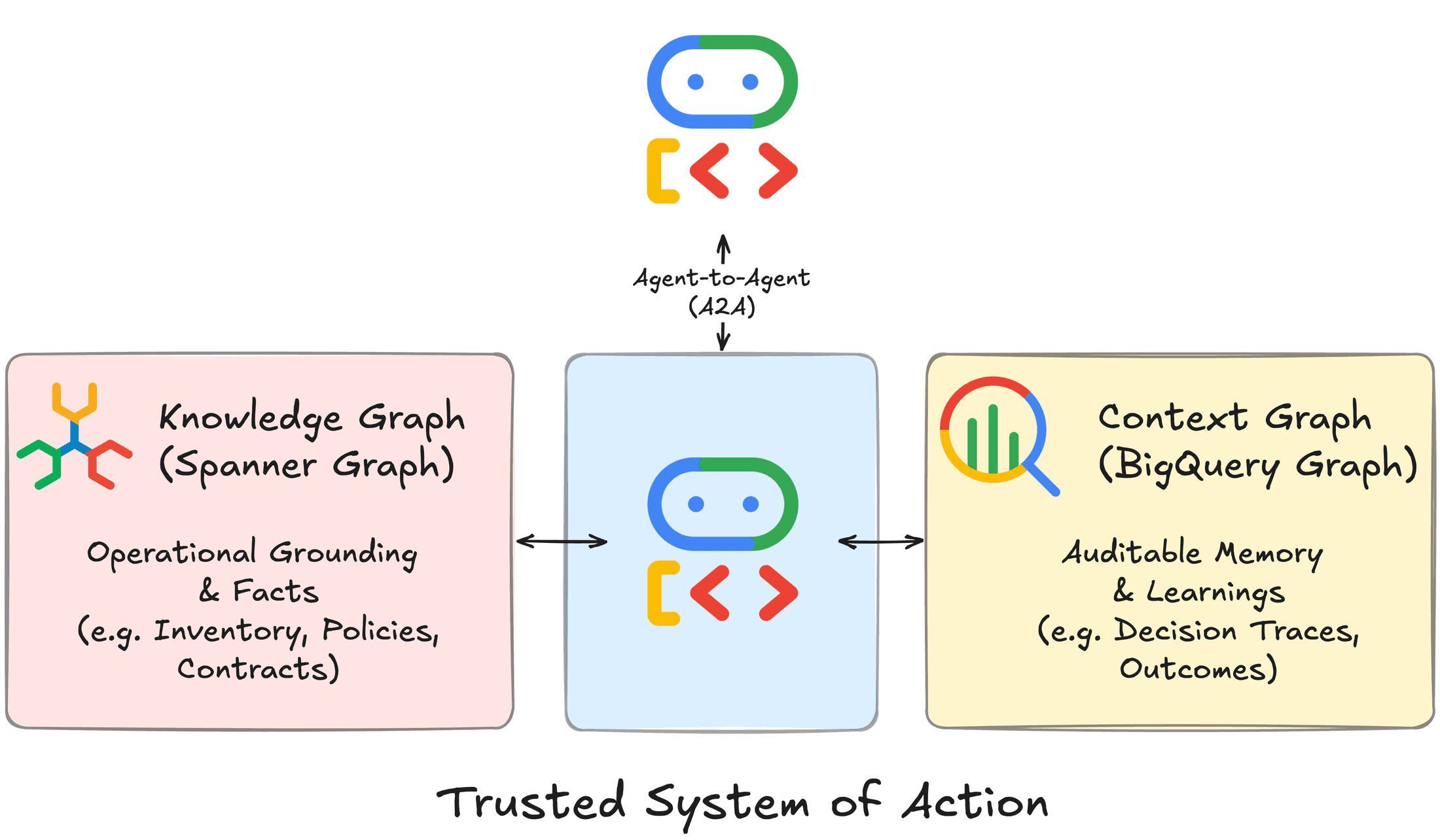
Seller Agent runs on two specialized graph systems, each with a distinct job. The knowledge graph handles acting. The context graph handles remembering.
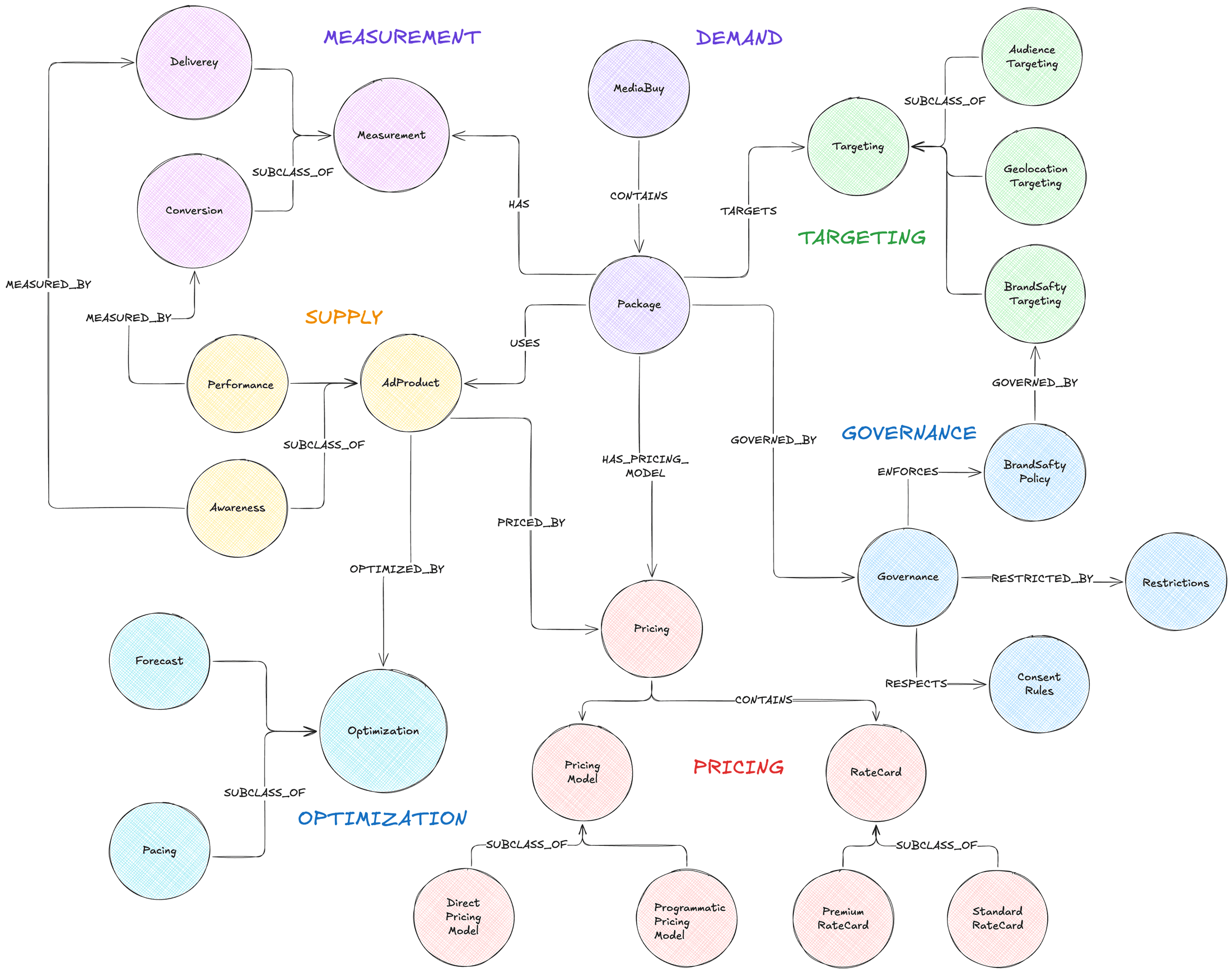
The knowledge graph, powered by Spanner Graph, models Yahoo's monetization business as connected entities: advertising products, placements, audience segments, inventory, contracts, and governance controls. Policies are not external documents the agent must interpret. They exist as first-class objects within the graph. When an agent proposes a campaign, it traverses the graph to verify every claim against ground truth.
Spanner Graph delivers 99.99% availability and consistency. For an autonomous system executing real transactions, that reliability matters. An agent cannot negotiate a deal if it is unsure whether the underlying data reflects reality.
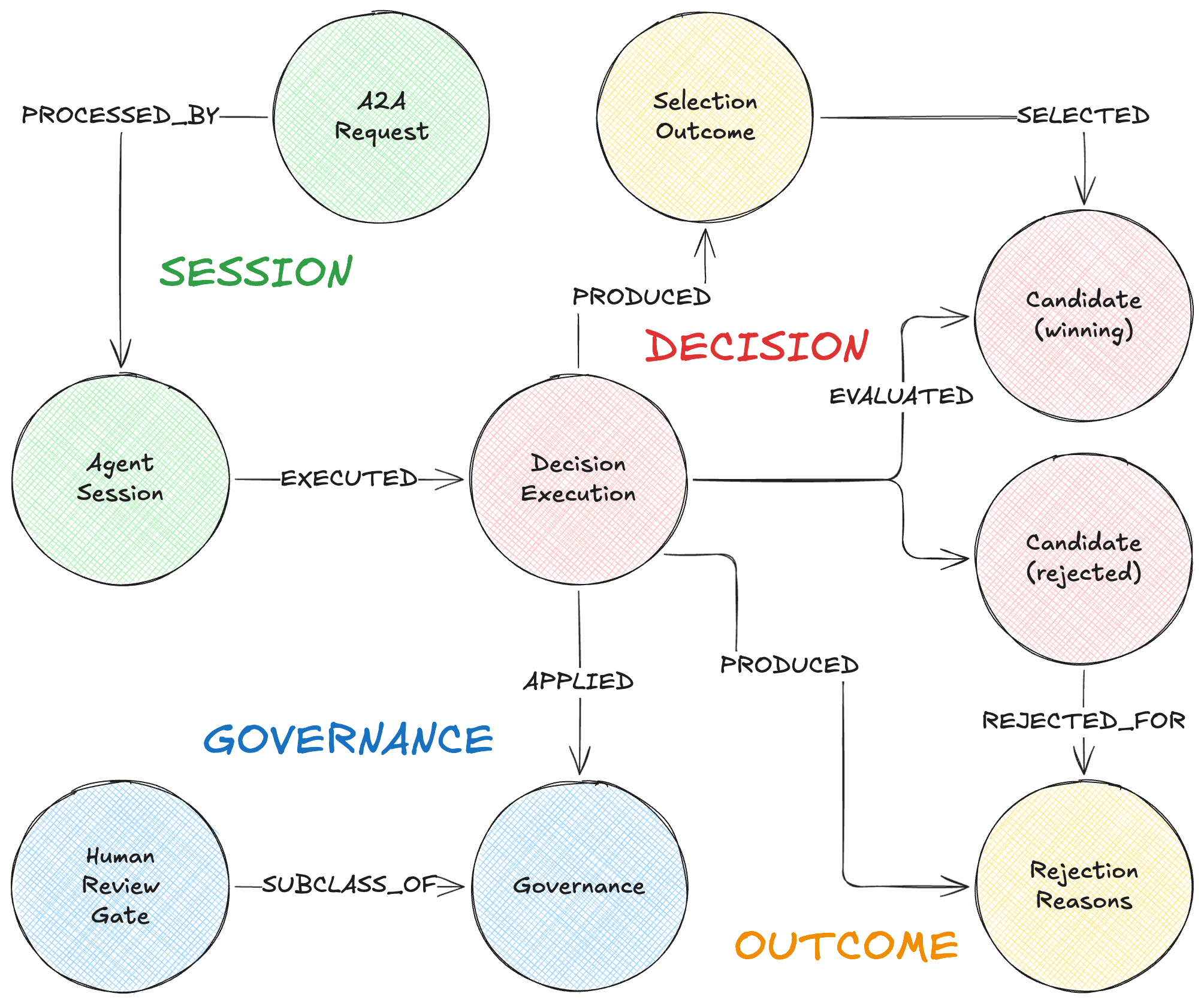
The context graph serves a different purpose: it stores the history of agent interactions, decisions, and outcomes. This allows the system to learn from past campaigns and maintain context across sessions. When a buyer returns with a follow-up request, the agent already knows their preferences and prior deals.
What happens when an ad request comes in
Buyer requests enter through a planning supervisor agent running on Google Kubernetes Engine, orchestrated with Google's Agent Development Kit. The supervisor breaks each request into specialized subtasks: inventory discovery, audience matching, forecasting, pricing analysis, package recommendation, governance review, and execution.
Specialized agents handle each task and coordinate through the open Agent2Agent (A2A) protocol. Gemini Enterprise Agent Platform provides the underlying models for embeddings, forecasting, and graph-based learning. But every action loops back to the knowledge graph for validation.
The result: campaigns that would have taken weeks now execute in seconds. Yahoo claims a 100x increase in execution speed compared to traditional manual workflows.
Regulator-grade auditability built in
Speed means nothing if the system cannot explain its decisions. The moment an AI agent starts moving real budgets, regulators and compliance teams need instant answers: why was this placement chosen, which policies were applied, how was this price calculated.
Yahoo logs 100% of agentic decisions in a BigQuery graph. Every action the system takes is traceable. This is not a log-parsing exercise after something goes wrong. The audit trail is a core product feature.
“Yahoo's deployment is the blueprint for the next generation of enterprise AI, where agentic workflows are grounded in a real-time, governed knowledge graph.”
— Bei Li, Sr. Staff Software Engineer at Google Cloud
Gabriel DeWitt, Yahoo's Head of Monetization, frames it as extending the company's core promise: "Yahoo's mission is to be a trusted guide through the digital world. In partnership with Google Cloud, we're extending that promise to advertisers: agentic media buying that's fast, transparent, effective, and built to be trusted."
Is this a new architecture or rebranded RAG?
Hacker News commenters have debated whether "Agentic Data Cloud" represents a genuine architectural advance or marketing terminology for existing retrieval-augmented generation patterns. The question is fair. RAG systems already ground LLM outputs in external data sources.
The difference appears to be scope and integration. RAG typically retrieves documents to inform a single prompt response. Yahoo's system embeds business logic, governance controls, and multi-step workflows directly into graph structures that agents traverse continuously. The knowledge graph is not a lookup table. It is the operating environment.
Whether this distinction constitutes a new paradigm or an evolution of existing patterns depends on how you draw the boundary. The practical outcome is clear: Yahoo has a production system executing real advertising transactions autonomously.
Applicability beyond advertising
Google Cloud positions the architecture as a blueprint for any industry requiring autonomous execution with accountability. Supply chain management, financial services, healthcare operations, any domain where AI agents need to act on real-world constraints while maintaining audit trails could apply the same dual-graph pattern.
The hard part is not the graph technology itself. It is modeling your business accurately enough that agents can traverse it reliably. Yahoo spent years building the underlying data infrastructure for its advertising business. The agentic layer sits on top of that foundation.
Another major AI infrastructure development shaping enterprise adoption
Related tool for visualizing database relationships and graph structures
Logicity's Take
Yahoo's architecture solves a real problem: LLMs are unreliable when facts matter. By treating governance as graph data rather than prompt engineering, the system sidesteps hallucination at the structural level. The 100x speed claim is marketing, but the design pattern is sound. Expect competitors to ship similar dual-graph architectures within 18 months.
Frequently Asked Questions
What is Yahoo's Seller Agent?
Seller Agent is Yahoo's agentic AI platform for digital media buying. It uses a multi-agent architecture to execute advertising campaigns autonomously, compressing weeks of manual work into seconds.
How does the dual-graph architecture prevent AI hallucination?
The knowledge graph stores real business data: inventory, pricing rules, contracts, and governance controls. Agents must traverse this graph to validate decisions, grounding every action in verifiable facts rather than LLM-generated assumptions.
What is the difference between the knowledge graph and context graph?
The knowledge graph represents current business state and rules for decision-making. The context graph stores interaction history and outcomes, enabling learning and maintaining context across sessions.
Is Agentic Data Cloud the same as retrieval-augmented generation?
It shares similarities with RAG but goes further. Rather than retrieving documents for single prompts, the system embeds multi-step workflows and governance controls into graph structures that agents traverse continuously during execution.
Can other industries use this architecture?
Google Cloud positions it as a blueprint for any domain requiring autonomous AI with accountability, including supply chain, financial services, and healthcare operations.
Need Help Implementing This?
Building agentic AI systems with graph-based governance requires expertise in knowledge graph design, agent orchestration, and enterprise data architecture. Contact Logicity's consulting partners for implementation guidance tailored to your industry.
Source: Cloud Blog
Huma Shazia
Senior AI & Tech Writer
Produced with AI assistance and reviewed by the Logicity editorial team. Learn more in our Editorial Policy.