Key Takeaways
- App control lets you start cooling your space before arriving home
- Top-mounted vents push cool air upward for better room circulation
- Magnetic front cover makes filter maintenance a 30-second task
The Windmill smart window air conditioner solves the oldest problem with window units: you can't turn them on before you get home. The companion app lets you start cooling your apartment from anywhere, which means walking into a comfortable room instead of sweating while you wait for the AC to catch up.
Currently selling for $299 on Amazon (down from $339), the Windmill represents a direct-to-consumer startup's attempt to redesign a product category that hasn't changed meaningfully since the 1970s. The company launched in 2021 with $10 million in early funding and a clear thesis: apartment dwellers want cooling that doesn't look terrible.
What makes the Windmill different from standard window ACs?
The standout feature is remote control through your phone. Before leaving work, you open the app and start cooling. By the time you walk through the door, the room is already at your target temperature. This also eliminates the anxiety of wondering whether you left the AC running all day. A quick check from anywhere confirms the status.
The app connects to Google Assistant and Amazon Alexa for voice control. You can adjust temperature, fan speed, and mode without getting up. Eco mode shuts off both the compressor and fan once the room hits your target, preventing the unit from running continuously and spiking your electricity bill.
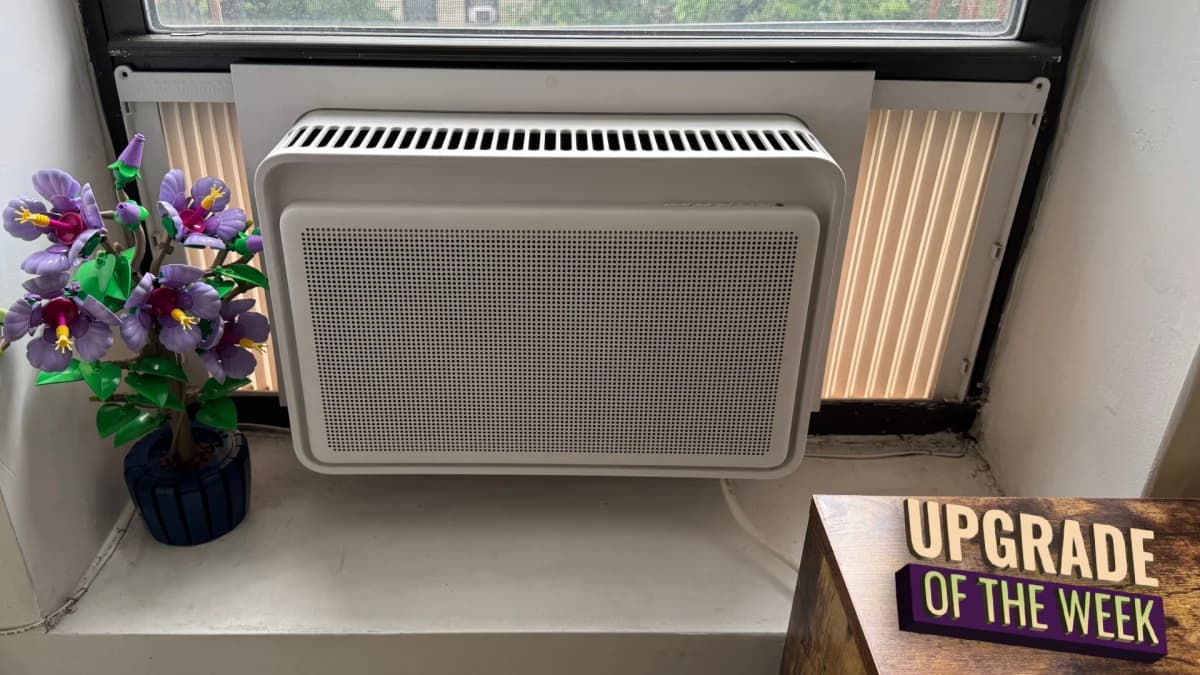
Design-wise, Windmill ditched the chunky beige aesthetic that window ACs have worn for decades. The unit is compact and minimalist, with a display that auto-dims after 60 seconds so it won't light up your bedroom at night. The vents sit on top rather than the front, giving it a sleeker profile.
Does the top vent placement actually improve cooling?
The top-mounted vents aren't just aesthetic. Air flowing upward and out at an angle circulates through a room more effectively than a direct front blast. Since heat rises, pushing cool air up first means it displaces warm air and spreads throughout the space rather than creating a cold zone directly in front of the unit.
The 8,000 BTU cooling capacity handles rooms up to 350 square feet. When you need rapid cooling, the unit delivers. One user reports it "blasts the room down to a serious chill" when pushed past Eco mode.
How easy is maintenance?
Filter cleaning takes about 30 seconds. The front cover is magnetic and pops on and off without tools or wrestling. Behind it sits a reusable antimicrobial mesh filter that slides out smoothly. Compare this to older units where removing the filter requires fighting with clips and screws, and the convenience becomes obvious.
Windmill also emphasizes sustainability in ways traditional manufacturers haven't. The unit uses R32 refrigerant, which has lower global warming potential than older refrigerants. Packaging is recyclable. These details matter to buyers who want cooling without the environmental guilt.
Who should buy this?
Urban apartment dwellers get the most value here. If you rent, you probably can't install central air, and you're stuck with window units whether you like them or not. The Windmill addresses the two biggest complaints about that reality: traditional units look ugly and require you to be home to control them.
At $299, it's more expensive than basic window ACs that run $150 or less. The premium buys you smart home integration, better design, and easier maintenance. Whether that's worth an extra $150 depends on how much time you spend looking at your AC and how often you want to cool your space before arriving.
Frequently Asked Questions
Does the Windmill AC work with Apple HomeKit?
Yes. Beyond Google Assistant and Amazon Alexa, Windmill supports Apple HomeKit integration for iOS users who want voice control through Siri.
How loud is the Windmill window air conditioner?
Windmill markets the unit as ultra-quiet. User reviews generally confirm it runs quieter than traditional window units, particularly in Eco mode when the compressor cycles off.
What room size can the Windmill AC cool?
The 8,000 BTU model handles rooms up to 350 square feet. Windmill also offers a 6,000 BTU variant for smaller spaces.
Is installation difficult?
Windmill promotes easy installation as a key feature. The unit fits standard window sizes and includes mounting hardware. Most users complete setup in under 30 minutes.
How much energy does Eco mode save?
Windmill claims up to 40% energy savings compared to running the unit continuously. Eco mode stops both the compressor and fan once your target temperature is reached.
Logicity's Take
The Windmill represents a broader trend of startups applying direct-to-consumer playbooks to boring product categories. Casper did it with mattresses, Away with luggage, and now Windmill with window ACs. The formula is consistent: better design, smart features, and a price premium justified by the experience upgrade. For tech workers who spend hours optimizing their home setups, paying $150 extra to never again wonder if they left the AC on is a reasonable trade. The real test will be durability. Traditional window units last 10-15 years. Whether Windmill's sleeker internals hold up that long remains an open question.
Need Help Implementing This?
If you're building out a smart home setup and want guidance on integrating devices like the Windmill AC with your existing ecosystem, reach out to our team at Logicity. We cover the tools and workflows that make modern living more efficient.
Source: Lifehacker
Huma Shazia
Senior AI & Tech Writer
Produced with AI assistance and reviewed by the Logicity editorial team. Learn more in our Editorial Policy.