Key Takeaways
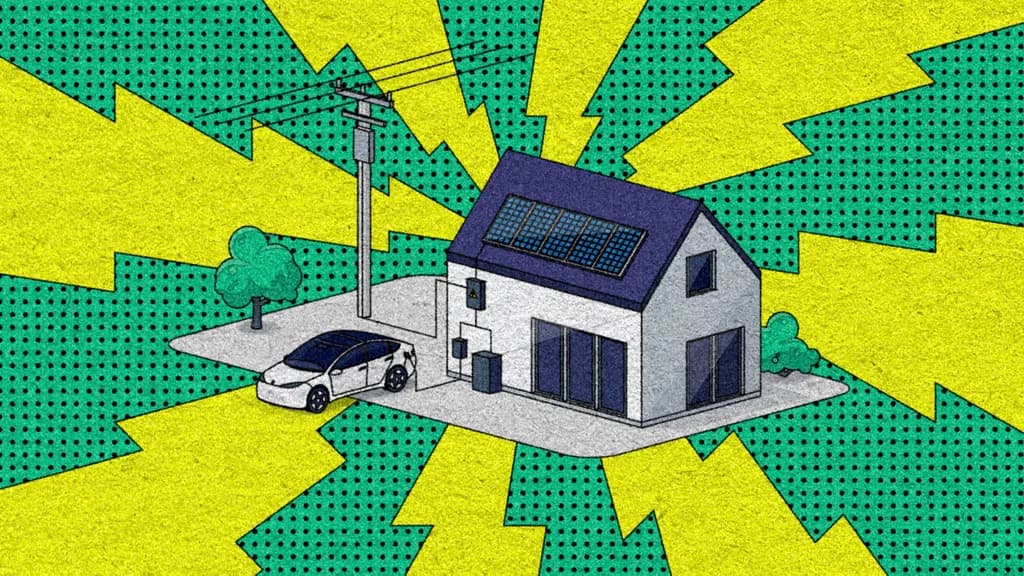
- Massachusetts EV owners in a pilot program could earn up to $3,000 this summer by sending power back to the grid during peak demand
- Installing a bidirectional charger costs over $20,000 on average, with installation alone running $16,000 due to panel upgrades
- GM has 250,000 V2G-capable vehicles on roads representing about a gigawatt of power, enough to power San Francisco for two days
Electric vehicles can already send power back to the grid when they're parked. In Massachusetts, a pilot program is paying EV owners up to $3,000 this summer for doing exactly that during heat waves. GM says it has 250,000 vehicles on the road capable of this trick, representing roughly a gigawatt of stored power. And yet vehicle-to-grid technology remains stuck in small-scale pilots. The bottleneck isn't the cars. It's everything else.
The $20,000 charger problem
Bidirectional charging, the technical term for EVs sending power back to homes or the grid, requires specialized hardware. That hardware is expensive. Rachel Ackerman, senior program director at the Massachusetts Clean Energy Center, puts the all-in cost for customers at over $20,000. Installation alone runs around $16,000, driven largely by electrical panel upgrades and system integration requirements.
The Massachusetts pilot works because government funding covers the equipment. Without that subsidy, the math doesn't work for most drivers. Earning $3,000 per summer sounds appealing until you realize it would take nearly seven summers just to break even on the charger, assuming no maintenance costs or hardware failures.
Some homeowners justify the cost differently. They buy bidirectional chargers for backup power during outages, treating grid support as a bonus feature rather than the primary use case. For everyone else, the economics simply aren't there yet.
Standardization doesn't exist yet
The compatibility problem compounds the cost problem. Most bidirectional chargers on the market today are designed to work with specific vehicles. Buy a Ford-compatible charger, then switch to a GM EV three years later, and you might need an entirely new setup. The industry is moving toward common standards, but that process remains incomplete.
This uncertainty makes the investment riskier. A $20,000 charger becomes an even harder sell when it might be obsolete with your next car purchase. Until automakers and charging companies agree on universal protocols, V2G adoption will stay fragmented.
Could cars themselves solve this?
Bidirectional chargers contain inverters, the same technology used in rooftop solar systems, to convert DC power from the battery into AC power for homes or the grid. But there's an alternative approach: design EVs to handle that conversion internally.
If the inverter lives inside the vehicle rather than in an external charger, installation costs drop significantly. Many experts argue this architectural shift will be necessary to make V2G economically viable at scale. GM has already moved in this direction, with 12 models capable of sending power directly to homes and, after a recent software update, to the grid as well.
How much grid capacity are we leaving on the table?
GM estimates its 250,000 V2G-capable vehicles represent about a gigawatt of power, enough to run San Francisco for roughly two days. Scale that up to the projected 26 million EVs expected on US roads by 2030, and the distributed battery storage potential becomes substantial. The International Energy Agency suggests vehicle-to-grid technology could supply up to 12% of daily electricity storage needs by 2050.
The average car sits parked 95% of the time. That's a lot of battery capacity doing nothing. During peak demand periods, like summer heat waves when air conditioners strain the grid, even a fraction of those parked EVs feeding power back could prevent blackouts or reduce reliance on expensive peaker plants.
California has recognized this potential. The state mandates that all new EVs sold after 2027 must have bidirectional charging capability built in. That regulatory push should accelerate standardization and, eventually, bring down costs as the technology scales.
What needs to happen next
The technology works. The use case is clear. The barriers are economic and organizational, not technical. Charger costs need to fall, probably by shifting inverter functionality into vehicles themselves. Compatibility standards need to solidify so buyers aren't locked into specific automaker ecosystems. Utility programs need to offer consistent compensation that makes participation worthwhile without requiring government subsidies to cover equipment.
California's 2027 mandate will help by creating a critical mass of capable vehicles. But vehicles are only half the equation. Until the charging infrastructure catches up, V2G will remain what it is today: a promising concept proven in pilots, waiting for the economics to align.
Frequently Asked Questions
How much can you earn from vehicle-to-grid programs?
In the Massachusetts pilot program, participants could earn up to $3,000 over the summer by sending power back to the grid during peak demand periods like heat waves. Actual earnings depend on your utility's rates and how often grid services are needed.
Why is bidirectional charging so expensive to install?
The total cost exceeds $20,000 on average, with installation alone running about $16,000. Most of this comes from electrical panel upgrades and integrating the charger with your home's existing electrical systems, not the charger hardware itself.
Which EVs support vehicle-to-grid technology?
GM has 12 models with V2G capability, representing about 250,000 vehicles on the road. Ford's F-150 Lightning also supports bidirectional charging. California will require all new EVs sold after 2027 to include this feature.
Does V2G damage EV batteries?
Battery degradation is a common concern, but modern battery management systems are designed to minimize cycling damage. Most V2G programs also limit discharge to preserve battery health, keeping the vehicle ready for driving.
Logicity's Take
The $3,000 summer earnings figure makes a good headline, but the real story is what happens when California's 2027 mandate kicks in. Once every new EV sold in the state has bidirectional capability baked in, the pressure shifts entirely to charging infrastructure and utility programs. Automakers have already shown they can add V2G through software updates. The question is whether utilities will build compensation models that work without subsidies, or whether V2G remains a nice feature that almost nobody uses.
Need Help Implementing This?
If your organization is exploring EV fleet management, grid integration, or energy infrastructure strategy, reach out to the Logicity team for analysis and vendor-neutral guidance on emerging energy tech.
Source: Fast Company / Adele Peters
Huma Shazia
Senior AI & Tech Writer
Produced with AI assistance and reviewed by the Logicity editorial team. Learn more in our Editorial Policy.