Key Takeaways
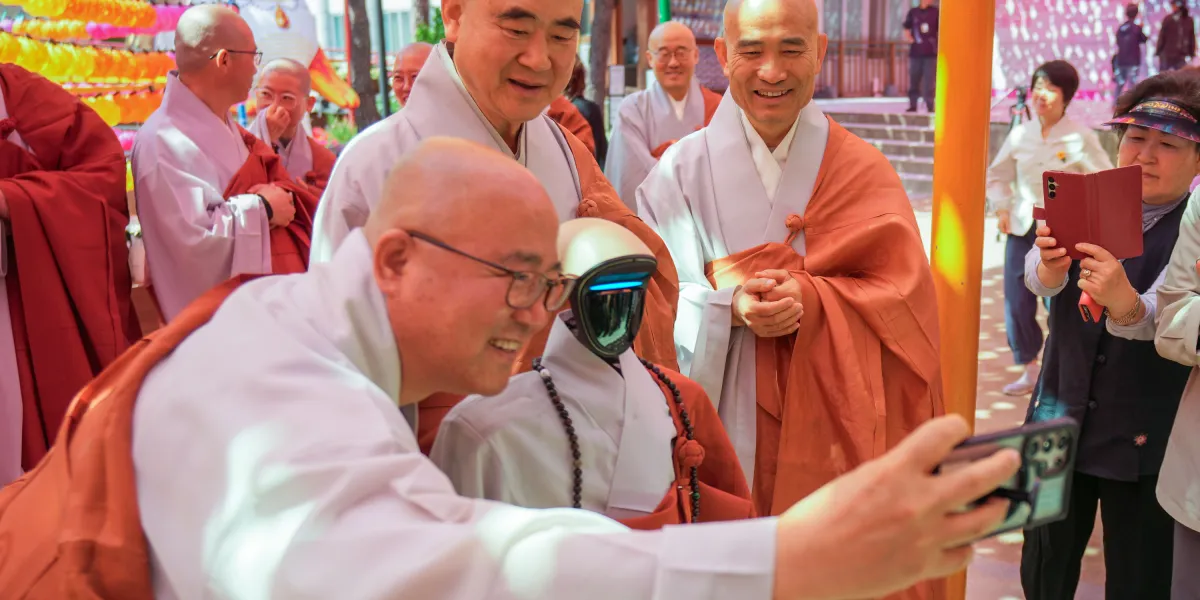
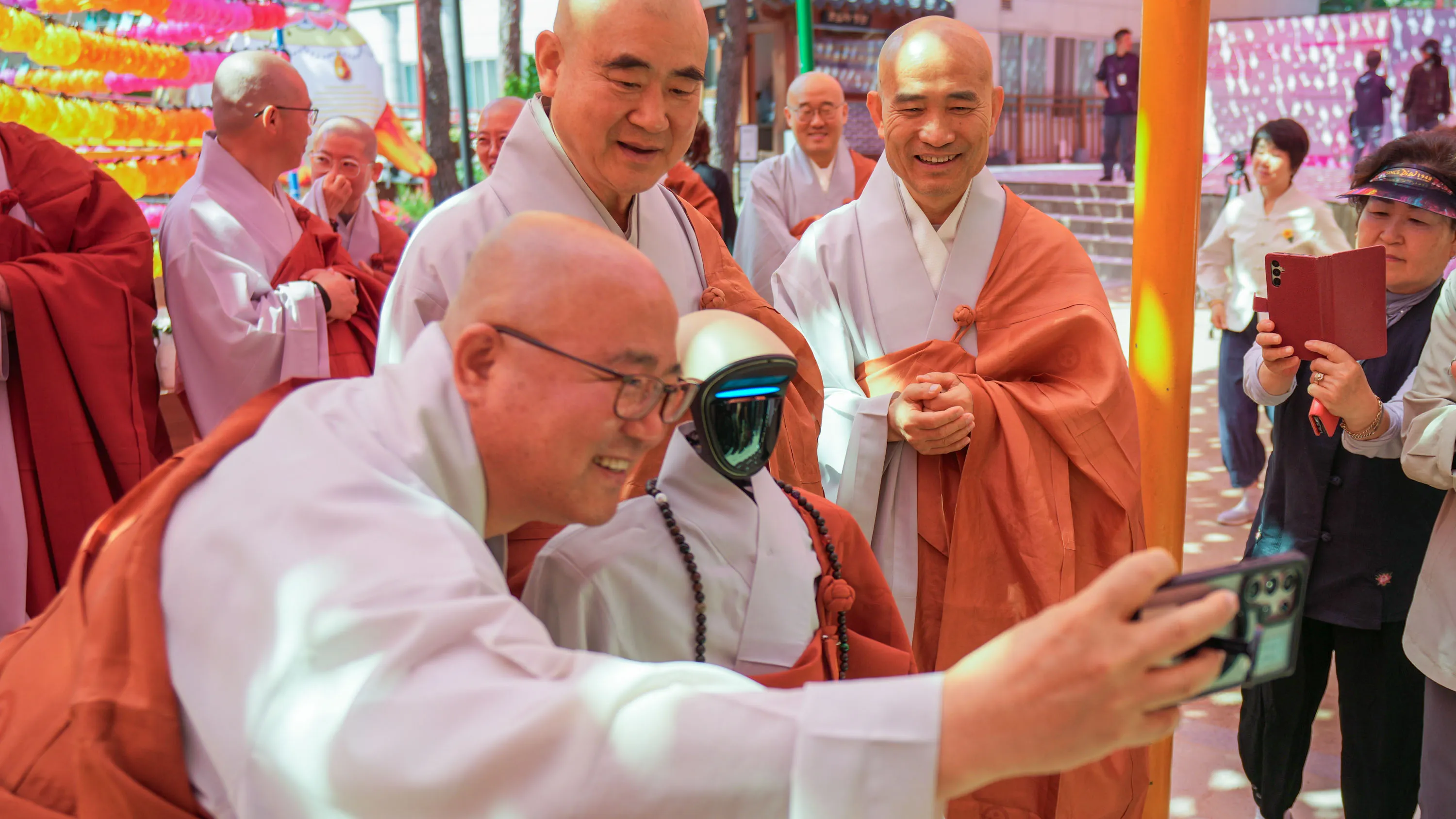
- Just 16% of South Koreans are more concerned than excited about AI, the lowest of 25 countries surveyed by Pew Research Center
- The government has designated AI as the engine of a 'Fourth Industrial Revolution' and is funding sovereign AI models and massive compute infrastructure
- 92.6% of South Koreans in their 20s use generative AI, and the market is projected to hit $175.8 billion by 2033
South Korea is the most AI-optimistic nation on earth. Only 16% of its citizens say they feel more concerned than excited about AI, according to a Pew Research Center survey of 25 countries. Compare that to the United States, where 50% express more worry than enthusiasm. The gap is not a statistical quirk. It reflects decades of deliberate policy, economic trauma, and a cultural equation: technology equals national survival.
Walk through Seoul's Gangnam district and you see what that equation produces. Delivery robots wait at crosswalks. Interactive bus stops display real-time schedules, soon to be upgraded into AI kiosks answering questions in multiple languages. Underground, 5G works flawlessly. Above ground, LED billboards celebrate K-pop birthdays. This is a city that treats new technology like a civic duty.
How did the government engineer AI enthusiasm?
South Korea's techno-optimism did not emerge organically. The government has framed AI as the essential engine for economic growth since the mid-2010s. President Lee Jae-myung, who took office in 2025, pledged to vault the country into the 'top three AI powers' alongside the US and China. He launched the Presidential Council on National AI Strategy, which funds massive compute purchases and a sovereign AI foundation model project aimed at developing homegrown alternatives to American systems.
'The South Korean government has designated an AI-powered Fourth Industrial Revolution as the country's path forward and aggressively promoted and invested in it,' says Chihyung Jeon, a professor of science and technology policy at the Korea Advanced Institute of Science and Technology. 'South Koreans have consistently and relentlessly been told by the government about AI's potential to create a better future.'
This is not empty rhetoric. Government agencies deploy AI textbooks in schools and AI eldercare robots in welfare centers. Tax credits and low-interest financing support Samsung and SK Hynix, which together supply most of the world's high-bandwidth memory chips powering Nvidia hardware. Both companies now carry valuations above $1 trillion, and their soaring share prices pushed the Kospi index to record highs in 2026.
Why does AI feel like a national survival strategy?
The psychology runs deeper than policy. South Korea's post-war economic miracle was built on successive technology waves: steel and ships in the 1970s, semiconductors in the 1980s, broadband in the 1990s, smartphones in the 2000s. Each wave pulled the country further from poverty. Missing the next wave feels existentially dangerous.
The 1997 Asian financial crisis seared this lesson into the national memory. When the IMF bailed out South Korea, the humiliation catalyzed a desperate push toward digital infrastructure. The country became one of the most connected on earth. Now that connectivity underpins AI adoption. A majority of Koreans use AI daily, either as a personal assistant or for work tasks, according to surveys by the Ministry of Culture and the Korea Chamber of Commerce.
What does light-touch AI regulation look like?
In 2024, South Korea's legislature passed the AI Basic Act, one of the world's first comprehensive AI laws. Its goal: promote development while establishing minimal guardrails. The approach contrasts sharply with the European Union's AI Act, which prioritizes risk classification and compliance burdens.
Seventy percent of South Koreans say advancing science and medicine through AI innovation is a bigger priority than protecting industries through regulation, according to the 2026 Stanford AI Index. The same index ranked South Korea third globally for notable AI models, measured by state-of-the-art advancements and citation rates.
For a country of 52 million, this is punching above its weight. Park Ji-hoon, lead analyst at Seoul Tech Institute, frames it bluntly: 'The government has framed AI as the essential engine for the Fourth Industrial Revolution, making it a national survival strategy.'
Are there blind spots in Korea's AI rush?
The single-mindedness creates risks. Online discussions on Reddit and Hacker News describe a 'paradox of transition.' South Koreans love the convenience of AI-powered public life but express mounting anxiety about job displacement. Many complain about low-quality 'AI slop' flooding media, from webcomics to news.
Critical reflection on AI's broader societal impacts often gets crowded out by the relentless national agenda. When the government and media frame AI as inevitable progress, skepticism can feel unpatriotic. The source article itself notes that this single-mindedness 'can crowd out critical reflection on AI's broader societal impacts.'
Microsoft's Work Trend Index highlights another tension: despite sky-high consumer enthusiasm, many South Korean companies lack coherent AI strategies. The eagerness exists at the individual level, but organizational implementation lags. This 'AI FOMO' may lead to rushed deployments without adequate governance.
What does the market trajectory look like?
The numbers are striking. South Korea's AI market is projected to grow at a 41% compound annual growth rate between 2026 and 2033, reaching $175.8 billion in revenue. That trajectory depends on continued government support, semiconductor dominance, and public willingness to adopt AI in daily life.
All three factors currently point in the same direction. But demographics pose a challenge. South Korea has one of the world's lowest fertility rates. AI eldercare robots are not just a novelty; they are a practical response to a shrinking workforce. The question is whether AI can offset demographic decline or merely delay its consequences.
Logicity's Take
South Korea offers a case study in what happens when a government treats AI as national infrastructure rather than private-sector experimentation. The results are impressive: high adoption, fast deployment, global relevance in AI model development. But the model requires sustained public trust. If job displacement accelerates without adequate safety nets, or if 'AI slop' erodes content quality, the optimism could curdle. Other nations watching South Korea should note both the speed and the risks.
Frequently Asked Questions
Why is South Korea so positive about AI compared to other countries?
Decades of government messaging, economic history tied to technology adoption, and cultural urgency around national competitiveness have created a population that views AI as essential to survival, not a threat.
What is the AI Basic Act in South Korea?
Passed in 2024, it is one of the world's first comprehensive AI laws, designed to promote AI development while establishing minimal regulatory guardrails.
How widespread is AI use in South Korea?
A majority of Koreans use AI daily for personal or work tasks. Among those in their 20s, 92.6% use generative AI tools.
What are the risks of South Korea's AI-first approach?
Critics point to job displacement anxiety, proliferation of low-quality AI-generated content, and organizational unpreparedness despite individual enthusiasm.
How big is South Korea's AI market expected to become?
Projections estimate $175.8 billion in market revenue by 2033, with a 41% compound annual growth rate from 2026.
Need Help Implementing This?
If your organization is exploring AI adoption strategies or wants to understand how different regulatory environments affect deployment, contact Logicity's advisory team for tailored guidance on building AI-ready infrastructure.
Source: MIT Technology Review
Huma Shazia
Senior AI & Tech Writer
Produced with AI assistance and reviewed by the Logicity editorial team. Learn more in our Editorial Policy.