Key Takeaways
- Nothing's smartphone shipments grew 25% year-over-year in Q1 2026 while the broader market declined
- Samsung's Galaxy S26 Ultra and Google's Pixel 10 Pro prioritize technical specs over distinctive design
- Nothing's valuation has exceeded $1.3 billion by making phones that spark emotional connection
The Smartphone Industry's Identity Crisis
Pick up a Samsung Galaxy S26 Ultra. Now pick up a Google Pixel 10 Pro. Both are technically excellent. Both take great photos. Both run your apps without complaint. And both are, according to How-To Geek's Jon Fingas, boring.
The modern smartphone market has reached what Fingas calls a "creative desert." Samsung's flagship is "technically outstanding, but held back by an uninspired design and generic software." Google's Pixel 10 Pro "won't thrill you unless you prize camera quality and AI." Even foldables have lost their edge. The Galaxy Z Fold 7 dropped bolder features like the S Pen in pursuit of thinness.
This isn't an accident. Samsung and Google are playing it safe because they're chasing mass appeal. The easiest path to broad customer reach is style that's "broadly appealing and inoffensive." The result? Phones that are "virtually interchangeable apart from a few technical differences."
“The industry was just so boring.”
— Carl Pei, Co-founder of Nothing
Nothing's Bet on Being Weird
Carl Pei left OnePlus and founded Nothing in 2021 with a simple thesis: make technology fun again. Five years later, the company is worth over $1.3 billion. Its smartphone shipments grew 25% year-over-year in Q1 2026 while the broader market shrank.
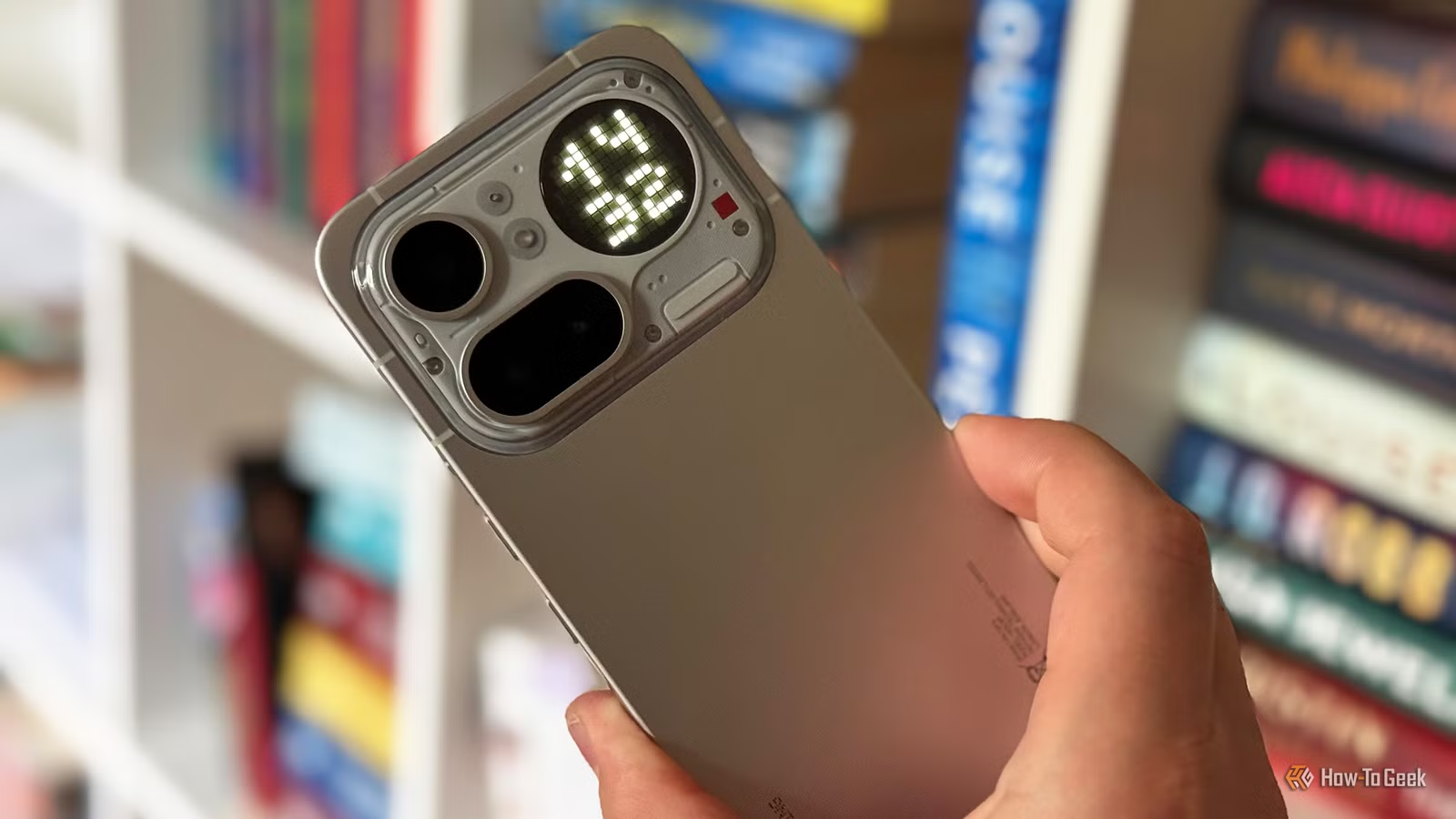
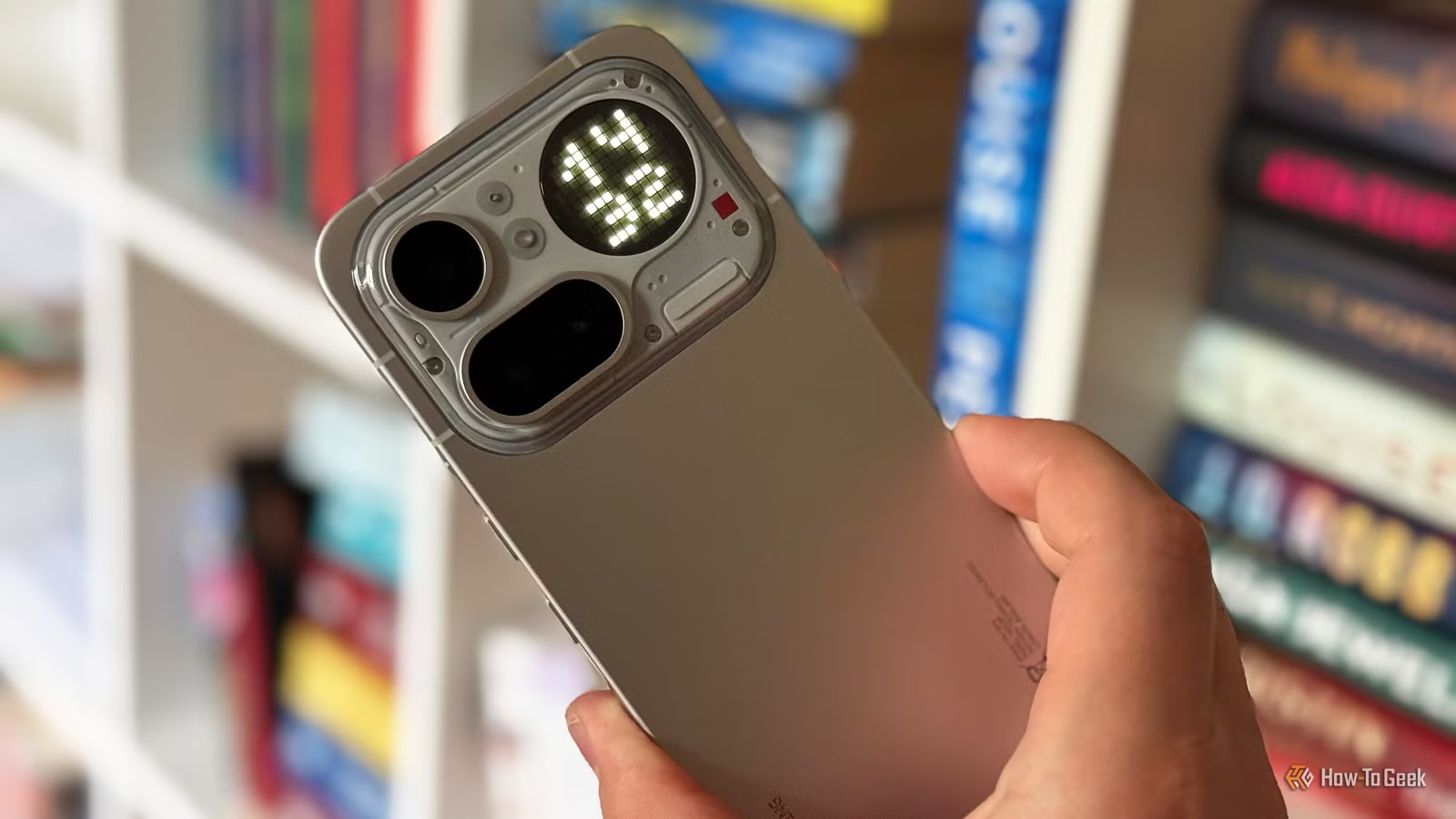
The strategy is the opposite of Samsung's. Where Samsung designs for the widest possible audience, Nothing designs to polarize. The Phone 4a Pro features an asymmetric camera plateau and a "Glyph Matrix" LED display on the back. You might find it ugly. That's the point.
"I love using and simply holding mine every day," Fingas writes. "It's a piece of art in my pocket." He describes the satisfaction of owning a conversation piece that sparks "what is that?" reactions. The phone reflects his personality as "slightly eccentric tech enthusiast" the way a distinctive jacket might.
The Business Case for Polarization
Nothing's success challenges a core assumption in product strategy: that broader appeal equals larger markets. The company is proving that strong opinions, even divisive ones, can build loyal customer bases faster than safe design.
India offers the clearest evidence. Nothing grew 500% year-over-year there in 2025. The country is brutally competitive. Price-sensitive consumers compare specs obsessively. Yet Nothing's phones, which don't always have the best specs at their price points, are winning.
The company is now confident enough to raise prices. Nothing's 2026 portfolio shows an estimated 30% price increase due to rising component costs. This marks a strategic shift away from the budget segment. It's a move you can only make when customers buy your brand, not just your specs.
“What we want to do is make technology fun again.”
— Carl Pei, Co-founder of Nothing
The Tradeoffs Nothing's Critics Point Out
Not everyone is convinced. Discussions on Hacker News often dismiss Nothing's design choices as "gimmicky" or "cyberpunk cosplay." Critics argue the company should focus on open-source software and hardware repairability rather than LED lights.
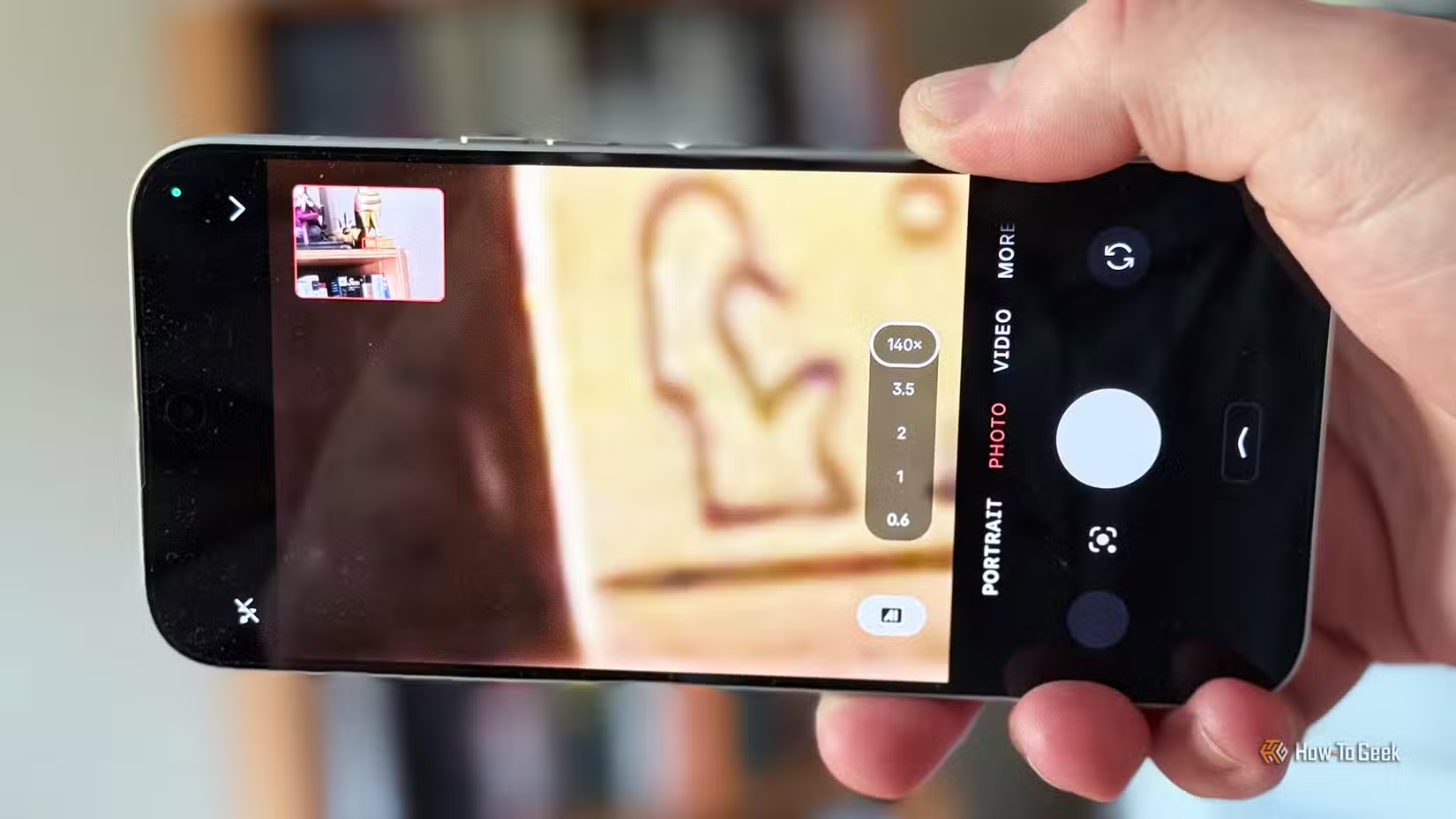
Reddit's Nothing community is more supportive but raises a valid concern: camera quality. Many users express frustration that Nothing's cameras don't match Samsung's S-series flagships. For buyers who prioritize photography, this is a real tradeoff.
The Phone 4a Pro starts at $499. At that price, you're not getting flagship camera hardware. You're getting a phone that makes you feel something when you pick it up. Whether that's worth the camera compromise depends entirely on what you want from a phone.
What Samsung and Google Should Learn
Nothing isn't going to outsell Samsung. That's not the lesson here. The lesson is that the smartphone market has room for personality, and customers will pay for it.
Samsung and Google have the resources to experiment. They choose not to because they're protecting existing market share. But protection isn't growth. Nothing's 25% shipment increase came from somewhere. Some of those customers used to buy Galaxies and Pixels.
Fingas frames Nothing as a "wake-up call" to the industry. The company proves that good phone design "should be polarizing." Safe design maximizes inoffensiveness. Polarizing design maximizes attachment. In a market where phones last three to four years, attachment drives loyalty.
Logicity's Take
The Nothing Phone 4a Pro at a Glance
- Price: $499
- Processor: Qualcomm Kryo 8-core, up to 2.8 GHz
- Display: Flexible AMOLED
- Signature feature: Glyph Matrix LED display on back panel
- Market position: Mid-range pricing, premium design differentiation
Frequently Asked Questions
What makes Nothing phones different from Samsung or Google?
Nothing prioritizes distinctive, polarizing design over mass appeal. The phones feature transparent backs, asymmetric camera layouts, and the Glyph Interface LED system. They're built to spark emotional connection rather than check every spec box.
Is the Nothing Phone 4a Pro worth $499?
If you prioritize camera quality above all else, probably not. Samsung and Google offer better camera hardware at similar prices. But if you want a phone with personality that feels different from every other glass slab, Nothing delivers something competitors don't.
How fast is Nothing growing compared to the smartphone market?
Nothing's global shipments grew 25% year-over-year in Q1 2026 while the broader smartphone market declined. In India, the company grew 500% year-over-year in 2025.
What is the Glyph Interface on Nothing phones?
The Glyph Interface is a system of LED lights on the back of Nothing phones. It provides customizable notification patterns, charging indicators, and other visual feedback. Critics call it gimmicky. Fans say it makes the phone feel alive.
Is Nothing moving away from budget phones?
Yes. Nothing's 2026 portfolio shows an estimated 30% price increase due to rising DRAM and NAND costs. The company is pivoting toward premium positioning as its brand strengthens.
Another case of a company making bold moves while competitors play it safe
Need Help Implementing This?
Source: How-To Geek
Manaal Khan
Tech & Innovation Writer
Produced with AI assistance and reviewed by the Logicity editorial team. Learn more in our Editorial Policy.