Key Takeaways
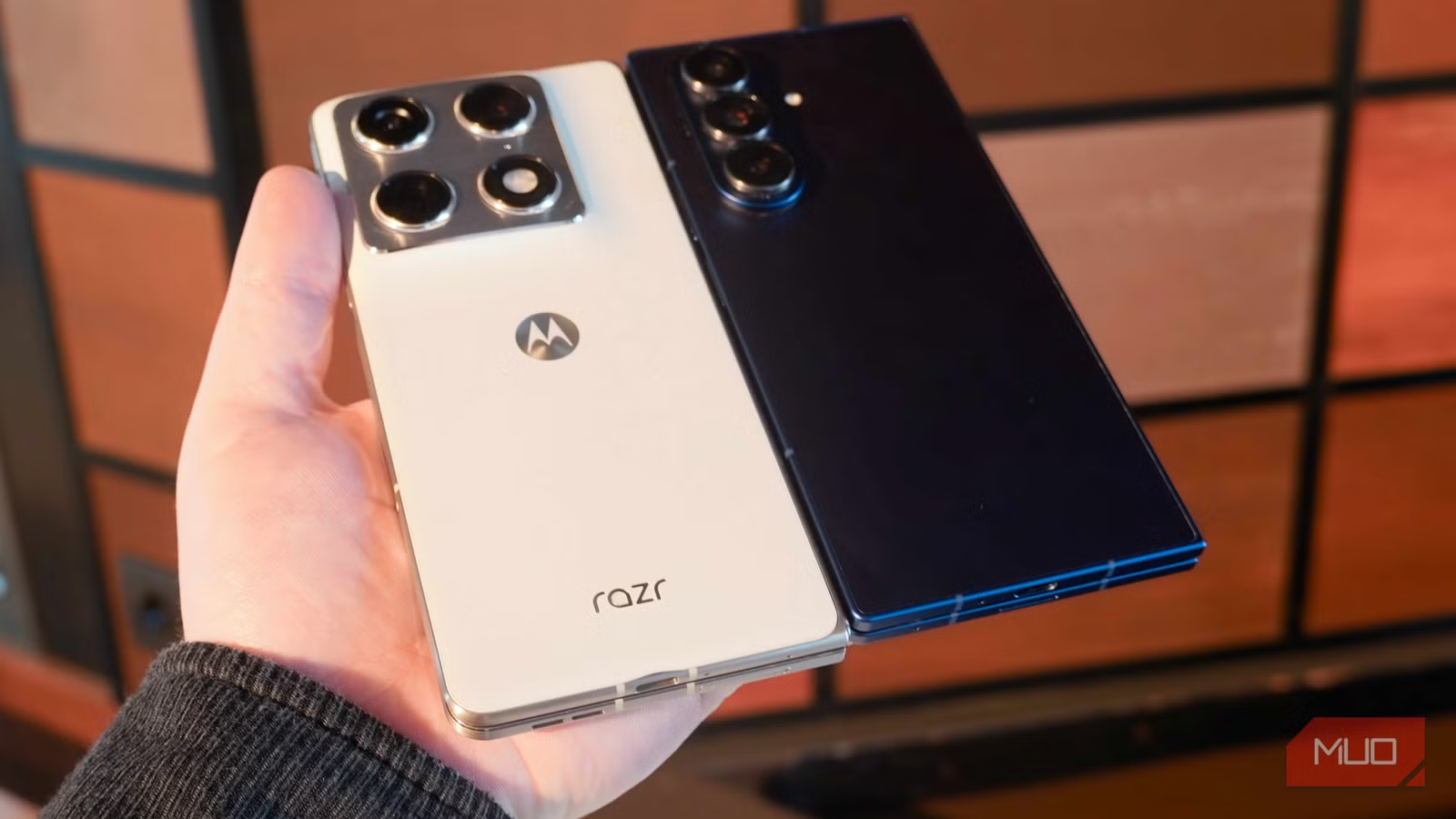
- Silicon-carbon batteries pack higher capacity into denser cells, giving phones like the Motorola Razr Fold multi-day battery life
- Apple and Samsung avoid the tech due to faster degradation, swelling risks, and reliability concerns
- U.S. carrier distribution limits exposure to silicon-carbon phones, since most buyers only see Apple, Samsung, and Google devices in stores
Silicon-carbon batteries have been shipping in Chinese smartphones for over two years, promising dramatically longer runtimes in the same form factor. Apple and Samsung still refuse to adopt them. After spending a month with the Motorola Razr Fold and its 6,000mAh silicon-carbon cell, a MakeUseOf reviewer found the battery life exceptional. He also found compelling reasons why the industry's two largest players remain hesitant.
The Razr Fold is notable because it's one of the few silicon-carbon battery phones available through U.S. carriers. That matters. Most American smartphone buyers purchase through AT&T, Verizon, or T-Mobile, lured by bundled discounts that soften sticker shock. Brands without carrier presence, like OnePlus, effectively remain invisible to this majority, even when they ship superior battery technology.
What makes silicon-carbon batteries different?
Traditional lithium-ion batteries use graphite anodes to hold lithium ions during charge and discharge cycles. Graphite is stable and predictable, allowing safe operation across hundreds or thousands of cycles. Silicon can theoretically store about ten times more lithium ions than graphite. That translates directly to higher energy density, meaning more capacity in the same physical space.
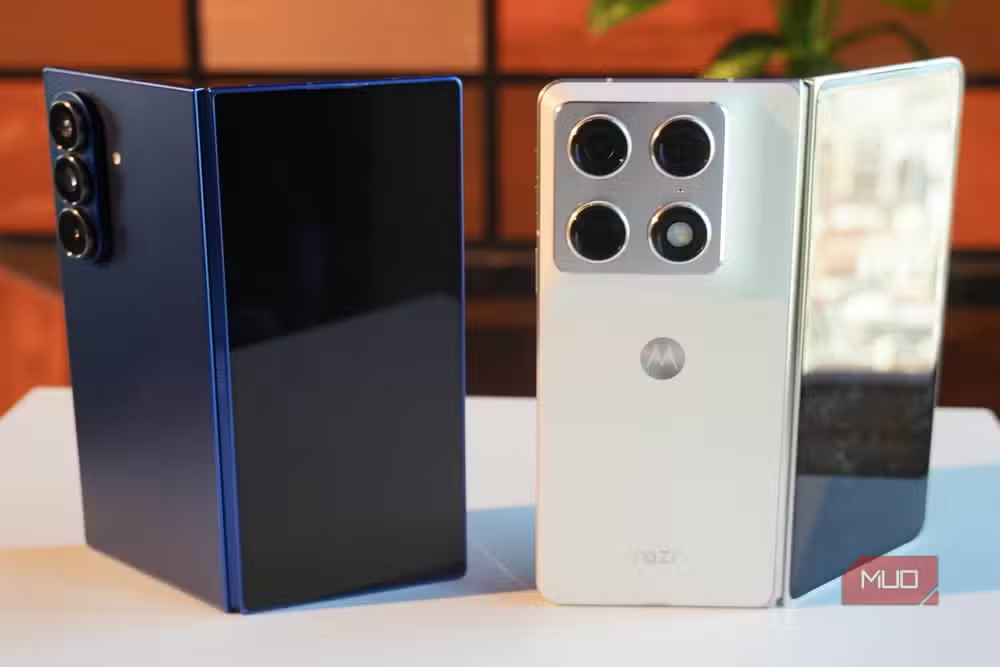
The catch is physics. Silicon expands up to 300% when fully charged with lithium ions, then contracts as it discharges. This swelling stresses the battery's structure over time. Chinese manufacturers like Honor, OnePlus, and Xiaomi have developed proprietary carbon matrix solutions to manage expansion, but the fundamental tradeoff remains.
How did the Razr Fold perform in real use?
Brady Snyder of MakeUseOf tested the Razr Fold against recent foldables including the Samsung Galaxy Z Fold 7 and Google Pixel 9 Pro Fold. Neither Samsung nor Google's device offered comfortable battery life when the main display saw heavy use. The Razr Fold, he found, lasts a full day and can stretch into a second day.
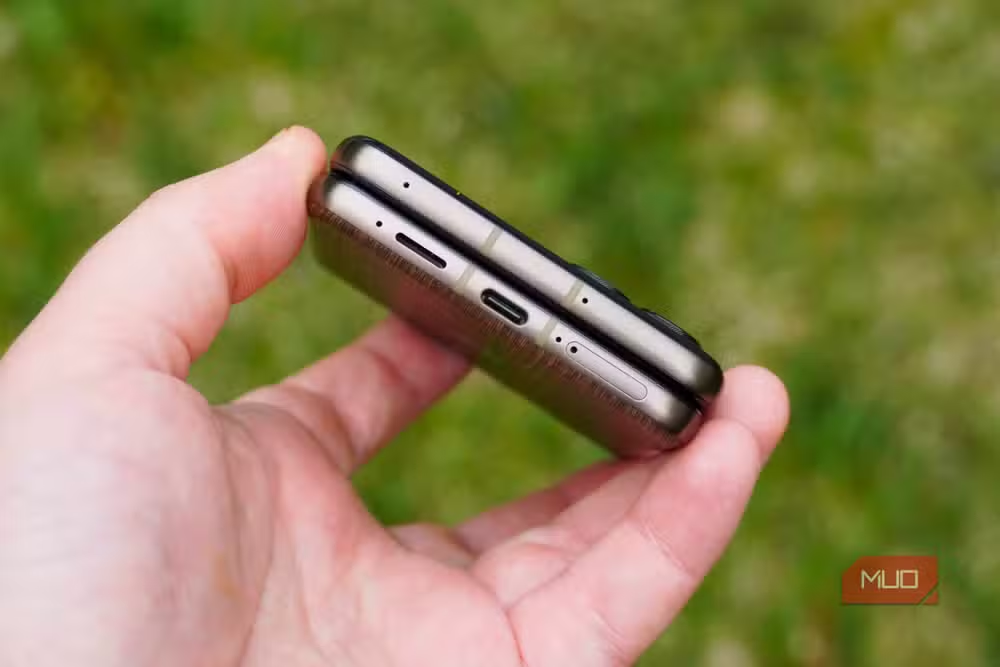
"There's always a new shiny gadget I'm waiting to try, but the Razr Fold is so good I don't want to give it up," Snyder wrote. "That is the highest compliment a reviewer can give." The 6,000mAh capacity dwarfs the 4,500 to 5,000mAh cells typical in Western flagships, and the real-world runtime difference proved noticeable.
Why won't Apple and Samsung adopt silicon-carbon?
Three concerns dominate. First, degradation: silicon-carbon cells lose capacity faster over their lifespan than traditional lithium-ion. A phone that ships with stellar battery life may feel noticeably worse after 18 months. Second, swelling: the expansion and contraction of silicon creates physical stress that can cause batteries to bulge. In tightly engineered devices like iPhones, any swelling poses design and safety problems.
Third, reliability at scale. Apple ships over 200 million iPhones annually. Samsung's Galaxy line moves comparable volumes. A 0.1% failure rate means hundreds of thousands of defective units, potential recalls, and brand damage. When lithium-ion batteries fail catastrophically, as Samsung learned with the Galaxy Note 7 in 2016, the consequences are severe. Conservatism here is rational.
The U.S. distribution problem
Even when silicon-carbon phones exist in the U.S. market, most buyers never see them. The OnePlus 15, available stateside with silicon-carbon tech, sells primarily through direct channels. The Motorola Razr Ultra 2026 packs the same battery chemistry as the Razr Fold but isn't stocked by major carriers. For the average American walking into a Verizon store, the choices remain Apple, Samsung, and Google. All three use lithium-ion.
Motorola's Razr Fold breaks this pattern by securing carrier distribution. It's a deliberate bet: put the technology where buyers actually shop. Whether this forces competitors to respond depends on whether consumers start asking questions about battery capacity that Apple and Samsung can't answer with their current chemistry.
Will mainstream brands eventually switch?
The technology is improving. Honor launched the Magic 6 Pro with silicon-carbon in 2024, and two years of iteration have refined manufacturing processes. George Zhao, Honor's CEO, has stated that the company achieves "energy densities that simply weren't possible with traditional lithium-ion technology while maintaining the safety standards consumers expect."
Apple and Samsung are watching. Both companies invest heavily in battery research and file patents related to silicon anode technology. The question is timing. If Chinese manufacturers demonstrate several years of reliable field performance with minimal warranty claims, Western brands will find it harder to justify avoiding a technology that consumers clearly prefer.
For now, U.S. buyers who want silicon-carbon have limited options. The Motorola Razr Fold represents the easiest path, available where most people buy phones and delivering the multi-day runtime that makes the technology appealing. Whether that's enough to shift mainstream expectations remains an open question.
Logicity's Take
Apple's caution makes strategic sense, but it's also becoming a competitive liability. Chinese brands have shipped millions of silicon-carbon phones since 2024 without major safety incidents. At some point, Apple's "we wait until it's perfect" narrative starts sounding like "we're behind." If the iPhone 18 still uses lithium-ion while Android flagships routinely hit 6,500mAh, battery anxiety becomes Apple's problem to explain.
Frequently Asked Questions
What is a silicon-carbon battery?
A silicon-carbon battery replaces the traditional graphite anode in lithium-ion cells with a silicon-carbon composite. Silicon stores about 10 times more lithium ions than graphite, enabling higher energy density and longer phone runtimes in the same physical space.
Why don't iPhones use silicon-carbon batteries?
Apple avoids silicon-carbon technology due to concerns about faster degradation, battery swelling from silicon expansion, and reliability risks at the scale of 200+ million annual iPhone shipments.
Which phones have silicon-carbon batteries in the U.S.?
The Motorola Razr Fold is the most accessible option through major U.S. carriers. The OnePlus 15 and Motorola Razr Ultra 2026 also feature silicon-carbon batteries but are sold primarily through direct channels.
Do silicon-carbon batteries degrade faster than lithium-ion?
Yes. The expansion and contraction of silicon during charging cycles causes faster capacity loss compared to stable graphite anodes in traditional lithium-ion batteries.
How much battery capacity do silicon-carbon phones offer?
Current silicon-carbon flagship phones pack 6,000mAh or more, compared to 4,500-5,000mAh typical in Western flagships using conventional lithium-ion chemistry.
Need Help Implementing This?
If your team is evaluating battery technology for hardware products or tracking mobile industry trends for investment decisions, contact Logicity for briefings on emerging smartphone technologies and their market implications.
Source: MakeUseOf
Huma Shazia
Senior AI & Tech Writer
Produced with AI assistance and reviewed by the Logicity editorial team. Learn more in our Editorial Policy.