Key Takeaways
- Most 3D printing tutorials skip or minimize prototyping to keep content short
- Never print the entire model on your first attempt
- Prototyping saves filament, time, and frustration in the long run
The Prototyping Problem in 3D Printing Content
Watch any 3D printing YouTube video and you'll notice a pattern. The creator measures an item, spends a few seconds in CAD, and pulls a perfect print off the bed. It looks effortless.
That's not how it actually works. Patrick Campanale, writing for How-To Geek, points out that prototyping is the most crucial step in 3D printing. It's also the step that almost every guide glosses over or skips entirely.
The first print is never great. Even with tools like ToolTrace.ai to help with measurements and modeling, getting a custom 3D print right requires iteration. Those polished tutorials compress hours of trial and error into seconds of B-roll.
Why Tutorials Skip This Step
Content creators have obvious reasons to minimize prototyping footage. It's repetitive. It's boring to watch. It doesn't fit the narrative of 3D printing as a quick solution to problems.
But the effect on viewers is real. Beginners expect their first prints to work perfectly. When they don't, people assume they did something wrong or that their printer is defective. Neither is usually true.
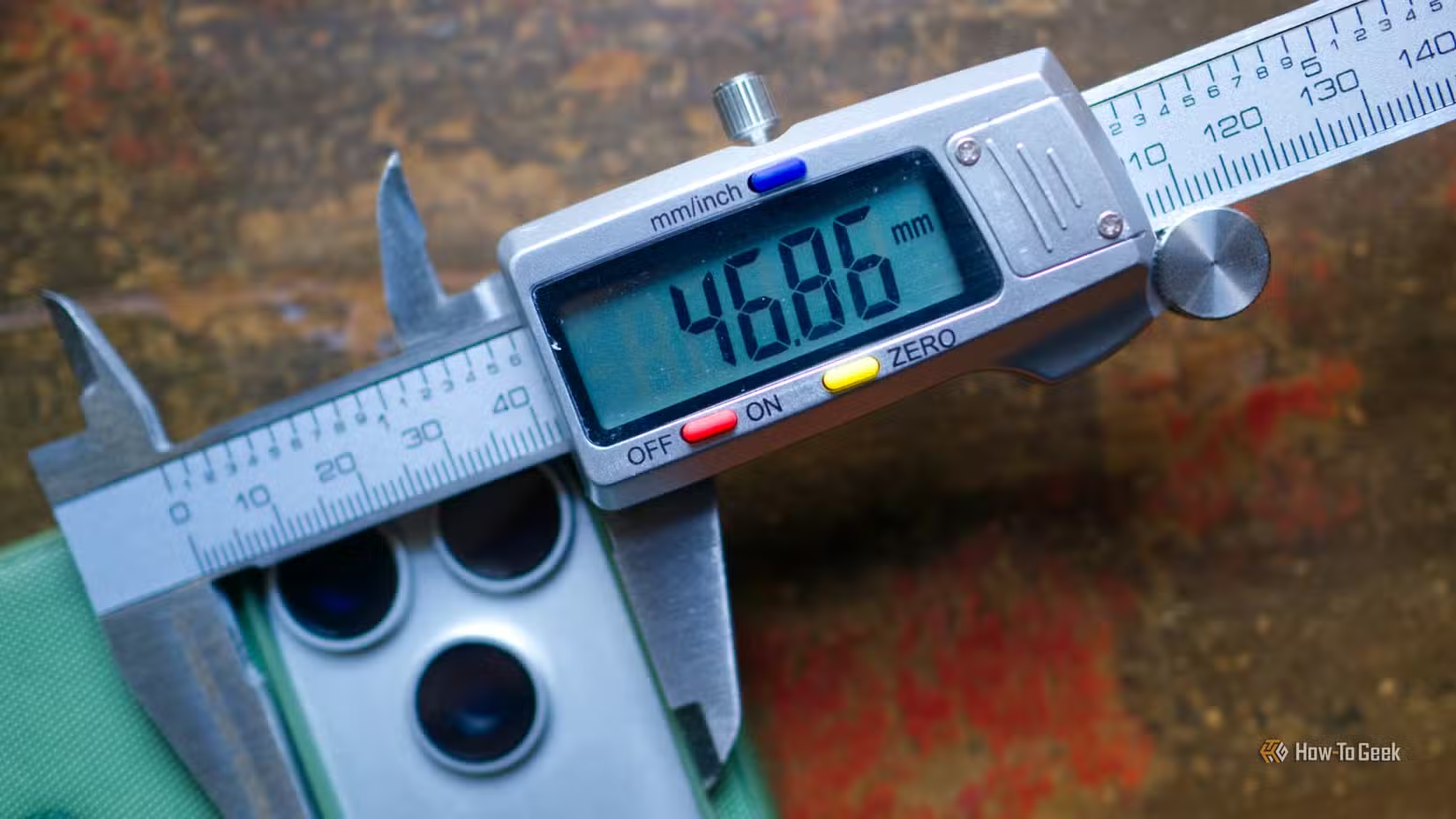
Take custom Gridfinity boxes as an example. These drawer organizers are a popular project in the maker community. Tutorials make them look simple: measure your items, model a box, print it out. In practice, tolerances matter enormously. A box that's 0.5mm too tight won't fit your items. A box that's 1mm too loose lets them rattle around.
The Cost of Skipping Prototypes
Campanale admits he's made this mistake more than a few times. Printing the entire model on the first attempt wastes plastic on something that will likely need adjustments.
Consider a practical example. You're designing a phone case. The full print takes 4 hours and uses 50 grams of filament. If the tolerances are wrong, you've burned half a day and enough plastic for several test prints.
A smarter approach: print just the corner with the button cutouts. That takes 20 minutes and uses 5 grams. If the buttons don't line up, you've lost almost nothing. Adjust the model and try again.
How to Prototype Properly
Good prototyping starts with identifying the critical features of your design. What dimensions absolutely must be correct? What tolerances can you live with?
- Print only the sections that matter. A bracket's mounting holes matter more than its decorative features.
- Test fit early and often. Don't wait until you have a complete print to check if it actually works.
- Document your adjustments. If you had to add 0.3mm to a hole for a snug fit, write it down for future projects.
- Use cheap filament for prototypes. Save the fancy materials for final prints.
This approach isn't glamorous. It won't make for exciting video content. But it's how experienced makers actually work.
Setting Realistic Expectations
The gap between tutorial content and real-world practice exists throughout tech education. But 3D printing is particularly susceptible because the process looks so automated. Put a file on the printer, press start, get a part.
The automation hides the design iteration that makes successful prints possible. Every custom model represents decisions about tolerances, support structures, orientation, and material properties. Those decisions rarely come out perfect on the first try.
Expecting multiple prototype prints isn't a sign of failure. It's the actual workflow.
Logicity's Take
Frequently Asked Questions
How many prototype prints should I expect before a final version?
For simple designs, 2-3 iterations is common. Complex parts with tight tolerances might need 5 or more. There's no fixed number because it depends on how many critical dimensions your design has.
Should I use the same filament for prototypes and final prints?
Not necessarily. If your final print will use expensive filament, prototype with cheaper PLA first. Just remember that different materials have different shrinkage rates, so your final print may need minor adjustments.
What's the fastest way to prototype 3D prints?
Print only the critical sections of your model. If you're designing a case, print just the corners or mounting points first. This reduces print time from hours to minutes while testing the dimensions that matter most.
Why do 3D printing tutorials skip prototyping?
Prototyping footage is repetitive and doesn't make for engaging video content. Creators condense the process to keep videos short and watchable, which gives viewers unrealistic expectations about how long projects actually take.
Another look at how tutorials and reality differ in tech projects
Need Help Implementing This?
Source: How-To Geek
Huma Shazia
Senior AI & Tech Writer
Produced with AI assistance and reviewed by the Logicity editorial team. Learn more in our Editorial Policy.