Key Takeaways
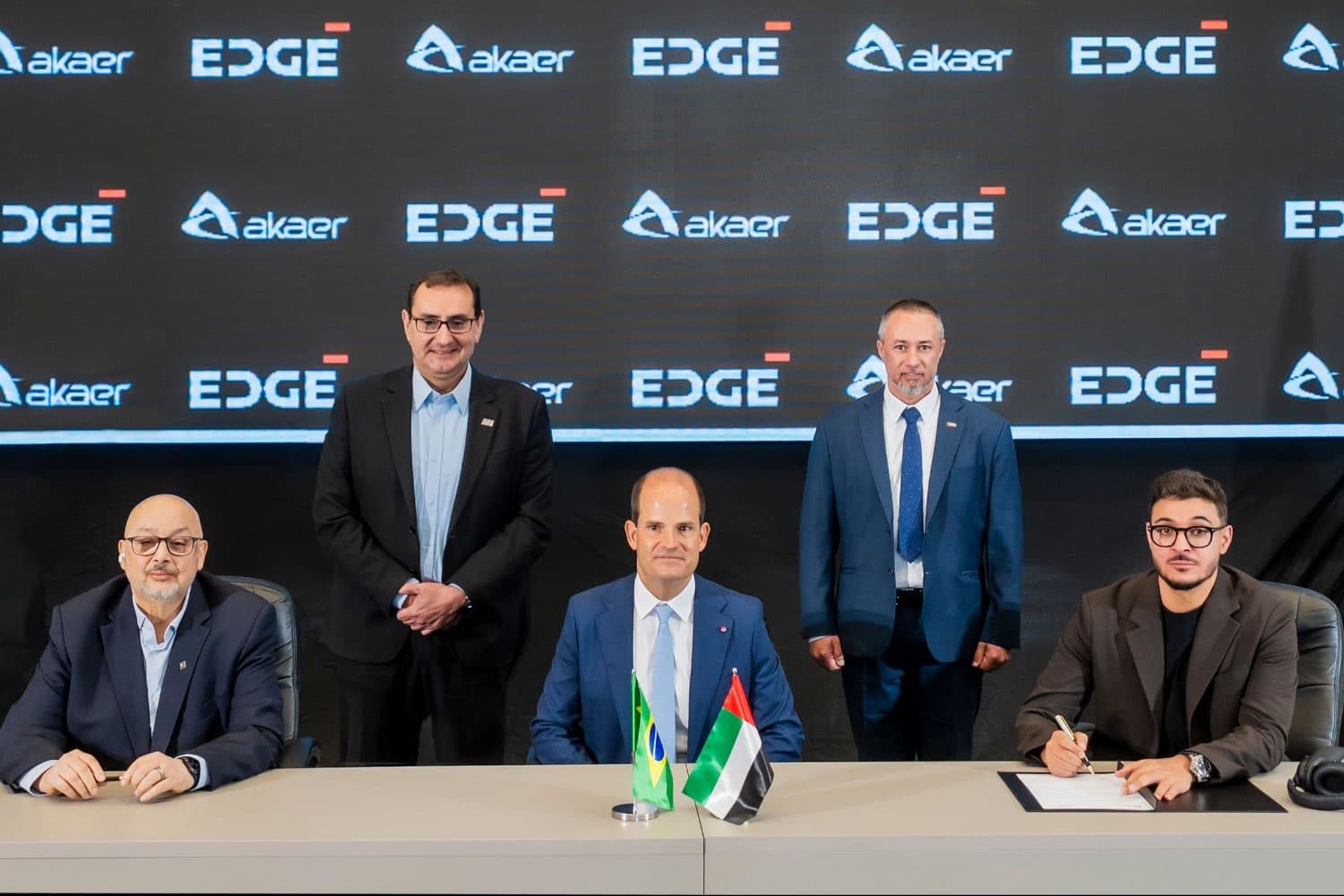
- UAE's EDGE Group is acquiring Brazilian aerospace firm AKAER to strengthen UAV and space capabilities
- AKAER brings three decades of aerostructure engineering expertise from Brazil's aerospace hub
- The deal accelerates UAE's push to become a top-10 global defense contractor
UAE defense conglomerate EDGE Group is acquiring AKAER, a Brazilian aerospace engineering firm with over 30 years of experience in aerostructures and advanced systems. The deal gives EDGE direct access to Latin American engineering talent and expands its footprint in UAVs, space systems, and next-generation defense platforms.
AKAER, founded in 1992, operates from São José dos Campos, Brazil's aerospace corridor. The company has built a reputation for aircraft structural engineering and has worked on projects ranging from commercial aviation components to defense platforms. For EDGE, which has been on an acquisition spree since its 2019 formation, this adds a South American base and a deep bench of aerospace engineers.
Why EDGE wants AKAER's engineering bench
EDGE isn't short on ambition. The group was created by consolidating more than 25 UAE defense entities, and it now employs over 100,000 people with annual revenues exceeding $5 billion. That puts it among the world's top 25 defense contractors. But the company has made clear it wants a spot in the top 10.
Buying AKAER serves that goal in two ways. First, it brings specialized engineering capabilities in aerostructures, something EDGE needs as it scales up drone and space programs. Second, it plants a flag in Brazil, a country with a mature aerospace industry and competitive labor costs compared to Europe or North America.
São José dos Campos isn't a random location. It's home to Embraer, one of the world's largest aircraft manufacturers, and a cluster of aerospace suppliers and research institutions. AKAER has spent three decades embedded in that ecosystem, which means EDGE now has access to supply chains and talent pipelines that took decades to build.
UAE's defense industry push beyond oil
This acquisition fits a broader UAE strategy. The country has been diversifying away from oil dependence, and defense manufacturing is one of the sectors the government has targeted for growth. UAE defense exports reportedly hit $1.4 billion in recent years, a figure that would have been unthinkable a decade ago.
EDGE has been central to that push. Since its formation, the group has moved aggressively to acquire capabilities it lacked domestically. Space systems and advanced UAVs are two areas where the company sees significant growth potential, both for UAE defense needs and for export markets.
The timing matters too. Global demand for drones has surged, driven by conflicts in Ukraine and elsewhere that have demonstrated the effectiveness of relatively low-cost unmanned systems. Countries are racing to develop indigenous drone capabilities, and EDGE wants to be a supplier.
What AKAER brings to the table
AKAER's expertise centers on aerostructures, the structural components of aircraft and spacecraft. This includes fuselage sections, wing structures, and composite materials. It's detailed, exacting work that requires deep engineering knowledge and precision manufacturing.
For EDGE's UAV ambitions, this expertise translates directly. Modern drones, especially medium and large platforms, require the same structural engineering rigor as manned aircraft. They need to be light, durable, and capable of carrying payloads while maintaining flight stability. AKAER's engineers have spent decades solving exactly these problems.
The space angle is less obvious but equally important. The UAE has been investing heavily in space, including the successful Hope Mars mission. As EDGE expands into space systems, AKAER's experience with aerospace-grade structures and materials becomes valuable.
What this means for the defense market
The EDGE-AKAER deal reflects a broader trend: defense companies are going global to acquire specialized capabilities. Building engineering expertise from scratch takes years, sometimes decades. Buying it is faster, if more expensive.
For competitors, this is a signal that EDGE is serious about moving up the rankings. The company isn't just consolidating UAE assets anymore. It's reaching into established aerospace markets to acquire talent and technology.
Whether EDGE can integrate AKAER effectively remains to be seen. Cross-border acquisitions in defense are notoriously tricky, with different regulatory environments, export controls, and corporate cultures to navigate. But if EDGE pulls it off, it will have a genuinely global engineering base for the first time.
Logicity's Take
For AI and product teams watching the defense space, this deal underscores a pattern: hardware-intensive industries are buying engineering capabilities rather than building them. The same logic applies to AI infrastructure. Companies that need specialized expertise, whether in aerostructures or ML ops, are increasingly acquiring it through M&A rather than organic hiring. EDGE's move suggests that even well-funded organizations see acquisition as the faster path to capability, a dynamic that's playing out across tech and defense alike.
Frequently Asked Questions
What does AKAER specialize in?
AKAER focuses on aerostructures, including aircraft and spacecraft structural components, composite materials, and precision manufacturing. The company has over 30 years of experience in Brazil's aerospace industry.
Why is EDGE acquiring a Brazilian company?
EDGE wants specialized aerospace engineering expertise it would take years to build internally. Brazil has a mature aerospace sector with competitive costs, and AKAER gives EDGE access to that talent pool and supply chain.
How does this fit UAE's economic strategy?
The UAE is diversifying away from oil dependence by building indigenous defense manufacturing capabilities. EDGE is central to that effort, and acquisitions like AKAER accelerate the company's growth toward becoming a top-10 global defense contractor.
What is EDGE Group?
EDGE Group is a UAE defense conglomerate formed in 2019 by consolidating over 25 defense entities. It employs more than 100,000 people and generates over $5 billion in annual revenue, ranking among the world's top 25 defense companies.
Need Help Implementing This?
If you're building products in regulated industries like defense or aerospace, understanding M&A dynamics and capability acquisition matters. Reach out to Logicity for insights on how tech companies navigate similar strategic decisions.
Source: Forbes Middle East / Forbes Middle East
Huma Shazia
Senior AI & Tech Writer
Produced with AI assistance and reviewed by the Logicity editorial team. Learn more in our Editorial Policy.