Key Takeaways
- 29 nations signed on to WAICO, headquartered in Shanghai, creating a China-led alternative to Western AI governance frameworks
- Huawei unveiled the Atlas 950 SuperPoD, an AI computing cluster designed to operate without US semiconductors
- Financial institutions face a future where AI standards and digital tools may diverge between Western and Chinese-aligned markets
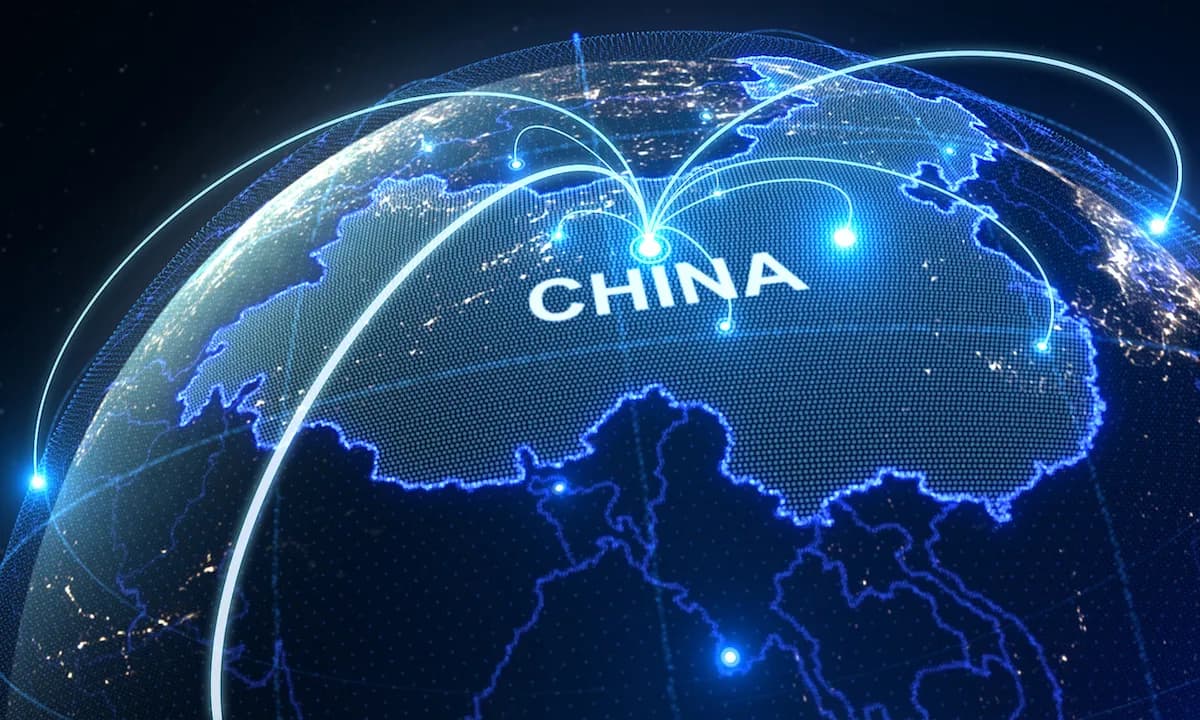
China formalized a new intergovernmental body for artificial intelligence on July 16, with 29 nations signing on to the World AI Cooperation Organization (WAICO) at a ceremony in Shanghai. The organization, headquartered in Shanghai and guided by UN Charter principles, positions Beijing as the architect of an alternative global AI governance framework, one that competes directly with US-led initiatives.
Chinese Foreign Minister Wang Yi joined representatives from Russia, Kazakhstan, Pakistan, Indonesia, and Laos at the signing. The stated mission: promote AI development that is "beneficial, safe, and fair." UN Secretary-General Antonio Guterres attended, lending institutional weight to what is effectively a diplomatic counter-move against Washington's AI governance playbook.
What does WAICO actually do?
WAICO is structured as an independent international organization, not a trade bloc or military alliance. According to CGTN, the body will focus on setting norms and standards for AI development, with particular emphasis on open-source models and technology transfer to developing nations. China is framing this as "sovereign AI," a term that implies each member state can develop AI infrastructure free from dependence on American technology or regulatory frameworks.
The timing is deliberate. WAICO launched at the World Artificial Intelligence Conference (WAIC) in Shanghai, where Chinese officials positioned the country as a champion of low-cost, open-source AI. A May 2026 report from Yale noted that this strategy targets Southeast Asian and developing nations worried about being excluded from the AI race.
The hardware angle: Huawei's Atlas 950
WAICO is not just about rules on paper. Huawei debuted the Atlas 950 SuperPoD at the same conference, a massive AI computing cluster engineered to run without high-end US semiconductors from Nvidia or AMD. This is a direct response to American export controls that have restricted Chinese access to advanced chips.
President Xi Jinping has compared AI's economic impact to the steam engine. The Atlas 950 is the hardware manifestation of that vision: a self-sufficient computing stack that can power China's AI ambitions regardless of US trade policy.
Why this matters for fintech and banking
For financial institutions, WAICO signals a fracturing of the global technology stack. Digital standards, AI-driven risk models, and fraud detection tools may soon diverge between Western-aligned markets and those adopting Beijing's governance model. Banks operating across both spheres will need to maintain parallel compliance regimes.

The absence of major US technology firms at the Shanghai summit is telling. No Google, no Microsoft, no OpenAI. This is not a global tent. It is a bloc, and financial services companies will increasingly have to choose which bloc's AI tools they build on.
Payment processors and trading platforms that rely on AI for transaction monitoring, credit scoring, or algorithmic trading face a specific problem. If WAICO nations adopt incompatible data-sharing standards or require local AI processing, cross-border operations become more complex and expensive.
The geopolitical split is now institutional
US-China tech competition has moved from tariffs and export bans to institution-building. WAICO is China's answer to the G7's Hiroshima AI Process and the UK's AI Safety Summit framework. The difference: WAICO includes nearly 30 countries, many of them in the Global South, and offers a governance model that does not require alignment with Washington.
Roughly 62% of WAICO's founding members are Global South nations. China is betting that these countries want AI infrastructure without Western conditions attached. Whether that bet pays off depends on execution, something China has historically delivered on physical infrastructure projects, but AI governance is a newer game.
Logicity's Take
WAICO is the clearest signal yet that AI governance will be bipolar, not global. For fintech teams, this means due diligence on AI vendors now includes a geopolitical layer. If your fraud detection model or credit scoring algorithm comes from a Chinese firm, will it be usable in EU or US markets? If it comes from OpenAI or Google, will it work in Indonesia or Kazakhstan? The smart play is modular infrastructure that can swap AI backends without rebuilding the stack. Expect middleware vendors like Zapier and Make to start offering compliance-layer integrations for exactly this problem.
Frequently Asked Questions
Which countries joined the World AI Cooperation Organization?
29 nations signed the founding agreement. Named members include Russia, Kazakhstan, Pakistan, Indonesia, and Laos. The full list has not been publicly released.
What is WAICO's stated mission?
WAICO aims to promote AI development that is beneficial, safe, and fair, with an emphasis on open-source models and technology transfer to developing nations.
How does WAICO affect US tech companies?
Major US AI firms were absent from the Shanghai summit. WAICO creates a parallel governance framework that may exclude or disadvantage Western technology providers in member countries.
What is the Huawei Atlas 950 SuperPoD?
A large-scale AI computing cluster designed to operate without US-made semiconductors from Nvidia or AMD, unveiled at the same conference where WAICO launched.
Will WAICO regulations apply to financial services?
The organization has not released specific financial sector rules, but its mandate to set AI standards suggests banking, payments, and fintech will eventually fall under its governance in member states.
Context on Chinese AI valuations and investment trends
Western AI development challenges as counterpoint
Need Help Implementing This?
Navigating AI governance across jurisdictions is complex. Logicity's advisory network can connect you with compliance specialists who understand both Western and emerging-market AI regulatory frameworks. Reach out at advisory@logicity.in.
Source: PYMNTS | / PYMNTS
Huma Shazia
Senior AI & Tech Writer
Produced with AI assistance and reviewed by the Logicity editorial team. Learn more in our Editorial Policy.