Key Takeaways
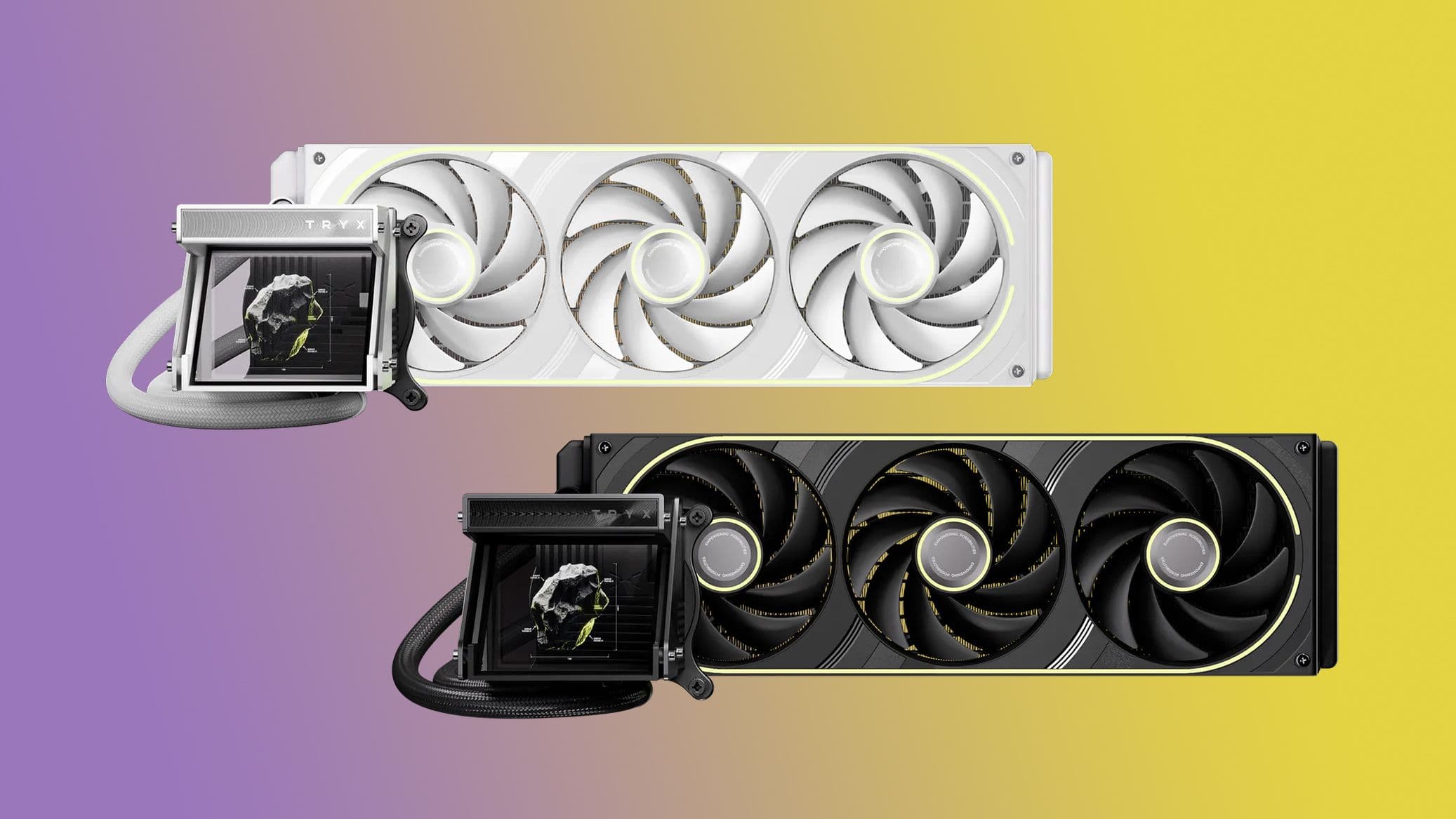
- Tryx Holo uses beam splitters instead of mirrors to create a holographic depth effect inside the pump block
- The cooler handles up to 280W thermal load using Asetek's latest pump technology
- Display resolution is limited to 640x480, which has drawn mixed reactions from enthusiasts
Tryx made a name for itself in 2024 with an AIO cooler featuring a curved panoramic OLED display. Now the Chinese hardware manufacturer is going further with the Tryx Holo, a liquid cooler that projects hologram-style images inside the pump block using beam splitters.
According to the product listing on Tryx's Chinese website, the Holo creates a "virtual image with physical depth" that makes visuals appear suspended inside the unit. The effect comes from professional-grade beam splitters rather than mirrors or standard LCD panels.
How the Holographic Effect Works
Beam splitters are optical components that divide light into separate paths. In the Tryx Holo, they reflect projected images in a way that gives them apparent depth, making 2D content look three-dimensional. This approach eliminates what Tryx calls the "electronic layering effect" visible on conventional LCD screens.
The pump block includes an adjustable hinge with 60-degree angle adjustments. This lets users position the display for the best viewing angle through their case's side panel.
There's a catch, though. The holographic display runs at 640 x 480 resolution. That's VGA-era pixel density. Some enthusiasts on HackerNews have pointed out this may look noticeably pixelated compared to modern high-density screens, even if the depth effect is clever.
Software and Customization
Tryx's Kanali software controls the display. Users can show system statistics like CPU temperature and load, or display custom content in JPG, MP4, and GIF formats. A built-in GIF library powered by Giphy comes included, with regular updates promised.
An audio linkage feature for video playback is listed for a future OTA update. This would sync display animations with system sounds or music.
Cooling Performance Specs
The aesthetics get the attention, but the Tryx Holo still needs to cool a CPU. It uses Asetek's latest pump technology, rated for up to 280W of heat dissipation. The pump operates between 800 and 2800 RPM.
Three 120mm FOBR fans with ARGB lighting handle airflow through the radiator. The fans use SLF (Silent-Lubricating-Fluid) bearing technology, which Tryx claims reduces high-frequency shaft noise and extends lifespan to 50,000 hours MTBF compared to standard hydraulic bearings.
A single-frame mounting solution connects all three fans to reduce cable clutter inside the case.
Compatibility and Availability
The Tryx Holo supports Intel LGA1851, 1700, 1200, and 115X sockets. AMD users get AM4 and AM5 compatibility. The initial launch covers the 360mm radiator size, with 240mm and 280mm options planned for later.
Pricing hasn't been announced. Tryx may reveal more details at Computex 2026 next week.
Community Reaction: Cool or Gimmick?
Online reactions are split. On Reddit's r/pcmasterrace, some users call the holographic effect "the next level of PC aesthetics." Others worry about "visual gimmickry" and the complexity of running proprietary software just to manage a pump block display.
Technical communities like HackerNews are more interested in the beam splitter implementation itself. Engineers there note that while the depth effect is a smart use of existing optical technology, the low resolution may disappoint users expecting modern display quality.
A Broader Trend in AIO Design
Tryx isn't alone in treating pump blocks as display canvases. Premium AIO manufacturers have been adding increasingly elaborate screens to their coolers for years. The move from flat LCDs to depth-focused optics represents the next step.
Whether beam-splitter holograms become standard or remain a niche enthusiast feature depends on execution and price. Given Tryx's previous panoramic OLED cooler wasn't cheap, expect the Holo to command a premium.
Logicity's Take
Frequently Asked Questions
What makes the Tryx Holo different from other AIO coolers with displays?
The Tryx Holo uses beam splitters to create a holographic depth effect, making images appear to float inside the pump block. Most competitors use flat LCD or OLED screens.
What is the display resolution of the Tryx Holo?
The holographic display runs at 640 x 480 pixels, which is lower than most modern screens but necessary for the beam splitter projection system.
What CPUs does the Tryx Holo support?
It supports Intel LGA1851, 1700, 1200, and 115X sockets, plus AMD AM4 and AM5 platforms.
How much heat can the Tryx Holo dissipate?
The cooler is rated for up to 280W using Asetek's latest pump technology.
When will the Tryx Holo be available and how much will it cost?
Pricing and availability haven't been confirmed. More details may come at Computex 2026.
Another hardware innovation pushing component technology forward
Need Help Implementing This?
Source: Latest from Tom's Hardware
Huma Shazia
Senior AI & Tech Writer
Produced with AI assistance and reviewed by the Logicity editorial team. Learn more in our Editorial Policy.