Key Takeaways
- TP-Link's Archer 8 Wi-Fi 8 router is tentatively scheduled for October 2026, with mesh and travel router variants following in early 2027
- Wi-Fi 8 focuses on real-world performance rather than theoretical speed gains, promising 33% throughput improvement and 30% better signal performance
- The 802.11bn standard won't be fully ratified until 2028, making these early releases 'pre-draft' hardware
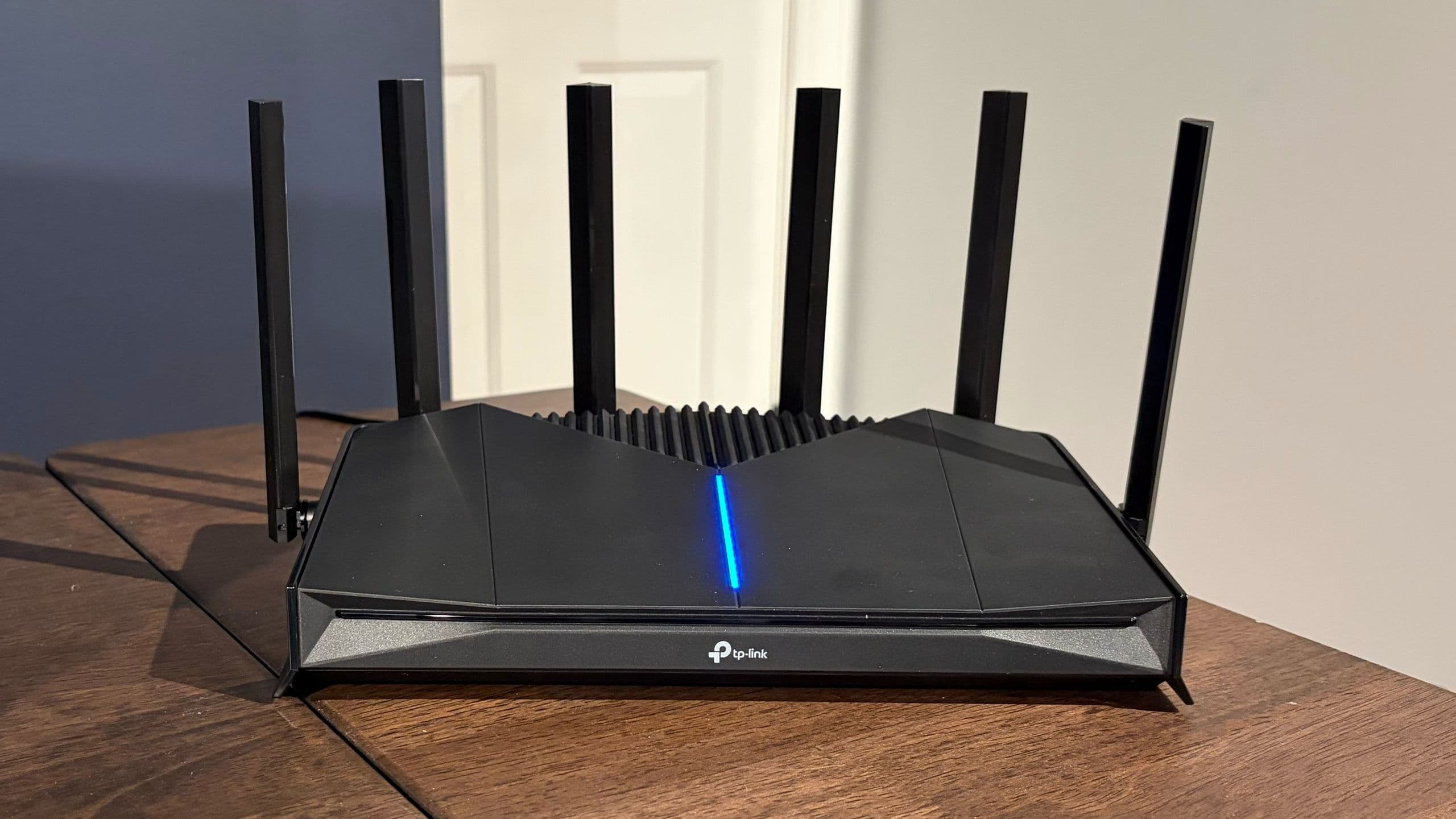
TP-Link, the top-selling consumer router brand in the United States, has announced its Wi-Fi 8 product roadmap. The Archer 8 standalone router will arrive in October 2026, pending FCC approval. It's an early bet on next-generation wireless tech. The 802.11bn standard that powers Wi-Fi 8 won't be fully ratified until 2028.
The announcement positions TP-Link ahead of competitors in the race to bring Wi-Fi 8 hardware to market. But it also raises questions about buying pre-standard equipment, a pattern that's burned early adopters before.
The Full Roadmap
TP-Link's Wi-Fi 8 lineup will roll out over roughly nine months:
The Archer 8 will feature what TP-Link describes as a "minimalist architectural form" with micro-ridge textures and RGB lighting. Internal improvements include AI-assisted network optimization, better thermal management, and redesigned antennas.
Real-World Performance Over Raw Speed
Wi-Fi 8 marks a shift in priorities for the wireless industry. Unlike Wi-Fi 6E and Wi-Fi 7, which chased higher theoretical maximums, this generation targets consistency and reliability in actual use.
“For years, Wi-Fi innovation has been measured by peak theoretical speeds. But what users actually care about is consistency. Archer 8 is designed to deliver exactly that: lower latency, better performance under interference, and more stable connectivity in real-world environments.”
— Jeff Barney, President of TP-Link Systems Inc.
TP-Link claims the Wi-Fi 8 products will deliver measurable improvements over their Wi-Fi 7 equivalents:
- 33% increase in real-world throughput through enhanced modulation and encoding
- 15% improvement in mesh performance under heavy load
- 30% better signal performance
- 1-3 dB improvement in receive sensitivity across 5 GHz and 6 GHz bands
These numbers matter for homes packed with smart devices, streaming, gaming, and remote work traffic competing for bandwidth. The promise is that Wi-Fi 8 will finally let devices approach the speeds that marketing materials have long advertised.
The Pre-Standard Gamble
Here's the catch. The IEEE 802.11bn standard isn't expected to be fully ratified until early 2028. That means TP-Link's October 2026 Archer 8 will ship on pre-draft specifications.
This isn't new territory. Manufacturers have shipped pre-standard wireless gear for years, betting that final specifications won't require significant hardware changes. Sometimes it works. Sometimes early adopters end up with orphaned equipment that can't fully support the ratified standard.
The strategy makes business sense for TP-Link. Capturing the early-adopter market builds brand loyalty and generates buzz. But buyers should understand they're essentially beta-testing hardware based on draft specifications.
Logicity's Take
Regulatory Hurdles Ahead
TP-Link's announcement comes with an important caveat: FCC approval is still pending. The company operates under increased regulatory scrutiny in the United States, and approval for next-generation wireless equipment isn't guaranteed.
Online discussions about the announcement reflect this uncertainty. Comments on HackerNews have focused on whether TP-Link can navigate US export controls and FCC requirements in time for the October 2026 target. The regulatory landscape for Chinese-owned networking equipment makers has grown more complex in recent years.
Community Skepticism
Early reactions in networking communities have been mixed. Reddit's r/networking subreddit shows skepticism toward "early" Wi-Fi 8 branding. Many users remember the buggy firmware and compatibility issues that plagued early Wi-Fi 7 routers. Launching on an unratified standard invites similar problems.
The concern isn't unfounded. Early-release wireless hardware often requires multiple firmware updates to reach stability, and interoperability between brands can be spotty until the standard finalizes.
Planning a network upgrade? These projects can help you prepare your home infrastructure.
Should You Wait?
For most buyers, yes. Wi-Fi 7 hardware is still maturing. Prices are dropping, and firmware has stabilized on major brands. Unless you have a specific need that Wi-Fi 8's reliability improvements address, waiting for standard ratification and second-generation hardware makes sense.
Enterprise buyers have even more reason to hold off. The 18-month gap between TP-Link's first Wi-Fi 8 consumer product and standard ratification means IT teams would be deploying equipment that might need replacement or significant updates before it reaches full compliance.
Frequently Asked Questions
When will Wi-Fi 8 routers be available?
TP-Link plans to release its Archer 8 Wi-Fi 8 router in October 2026, pending FCC approval. Mesh systems and travel routers will follow in early to mid-2027.
Is Wi-Fi 8 faster than Wi-Fi 7?
Wi-Fi 8 focuses on real-world performance rather than theoretical speed gains. TP-Link claims 33% better actual throughput and 30% improved signal performance compared to Wi-Fi 7.
What is the Wi-Fi 8 standard called?
Wi-Fi 8 is based on the IEEE 802.11bn standard, which is expected to be fully ratified in early 2028.
Should I buy a Wi-Fi 8 router when it launches?
Early adopters should be cautious. Pre-standard hardware may face compatibility issues and could require updates once 802.11bn is ratified. Most users should wait for second-generation products.
Will my current devices work with Wi-Fi 8?
Yes. Wi-Fi standards are backward compatible. Your existing devices will connect to a Wi-Fi 8 router but won't benefit from the new features until you upgrade them.
Need Help Implementing This?
Source: Latest from Tom's Hardware
Manaal Khan
Tech & Innovation Writer
Produced with AI assistance and reviewed by the Logicity editorial team. Learn more in our Editorial Policy.