Key Takeaways
Tesla Expands Robotaxi Across Florida as Amazon's Zoox Falls Behind
- Tesla added Orlando and Tampa to its robotaxi service on July 21, bringing total coverage to six US cities
- The expansion comes one day before Tesla's Q2 2026 earnings report, with Wall Street focused on autonomous driving progress
- Tesla's camera-only approach differs from Waymo's lidar-based system, potentially affecting scaling costs
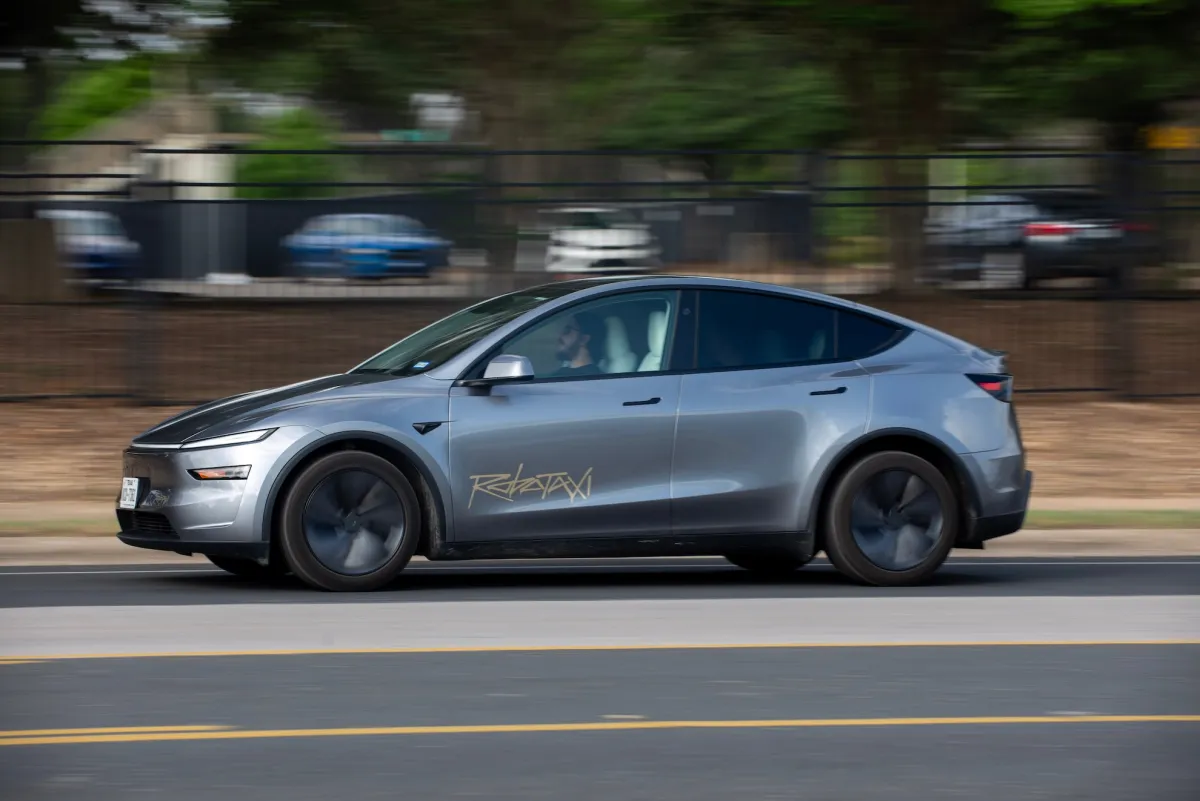
Tesla expanded its robotaxi service to Orlando and Tampa on July 21, 2026, adding two more Florida cities as the company tries to prove it can scale autonomous ride-hailing beyond pilot markets. The timing is pointed: Tesla reports Q2 earnings on July 22, and investors want evidence that the robotaxi business can grow fast enough to justify valuations built on AI and autonomy promises.
Six cities now have Tesla robotaxi coverage. Austin launched in June 2025. Dallas and Houston followed earlier in 2026, then Miami this month. The company also runs supervised testing in San Francisco's Bay Area, though that's not a commercial service yet.
Why is Tesla rushing robotaxi expansion before earnings?
CEO Elon Musk has staked Tesla's future on three bets: AI, autonomous driving, and humanoid robots. Traditional EV sales face margin pressure from Chinese competitors and slowing demand. Robotaxis offer a different story, one where Tesla captures ride revenue instead of one-time vehicle sales.
Wall Street has grown skeptical. Tesla missed several expansion targets over the past year, and investor questions about rollout pace have intensified. Musk's response: the company is being deliberately cautious. Safety testing, not engineering capability, is the main constraint.
That explanation satisfies some analysts. Others note that Waymo, Alphabet's autonomous driving unit, already operates commercial robotaxi services in Phoenix, San Francisco, and Los Angeles. The competitive pressure is real.
How Tesla's camera-only approach differs from Waymo
Tesla bets on cameras and AI software. No lidar, no radar on most newer vehicles. The company argues this approach scales better because cameras are cheap and AI keeps improving. Critics argue lidar provides depth perception that cameras struggle to match, particularly in edge cases like low light or unusual obstacles.
Waymo takes the opposite position. Its vehicles carry lidar sensors, radar, and cameras. The hardware costs more per vehicle, but Waymo argues the redundancy improves safety. Both companies have safety records to defend their choices, though direct comparisons are difficult given different operating conditions.
| Feature | Tesla Robotaxi | Waymo |
|---|---|---|
| Primary sensors | Cameras + AI vision | Lidar + radar + cameras |
| Hardware cost per vehicle | Lower | Higher |
| Current commercial cities | 6 (Austin, Dallas, Houston, Miami, Orlando, Tampa) | 3+ (Phoenix, San Francisco, Los Angeles) |
| Vehicle type | Modified Model vehicles; Cybercab planned | Custom Jaguar I-Pace, Zeekr |
| Supervised testing markets | San Francisco Bay Area | Multiple cities |
More on how AI systems are automating complex tasks
What is the Cybercab, and when will it deploy?
Tesla's current robotaxis are modified production vehicles. The long-term plan involves the Cybercab, a purpose-built robotaxi with no pedals and no steering wheel. Removing human controls signals confidence in full autonomy, but it also raises regulatory questions.
Tesla has not announced a firm Cybercab deployment date. Regulatory approval for vehicles without manual controls will require new frameworks in most states. The National Highway Traffic Safety Administration has granted some exemptions for autonomous vehicle testing, but commercial deployment at scale is another matter.
Investor concerns heading into earnings
Three questions will dominate the Q2 earnings call. First, how many rides has the robotaxi service completed, and what's the revenue per ride? Tesla hasn't disclosed detailed metrics publicly.
Second, what's the safety record? Autonomous vehicle companies report disengagements, where a human operator takes over, and accidents per mile driven. Investors want to see numbers that compare favorably to human drivers.
Third, what's the expansion timeline? Six cities in roughly 13 months is progress, but Musk has promised faster growth before. The credibility gap matters when valuations assume robotaxis will eventually generate more revenue than vehicle sales.
Related Musk venture also faces valuation questions
Florida's regulatory environment
Florida has been relatively permissive toward autonomous vehicles. The state allows AV testing and deployment without requiring a human safety driver in all cases, provided companies meet certain registration and insurance requirements. That regulatory stance likely influenced Tesla's decision to expand there before tighter markets like California.
Orlando and Tampa also offer useful testing conditions. Both cities have a mix of urban streets, highways, and tourist traffic patterns that differ from Austin or Houston. Proving the system works across varied environments strengthens Tesla's case that the technology is ready for broader deployment.
Logicity's Take
Tesla's camera-only bet is a cost advantage if it works, but Waymo's lidar approach has a longer commercial track record. For tech leaders watching this space, the real signal isn't city count. It's when Tesla publishes ride metrics, safety data, and revenue per mile. Until those numbers appear, the robotaxi story remains a forward-looking valuation driver, not a proven business line. Companies building fleet management or autonomous logistics should watch both Tesla and Waymo pricing closely. Waymo One reportedly charges comparable rates to Uber in its markets.
Frequently Asked Questions
How many cities does Tesla robotaxi now cover?
Six US cities: Austin, Dallas, Houston, Miami, Orlando, and Tampa. San Francisco Bay Area has supervised testing but is not a commercial service.
Does Tesla use lidar in its robotaxis?
No. Tesla relies on cameras and AI-based vision software. Competitors like Waymo use lidar sensors alongside cameras and radar.
What is the Tesla Cybercab?
A purpose-built robotaxi without pedals or a steering wheel. Tesla has not announced a deployment date.
When is Tesla reporting Q2 2026 earnings?
July 22, 2026, one day after the Orlando and Tampa expansion announcement.
Why is Tesla expanding robotaxis in Florida?
Florida has permissive autonomous vehicle regulations and diverse traffic conditions useful for system testing.
Need Help Implementing This?
If you're building autonomous vehicle infrastructure, fleet management systems, or AI-driven logistics, Logicity can connect you with technical consultants and implementation partners. Contact our team for introductions.
Source: Tech-Economic Times / ET
Huma Shazia
Senior AI & Tech Writer
Produced with AI assistance and reviewed by the Logicity editorial team. Learn more in our Editorial Policy.