Key Takeaways
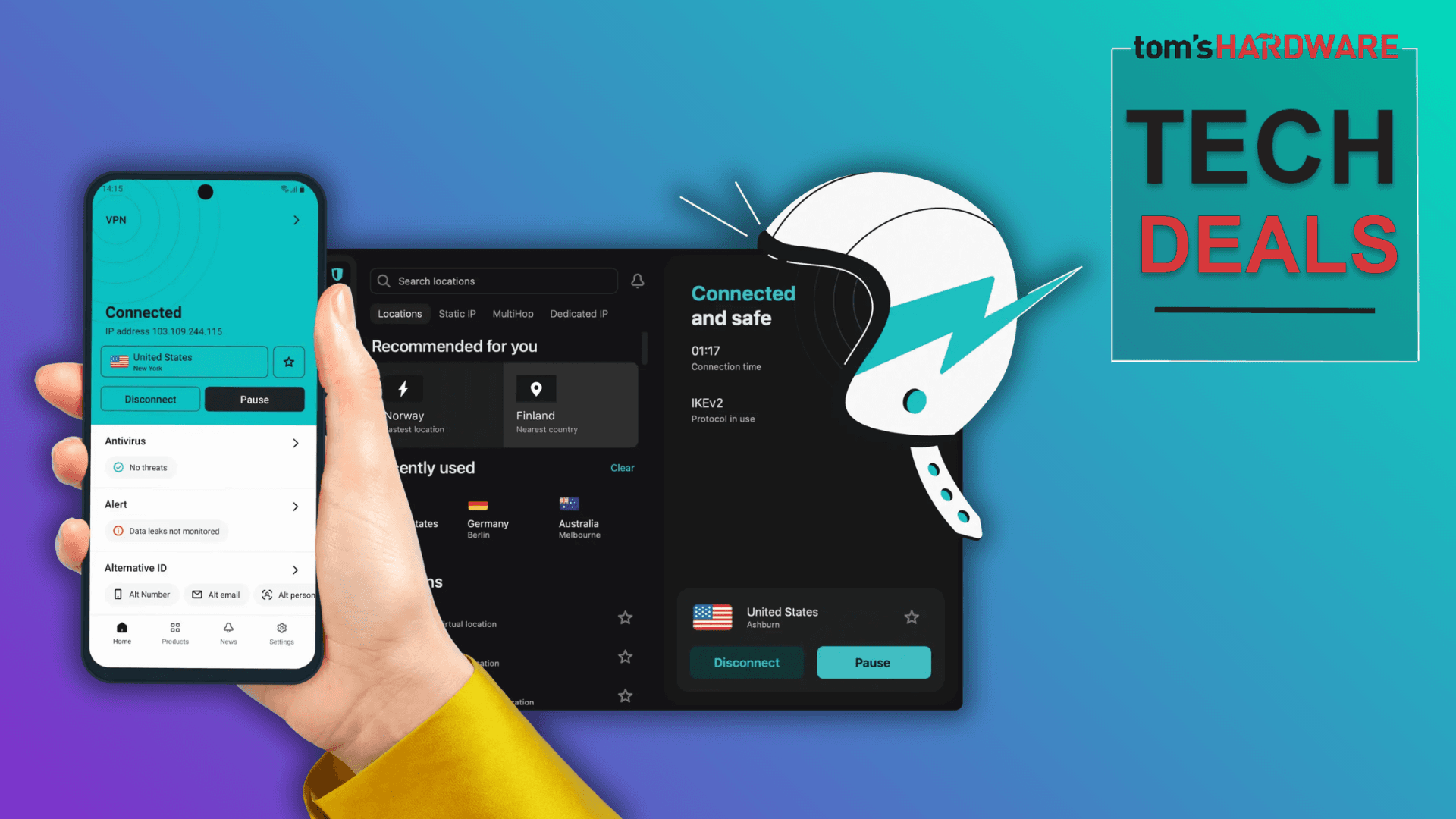
- Surfshark One costs $75 for 27 months, down from $511 at monthly rates
- The suite includes VPN with unlimited connections, antivirus via Avira, and Alternative ID for fake credentials
- Surfshark operates 4,500+ servers in 100 countries with independently audited no-logs policy
Surfshark One, the privacy suite that bundles VPN, antivirus, and identity protection tools, is selling for $75 over 27 months. That works out to roughly $2.79 per month. At standard monthly pricing, the same stretch would cost $511, so the discount lands at 85%.
The deal comes as Surfshark, now part of the Nord Security group since a 2022 merger, pushes hard into household and small-office markets where the "unlimited simultaneous connections" policy gives it an edge over rivals like ExpressVPN (which caps at eight devices) or even its sibling NordVPN (ten devices).
What does Surfshark One actually include?
Surfshark One is not just a VPN. It is a bundle. Four main components ship together: the VPN itself, antivirus protection powered by Avira's engine, an ad and cookie-popup blocker, and the Alternative ID system for generating fake personal details and masked email addresses.
The VPN piece is the headline feature. Surfshark runs over 4,500 servers spread across 100 countries. Traffic is encrypted with AES-256, and users can enable multi-hop routing, which bounces data through two servers for an extra privacy layer. A kill switch stops all traffic if the VPN connection drops, preventing accidental exposure of your real IP.
Surfshark's no-logs claim is not just marketing. The company underwent an independent audit in 2025 that confirmed it stores no browsing history, connection timestamps, or IP addresses. The infrastructure runs on RAM-only servers, meaning data never touches a hard drive and is wiped on every reboot.
How does the antivirus component stack up?
Surfshark licenses Avira's detection engine for real-time malware scanning. Avira consistently ranks in the top tier of independent AV tests, so the protection is credible. You get scheduled scans, quarantine management, and automatic definition updates.
This is not a replacement for a dedicated security suite if you are managing a corporate endpoint fleet. But for a home user or freelancer running a handful of machines, it covers the basics without adding another subscription.
Alternative ID: burner identities for sign-ups
The Alternative ID feature lets you generate a fake name, date of birth, and address, plus a masked email alias that forwards to your real inbox. When a website demands personal details for registration, you hand over the decoy instead. If that site gets breached or sells your data, it is the fake profile that leaks, not your real one.
Reddit discussions on r/privacy show this has become one of the most popular reasons to pick Surfshark One over a plain VPN. Users report using Alternative ID for retail accounts, sweepstakes entries, and any site that seems likely to spam them.
Who benefits most from unlimited connections?
A typical household in 2026 has phones, tablets, laptops, smart TVs, and possibly a NAS or gaming console that could all benefit from VPN protection. Connection caps force you to choose which devices to protect. Surfshark's unlimited policy means every device in the house can connect at once under a single subscription.
For small offices, this is even more attractive. A five-person team with two devices each already exceeds most competitors' limits. With Surfshark, you do not need to worry about the math.
Streaming access: the unspoken use case
VPN providers rarely lead with this, but most users know the deal. Connecting through a server in another country can unlock region-locked streaming libraries. Surfshark says your mileage may vary, which is the standard legal hedge, but community reports suggest it works reliably with major platforms when using the right servers.
This is not guaranteed and depends on the ongoing cat-and-mouse game between streaming services and VPN operators. But it is a genuine perk for travelers or anyone with an international library gap to fill.
What are the risks of long-term VPN subscriptions?
Locking in for 27 months means betting that Surfshark will remain competitive and trustworthy for that entire period. VPN markets shift. A company that passes an audit today could change hands or policies tomorrow. The 30-day money-back guarantee covers initial buyer's remorse, but not dissatisfaction in month 18.
The flip side: VPN subscriptions rarely get cheaper over time, and the effective monthly rate on this deal is hard to beat. If you are already certain you want a VPN, the math favors committing.
Logicity's Take
Surfshark One's pricing targets multi-device households where the unlimited connections policy delivers clear savings over competitors. The Avira-powered antivirus and Alternative ID tools add genuine value beyond the VPN itself, though neither is best-in-class standalone. For users who want a single subscription covering privacy, malware, and identity protection across every device they own, this is one of the more practical bundles available in 2026.
Linux users often pair VPNs with privacy-focused OS setups
Frequently Asked Questions
Does Surfshark One include antivirus protection?
Yes. Surfshark One bundles antivirus powered by Avira's detection engine, providing real-time malware scanning alongside the VPN and identity tools.
How many devices can connect to Surfshark at once?
Surfshark allows unlimited simultaneous connections on a single subscription, covering every device in a household or small office.
Is Surfshark's no-logs policy verified?
Surfshark underwent an independent audit in 2025 confirming it stores no browsing history, connection logs, or IP addresses. The company uses RAM-only servers to ensure data cannot be recovered.
Can I get a refund if Surfshark does not work for me?
New customers have 30 days to request a full refund if the service does not meet their needs.
Does Surfshark work for streaming geo-restricted content?
Surfshark operates servers in 100 countries, and many users report success accessing region-locked streaming libraries, though results depend on the specific server and service.
Need Help Implementing This?
Setting up a VPN across multiple devices or configuring privacy tools for your team? Reach out to the Logicity team for guidance on choosing and deploying security solutions that fit your workflow.
Source: Latest from Tom's Hardware
Manaal Khan
Tech & Innovation Writer
Produced with AI assistance and reviewed by the Logicity editorial team. Learn more in our Editorial Policy.