Key Takeaways
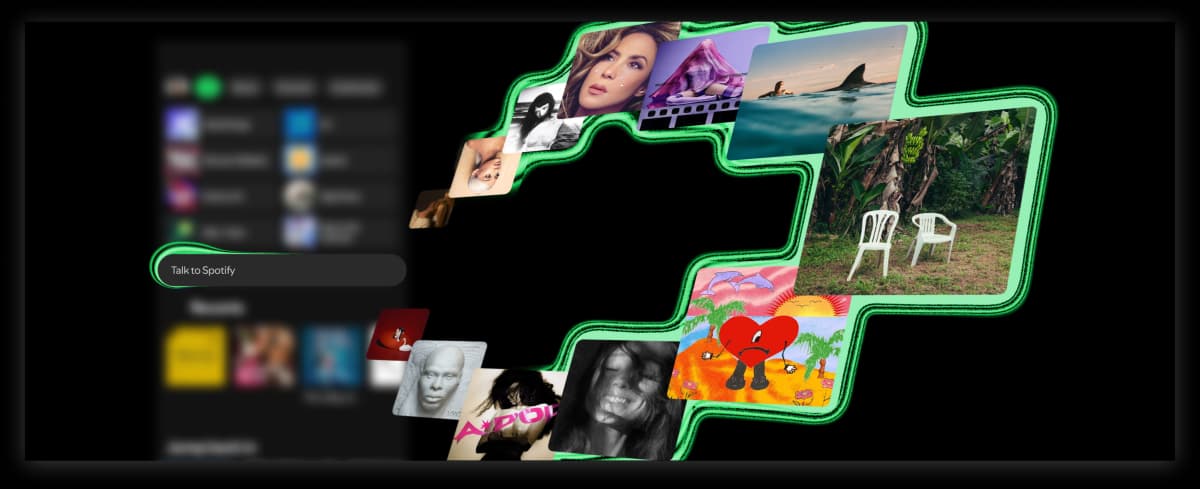
- Spotify Premium users can now have back-and-forth conversations with the app to choose music, podcasts, or audiobooks
- The feature uses a mix of Spotify's own AI and models from multiple providers, rolling out first in the US, Ireland, and Sweden
- Users can ask about their listening history, get artist recommendations, and control playback through natural language
Spotify is giving Premium subscribers a new way to interact with its 100 million-track catalog: talk to it. The company announced Tuesday that users can now have ChatGPT-style conversations with the app to pick what plays next, dig into their listening history, or discover new artists. The feature is live in beta for users 18 and older in the US, Ireland, and Sweden on iOS and Android.
This isn't Spotify's first AI experiment. The company already offers an AI DJ that speaks in a synthetic voice and can respond to simple commands, plus prompt-based playlist builders. But the new assistant goes further, enabling open-ended, multi-turn conversations across the app's Home and Now Playing views.
What can you actually ask Spotify's AI?
The assistant handles three main categories: music selection, catalog knowledge, and personal listening data.
For music selection, you can start broad and refine. Spotify suggests opening with something like "play some artists I haven't heard before," then narrowing with follow-ups: add a specific artist, filter to recent tracks only, or ask for something "more upbeat." You can also tell it to save songs, add tracks to your queue, or follow an artist without touching the screen.
On catalog knowledge, the assistant can answer questions about what inspired a song, when an album dropped, or which artists sound similar to whoever's playing. Think of it as Wikipedia for music, embedded in your player.
The personal data angle is where things get interesting. You can ask when you first played a particular track or what genres you've been streaming lately. Spotify already collects this data for its annual Wrapped campaign. Now you can query it year-round.
What's powering the AI?
Spotify isn't saying exactly which models run under the hood. The company told TechCrunch it uses "a mix of its own AI technology and models from multiple providers, based on whatever is best for the task." That likely means Spotify's recommendation algorithms handle music selection while third-party large language models, possibly from OpenAI or Anthropic, handle natural language understanding and generation.
The beta label matters here. Spotify acknowledges things won't always work perfectly and says user feedback will shape improvements. For a company with 239 million paying subscribers, that's a lot of potential testers.
Where this fits in Spotify's AI roadmap
Spotify has been layering AI features for years, starting with algorithmic playlists like Discover Weekly. The 2022 acquisition of Sonantic, a voice synthesis startup, led to the AI DJ feature. Last year, the company rolled out AI-generated podcast translations that clone hosts' voices into other languages.
The conversational assistant is the most ambitious step yet. It moves Spotify from passive recommendations, where algorithms guess what you want, to active dialogue, where you tell the app and negotiate until you're satisfied. That's a meaningful shift in how music streaming could work.
Apple Music and YouTube Music have yet to ship comparable conversational features. Amazon Music has Alexa integration, but voice commands aren't the same as multi-turn chat. Spotify is betting that the conversational interface becomes the default way people browse audio.
Logicity's Take
The real test isn't whether the AI can answer questions. It's whether users actually want to talk to their music app. Voice assistants promised the same frictionless future a decade ago, and most people still tap screens. Spotify's advantage is context: the assistant knows what you're playing, what you've played, and what 600 million other users like. If Spotify can turn that data into genuinely useful suggestions, not just correct answers, the feature could stick. If it feels like a chatbot stapled onto a playlist, it'll join Siri and Google Assistant in the "neat but ignored" category. For product teams building their own AI features, the lesson is clear: conversational interfaces only win when they're faster or smarter than the alternative, not just different.
Availability and requirements
The feature requires a Spotify Premium subscription. It's rolling out now on iOS and Android in the US, Ireland, and Sweden, limited to users 18 and older. English is the only supported language at launch. Spotify hasn't announced a timeline for broader availability.
Frequently Asked Questions
Is Spotify's AI assistant free?
No. The conversational AI feature is available only to Spotify Premium subscribers, not free-tier users.
Which countries have access to Spotify's AI chat feature?
The beta is currently live in the United States, Ireland, and Sweden. Spotify hasn't announced when other markets will get access.
Can I use Spotify's AI assistant with voice commands?
Yes. You can either type or speak to the assistant through the app's Home and Now Playing views on mobile devices.
What AI models does Spotify use for its assistant?
Spotify says it uses a combination of its own AI technology and models from multiple external providers, choosing whichever works best for each task. The company hasn't named specific vendors.
How is this different from Spotify's AI DJ?
The AI DJ plays curated music with spoken commentary but offers limited interaction. The new assistant allows open-ended, back-and-forth conversations to control playback, explore your listening history, and learn about artists.
Another look at how AI models are being deployed at scale for enterprise applications
Need Help Implementing This?
Building conversational AI into your product? Logicity covers the tools, architectures, and vendor decisions that matter. Subscribe to our newsletter for weekly analysis on AI product development.
Source: TechCrunch / Sarah Perez
Manaal Khan
Tech & Innovation Writer
Produced with AI assistance and reviewed by the Logicity editorial team. Learn more in our Editorial Policy.




