Key Takeaways
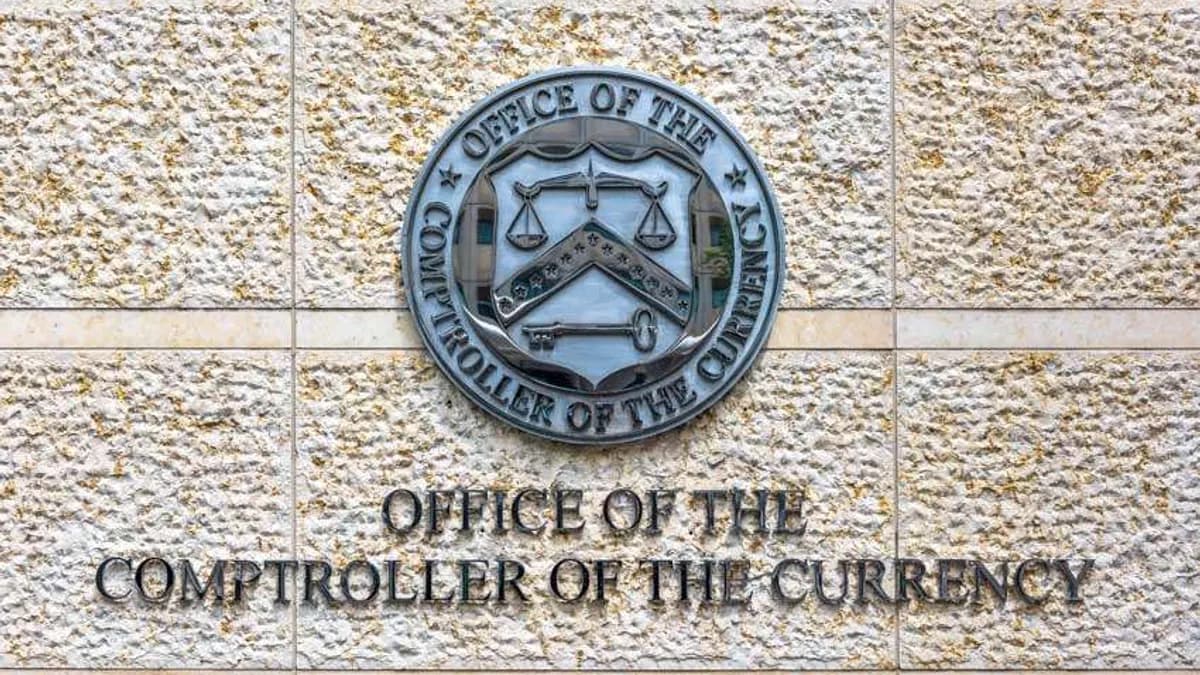
- Sony Financial Group received conditional OCC approval to establish Connectia Trust, a $40 million national trust bank for stablecoin issuance
- Banking trade groups oppose the charter, arguing it lets Sony avoid deposit insurance and Community Reinvestment Act obligations
- Connectia represents the first commercial-conglomerate ecosystem bank, with OCC supervising the trust while Japan's FSA oversees the parent
Sony Financial Group has secured conditional approval from the Office of the Comptroller of the Currency to launch Connectia Trust, a $40 million national trust bank that will issue and manage U.S. dollar stablecoins. The Japanese conglomerate disclosed the approval Monday, with operations expected to begin in 2027.
The move makes Sony the first major commercial conglomerate to receive this type of federal banking license for digital asset services. It also marks Sony's first significant regulated banking presence in the United States, separate from its extensive financial operations in Japan.
What will Connectia Trust actually do?
Sony's filing states Connectia will be established "in preparation for the commercialization of businesses related to the issuance and management of U.S. dollar-denominated stablecoins in the United States." Beyond that, details are scarce. The company hasn't named specific products, disclosed whether it will target retail or institutional customers, or announced who will lead the operation.
Connectia Trust, a subsidiary of Sony Financial Group, will form this month with $40 million in capital. That figure triggered Japan's disclosure requirements because it exceeds 10% of Sony Financial Group's capital, according to Tokyo Brief.
Why banking groups opposed Sony's application
When Sony's application went public in October, it drew immediate pushback from the Bank Policy Institute, Independent Community Bankers of America, and the National Community Reinvestment Coalition. Their core objection: trust charters give stablecoin issuers the credibility of a banking institution without the obligations.
The NCRC argued that approving Connectia would "create a two-tier system where digital asset firms receive comparable federal status without comparable public obligations, undermining the integrity of the entire chartering framework." Trust banks don't have to comply with the Community Reinvestment Act, which requires banks to meet the credit needs of the communities they serve.
The ICBA raised a different concern: deposit insurance. Trust banks aren't required to hold it, which the ICBA said creates risk of consumer "confusion" and "harm" if the institution becomes insolvent. "The OCC's untested receivership framework is wholly unequipped to resolve an uninsured, systemically significant stablecoin issuer like Connectia risking permanent customer losses and market contagion," the trade group warned in November.
A new regulatory structure with no Fed oversight
Roman Goldstein, a senior director at financial services advisory firm Klaros Group, called Connectia the "first commercial-conglomerate ecosystem bank" in a LinkedIn post analyzing the approval.
Goldstein noted the unusual supervisory arrangement: OCC supervises the trust bank, but Japan's Financial Services Agency supervises the parent bank. "A foreign-owned bank with no Fed in the picture," he wrote. The OCC didn't sidestep the banking-and-commerce objections. It simply determined the law permits this integration.
The regulator did impose one notable condition. The OCC indicated it may require Sony's subsidiary to dedicate a full-time, non-dual-role CFO at any point. That suggests the agency wants clear accountability built into Connectia's leadership structure.
Part of a broader wave of crypto trust charters
National trust bank charters have seen surging interest under OCC chief Jonathan Gould. Crypto firms Circle, Ripple, and Paxos were among the first wave of recent trust bank charter approvals in December. Large institutions like Morgan Stanley have also sought trust charters for new offshoots.
But Sony's application stands apart. Unlike crypto-native companies building financial infrastructure, Sony is a commercial conglomerate with existing financial services across insurance, banking, and asset management in Japan. Sony Financial Group manages over $15 trillion in assets. The U.S. stablecoin venture represents an expansion of that ecosystem into American digital finance.
The BPI flagged this distinction, noting the application "raises questions regarding the longstanding separation of banking and commerce." Industrial loan company charters from the FDIC have faced similar criticism. Automakers Ford, GM, and Stellantis have all received conditional ILC approvals. But as Goldstein noted, "every application ultimately turns on whether the regulator is comfortable with the business, risk management, org structure, and management team."
What happens between now and 2027?
Conditional approval is exactly that. Sony must still meet specific requirements before Connectia can begin operations. The OCC's conditions typically include demonstrating adequate capital, risk management systems, and compliance frameworks. Sony has roughly 18 months to finalize leadership, build out operations, and satisfy the regulator.
The stablecoin market currently exceeds $125 billion in total capitalization, with Tether and USDC controlling roughly 90% of the market. Whether Sony positions Connectia to compete directly with those established players or carves out a niche within its existing financial ecosystem remains unclear.
Logicity's Take
Sony's approval matters less for stablecoins specifically than for what it signals about OCC's posture toward commercial conglomerates entering U.S. banking. The agency clearly believes current law permits this integration, despite industry objections. For fintech teams watching stablecoin infrastructure, the interesting question is whether Sony builds a standalone product or integrates stablecoin rails into PlayStation Network, Sony Bank, or its other consumer touchpoints. A $40 million capitalization is modest for a company Sony's size. That suggests this is a regulatory beachhead, not the full operation.
Frequently Asked Questions
What is Connectia Trust?
Connectia Trust is a national trust bank subsidiary of Sony Financial Group that will issue and manage U.S. dollar-denominated stablecoins. It received conditional OCC approval in July 2026 and expects to launch in 2027.
Why do banking groups oppose Sony's trust charter?
Trade groups argue trust charters give stablecoin issuers federal banking credibility without requiring deposit insurance or Community Reinvestment Act compliance. They warn this creates a two-tier system favoring digital asset firms.
Does Sony already have U.S. banking operations?
No. Connectia Trust represents Sony's first significant regulated banking presence in the United States. Sony Financial Group operates banking, insurance, and asset management services in Japan.
What other companies have received similar OCC trust charters?
Circle, Ripple, and Paxos received trust bank charter approvals in December 2025. Morgan Stanley has also sought trust charters for new business lines.
When will Connectia Trust begin operating?
Sony expects to launch Connectia Trust operations in 2027, pending satisfaction of OCC's conditional requirements.
Another regulatory development reshaping digital asset oversight in the U.S.
Need Help Implementing This?
Logicity covers fintech infrastructure, regulatory changes, and digital asset developments for technical teams. Subscribe to our newsletter for weekly analysis on the stories shaping financial technology.
Source: Banking Dive
Huma Shazia
Senior AI & Tech Writer
Produced with AI assistance and reviewed by the Logicity editorial team. Learn more in our Editorial Policy.