Key Takeaways
- SK hynix became South Korea's most valuable company, ending Samsung's 25-year reign on KOSPI
- The memory maker controls 61% of the global HBM market, compared to Samsung's 17%
- SK hynix stock rallied over 340% in 2024, fueled by AI chip demand from Nvidia
SK hynix overtook Samsung Electronics on Monday to become South Korea's most valuable publicly traded company. It's the first time Samsung has lost the top spot on the KOSPI index since November 2000.
SK hynix shares closed up 5.6%, pushing its market capitalization to 2,080.4 trillion won ($1.35 trillion). That edged past Samsung's 2,066.7 trillion won, excluding preferred shares. The milestone caps a stunning 340% rally this year, built almost entirely on demand for high-bandwidth memory (HBM) that SK hynix supplies to Nvidia and other AI chip buyers.
Why did SK hynix surge past Samsung?
SK hynix is a pure-play memory maker. Samsung spans smartphones, displays, contract chipmaking, home appliances, and dozens of other businesses. Investors are rewarding that focus because HBM carries the industry's fattest margins. Unlike commodity DRAM that buyers can swap between vendors, HBM ties suppliers to specific AI accelerators. Once you're qualified for Nvidia's H100 or H200, you have a sticky customer.
The company built its lead by continuing to invest in HBM through the brutal 2023 downturn. When memory prices collapsed, SK hynix posted a 7.73 trillion won annual operating loss. It kept spending anyway. Samsung, by contrast, hit yield and qualification delays on its HBM3E chips that reportedly slowed major Nvidia orders. That's the proximate reason for the 61% to 17% market share gap.
How wide is the production gap?
Samsung still leads in conventional DRAM output, but the margin is shrinking. Bank of America estimates put SK hynix's monthly DRAM production at roughly 589,000 wafers this year, against Samsung's 691,000. That's about a 23% gap.
SK hynix is projected to expand output by 38% between 2025 and 2028. Samsung's planned expansion is 17.5%. If those projections hold, the production gap narrows to under 10% by 2028. SK hynix has also pledged to double its total memory wafer output within five years.
The capacity both companies are pouring into HBM is not going into commodity chips. They've warned this could extend the broader memory shortage past 2027.
Samsung disputes the ranking
Samsung told Reuters that the comparison is unfair. The company argues its market cap should include preferred shares, which would lift its value to 2,246.4 trillion won and maintain the top spot. Whether investors buy that framing is another question. The KOSPI ranking excludes preferred shares by convention.
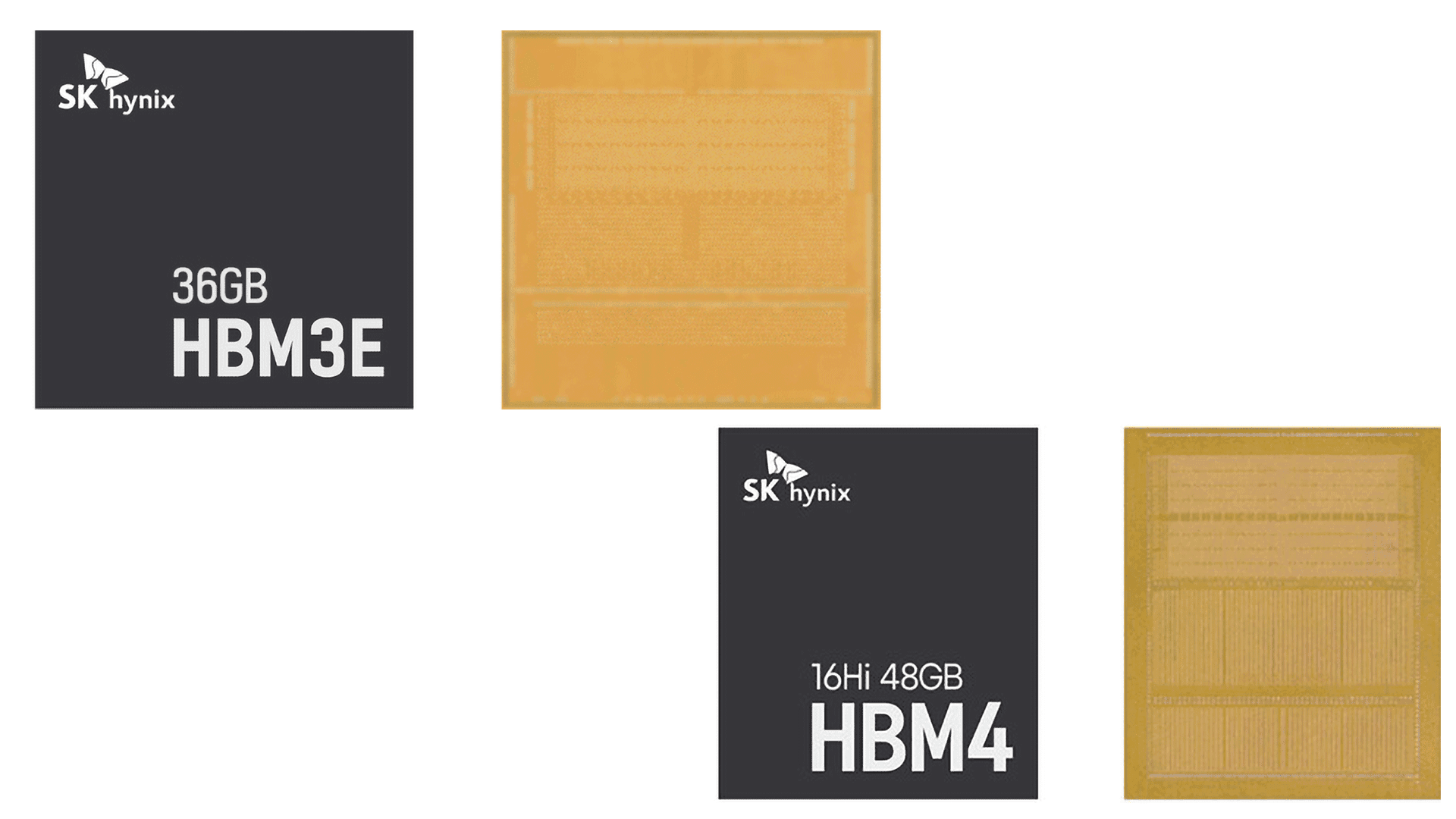
The gap also reflects the current HBM3 and HBM3E generations rather than what comes next. Nvidia CEO Jensen Huang confirmed earlier this month that Samsung, SK hynix, and Micron all passed HBM4 certification for the Vera Rubin platform. Samsung shipped the industry's first 12-layer HBM4E samples on May 29. The next generation could reshuffle market share again.
The long bet behind SK hynix's rise
SK Group Chairman Chey Tae-won pushed through the original Hynix acquisition despite internal opposition. In a book published in January, he explained the strategy.
“What I really wanted to accomplish when we acquired Hynix was to transform it from a commodity memory producer into a mainstream semiconductor company whose products are indispensable.”
— Chey Tae-won, SK Group Chairman
That transformation took years. SK hynix was a cyclical commodity business, battered by the same boom-bust cycles that hit all memory makers. The AI boom changed the equation. HBM is not interchangeable. It requires deep co-engineering with chip designers like Nvidia. SK hynix bet on that relationship early, and it paid off.
What this means for the memory industry
The SK hynix valuation milestone signals a broader shift in how investors value semiconductor companies. Pure-play focus on high-margin, hard-to-replicate products is beating diversification. Samsung's conglomerate structure, once seen as a strength, now looks like dilution.
That said, the AI memory boom could cool. HBM demand is concentrated among a small number of hyperscalers and AI chip companies. If AI infrastructure spending slows, SK hynix's premium valuation faces pressure. Samsung's diversification would then look like a hedge, not a drag.
Samsung's latest storage standard shows the company is still pushing innovation in mobile components
Frequently Asked Questions
Why did SK hynix overtake Samsung as South Korea's most valuable company?
SK hynix shares rallied over 340% in 2024, driven by its dominant 61% share of the high-bandwidth memory (HBM) market. HBM is essential for AI accelerators like Nvidia's chips, and SK hynix invested heavily during the 2023 downturn while Samsung faced yield delays.
What is HBM and why is it important?
High-bandwidth memory (HBM) is a specialized type of stacked DRAM that sits directly on AI chips, providing the massive memory bandwidth needed for large language models and generative AI. It commands premium margins because of its technical complexity and supplier lock-in with chip designers.
How long has Samsung held the top spot on KOSPI?
Samsung had been South Korea's most valuable listed company since November 2000, a span of nearly 25 years before SK hynix overtook it.
Does Samsung dispute the SK hynix ranking?
Yes. Samsung argues its market cap should include preferred shares, which would lift its value to 2,246.4 trillion won and maintain the top position. The KOSPI ranking traditionally excludes preferred shares.
Could Samsung regain market share in HBM?
Possibly. Nvidia confirmed that Samsung passed HBM4 certification for the Vera Rubin platform, and Samsung shipped the first 12-layer HBM4E samples in May 2025. The next generation could shift competitive dynamics.
Logicity's Take
This isn't just a market cap story. It's a referendum on conglomerate versus pure-play strategy in semiconductors. SK hynix's valuation surge shows investors will pay a premium for companies that dominate a single high-growth segment, even if the company is smaller overall. Samsung's diversification protected it during memory downturns for decades. Now that protection looks like a ceiling. The real question is whether HBM margins stay fat once Micron and Samsung solve their yield problems, or if SK hynix is capturing a temporary window.
Need Help Implementing This?
If you're a hardware startup or enterprise navigating the AI memory supply chain, Logicity can connect you with industry analysts and procurement specialists. Contact us for introductions to experts who can help you plan around memory constraints and supplier dynamics.
Source: Latest from Tom's Hardware
Manaal Khan
Tech & Innovation Writer
Produced with AI assistance and reviewed by the Logicity editorial team. Learn more in our Editorial Policy.