Sarvam, the Bangalore-based AI unicorn, launched Sarvam Code at its Epoch 2026 conference on July 30, pitching the coding agent as a cheaper, India-hosted alternative to Claude Code and OpenAI's Codex. The startup claims its agent solves coding tasks at roughly $2 each, compared to $4.10 to $27.80 per solved task for competitors, based on Terminal-Bench 2.1 benchmarks.
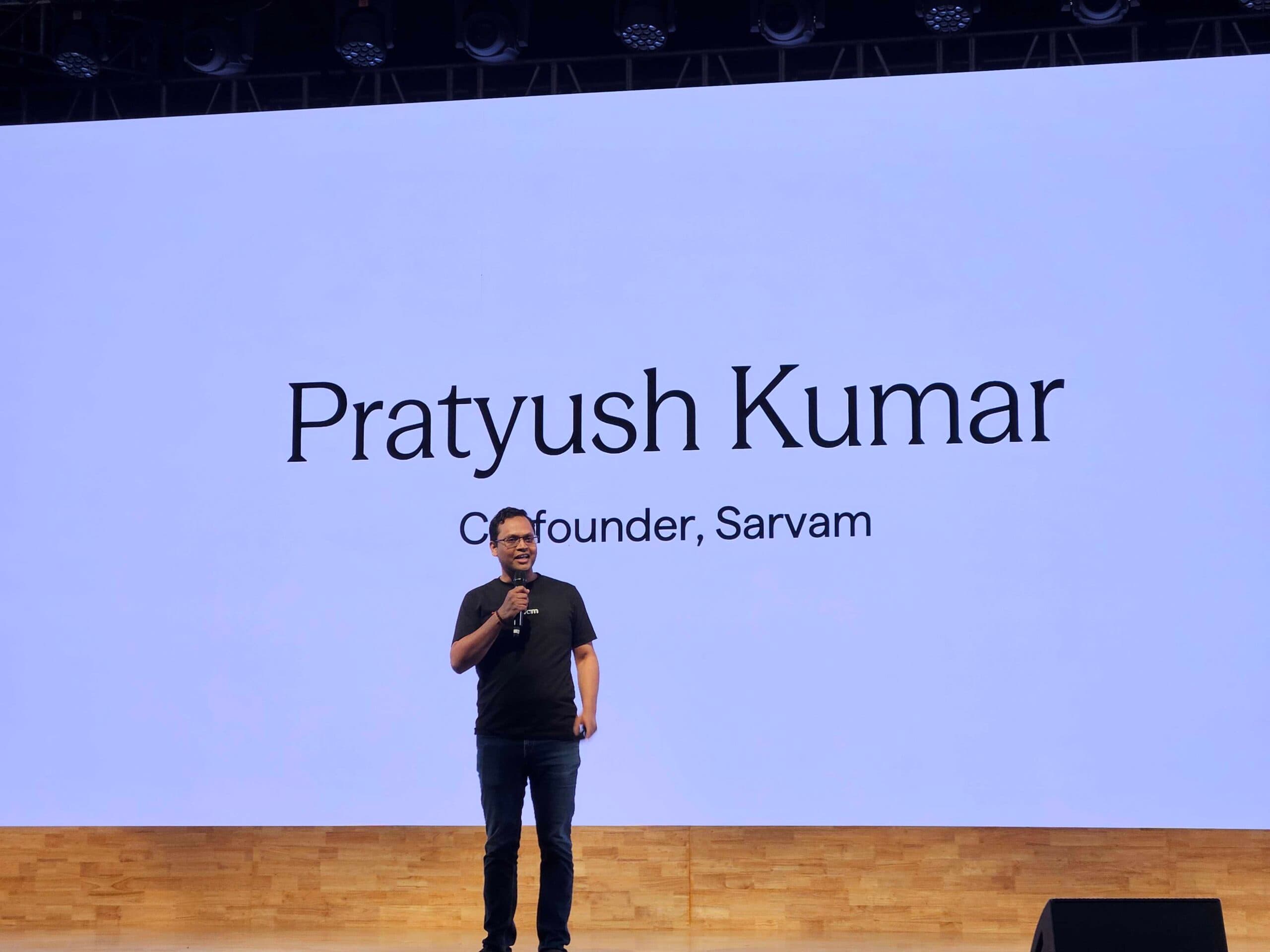
The pitch is pointed. IT services companies in India have been licensing Anthropic's tools for development work. Sarvam cofounder Pratyush Kumar wants to intercept that spend. "IT services companies are buying licenses from Anthropic and so on because they want to do coding," Kumar said. "We showed that not only is it hosted in India with our own models, but actually is very competitive."
How Sarvam Code structures its agent
India Just Built Its Own AI Coding Agent? | Sarvam Code Explained | Tab 47
The architecture splits coding work across three specialised agents: a planner, a worker, and a verifier. Kumar says this addresses a persistent weakness in open-source models: knowing when a task is actually done. Most models will keep iterating or declare completion prematurely. The verifier agent exists specifically to police that threshold.
There's a billing twist, too. Sarvam says it only charges for completed work. Retries and dead ends don't count against your credits. That's a meaningful distinction if your team is using agents for exploratory refactoring or debugging sessions where the first three attempts often fail.
The benchmark claims
Sarvam used Terminal-Bench 2.1 to position its agent against Claude Code and Codex. The numbers: Sarvam Code at roughly $2 per solved task, Claude Code at $4.10, and Codex ranging up to $27.80. The company also claims Sarvam Code outperforms both on task completion rates, though it did not publish the raw pass rates.
Benchmark claims from vendors warrant skepticism. Terminal-Bench 2.1 is a respected evaluation suite, but the specific task mix matters. Sarvam did not disclose whether the benchmark ran on tasks tuned for its model's strengths, or how inference costs were calculated. The claim is directional, not definitive.
The India-hosting angle
For regulated industries, data residency is not optional. Banks, insurers, and government-adjacent tech teams face compliance constraints that make US-hosted inference awkward at best. Sarvam Code runs on Indian infrastructure through the company's Indus platform, which uses a unified credit system across Sarvam's agentic AI products.
The startup also announced Sarvam Inference, a broader platform serving frontier open-source models on Indian infrastructure. Alongside that: Blackwell GPU deployments, a new Bulbul v4 text-to-speech model, and upgraded vision and OCR tools. The coding agent is the headline, but Sarvam is building a full-stack inference business.
Another on-prem AI code tool for teams avoiding cloud dependencies
What the announcement doesn't say
The company didn't publish actual pricing tiers or credit costs for the Indus platform. "Cheaper" per benchmark is not the same as "cheaper for your workload." Teams evaluating Sarvam Code will need to run their own tests with representative tasks before committing.
There's also the question of ecosystem. Claude Code integrates with existing IDE workflows and has months of production hardening. Sarvam Code is in early beta. The planner-worker-verifier architecture is interesting, but reliability at scale remains unproven.
Logicity's Take
Sarvam's cost claims are aggressive, but the real leverage is data residency. Fintech and banking teams that have avoided AI coding tools because of compliance risk now have an India-hosted option to evaluate. The only-charge-for-completions model is also smart positioning. The risk: early beta means limited production feedback. Teams should pilot on non-critical codebases before scaling up.
Sarvam also appointed Devendra Singh Chaplot, a founding member at Mistral AI and former OpenAI executive, as an advisor. The hire signals ambition beyond domestic markets, but the near-term play is clearly capturing Indian enterprise spend that currently flows to US model providers.
The Sarvam Code beta is live now through the Indus platform. Pricing details and credit tiers remain unpublished.
Need Help Implementing This?
If your team is evaluating AI coding agents or comparing infrastructure options, reach out to Logicity's advisory desk for vendor-neutral guidance.
Source: Inc42 Media / Ankush Das
Manaal Khan
Tech & Innovation Writer
Produced with AI assistance and reviewed by the Logicity editorial team. Learn more in our Editorial Policy.