Dili, a startup building AI tools to automate compliance for U.S. construction and infrastructure projects, has raised $21.7 million in total funding after closing a $15 million Series A led by Khosla Ventures. The round also drew participation from Allianz, Rebel Fund, Brick and Mortar Ventures' Darren Bechtel, and Y Combinator's Garry Tan. The company says its software is already running on roughly 700 projects, from manufacturing facilities to data centers.
Why infrastructure projects need compliance automation
Federally funded construction comes with layers of overlapping rules. Davis-Bacon regulations let the Department of Labor set prevailing wages for certain projects. Clean energy work funded under the Inflation Reduction Act triggers a separate set of prevailing wage and apprenticeship requirements. OSHA and EPA rules stack on top depending on the work type.
"Non-compliance can result in millions of dollars of fines for those projects," Dili co-founder and CEO Anand Chaturvedi told TechCrunch. "So it's really powerful to be able to check all the information as it comes in, instead of just sampling data."
That last point matters. Traditional compliance workflows rely on spot checks and manual document review. A contractor might spend a full day on a single audit task. Dili claims to compress that to minutes by ingesting documents from payroll systems, ERPs, and vendor files, then cross-referencing them against the relevant rules.
How Dili handles the LLM reliability problem
Compliance is a domain where hallucinations are not acceptable. Chaturvedi says the company addresses this by limiting where AI models operate. Large language models only handle the data layer, converting unstructured documents into structured data. From there, a deterministic rules engine takes over, sorting the structured data against the static compliance requirements.
The architecture is a bet that the hard part is not the rules themselves but getting messy real-world documents into a format where rules can be applied reliably. Payroll exports, subcontractor certifications, and apprenticeship logs do not arrive in clean schemas. The AI handles extraction and normalization. The compliance logic stays brittle on purpose.
Two business models, one platform
Dili operates in an unusual split. About half its 700 projects use the software as an in-house tool, with the customer's own staff running compliance. The other half outsource the entire process to Dili on a contractor model, letting the company handle compliance as a managed service.
Chaturvedi expects that ratio to shift. "Software and AI are going to start eating a lot of those professional services workflows, so I think more and more people will start to bring those in-house," he said. The contractor model may serve as an onramp for organizations that are not ready to own the process internally.
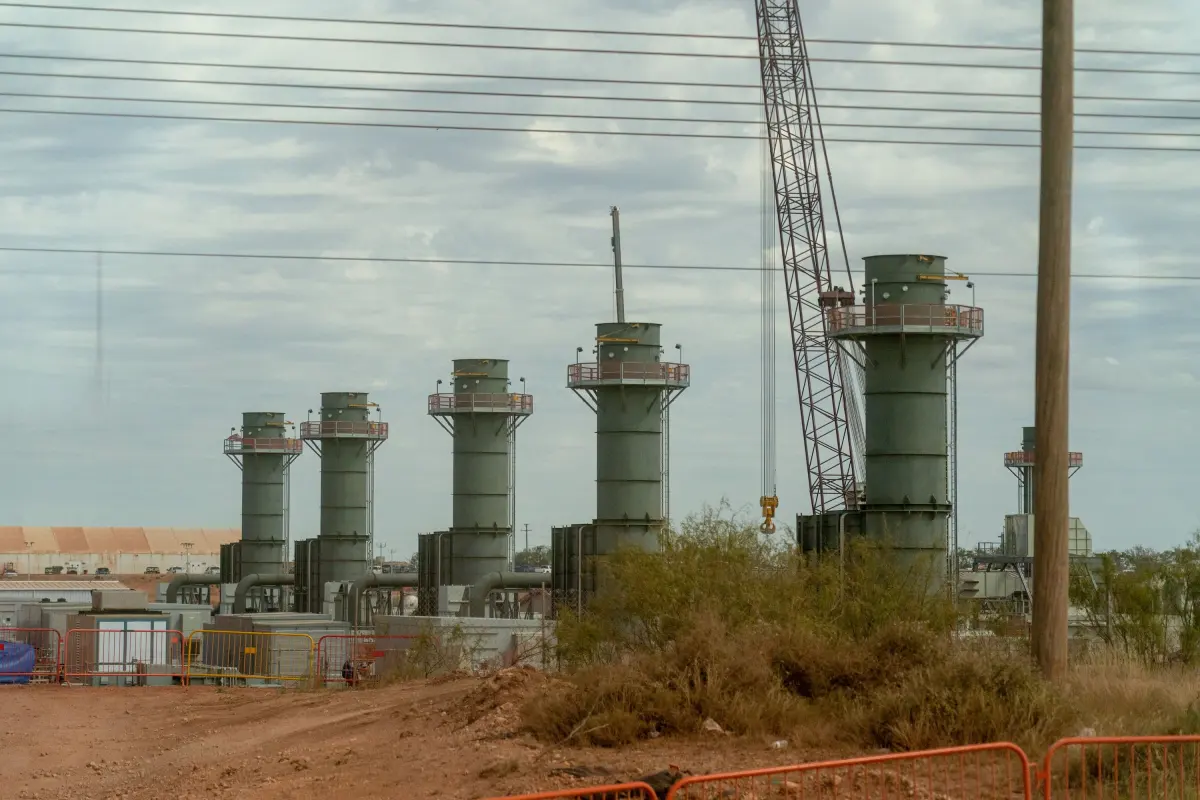
Data centers are among the infrastructure projects Dili's software supports
What the raise signals for construction tech
Dili graduated from Y Combinator's Summer 2023 batch and previously raised a $6.7 million seed round. The Series A brings total funding to $21.7 million. Khosla Ventures leading suggests the firm sees infrastructure compliance as a category worth owning, not just a feature for existing construction software vendors to bolt on.
The timing aligns with a wave of federally funded projects. The Inflation Reduction Act, the CHIPS and Science Act, and the Bipartisan Infrastructure Law have collectively unlocked hundreds of billions in new construction. Each dollar carries compliance strings. The question is whether a startup can capture that workflow before incumbents or integrators do.
Logicity's Take
Dili's 700-project footprint is real traction for a compliance tool, but the dual business model is worth watching. Managed services can mask software stickiness: if half your revenue comes from doing the work for clients, you are partly a staffing business with software margins on paper. The test will be whether the in-house software cohort renews and expands, or whether it churns once the compliance audit passes. For CTOs evaluating the space, the deterministic-rules-over-LLM architecture is a sensible choice that sidesteps the reliability debates plaguing other AI compliance pitches.
Need Help Implementing This?
If you are evaluating compliance automation for infrastructure projects, Logicity can help you map vendors to your regulatory requirements. Reach out via our contact page.
Source: TechCrunch / Russell Brandom
Huma Shazia
Senior AI & Tech Writer
Produced with AI assistance and reviewed by the Logicity editorial team. Learn more in our Editorial Policy.