Key Takeaways
INSANE: Bernie Sanders DEMANDS AI Data Center MORATORIUM! Robby Soave | RISING
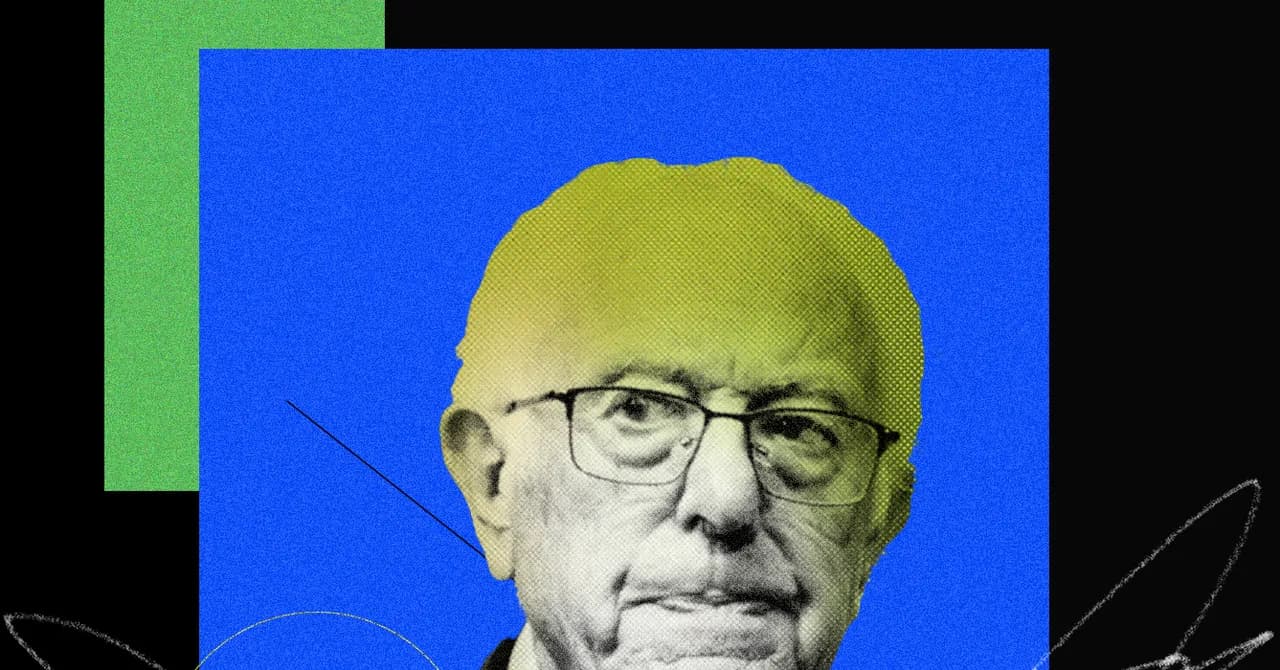
- Sanders proposes taxing AI's richest companies to fund direct payments to Americans through a sovereign wealth fund
- A separate bill would halt data center construction until environmental and consumer safeguards are implemented
- Despite AI being 'the most consequential technology in history,' no significant AI legislation has passed Congress
Bernie Sanders wants Congress to tax the AI industry's wealthiest companies and write checks directly to American citizens. The Vermont senator's American AI Sovereign Wealth Fund Act, introduced in June 2025, would create a national fund financed by AI profits. A separate bill co-authored with Representative Alexandria Ocasio-Cortez would pause data center construction until regulators establish environmental and consumer protections.
In a WIRED interview published this week, Sanders argued that AI represents "the most consequential, transformational technology in the history of humanity," yet Congress has produced zero significant legislation to govern it. The 84-year-old senator placed blame on tech billionaires driving AI development: Elon Musk, Jeff Bezos, Mark Zuckerberg. "They could care less about the needs of ordinary people," Sanders said. "Just wanna get richer and more powerful."

What would the AI sovereign wealth fund actually do?
The proposal targets a straightforward redistribution: take a slice of profits from companies building AI systems and route that money to ordinary Americans. Norway's sovereign wealth fund, built on oil revenue, offers a rough precedent. Sanders' version would tap a new kind of natural resource, the data and compute infrastructure powering large language models and automated systems.
Details on tax rates and distribution mechanisms remain scarce. Sanders himself pivoted quickly in the interview to broader concerns about AI governance, suggesting the bill is as much a provocation as a policy blueprint. The political math is brutal. Any legislation taxing tech giants faces opposition from a federal administration Sanders describes as "happier to enrich itself via technology than actually govern it."
Why halt data center construction?
The moratorium bill, introduced in March 2025 with AOC, targets the physical infrastructure of AI. Data centers consume massive amounts of electricity and water. Local communities have pushed back on new facilities, citing rising energy costs and environmental strain. Sanders wants construction paused until guidelines protect "ordinary people" from these downstream effects.
This isn't fringe positioning anymore. The day after WIRED published the interview, Representative Frank Pallone, the top Democrat on the House Energy and Commerce Committee, publicly endorsed a data center moratorium. Pallone is no democratic socialist. His support signals that concerns about AI infrastructure have migrated from the progressive wing toward the party's center.
Congress hasn't passed a single major AI bill
Sanders expressed frustration at the legislative vacuum. "You would think that with such a transformational technology that's going to impact every aspect of their life, there'd be massive debates," he said. "Zero. Nothing. As of this date, there's not been one significant piece of legislation dealing with AI."
The European Union passed its AI Act in 2024. China has rolled out regulations on algorithmic recommendation systems and generative AI. The U.S. has executive orders and voluntary commitments from tech companies. Federal law? Still waiting.
Part of the problem is jurisdictional. AI touches commerce, labor, defense, healthcare, and civil rights. No single committee owns the issue. Another part is money. Tech companies and their aligned super PACs spend heavily to shape, slow, or kill regulation. Sanders has spent decades fighting that dynamic on healthcare, education, and labor. He sees AI as the next front.
Can progressive pressure actually move AI policy?
The interview ran on June 23, the day of New York's Democratic primary. The next morning, a coalition of democratic socialists swept multiple races. Sanders didn't organize those wins directly, but they reflect a political current he's ridden for years: populist anger at concentrated wealth and corporate power.
Town halls across the country are fighting data center projects. Protests draw millions. Establishment candidates are losing primaries. Whether this energy translates into AI legislation is another question. Sanders has spent 34 years in Congress championing ideas that poll well but rarely become law: Medicare for All, free college tuition, breaking up big banks.
His AI bills face the same headwinds. A Republican-controlled House won't pass a sovereign wealth fund. A tech-friendly White House won't sign one. But Sanders has always played a longer game. He shifts the window of acceptable debate. Medicare for All went from fringe to mainstream Democratic platform in a decade. The question is whether AI moves faster than the politics can catch up.
Logicity's Take
For AI builders, Sanders' bills are a leading indicator, not an imminent threat. Federal AI regulation isn't arriving this Congress. But the political groundwork is being laid: mainstream Democrats endorsing data center pauses, sovereign wealth fund rhetoric entering the conversation. Teams building AI infrastructure should track state and local regulations more closely than federal bills. California, New York, and Texas are where the real constraints will emerge first. Energy procurement, environmental compliance, and community relations are becoming product decisions, not afterthoughts.
The billionaire framing
Sanders repeatedly named Musk, Bezos, and Zuckerberg as the villains driving AI development without regard for public welfare. This framing is strategic. It connects AI policy to his career-long critique of wealth concentration. The three men control companies, OpenAI's biggest investor (Microsoft, where Bezos has no direct stake, but Amazon competes), Meta's AI research, and xAI (Musk's venture), that are central to the current AI race.
The personalization also has limits. AI development involves thousands of researchers, engineers, and product managers. Many share Sanders' concerns about safety, labor displacement, and environmental costs. Reducing the industry to three billionaires makes for good soundbites but obscures the actual decision-making happening inside labs and product teams.
Frequently Asked Questions
What is the American AI Sovereign Wealth Fund Act?
A bill proposed by Senator Bernie Sanders in June 2025 that would tax AI companies and use the revenue to make direct payments to American citizens, similar to how some countries use natural resource revenues.
Would the data center moratorium stop all AI development?
No. The bill would pause new data center construction until environmental and consumer safeguards are implemented. Existing facilities and AI research would continue.
Has Congress passed any major AI legislation?
Not as of June 2025. Sanders noted in his WIRED interview that no significant AI legislation has been enacted despite the technology's transformational impact.
Which Democrats support the data center moratorium?
Bernie Sanders and Alexandria Ocasio-Cortez introduced the bill. Representative Frank Pallone, the top Democrat on the House Energy and Commerce Committee, has also endorsed the concept.
What are the chances these bills become law?
Low in the current Congress. Republican control of the House and a tech-friendly administration make passage unlikely. The bills serve more to shift political debate than to achieve immediate legislative wins.
How AI labs are optimizing compute amid regulatory and resource constraints
The global supply chain politics shaping AI infrastructure
Need Help Implementing This?
Logicity helps AI teams navigate regulatory trends and infrastructure decisions. Get in touch for analysis tailored to your product roadmap.
Source: Feed: Artificial Intelligence Latest / Katie Drummond
Huma Shazia
Senior AI & Tech Writer
Produced with AI assistance and reviewed by the Logicity editorial team. Learn more in our Editorial Policy.