Key Takeaways
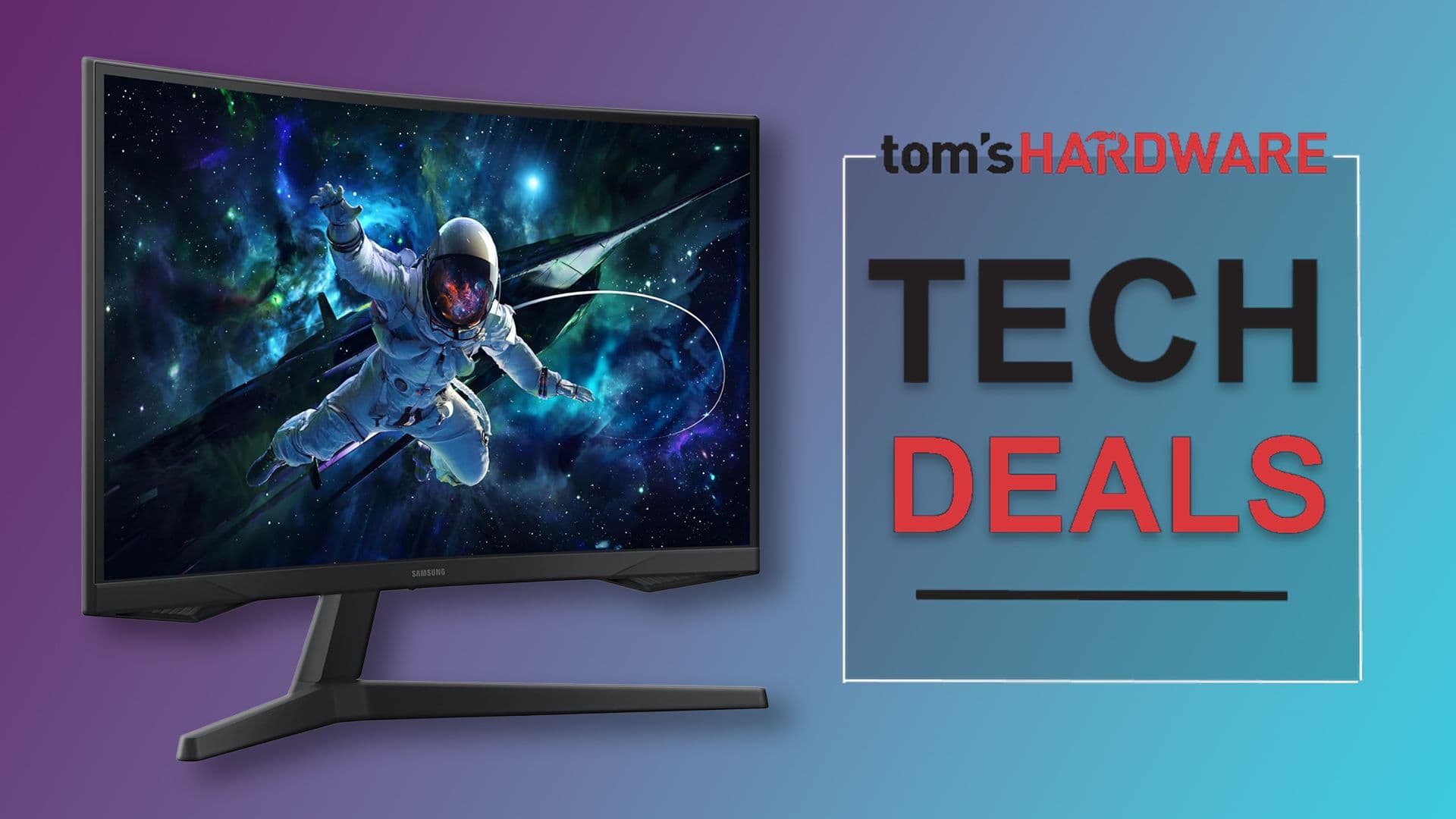
- Samsung Odyssey G55C drops to $189.99, down 46% from $349.99 MSRP
- 32-inch curved VA panel with 1440p resolution and 165Hz refresh rate
- HDR10 support but limited to 300 nits peak brightness
The Samsung Odyssey G55C has dropped to $189.99 on Amazon, its lowest price ever. That's 46% off the $349.99 launch price and puts a 32-inch, 1440p, 165Hz gaming monitor under $200 just days before Prime Day officially begins.
Two years ago, this spec sheet at this price would have been fiction. The 1440p high-refresh category has collapsed in price as panel production scaled up and manufacturers cleared inventory ahead of new product cycles. What was once a $400 proposition is now an impulse buy.
What does the Samsung Odyssey G55C actually offer?
The G55C uses a 32-inch VA panel with a 1000R curvature, Samsung's tightest curve radius. VA panels excel at contrast, typically hitting 2500:1 to 3000:1 ratios compared to IPS panels that hover around 1000:1. For gaming in darker environments or playing titles with lots of shadow detail, that contrast advantage matters.
The 165Hz refresh rate sits comfortably above the 144Hz baseline that most competitive gamers target. Combined with 1440p resolution on a 32-inch screen, you get roughly 93 pixels per inch. That's dense enough to look sharp at typical desk distances without requiring a monster GPU to drive.
Samsung claims a 1ms MPRT response time, achieved through backlight strobing. Real-world performance will vary, but VA panels have historically struggled with dark transitions. AMD FreeSync support handles variable refresh rate sync, keeping the panel and GPU coordinated to prevent screen tearing.
Where does this monitor fall short?
HDR10 certification sounds nice on paper, but 300 nits peak brightness undercuts the experience. True HDR typically demands 600 nits minimum, with 1000 nits preferred. The G55C will accept HDR signals and display them, but don't expect the dramatic highlight punch that OLED or high-end IPS monitors deliver.
Color accuracy also takes a back seat. VA panels prioritize contrast over color precision. Content creators or anyone doing color-sensitive work should look elsewhere. For gaming and media consumption, most users won't notice the difference.
There are no built-in speakers. Samsung includes a 3.5mm audio jack for headphones or external speakers, which is fine since monitor speakers are rarely worth using anyway.
Connectivity and practical setup
The G55C comes with HDMI 2.0 and DisplayPort 1.2 inputs. HDMI 2.0 caps out at 1440p 144Hz, so you'll want to use DisplayPort to hit the full 165Hz. The dual inputs let you connect a PC and a console simultaneously, switching between them without cable swapping.
The 1000R curve, which matches a 1-meter radius, is aggressive. Samsung markets it as matching the natural curvature of the human eye for reduced strain during long sessions. Whether you find curved monitors immersive or distracting is personal. Some users love them for gaming; others find the curve annoying for productivity work with straight lines and text.
Who should buy this monitor?
The G55C makes sense for gamers upgrading from 1080p who don't want to spend $400 or more on an IPS or OLED panel. It's particularly well-suited for mid-range systems running RTX 3060 or RTX 4060 class GPUs, where 1440p at high refresh rates is achievable without constant compromises.
Competitive FPS players who prioritize response time over image quality might prefer a 27-inch 1080p 240Hz panel instead. And anyone doing professional creative work should skip this entirely in favor of a color-accurate IPS display.
But for the average gamer who wants a big, immersive screen with smooth performance and isn't chasing benchmark perfection, $190 is hard to argue with.
Frequently Asked Questions
Is the Samsung Odyssey G55C good for competitive gaming?
It's adequate but not ideal. The 165Hz refresh rate and AMD FreeSync help, but VA panels have slower dark-level transitions than IPS. Serious competitive players often prefer faster 240Hz monitors at 1080p.
Can I use the G55C with a PlayStation 5 or Xbox Series X?
Yes. Both consoles output 1440p at 120Hz over HDMI 2.0. You won't hit the monitor's full 165Hz, but 120Hz is the current ceiling for console gaming anyway.
Is 300 nits bright enough for a gaming monitor?
For typical indoor use, yes. It's sufficient for gaming in a normally lit room. However, it's too dim for proper HDR performance, where 600-1000 nits is standard.
How does the Odyssey G55C compare to the G7?
The G7 offers faster 240Hz refresh rates, better VA response times, and higher brightness. It costs significantly more. The G55C is Samsung's budget option in the Odyssey lineup.
Will Prime Day have better monitor deals than this?
Possibly, but $190 for these specs already represents excellent value. If you need a monitor now, this deal is safe to pull the trigger on.
Logicity's Take
The 1440p monitor market is in a race to the bottom, and buyers are winning. Two years ago, a 32-inch 165Hz panel under $300 was notable. Under $200 was fantasy. Samsung is likely clearing G55C inventory before refreshing the lineup, which means these prices won't last. If you've been waiting for 1440p to get cheap, it just did.
Building a gaming setup? Optimize your PC software while you're at it.
Need Help Implementing This?
Building a gaming rig or upgrading your workspace setup? Reach out to Logicity's team for hardware recommendations tailored to your budget and use case. We're here to help you make smart tech decisions.
Source: Latest from Tom's Hardware
Manaal Khan
Tech & Innovation Writer
Produced with AI assistance and reviewed by the Logicity editorial team. Learn more in our Editorial Policy.