OpenAI CEO Sam Altman suggested parents use ChatGPT Work to generate personalized morning podcasts for their kids. The internet responded by liking a one-line rebuttal from a cartoon creator 12 times more than Altman's original post.
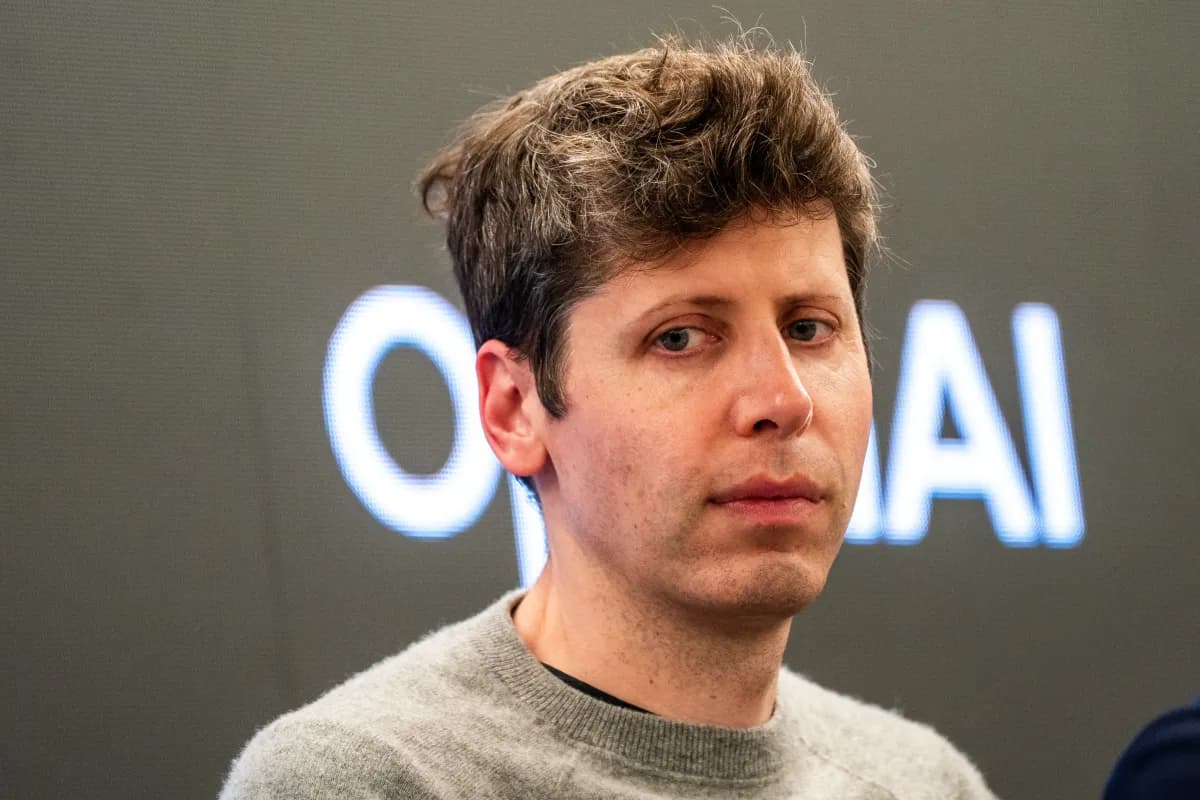
On August 1, Altman posted what he called a "cool use case" for OpenAI's new ChatGPT Work product: connect family calendars, explain each child's interests, then let the AI generate a daily podcast for the school commute covering "one kid's soccer game that afternoon, one kid's upcoming birthday, some news, etc."
Alex Hirsch, creator of the animated series Gravity Falls, had a simpler suggestion: "What if you just talked to your children?"
By Saturday morning, the numbers told the story. Altman's post had roughly 9,600 likes and 300 reposts. Hirsch's response: 122,000 likes and 9,000 reposts.
Why the ratio matters
Why Sam Altman’s Viral AI Parenting Idea Is Dividing The Internet
This wasn't a random pile-on. The backlash captures a growing skepticism toward tech executives who frame AI as a solution to problems most people don't consider problems at all. Talking to your kids during the drive to school isn't an inefficiency to optimize.
Altman has made similar comments before. On The Tonight Show with Jimmy Fallon, he declared, "I cannot imagine having gone through figuring out how to raise a newborn without ChatGPT." He added, "Clearly, people did it for a long time, no problem," but the framing stuck.
Microsoft CEO Satya Nadella made a comparable claim last year, saying he'd stopped listening to podcasts during his morning commute and instead asks an AI chatbot about them. The pattern is consistent: tech leaders pitching AI as a buffer between users and direct human experience.
OpenAI's push into family products
Altman's post wasn't idle musing. OpenAI recently posted a job listing for a product manager with "experience building trust-sensitive consumer experiences for parents and families." The company is actively courting the parenting market.
Meta is moving in the same direction, testing an AI-powered app that tells bedtime stories. The assumption underlying both efforts: parents want AI to mediate interactions with their children.
OpenAI has added safety features for parents using ChatGPT. But the company also faces multiple lawsuits from families alleging the chatbot contributed to delusions and suicides. OpenAI says it is "continuously improving how our models respond in sensitive interactions."
The deeper tension
The backlash reveals something specific. Many AI use cases promise to save time on tasks people already find tedious: scheduling, summarizing documents, generating first drafts. The productivity argument works when the task is a means to an end.
Talking to your children isn't a means to an end. It's the thing itself. Hirsch's question landed because it exposed a category error: treating a relationship as a workflow to automate.
Logicity's Take
Altman's post is instructive for any company building AI products for consumers. The productivity framing that works for enterprise tools can backfire spectacularly when applied to domains people consider intrinsically valuable. CTOs evaluating AI integrations should ask: is this task one users want to do faster, or one they actually want to do?
OpenAI's ChatGPT Work product is designed for business contexts, where the automation pitch is straightforward. Extending that pitch to parenting invites exactly the response Altman received.
The ratio won't change OpenAI's roadmap. But it might change how the company talks about it.
Related: another AI product facing pushback on boundaries and user control
Need Help Implementing This?
Logicity helps teams evaluate AI products and integrations. Contact us for guidance on where automation fits your workflow — and where it doesn't.
Source: TechCrunch / Anthony Ha
Manaal Khan
Tech & Innovation Writer
Produced with AI assistance and reviewed by the Logicity editorial team. Learn more in our Editorial Policy.