Key Takeaways
Lenovo LOQ Essential vs Original LOQ - BIG Differences!
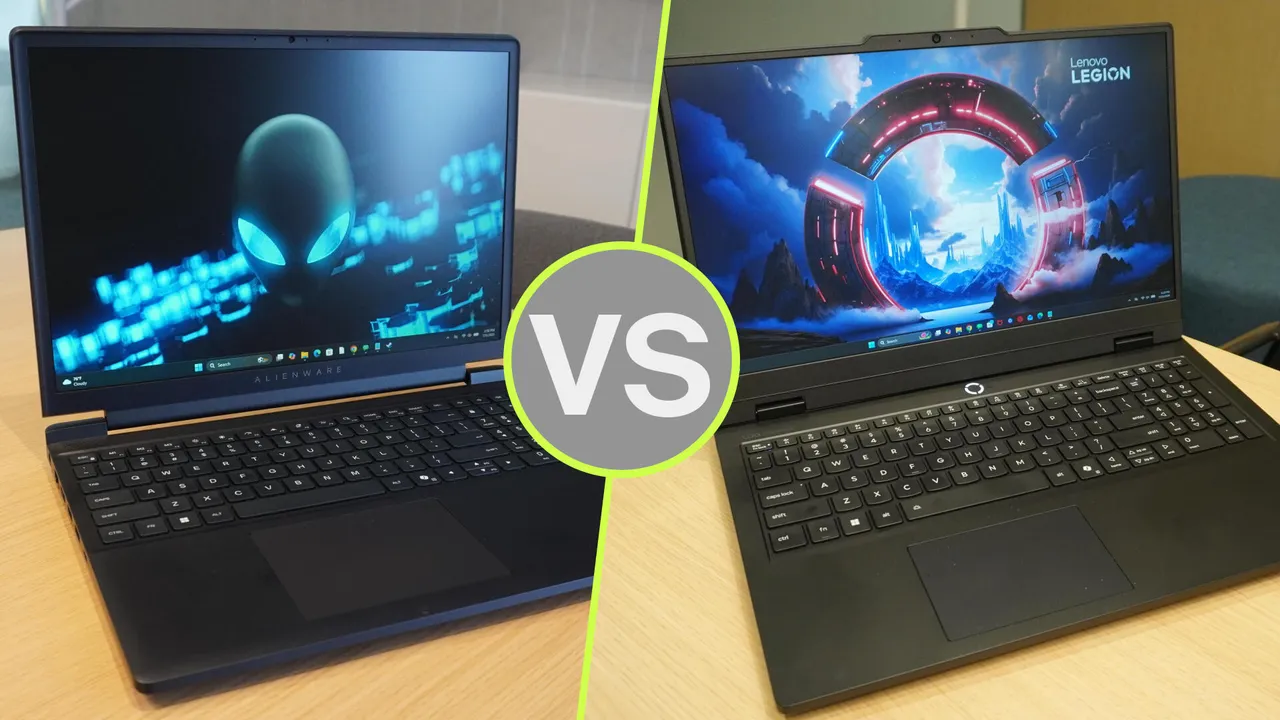
- The Alienware 15 starts at $999 with better gaming benchmarks; the LOQ Essential 15 starts at $1,299 with superior display color coverage
- Both laptops weigh around 5 pounds and share similar RTX 50-series GPU options, but differ in RAM speed and charging wattage
- Display quality tips to the LOQ (100% sRGB vs 62.5%), while raw gaming performance tips to the Alienware
Two budget gaming laptops, both priced around $1,200, both stripped of RGB lighting to keep costs down, both hovering near five pounds. The Alienware 15 (2026) and Lenovo LOQ Essential 15 are close enough in specs that picking one feels like splitting hairs. But the differences that exist matter: display color accuracy, RAM speed, charging wattage, and starting price. Here's how they actually compare.
Specs at a glance
| Spec | Alienware 15 (2026) | Lenovo LOQ Essential 15 |
|---|---|---|
| Starting price | $999 | $1,299 |
| Display | 15.3" IPS, 1920×1200, 165Hz, 62.5% sRGB | 15.6" IPS, 1920×1080, 144Hz, 100% sRGB |
| Weight | 4.85 lbs (2.2 kg) | 5.07 lbs (2.3 kg) |
| Processor options | Intel Core 7 240H or AMD Ryzen 200 | Intel Core i7-13650HX |
| GPU options | RTX 4050, 5050, 5060 | Up to RTX 5060 |
| RAM | 16GB DDR5, 5600 MT/s | 16GB DDR5, 4800 MT/s |
| Storage | 512GB or 1TB NVMe Gen 4 | 512GB NVMe, two M.2 slots |
| Battery/charging | 5,000mAh, 65W (North America) | 5,000mAh, 45W |
The $300 price gap is the first thing that jumps out. Alienware starts at $999; Lenovo starts at $1,299. That's significant for a "budget" category. But spec sheets only tell part of the story.
Display: LOQ wins on color, Alienware wins on refresh rate
Both panels hit 300 nits of brightness. Both run at 1920 pixels wide. But the similarities end there.
The Alienware 15 uses a 16:10 aspect ratio with 1920×1200 resolution. That extra vertical space is useful for productivity and web browsing. It also pushes a 165Hz refresh rate, which is marginally smoother than the LOQ's 144Hz.
The LOQ Essential 15 counters with 100% sRGB color coverage versus the Alienware's 62.5%. That's a dramatic gap. Games, movies, and everyday browsing all look noticeably more vivid on the LOQ. For anyone who cares about visual accuracy, the LOQ's display is the better panel despite the lower refresh rate.
✅ Pros
- • 16:10 aspect ratio provides more vertical screen space
- • 165Hz refresh rate for smoother gameplay
❌ Cons
- • Only 62.5% sRGB coverage makes colors look washed out
Pros: 100% sRGB delivers accurate, vivid colors, 16:9 ratio is standard for most media content. Cons: 144Hz refresh rate is slightly slower, Less vertical space for productivity tasks.
Gaming performance: Alienware edges ahead
Both laptops can be configured with the same Nvidia RTX 50-series GPUs. Both ship with 16GB of DDR5 RAM. So where does the Alienware pull ahead?
RAM speed. The Alienware's DDR5 runs at 5600 MT/s versus the LOQ's 4800 MT/s. That 800 MT/s difference shows up in benchmarks, particularly in CPU-bound scenarios and games that lean on memory bandwidth. It's not a dramatic gap, but it's measurable.
The Alienware also offers more processor flexibility: Intel Core 7 240H or AMD Ryzen 200-series options, compared to the LOQ's single Intel Core i7-13650HX configuration. For buyers who prefer AMD or want the latest Intel silicon, the Alienware is the only choice.
Battery and charging: neither is great
Both laptops pack 5,000mAh batteries. Neither will last a full workday unplugged, which is typical for gaming laptops prioritizing performance over efficiency.
The Alienware charges at 65W in North America (80W internationally). The LOQ charges at just 45W. That means the Alienware fills up faster, which matters if you're moving between outlets.
Weight and portability
The Alienware 15 weighs 4.85 pounds. The LOQ Essential 15 weighs 5.07 pounds. That 0.22-pound difference is imperceptible in a backpack. Neither laptop qualifies as ultraportable.
Logicity's Take
At $999, the Alienware 15 is the better value for raw gaming performance: faster RAM, faster charging, and a lower starting price. But if display quality matters to you, whether for gaming visuals, creative work, or just watching movies, the LOQ's 100% sRGB panel is worth the $300 premium. Neither laptop is a clear winner; the right choice depends on whether you prioritize color accuracy or frame rates.
Which should you buy?
Pick the Alienware 15 if you want the lowest entry price, faster RAM, more processor options, and quicker charging. It's the better pure gaming machine for the money.
Pick the LOQ Essential 15 if display quality is non-negotiable. The 100% sRGB panel makes a visible difference in games, movies, and everyday use. You're paying a premium for that, but it's a premium some buyers will happily pay.
Both laptops cut corners to hit their price points. No RGB lighting, middling battery life, weight north of 4.5 pounds. Accept those tradeoffs, and either machine delivers solid 1080p gaming without breaking $1,500.
Frequently Asked Questions
Can both laptops be upgraded with more RAM?
Yes. Both have two DDR5 SODIMM slots and ship with a single 16GB stick, leaving room for a second stick to enable dual-channel memory.
Do either of these laptops have RGB lighting?
No. Both the Alienware 15 (2026) and LOQ Essential 15 skip RGB lighting to keep prices down.
Which GPU options are available on each laptop?
The Alienware 15 offers Nvidia RTX 4050, 5050, and 5060. The LOQ Essential 15 goes up to the RTX 5060.
Need Help Implementing This?
Looking for guidance on which hardware fits your team's needs? Contact Logicity's consulting partners for personalized recommendations on laptops, workstations, and IT procurement strategy.
Source: Latest news
Huma Shazia
Senior AI & Tech Writer
Produced with AI assistance and reviewed by the Logicity editorial team. Learn more in our Editorial Policy.