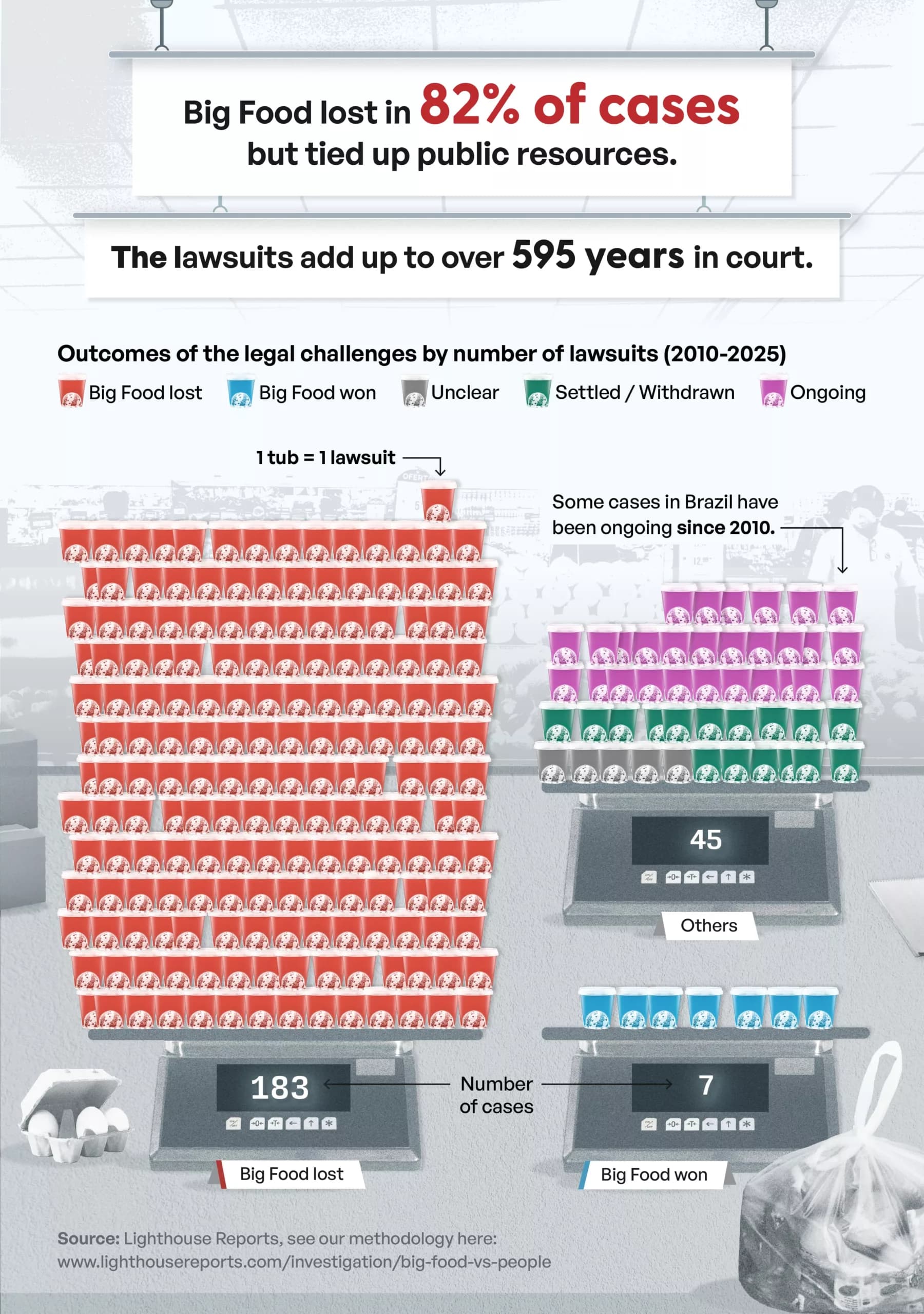
Coca-Cola, PepsiCo, and Mondelez have filed or funded more than one-third of 239 identified lawsuits against public health nutrition laws since 2010, according to a cross-border investigation published by Lighthouse Reports on July 22, 2026. The suits target front-of-pack warning labels, soda taxes, and restrictions on advertising junk food to children. Six countries, 595 cumulative years of litigation, billions in legal and healthcare costs.
The investigation, produced with academic researchers in Colombia, Brazil, the U.S., and Australia, is the first systematic count of how transnational food corporations use courtrooms to stall or kill regulations their lobbyists cannot defeat in legislatures.
Who is suing, and where?
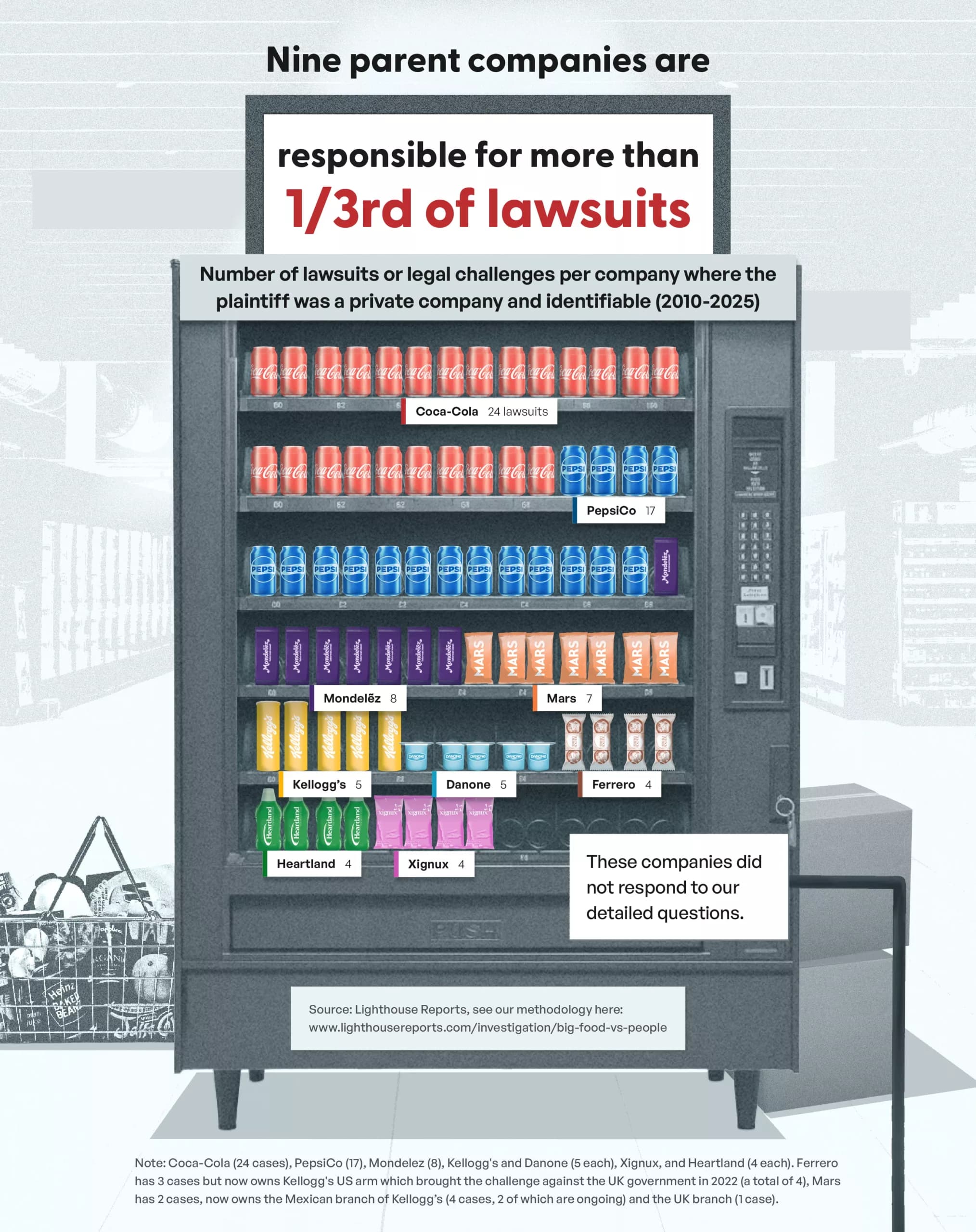
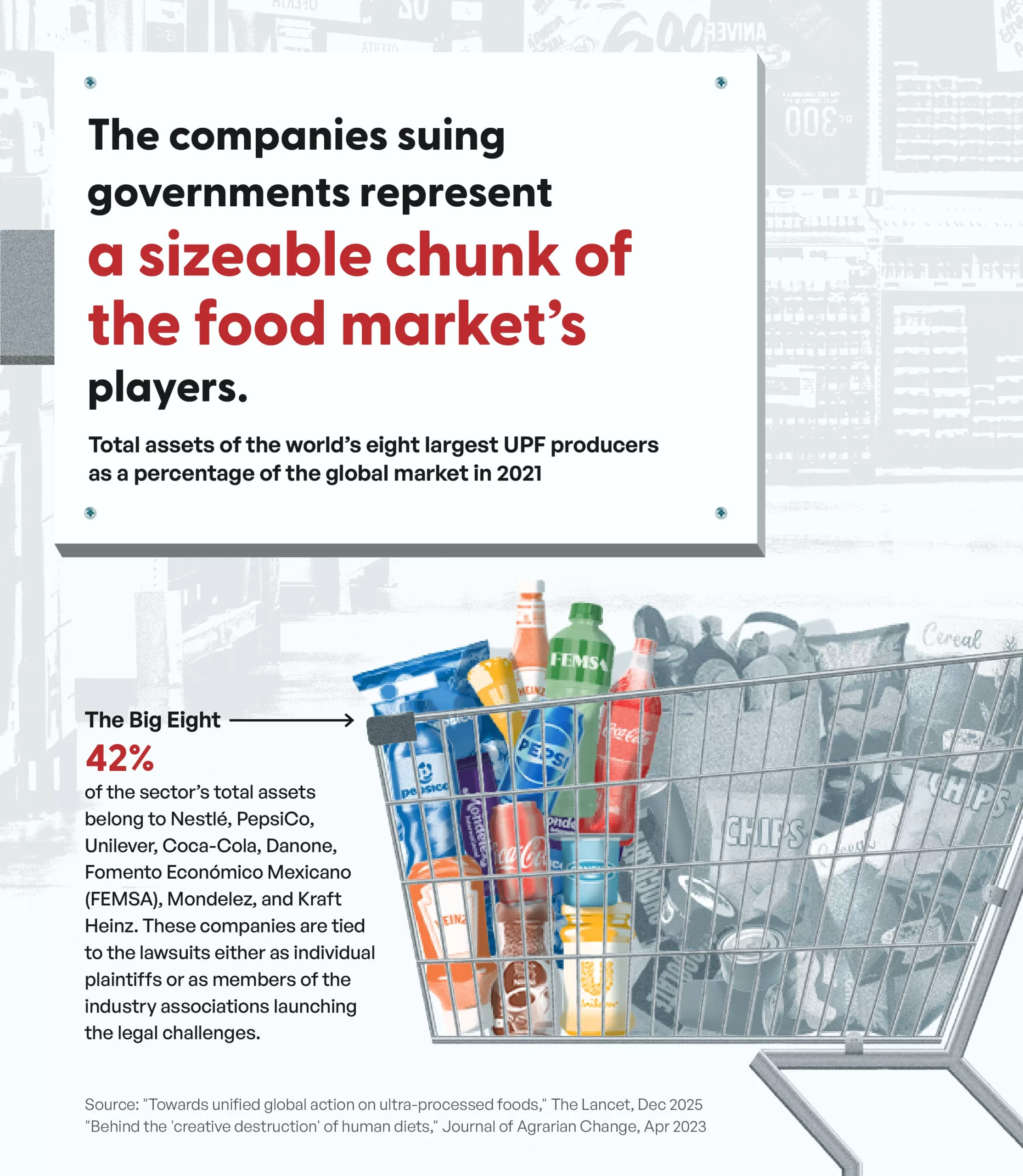
Of the cases where the plaintiff was identifiable, nine parent corporate groups account for more than a third. Coca-Cola, PepsiCo, and Mondelez lead the pack. The companies say the laws they challenge violate constitutional rights, trade agreements, or intellectual property protections. The governments say the companies are buying time while diet-related diseases kill millions annually.
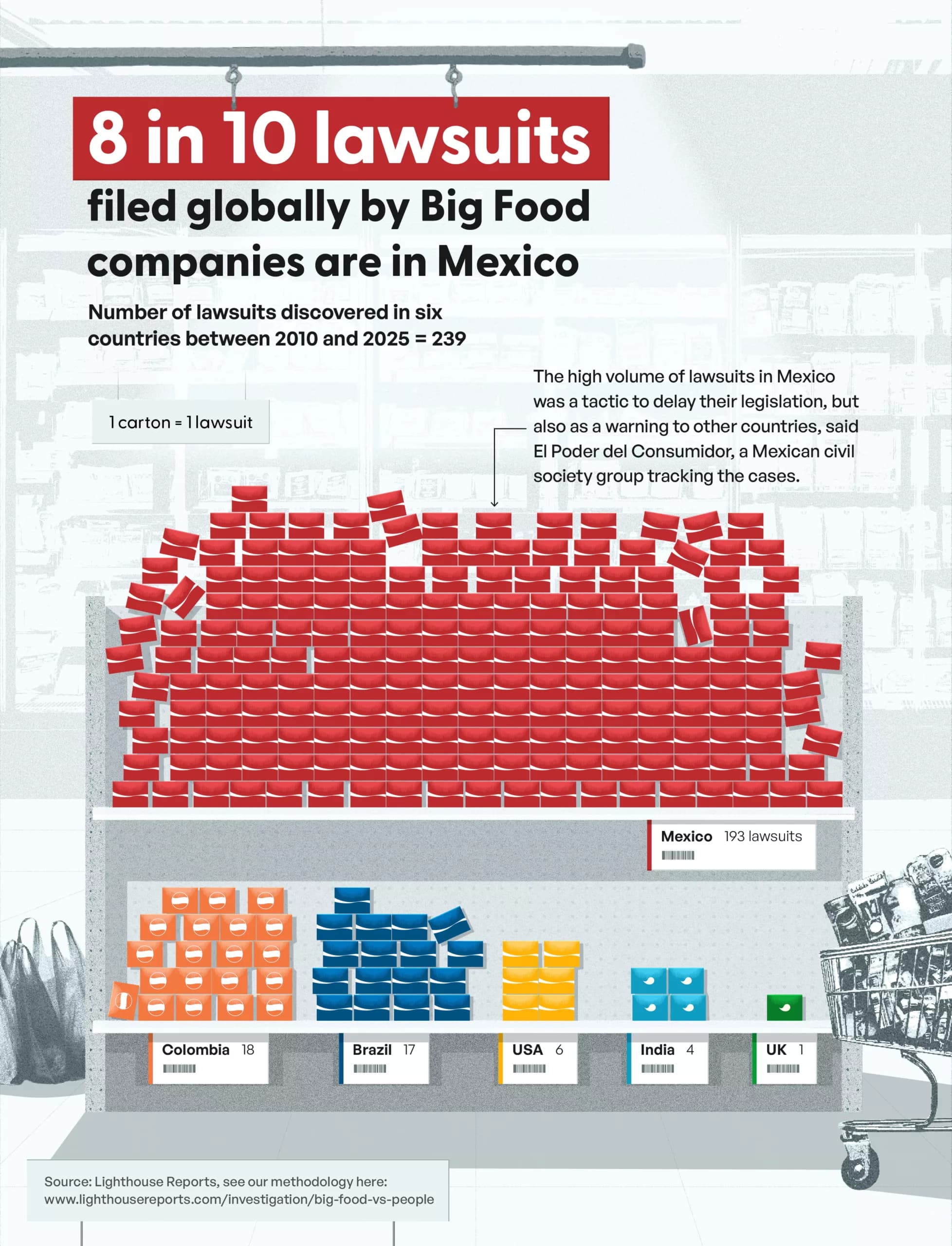
Mexico is the epicenter: 193 of 239 suits were filed there, most targeting the country's black-octagon warning labels on packaged food. A 2022 national survey found 41 percent of Mexican adolescents were overweight. The labels, which the industry calls unconstitutional, are among the strictest in the world.
Brazil, Colombia, the U.S., the U.K., and India account for the remaining cases. In India, the investigation made an exception to include suits against health influencers, who had taken on the de facto role of informing consumers about nutritional content in the absence of strong labeling laws.
What policies are under attack?
The suits cluster around four policy types: front-of-pack labeling, advertising restrictions aimed at children, soda taxes, and broader taxes on ultra-processed foods. Labeling drew the most fire. Companies argue that mandated warnings distort consumer perception and infringe on trademarks. Governments counter that consumers have a right to know what they are eating.
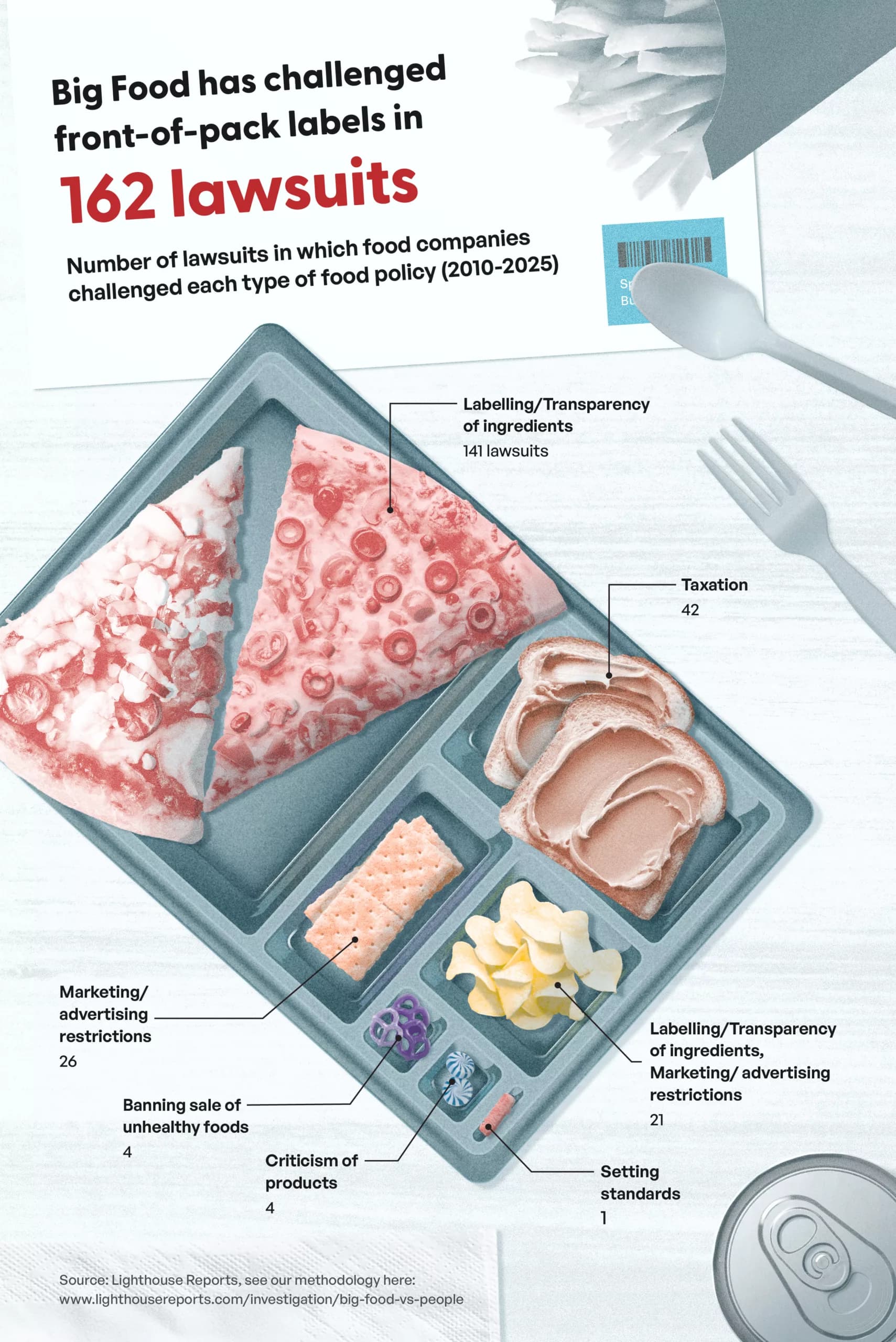
Advertising restrictions, especially those protecting children, are the second major target. The industry position: parents, not regulators, should control what kids see. The public health position: children lack the cognitive defenses to evaluate marketing, and the burden should not fall on families already managing rising obesity rates.
595 years of litigation, and a chilling effect
Add up the duration of all 239 cases and you get 595 years of litigation. That is not a typo. It represents staff time, legal fees, and political capital that governments, often in middle-income countries, must divert from other priorities. The investigation calls this a "chilling effect": health ministries may simply avoid passing strong regulations because they cannot afford the courtroom fight.
The tactic is not new. Tobacco companies pioneered it. But the food industry operates in a softer reputational zone. Soda is not cigarettes, and companies can credibly claim reformulation efforts while still suing to block labeling. The dissonance is the strategy.
Food-tech and health startups often feature in weekly funding rounds, relevant context for founders watching this space.
What founders should take from this
If you are building in food-tech, consumer health, or regulatory technology, this investigation is a map. The legal pressure points are clear: labeling, advertising, taxation. Incumbents will spend heavily to protect market share. Startups entering these categories should expect regulatory uncertainty, and should budget for it.
There is also opportunity. Transparency tools, nutrition scoring APIs, and compliance software for food manufacturers are all growth areas precisely because regulation is tightening worldwide. Chile, Israel, and several EU countries have enacted or are considering similar labeling rules. The fight in Mexico is a leading indicator, not an outlier.
Logicity's Take
For founders, the playbook here is instructive: large incumbents will use courts as a product feature, delaying unfavorable rules for years while they reformulate or reposition. If you are building in a regulated space, litigation insurance, scenario planning, and policy monitoring belong in your ops budget. The chilling effect is real, but so is the market for tools that help governments and companies comply faster. Watch Mexico, not just the EU.
The public relations gap
In public, Coca-Cola, PepsiCo, and Mondelez say they want to be part of the solution. They fund wellness programs, reformulate products, and sponsor research. In court, they argue that warning labels violate their rights. Both things are true at the same time. The investigation does not accuse the companies of breaking the law. It accuses them of using the law to break public health policy.
That distinction matters. The companies are not villains for defending their interests. They are corporations doing what corporations do. The question is whether governments, and voters, want to subsidize that defense by bearing the cost of endless litigation, or whether they want to change the rules of engagement.
The academic paper accompanying the investigation will be published alongside the media coverage. It will offer a more systematic look at the dataset. For now, the number is the headline: 239.
Need Help Implementing This?
Logicity helps founders navigate regulatory complexity. If you are building in food-tech, health, or compliance software and want to discuss market positioning, reach out to our team.
Source: Hacker News: Best
Huma Shazia
Senior AI & Tech Writer
Produced with AI assistance and reviewed by the Logicity editorial team. Learn more in our Editorial Policy.